Kansas lawmakers divided as special session to fight COVID-19 vaccine mandates begins
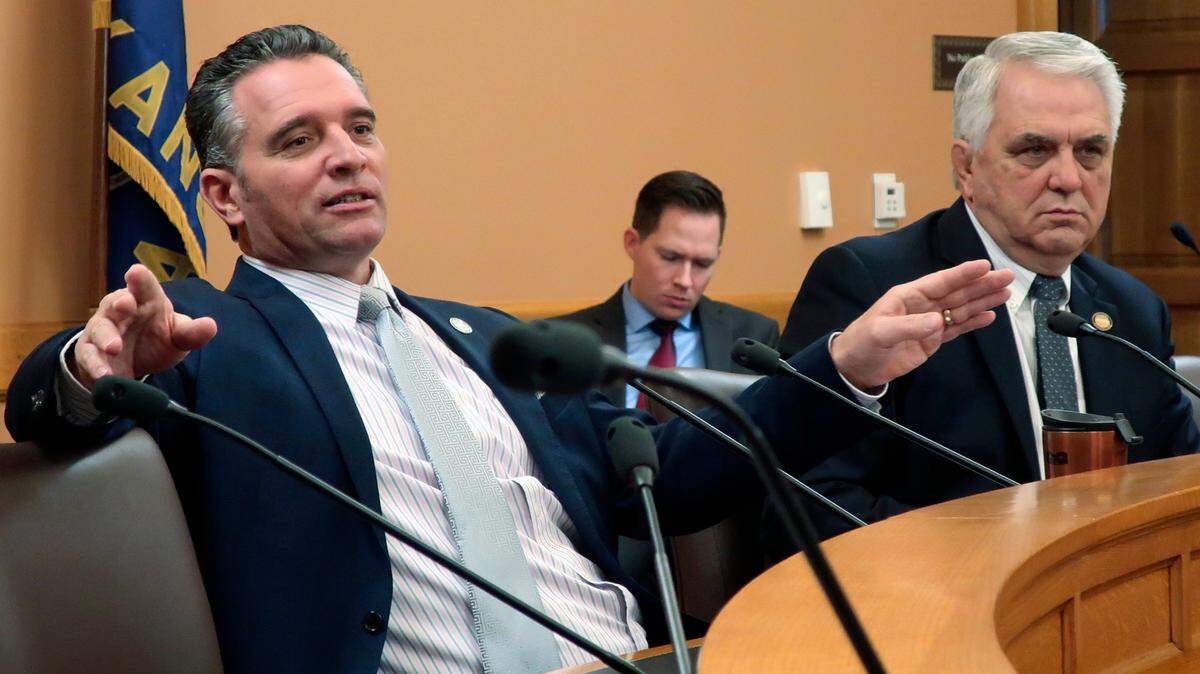
Kansas lawmakers opened a special session Monday with Republicans divided over how far to push their effort to fight federal COVID-19 vaccination rules but largely unified in support of sweeping religious exemptions for workers.
Ahead of the $65,000-per-day session, top Republicans had appeared united on two tightly-focused bills to deliver unemployment benefits to workers fired for refusing to get a shot and provide extensive religious and medical exemption from vaccine mandates. Rank-and-file lawmakers received assurances of a narrow session.
But the House and Senate instead began debating separate proposals. In a 78-40 vote, the House passed a bill just after noon that swaps a guarantee of unemployment benefits for fired workers for a process that allows state officials to investigate allegations of unlawful firings and fine employers in violation of the law. Five Republicans joined Democrats in voting against the legislation.
The Senate continued to debate its own proposal, which includes unemployment benefits, late into the afternoon. Republicans in both chambers largely agreed, however, on provisions that would effectively institute a no-questions-asked policy for workers opting out of mandates on religious grounds.
A top deputy to Democratic Gov. Laura Kelly, who has criticized federal vaccine mandates, said Monday that the bills, as currently crafted, were “probably OK” and “more in line with something the governor can support” but wouldn’t guarantee whether they’d earn the governor’s signature. Kelly and her office hadn’t previously taken a public position on the proposed bills.
Kelly chief of staff Will Lawrence warned lawmakers against making major changes to the bills that put state law in conflict with federal law. “All these changes have interplay with federal law,” he told The Star, adding that the governor’s office will be watching how legislators amend the proposals.
Lawrence earlier told a meeting of Senate Democrats that if the two current bills are voted down, “I think it gets worse, not better” as the session continues.
“We shouldn’t be in a special session but the Republicans put themselves here,” Lawrence said during a meeting of Senate Democrats.
Kelly was constitutionally-obligated to recall legislators to Topeka after every Republican lawmaker signed a petition to force a special session, the first time that’s happened in Kansas history. GOP lawmakers had faced increasing pressure to take action after President Joe Biden’s administration announced a series of vaccination mandates and rules in September.
The federal rules — all of which face court challenges — will require most health care workers to be vaccinated, require federal contractors to ensure their workforces are vaccinated and require large employers to ensure their workers are vaccinated or undergo regular testing.
“This is about individual rights, pure and simple. Business rights are pretend, they really don’t exist,” said Sen. Mark Steffen, a Hutchinson Republican.
Business opposition
Amendments to the bills may prove critical to determining the course of the special session and whether the Legislature takes swift action or becomes mired in gridlock. GOP leaders have already acknowledged the House and Senate will have to negotiate a final version of the legislation, a potentially lengthy process.
House Speaker Ron Ryckman, an Olathe Republican, warned his fellow GOP colleagues against putting forward amendments that could weaken the legislation or force them into difficult votes. He portrayed the House proposal as a compromise with the business community, which has repeatedly raised concerns with the proposals that have placed Republicans — traditionally seen as an ally of business — in an awkward position.
The Kansas Chamber of Commerce made clear Monday it still doesn’t support the measures.
“We are not able to support any mandate or penalties on businesses that impacts their abilities to make informed decisions on how to best maintain their operations and could lead to unintended consequences,” Chamber President Alan Cobb said in a statement.
The House bill requires the Kansas Department of Labor to investigate allegations that workers have been fired after asking for a religious or medical exemption and being denied the exemption. The Attorney General’s Office can then levy fines if the employer doesn’t reinstate the worker with back pay.
“I’m much more concerned about people getting their job back or keeping their job than sitting and collecting unemployment,” Ryckman said.
Senate President Ty Masterson, an Andover Republican, said Monday morning he hadn’t been in touch with House leaders about their new proposal. He described the overall goal of the session as protecting individuals who are “in the crosshairs” of Biden’s vaccine rules.
He also nodded to divisions among Republicans. Some hard-right conservatives are calling for more aggressive action. At least one lawmaker, Republican Sen. Dennis Pyle of Hiawatha, questioned whether the bill included any protections against profiling those who obtain religious exemptions.
“I know as this comes forward there are going to be many who are unsatisfied this doesn’t go far enough in certain things they want to accomplish and there are those who think we should not be doing anything,” Masterson said.
Both the House and Senate bills include a wide-ranging religious exemption provision that effectively acts as a no-questions-asked rule. Employers wouldn’t be allowed to probe the sincerity of the worker’s religious beliefs.
Under the legislation, religious beliefs are defined as including both “theistic and non-theistic moral and ethical beliefs” that are held “with the strength of traditional religious views.”
“A lot of people are going to find Jesus and I think that that’s fantastic,” Rep. Stephen Owens, a Hesston Republican, told a gathering of House Republicans, prompting chuckles.
‘Focused on the goal’
Democratic lawmakers, with some exceptions, appeared mostly opposed to the bills and warned they could lead to unforeseen consequences. “This bill right now is going to cause chaos if passed unadulterated,” said Sen. Tom Holland, a Baldwin City Democrat.
Rep. John Carmichael, a Wichita Democrat, said the Legislature would ultimately accomplish little other than placing Kansas employers in a difficult position as federal requirements supersede any state guidelines.
“We lie to our constituents, we make ourselves feel good, we have the fodder for campaign postcards,” Carmichael said. “But our constituents are out of work.”
Sen. Jeff Longbine, an Emporia Republican, expressed worry the legislation would put businesses in a tough position, forced to choose between following state law and federal regulations. Longbine, who said he opposes the federal mandates, suggested the Legislature should instead allow lawsuits against the rules to proceed.
“My biggest concern about the religious exemption is what kind of precedent does it set if you can come into my business as an employee and tell me that you have a religious exemption, sign a paper, I don’t get to check the validity of it, I don’t get to understand whether it is a true religious exemption,” Longbine said.
“What do I do with employees that come in and say, ‘I have a religious exemption against working Wednesday mornings, so I’m not going to show up.’”
Masterson dismissed the concerns, telling lawmakers to stay “focused on the goal.”
In the House, conservatives said the current bills didn’t go far enough but signaled a willingness to wait to move on further measures until January. Rep. Pat Proctor, a Leavenworth Republican, said he thought the state could and should ban all vaccine mandates but urged his colleagues to vote yes on this measure and return to the issue later.
“There are a lot of states around us that have legalized marijuana against the federal statute,” Proctor said.
This story was originally published November 22, 2021 at 12:31 PM.