Fear of redistricting rises as Wyandotte County braces for Republican push for power

READ MORE
Congressional redistricting sparks fear in Wyandotte County
Wyandotte County is casting a wary eye as the Kansas Legislature prepares to draw new congressional district maps. The largest Democratic and minority stronghold in Kansas fears Republican plans for the county.
Expand All
Fear of redistricting rises as Wyandotte County braces for Republican push for power
What is redistricting, and why does it matter to you? Read our FAQ for a clear explanation
Is Kansas’ redistricting method the best? Here are pros and cons of other systems
Vote in our poll: How should redistricting be done in Wyandotte and Johnson Counties?
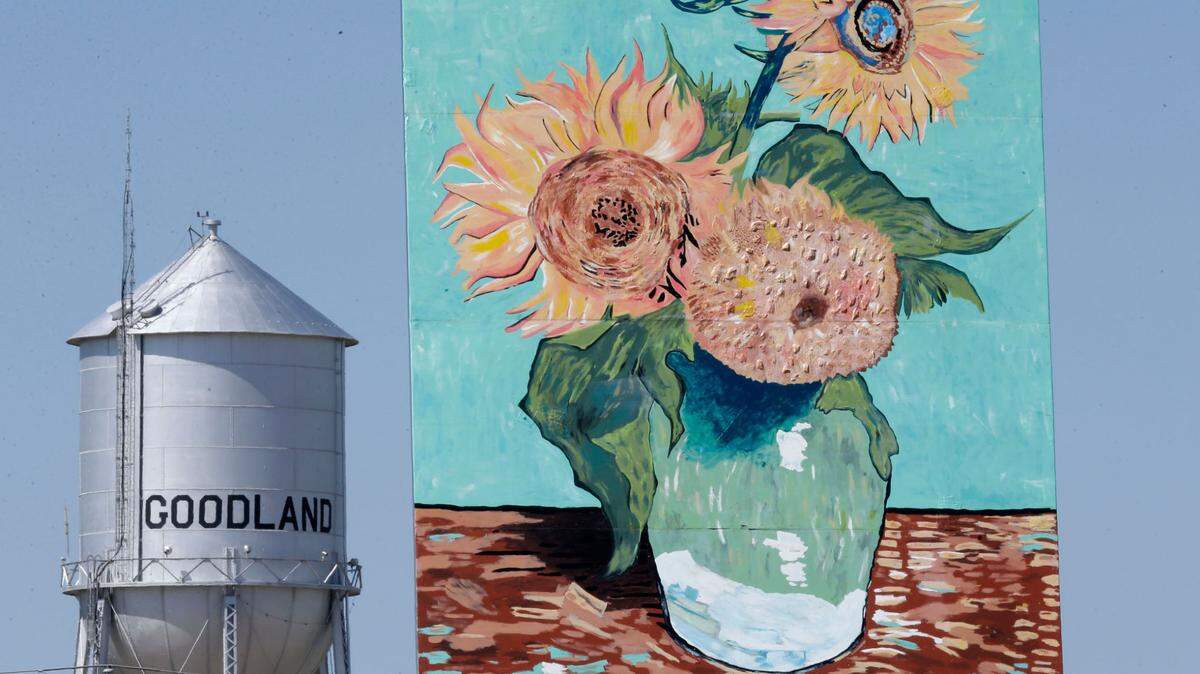
From downtown Kansas City, Kansas, it’s a six-hour, 400-mile drive west to Goodland, one of the final outposts along I-70 before reaching Colorado.
One is a city of 150,000, part of a sprawling metro area and the hub of Wyandotte, the state’s most diverse county, where a fifth of residents are Black and a third are Hispanic or Latino.
The other is a town of about 4,500 that often serves as a pit stop for travelers. It is the seat of Sherman County, where more than 80% of the residents are white.
In 2012, then-Kansas House Speaker Mike O’Neal, the chamber’s top Republican, produced a plan to place both communities in the 1st Congressional District. The “Big First” was already a mammoth jurisdiction that spanned rural western Kansas. O’Neal’s idea was to snake it along the northern edge of the state, then drop it down and snatch up Wyandotte County.
All to be represented by a single member of Congress.
Republicans said it was the solution to a math problem: how to divide the state’s four congressional districts evenly by population. Democrats scoffed. They saw a crude attempt to dilute the influence of the largest Democratic and minority stronghold in a state predominantly conservative and white.
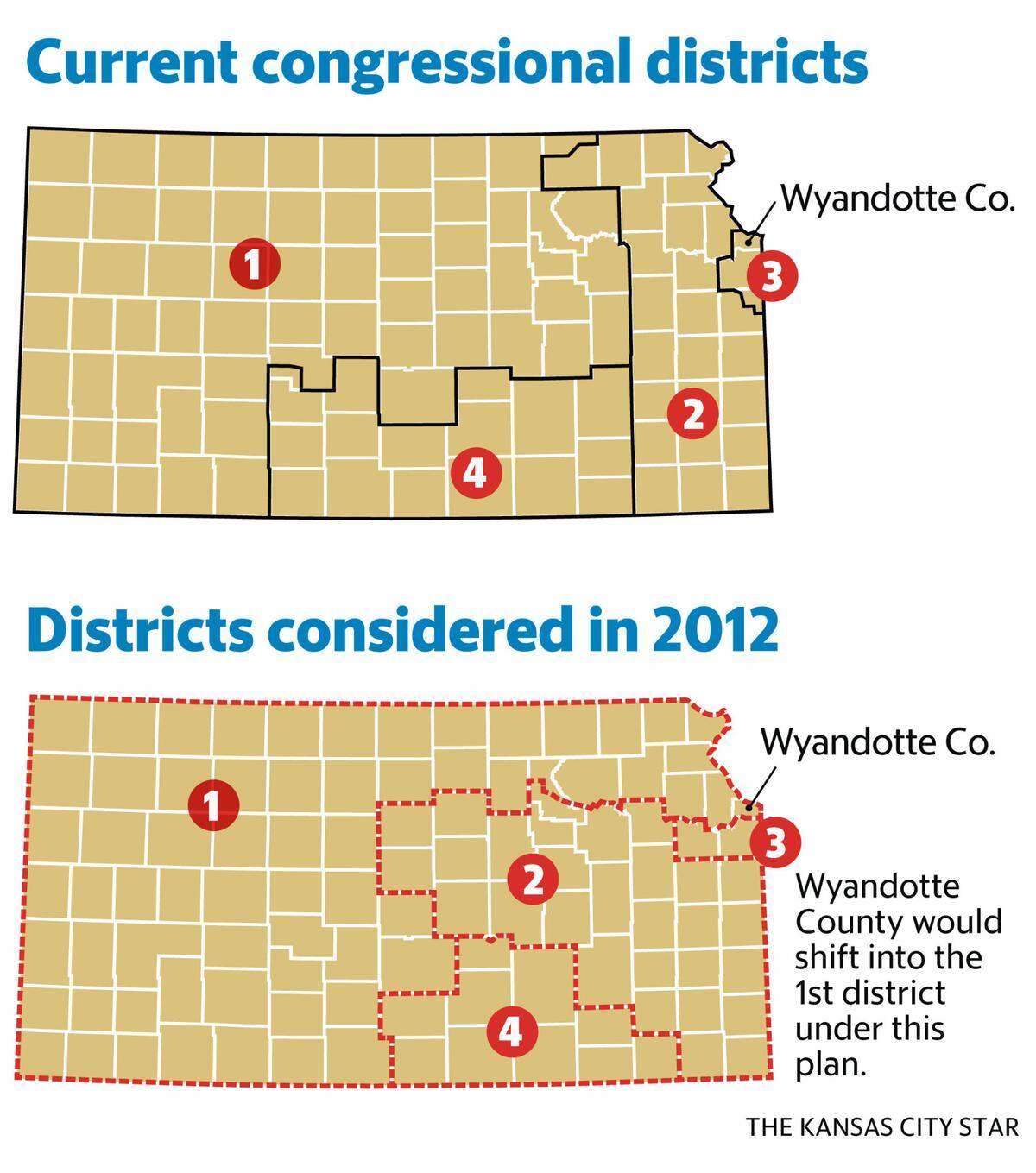
O’Neal, unable to find enough support, abandoned his plan. The Legislature, gridlocked, failed to pass any new congressional maps. Federal judges intervened and imposed boundary lines that kept Wyandotte County in the 3rd District with Johnson County, where it’s been since 1982.
Today, Wyandotte County officials, civic leaders and residents have a simple question: Will they try again?
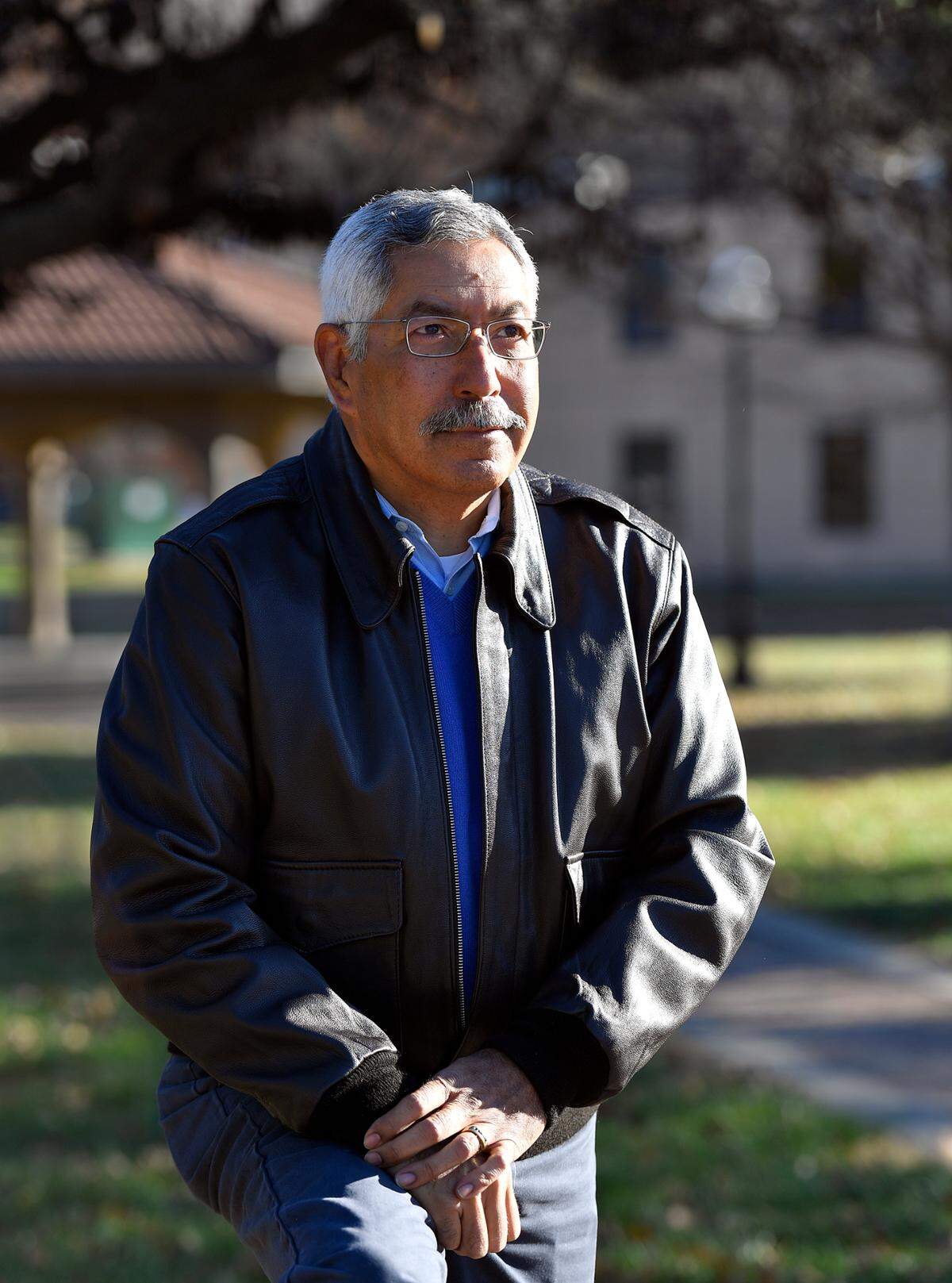
“That is what I have feared the most and what I have argued against as part of this whole process. Because there has to be some rational thought based on how these lines are being drawn,” said Ramón Murguia, an attorney who grew up and lives in Wyandotte County.
Few exercises of partisan power are as raw or cynical as redistricting. Every 10 years, the Kansas Legislature draws the boundaries of the state’s four congressional and 165 legislative districts, based on population changes reported by the latest census data.
In drawing maps, the party in control gets to set the playing field for the next decade.
Wyandotte and Johnson counties together have about 44,000 more people than the 3rd Congressional District is legally allowed. Simply put, it won’t be possible to keep all of both counties together. Wyandotte County Democrats fear this gives lawmakers an opening to get creative.
High stakes always surround redistricting, but it’s especially true this time. Democrats head toward the 2022 midterm elections with only the slimmest control of the U.S. House. If fewer than 10 seats flip, Republicans will be back in charge.
It’s a powerful incentive for Republicans intent on reclaiming the 3rd District from U.S. Rep. Sharice Davids, the state’s sole Democrat in Congress. The party lost the seat in 2018, when Davids defeated Republican Rep. Kevin Yoder. In 2020, she fended off Amanda Adkins, beating the Republican businesswoman by more than 10 percentage points.
In an unusual moment of public candor last year, former Kansas Senate President Susan Wagle said it would be possible for the Legislature, with its GOP supermajorities, to draw maps that allow Republicans to again win all of the state’s seats. Her admission spread alarm through Wyandotte’s political class.
There’s no guarantee Republicans will be successful. Democratic Gov. Laura Kelly can veto proposed maps. Whipping up enough GOP votes to override a veto could prove difficult. It is also possible that Kansas will end up back in federal court, just like it did 10 years ago.
If that happens, then the fuzzy but legally crucial term “communities of interest” could determine Wyandotte County’s fate. It refers to the collection of social, economic and other common characteristics that bind a place together. In 2012, federal judges cited the county’s communities of interest as the basis for keeping it intact and in the 3rd District.
Whatever lies ahead, Wyandotte Democrats are gearing up for a fight. Redistricting always seems to bring the possibility the county will end up on the political chopping block — getting the ax in a Republican quest for total political dominance.
It’s a history some residents know all too well. From the early 1960s until the early 1980s, Wyandotte County was split into two districts by Republicans after Kansas voters elected several Democrats to Congress during the 1950s. Democrats alleged the move was a gerrymander to dilute the power of Wyandotte County voters.
“We tried to push the idea that this was unconstitutional, that a county was split for political purposes, and we pushed hard on it,” Bill Reardon, a former Democratic state representative, recalled recently.
Reardon — like Murguia, a member of a powerful Kansas City, Kansas, political family of the same name — was first elected to the Kansas House in the mid-1970s. He fought for the reunification of Wyandotte County, which federal judges eventually ordered in 1982.
No longer active in politics, Reardon is nevertheless watching redistricting, wary of what lawmakers may propose since the 3rd District is overpopulated. “They’ll have cover,” he said.
If you have too many people, he said, “something’s got to give.”
‘Communities of interest’
The consequences for a Wyandotte that is once again divided — or transplanted into the 1st District — are difficult to forecast. On any particular issue, it would be difficult to say with certainty that district boundaries made the difference.
But over time, Wyandotte County leaders say, the effect would be to blunt the area’s influence in Congress. Local officials, businesses and other organizations would find themselves having to cultivate relationships with two U.S. House members instead of one. While that might not sound like much of a challenge, it can be problematic.
To think about it in concrete terms, imagine Wyandotte County’s Unified Government trying to simultaneously lobby two representatives for a federal highway earmark — and then getting those lawmakers to coordinate their own efforts, especially if they belong to different parties.
Or, if Wyandotte County is placed in the 1st District, residents and officials would need to find ways to keep the attention of a representative watching out for a largely rural expanse. How much time could such a legislator devote to issues important to urban enclaves in a district where constituents expect their representative to be heavily focused on agriculture?
“I think any splitting up will just work against that and work against us getting the kind of congressional help we need,” said state Rep. Kathy Wolfe Moore, a Democrat who represents part of Kansas City, Kansas. “I think we’re stronger as one community speaking with one voice.”
Republicans are remaining tight-lipped about their plans. Senate Vice President Rick Wilborn, a McPherson Republican who chairs the Senate Redistricting Committee, acknowledged that with modern software, it’s easy for anyone to draw maps but said he personally has not and is waiting until the legislative session begins in January.
“It’s going to be challenging, and always has been over the last 20 years I observed it as a citizen, and it’s going to come down to numbers,” Wilborn said of the process.
A series of town halls held by the panels in August were met with criticism because U.S. Census Bureau data was not yet available. Lawmakers scheduled another round of meetings for late November. Legislators will attend virtually.
“There’s going to have to be some carving,” Rep. William Sutton, a Gardner Republican and member of the House Redistricting Committee, said of the 3rd District. “But what that’s going to look like, that hasn’t been discussed at all yet.”
One person, one vote
Each of Kansas’s four congressional districts must include one-fourth of the state’s population. According to the 2020 Census, that’s 734,470 people per district.
The number isn’t a guideline or a suggestion. It’s effectively an iron-clad rule.
“One person, one vote” is a foundational principle of redistricting, upheld by the U.S. Supreme Court. It means that everyone’s vote should carry the same weight.
While lawmakers are bound to that principle, they have wide latitude in how they draw the boundaries. Lines that slice through counties, cities, even neighborhoods can be tolerated if necessary to comply with “one person, one vote.”
But that discretion isn’t absolute. Districts must be contiguous and, under the federal Voting Rights Act, the way maps are drawn must not be racially discriminatory. (Gerrymandering boundaries for partisan purposes is another story. The U.S. Supreme Court has effectively said it is not a matter for the federal judiciary.)
Another widely respected, if not always practiced, principle is that lawmakers should preserve communities of interest — the web of common social, economic and other characteristics that brings an area together. For decades, Kansas legislators and federal judges have argued the Kansas side of the Kansas City metro area — Wyandotte and Johnson counties — comprise a community of interest.
For many residents, it’s not just a theoretical concept but a lived reality.
“So many times we are divided by small municipality lines or county lines or state lines that are to the detriment of all of us,” said Murguia, the Wyandotte County attorney.
Murguia’s work and interests take him all across the metro. He is chairman of the board of Union Station and has sat on the board of the Greater Kansas City Hispanic Development Fund. He has witnessed how the state line already deals Kansas City a “difficult hand” when it comes to the region speaking with one voice.
“But we don’t have to complicate that further by even on the Kansas side having to deal with two or three representatives over what is a common Kansas City metropolitan issue,” Murguia said.
At a more basic level, the everyday lives of thousands of Wyandotte and Johnson county residents are bound together in countless ways. They cross county lines to get groceries, to work, to worship, to go to the movies. And on and on.
Stacey Knoell, director of the Kansas African American Affairs Commission, has described the connections as “fluid transitions and close associations across the county line.” For example, her mother recently moved to Olathe from Kansas City, Kansas, but her doctor and church are still in Wyandotte County.
“There is a shared mindset within the two counties — that being that we are a metropolitan community with a focus on a ‘city or suburban’ lifestyle. We are not rural in composition or worldview,” Knoell told lawmakers at an August hearing on redistricting.
Moving southern JoCo?
Whatever action lawmakers take will have consequences. If they prioritize keeping Wyandotte County entirely in the 3rd District, the map will have to shift somewhere else.
O’Neal, the former House speaker who championed the unsuccessful effort to drop Wyandotte County into the 1st District in 2012, said Monday that “I’ll take whatever slings and arrows” but that there had to be a map that showed the “what-ifs.”
“Even I thought it looked like hell. I mean, it just wasn’t pretty,” O’Neal said of his proposed map.
If Wyandotte County is held harmless in redistricting this time, it will squeeze other districts, he said in a previous interview.
He cited the state’s history of communities that have toggled between congressional districts. Lawrence, one of the state’s few Democratic strongholds, used to be split between the 2nd and 3rd districts.
And Reno County, which O’Neal represented when he was in the House, has gone back and forth between the 1st and 4th districts, he noted.
“It wasn’t as contentious, I guess I would say, as the argument that swirls around the 3rd District, and I get that,” O’Neal said. “It is what it is.”
Democrats have suggested that the Legislature move parts of southern and western Johnson County out of the 3rd District and into the 2nd in order to leave Wyandotte County intact. They contend those areas are more conservative and would be more at home in the 2nd District, which has been represented by a Republican since 2009.
At least some Republicans are on board with the idea. Sutton, the state legislator from Gardner, said he wouldn’t have any issue if his area moves into the 2nd District.
“I’m not getting heartburn off of that. Absolutely not,” he said.
Michael Smith, a political scientist at Emporia State University who has studied Kansas redistricting, has drawn a map that would move the Johnson County cities of Gardner and Edgerton, the Johnson and Miami counties city of Spring Hill and the Johnson and Leavenworth counties city of DeSoto into the 2nd District — shifting enough population to allow the rest of Johnson and all of Wyandotte to remain together in the 3rd.
He said if population is taken solely from Wyandotte County, it would require a significant division. Simply trimming off western areas of the county, such as Bonner Springs, wouldn’t be enough.
The 2nd District would have to move all the way east to around Kansas City Kansas Community College, located near the corner of College Parkway and State Avenue.
“You have to sever it in half,” Smith said. “So doing it by splitting Wyandotte County would really chop up Wyandotte County.”
‘The logic is unavoidable’
Wyandotte’s current redistricting uncertainty reflects the past experience of Kansas Democrats.
During the 1950s, Democrats won congressional elections in four of Kansas’ then-five districts. Even the rural, conservative Big First elected a Democrat, the only time in state history it did so.
When the time came to redraw the map in 1961, the Republican-controlled Legislature partitioned Democratic-leaning Wyandotte County, placing the more rural western half in the 2nd District and the urban east in the 3rd.
“I remember my dad complaining about that,” said Reardon, the former state legislator whose father had been a long-time county commissioner.
What happened 20 years later offers a glimpse of what might be set in motion if the Legislature tries to again divide Wyandotte or lift it out of the 3rd.
As redistricting played out in 1982, Reardon, now in the House, was determined to bring the county together again. Resistance was beginning to fade, he said, in part because the growth of conservative Johnson County since the 1960s ensured Republicans would remain dominant in the area, even if Wyandotte County were reunited.
But the maps that actually passed the Legislature continued to divide Wyandotte County. Democratic Gov. John Carlin vetoed a reapportionment bill that February. In his veto message, he wrote the Legislature “seems to have forgotten” the principles of avoiding breaking apart cities and counties and keeping districts compact.
Lawmakers sent him a new map. It still split Wyandotte County, along with Sedgwick and Reno counties. Again, he vetoed it.
“Conceptually, it’s something I’ve always believed in, that you don’t divide,” Carlin said in a recent interview. “As best you can … you keep the community together so they really have somebody who can speak for the community and be more effective.”
With Carlin and the Legislature at odds, four voters from different parts of the state sued in federal court. Elections loomed later that year, and with the clock ticking, the lawsuit gave judges an opening to take control and draw maps for the state.
Carlin, technically a defendant in the lawsuit, joined the plaintiffs in arguing the maps he vetoed raised “serious questions regarding the dilution of minority votes.” Black residents made up nearly 25% of the county’s population at the time, and a third of all Black residents in the state lived in Wyandotte County.
When a three-judge panel ruled in June 1982, they found that splitting Wyandotte County’s large minority population was undesirable unless required for some significant reason. Instead, they found a compelling case for keeping the entire county together, as both Reardon and Carlin wanted.
“Whatever the historical justification for dividing the county (apparently along rural versus urban lines), the expert testimony indicated that in several respects Wyandotte County is unique,” the judges’ opinion read.
“It is densely urban, industrial, economically depressed, and contains approximately one-third of the black minority population in the state,” they wrote. “Except for historical reasons, the division of Wyandotte County between the Second and Third Districts … makes no sense at all.”
The judges also declared “the logic is unavoidable” that Johnson County and Wyandotte County should be grouped together in one district.
“The ties that bind the two counties together economically, politically and culturally are significantly greater than those that divide them,” they wrote.
‘The most urban of counties’
When the federal judges again drew Kansas’ maps in 2012, they took a similar position. They concurred with the 1982 decision that Wyandotte should be a single district to avoid diluting minority votes and that it should be paired with Johnson County.
If Kansas again winds up in federal court, judges are certain to pay attention to those past decisions.
Wyandotte County remains the most diverse county in the state. Black residents today make up 20.4% of its population, according to the 2020 Census. Hispanic residents constitute 33%. It has the highest score among Kansas counties on the Census’s Diversity Index.
“How would a fully urban, or the most urban of counties in Kansas, fit with a congressional member who might be decidedly rural?” asked state Sen. David Haley, a Democrat from Kansas City, Kansas.
“I just don’t think that we would be found to be a community of interest.”
The Star’s Katie Bernard contributed reporting