When will Kansas recoup taxes from STAR bonds projects? May be next century, auditors say
Kansas may spend decades — or even more than a century — recouping the sales tax revenue it gave up developing large attractions under a controversial incentive program, state auditors estimate.
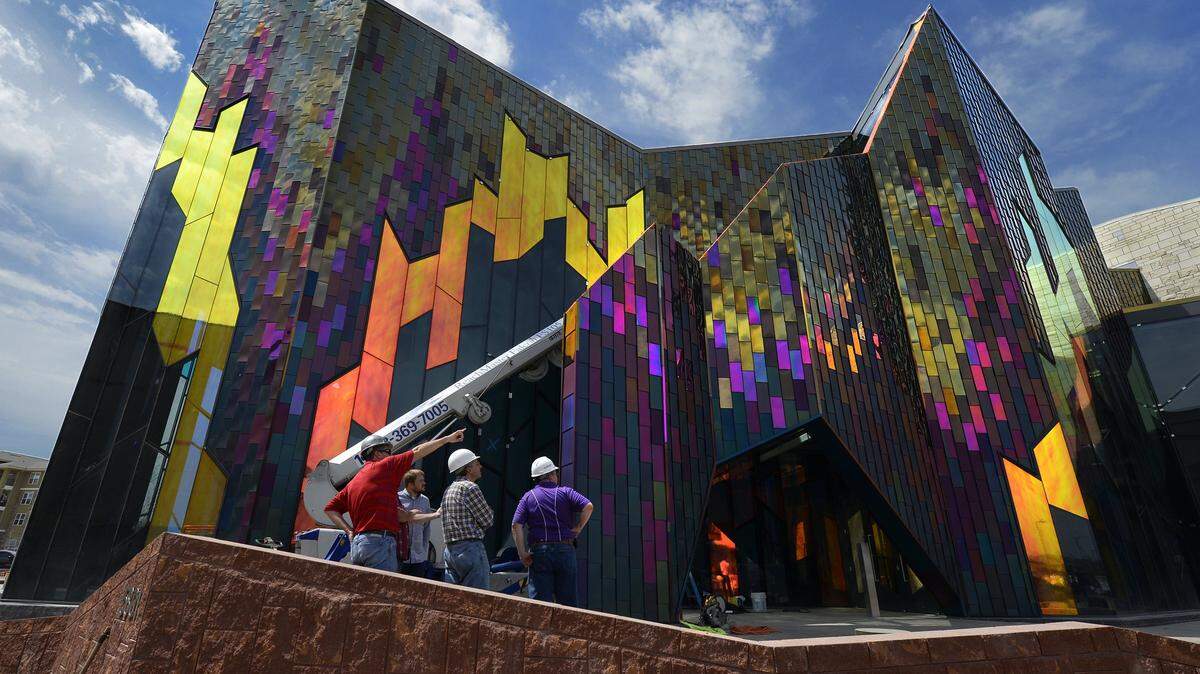
The Prairiefire museum in Overland Park? Its sales tax break-even year may not come until 2104.
The Wichita Sports Forum? It could be as late as 2076.
The Hutchinson Underground Salt Museum? Your great-grandchildren will be around in 2132.
Auditors for the Kansas Legislature released a critical evaluation of the state’s Sales Tax and Revenue (STAR) bonds program Monday that is certain to fuel calls for further reform of the incentive. Some lawmakers view the program as a revenue giveaway to entice business growth that would have happened anyway.
State economic development officials say STAR bonds lure unique attractions Kansas couldn’t have secured otherwise. They dispute the evaluation’s sales tax break-even estimates.
STAR bonds have provided more than $1 billion in financing for more than a dozen projects since their creation in 1993. Auditors with Legislative Post Audit (LPA) found that while the projects benefit communities through job creation and local tourism, most don’t draw many out-of-state tourists, significantly limiting their ability to generate new revenue for Kansas.
The program works by allowing cities to issue bonds to finance construction and redevelopment that are then paid back with future sales tax revenue generated by the attractions as well as new businesses that locate nearby. Village West in Wyandotte County — including the Kansas Speedway, the Legends and other developments — is perhaps the most prominent example.
The evaluation is part of an ongoing review of Kansas economic development incentives by auditors, but it was perhaps the most anticipated report so far. STAR bonds attract the scrutiny of lawmakers practically every year. Only two states, Illinois and Nevada, have similar programs but neither has used theirs since 2010, according to the evaluation.
“We estimate it will take decades for the state to recoup the sales tax revenue it gave up for 3 STAR bond districts we evaluated,” the report says.
Auditors estimated that at a minimum it will take Prairiefire until 2046 and the Hutchinson Salt Museum until 2057 to break-even on the sales tax revenue the projects gave up through STAR bonds. The Wichita Sports Forum could break even as early as 2030.
Auditors didn’t calculate estimates for every STAR bonds project, but chose those three because they are “typical” districts that still vary in size and attraction type. At all three locations, they found the area would likely have developed without STAR bonds, though auditors acknowledged the financing may have sped up growth.
“The Prairiefire district was an undeveloped area before its bonds. But Overland Park officials said this area likely would’ve developed without STAR bond financing at some point,” the evaluation says.
About $65 million in STAR bonds were issued in 2012 for the project, though it has only attracted what auditors called a “modest” number of out-of-state visitors. During the pandemic in 2020, it collected about $2.2 million in tax revenue.
Overland Park City Manager Bill Ebel said the evaluation shouldn’t exclude the benefit of property taxes to the state. Not including property tax information underestimates the benefit of the Prairiefire district to the state, he contends.
Ebel also said it’s not clear how much the development in the Prairiefire area would have been retail without STAR bonds. He said that while it’s “probably true” the area would have developed, the report assumes the growth would have produced a similar sales tax revenue.
“This assumption cannot be verified and has a significant impact on the report’s ‘break-even’ analysis,” Ebel wrote in a written response included in the evaluation.
The evaluation found that only three of 16 STAR bonds projects met the Kansas Department of Commerce’s tourism-related goals in at least one of two years reviewed. The agency calls for attractions to draw 20% or more of its visitors from out-of-state and 30% or more of visitors from at least 100 miles away.
Only the Hutchinson salt museum, the Heartland Park race track in Topeka and the Kansas Speedway met both of those goals in either 2018 or 2019, according to auditors, who used data from StreetLight, a company that relies on cell phone and vehicle GPS location data to estimate visitation.
“STAR bond attractions likely provide local benefits, but that doesn’t satisfy the program’s unique purpose of stimulating the Kansas economy through tourism,” the evaluation says.
The Department of Commerce, in a written response, said auditors relied on unsubstantiated assumptions in its “break even” analysis, including that only out-of-state visitors create new economic activity in Kansas and that much of the development around STAR bond attractions would have happened without the incentives.
“Nothwithstanding LPA’s extremely narrow perspective of considering only sales tax revenues, from a higher-level perspective, the STAR Bond program is a net positive sales tax generator,” Lt. Gov. David Toland, who is also the commerce secretary, wrote.
Toland noted that the Village West project, which auditors didn’t study, returns more sales tax revenue to Kansas on an annual basis than the state “forgoes” on every other STAR bond project.
“STAR Bond Districts have created tens of thousands of jobs, millions of dollars in state withholding taxes, increased property taxes and a plethora of other positive economic impacts,” Toland wrote.
The Department of Commerce also contends auditors were overly focused on the program’s tourism-related goals. Toland noted that STAR bonds were also implemented to promote the “general and economic welfare” of Kansas and that auditors didn’t fully discuss how the projects improve quality of life for residents.
Legislative Post Audit said auditors focused on tourism because of their limited time to evaluate the program and because the tourism focus sets STAR bonds apart from other incentives.
The Legislature passed and Gov. Laura Kelly signed into law changes to the program this spring that will require feasibility studies for proposed projects to include the anticipated effects on the regional and statewide economy. The law also requires projects to report how they plan to track visitors and report those figures on an annual basis.
Auditors on Monday recommended lawmakers consider changing the law to clarify the program’s goals, such as including specific benchmarks of success. Sen. Caryn Tyson, a Parker Republican, said the program has gone beyond its original intent.
“We’re looking at theaters, we’re looking at furniture stores, we’re looking at car dealerships,” Tyson said. “Those are not the items that bring people, tourism in.”
This story was originally published August 31, 2021 at 5:00 AM.