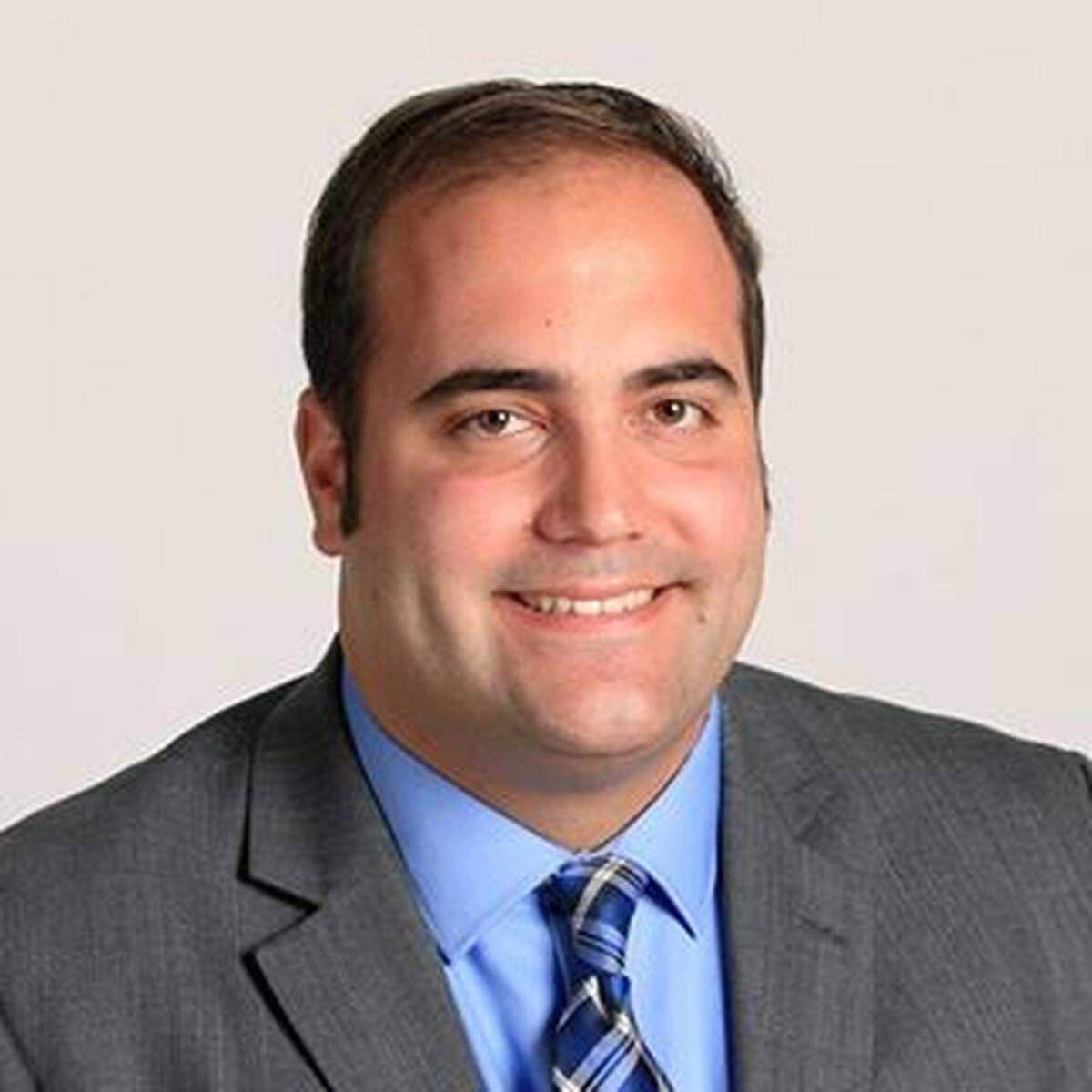
Kansas Rep. LaTurner said he’d skip earmarks, but bill steers millions to his projects
A transportation bill which could soon pass the U.S. House includes roughly $20 million in earmarked funding requested by Rep. Jake LaTurner, the Kansas Republican congressman who earlier said he would not participate in the process this year.
Earmarks are a method by which lawmakers can steer discretionary funds to specific projects in their districts. It fell out of favor a decade ago with the wave of anti-spending Tea Party candidates elected to Congress.
The practice returned this year, however, restored by Democrats after they captured both chambers of Congress. That placed Republicans, who have long inveighed against government spending, in a politically tricky spot: Do they abstain and pass up opportunities to fund popular projects in their districts? Or participate and risk charges of pork barrel spending?
LaTurner, a freshman Republican who represents Lawrence and Topeka, told The Star in April he planned to sit out of the process this year because majority Democrats weren’t allowing enough time to vet projects.
“I’m not inclined to do it, period. We’re not going to do it this year,” LaTurner said at the time. “But we will take another look next year.”
However, LaTurner ended up submitting 12 earmark requests for transportation projects in his district, totaling more than $21.7 million.
Most of these requests have received preliminary approval from the House Transportation and Infrastructure Committee, which means $19.6 million in federal funding will pour into LaTurner’s district if the transportation authorization bill passes in its current form.
That includes $3 million to replace buses in Topeka, $1 million to replace a bridge in Leavenworth and $750,000 to improve Route 458 in Lawrence, among other projects.
Asked to clarify why LaTurner offered earmark requests despite his previous comments, the congressman’s chief of staff Braden Dreiling drew a distinction between the transportation earmarks and those in a separate and larger appropriations bill, which is being handled by a different committee.
“Representative LaTurner said this winter he would not request earmarks during the appropriations process because our office did not have the time to vet them and he stuck to his word. However, as Congress moved onto the transportation plan we had additional time and chose to submit office and state-vetted, approved, and sponsored transportation projects previously qualified to receive federal funds,” Dreiling said in a statement.
The transportation authorization bill, which funds federal highway spending, is passed by Congress every five years and is distinct from President Joe Biden’s massive infrastructure proposal, which could potentially bring additional federal money to the region.
In addition to LaTurner’s earmarks, the bill includes $15 million to upgrade the U.S. 69 interchange at 167th Street in Overland Park at the request of Kansas Democratic Rep. Sharice Davids.
It also provides $10.5 million for zero-fare electric buses, which will serve both sides of the Kansas City metro, after dual requests from Davids and Missouri Democratic Rep. Emanuel Cleaver.
Davids said in a statement that “both projects would make lasting improvements to safety and bring good-paying, stable jobs to our region.”
The bill also includes $6 million for the pedestrian plaza in Kansas City’s Jazz District among other Missouri projects submitted by Cleaver.
Two projects that didn’t make the cut were a pair of highway expansions, submitted by Davids on behalf of the City of Lenexa. They would have totaled $600 million, an enormous sum compared to Davids’ other requests.