After brutal year, Kansas and Missouri public health officials consider their future

When Kansas City Health Department Director Rex Archer retires at the end of July, he will join the growing ranks of public health officials who have departed during the pandemic.
Some found the stress overwhelming or faced threats and public vitriol. Others, including Archer, finally decided to step down after putting off overdue retirements.
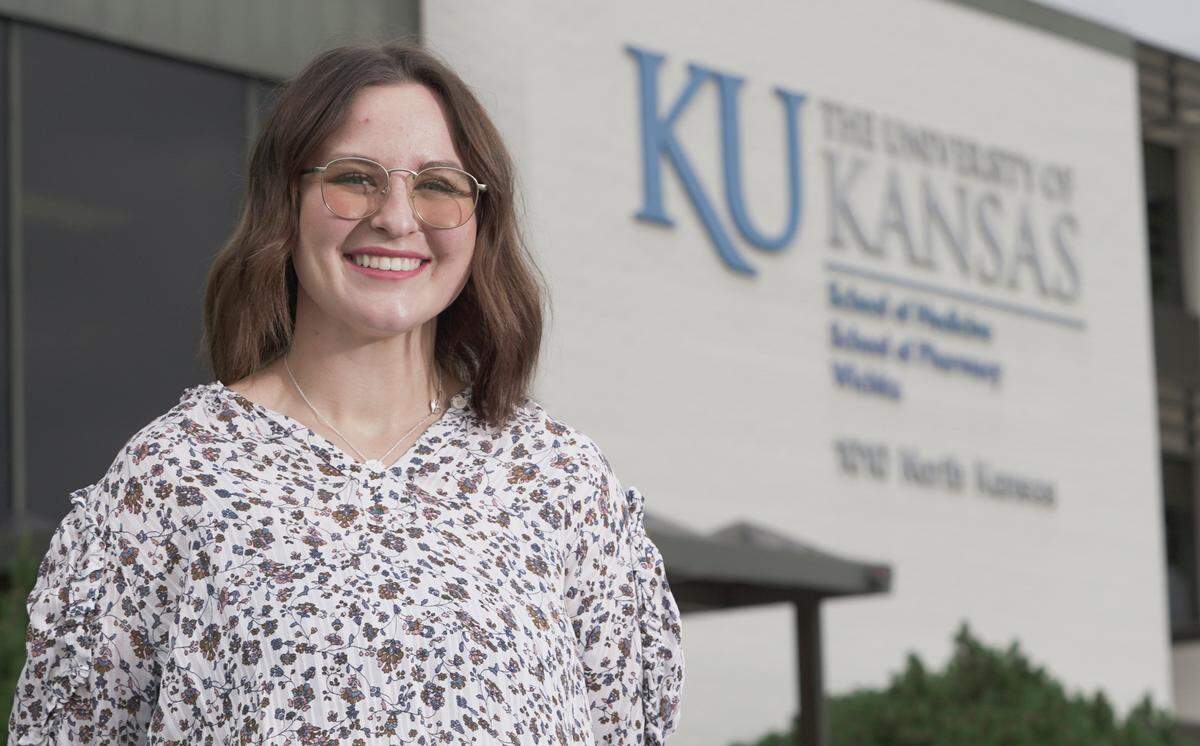
They’ll be replaced by people like Taylor Carter, a public health graduate student at the University of Kansas School of Medicine.
Carter, 24, and her peers will form the next generation of health leaders. They are entering the field eyes wide open after observing up close the biggest health crisis the United States has faced in more than a century.
“It sounds kind of wild, but being a public health student during this pandemic felt empowering and exhausting simultaneously,” said Carter, who is also a public health associate at the Center for Public Health Initiatives at Wichita State University.
The public health systems in Kansas and Missouri are battered after enduring a 15-month stress test. COVID-19 pushed agencies and staff to the breaking point as local health departments strained, sometimes in vain, to contain a novel virus that spread easily through the population.
Efforts to fight the virus, such as mask mandates, provoked anger among many residents across the two conservative states. Basic public health interventions, such as limiting the sizes of public gatherings, were sometimes cast as heavy-handed government overreach trampling on personal freedom.
But as vaccinations rise and cases fall, those in public health — both lifetime professionals and those early in their careers — are beginning to imagine the future after a punishing pandemic that exposed shortcomings and exacerbated long-term problems in both states.
Health leaders will need to be politically adept, they say. By their nature, public health professionals prefer to stick to health. But clashes over restrictions, masks and even vaccines have made clear their decisions don’t exist in a political vacuum and cultivating the support of elected officials and the public will be crucial when the next crisis comes.
Those in the field also say the pandemic underscored the importance of high-level management and organizational skills. Fighting an outbreak requires a quick response and future health leaders will have to act confidently despite the risk of public and political blowback.
They must also confront a history of chronic underfunding that left local agencies weakened when they faced their greatest challenge. Those in the profession are waiting to see whether the crisis will lead to change or slowly fade from memory. At stake is not only the ability of the system to respond to the next outbreak, but also its power to attract and retain future talent.
How public health professionals respond to these challenges will go far in determining whether Kansas and Missouri are prepared for the next major crisis.
“We were already very concerned about the loss of institutional knowledge, a lot of people retiring. So this just compounds that for a public system that’s been underfunded for decades,” Sanmi Areola, director of Johnson County’s Department of Health and Environment, said of the pandemic.
“It’s going to be a challenge.”
Dealing with politics
Pressure on local health leaders was intense.
Top officials from roughly a third of local Kansas departments quit during the pandemic as of this month, according to the Kansas Department of Health and Environment. At least a dozen Missouri health leaders had quit as of last October.
Randall Williams, director of the Missouri Department of Health and Senior Services, abruptly resigned in April after four turbulent years in charge, including the past year when he spearheaded the state’s pandemic response. While Gov. Mike Parson, a Republican, praised Williams, the circumstances surrounding his departure have remained unclear. Parson’s administration refuses to release his resignation letter.
In Kansas, Gov. Laura Kelly, a Democrat, ordered a series of statewide precautionary restrictions early in the pandemic, including a stay-at-home order. Health officials were tasked with encouraging compliance in the conservative state, irritating some residents in counties that early on had no or few cases.
By late spring, the Republican-controlled Legislature restricted Kelly’s emergency powers and allowed counties to opt out of statewide orders. In some cases, that shifted public attention to local health officers, who had to decide whether to endorse the statewide orders while in front of county commissions, which voted on whether to opt out.
The most intense confrontations came over mask mandates during the summer and fall. Like the rest of the country, masks were politicized in both Kansas and Missouri. Kelly issued multiple statewide mandates that drew scorn from Republicans.
Parson resisted issuing statewide orders despite intense pressure from Democrats and the health care community.
“Mostly as public health professionals, we’re science and evidence-based. And yet a lot of people make decisions that are completely the antithesis of science and evidence-based,” said Lee Norman, secretary of the Kansas Department of Health and Environment. “And it becomes somewhat of a frustration.”
Norman has spoken of receiving threats and having a security detail assigned to him. Other health officers resigned after facing uncooperative county commissioners or an angry public. Shawnee County Health Officer Gianfranco Pezzino abruptly resigned in December when commissioners in his county lifted some restrictions.
That’s the public health world Carter is stepping into.
“I think politics and public health are kind of like eyebrows in a way,” Carter said. “They’re very similar and they’re right next to each other, but they’re not quite twins.”
More departures likely
The pandemic has made the connections between public health and politics impossible to ignore. Carter interned with the Sedgwick County Health Department as a contact tracer last spring and summer. She saw firsthand how a new law passed in response to privacy concerns changed her job.
The measure, passed by the Legislature in June 2020, made contact tracing voluntary and imposed criminal penalties for violations.
“The way the disease containment efforts were carried out were directly impacted by the policies that the state legislature passed,” Carter said. “And it made it tremendously difficult to really try to effectively contain the virus.”
Contact tracing is just one example of how political pressures altered the jobs of public health workers. Kansas lawmakers have also effectively gutted the power of local health officers, who could once issue orders but must now propose them to county commissions.
“I think that’s the biggest weakness we have right now in our system in our country is that the directors of the health department don’t have any protection to standing up and speaking truth to power,” Archer said.
At least 15 state legislatures have passed or are considering severe restrictions on the authority of public health agencies, according to a report released Friday by the National Association of County and City Health Officials. CEO Lori Tremmel Freeman predicted even more health officials will depart once the pandemic eases both because of politics and not wanting to quit in the middle of a crisis.
Freeman said NACCHO along with the Centers for Disease Control and Prevention surveyed the mental health of public health workers. While the results will be published by the CDC in the near future, she called them “troubling and disheartening.”
“A significant number have suffered some form of depression,” Freeman said.
To young students looking at public health, the past 15 months could look “pretty daunting,” said Tanya Honderick, site director for KU’s Master of Public Health program. But she also sees a lot of opportunity given the heightened awareness surrounding the profession.
Nationally, applications to graduate-level degree programs in public health have surged 40% in 2021 compared to March 2020, according to the Association of Schools and Programs of Public Health. Honderick said KU’s numbers have held steady, which she said was encouraging given the economic challenges of the past year.
“Definitely that was a theme of our past round of applications,” Honderick said of the pandemic. “As we talk to students … it certainly has been a trend in the conversation.”
Public health underfunded
Even as the pandemic drives interest in public health, keeping graduates working for often under-resourced agencies could prove challenging.
Kansas and Missouri both rank near the bottom in per person spending on public health. Kansas spends $64 and Missouri $61. That places the states 40th and 41st, respectively, according to America’s Health Rankings, produced by the United Health Foundation.
The highest-ranking state, Alaska, spends $289 per person.
While health departments around the country have received billions of dollars to combat COVID-19, those funds are designated for the pandemic. Health leaders fear agencies won’t emerge from the crisis with permanent funding that’s more robust.
Even before the pandemic, health officials had been trying to raise awareness of the two states’ low funding. Kansas, in particular, hadn’t increased a key source of funding to local health departments in nearly 30 years.
Nearly two-thirds of Kansas counties were receiving just $7,000 a year from the State Formula Grant, a program that provides health departments with discretionary funding. That is growing to $12,000 for those agencies after the Legislature approved an increase.
“An infusion of additional resources is an imperative, no question about that,” said Areola. “Not just to address everyday public health issues … but also to be ready for the next pandemic, the next unexpected public health emergency.”
Johnson County, which was receiving about $406,000 under the state formula grant, is set to get an additional $153,000.
“The cost of services and demand continues to grow, but the financial support just hasn’t always been there,” Carter said of public health funding. “Knowing that definitely makes me feel a little more hesitant about dedicating my career to it.”
Still, Carter sees room for opportunity.
“That’s kind of what keeps me in it,” she said.
This story was originally published May 30, 2021 at 5:00 AM.