Missouri lawmakers vow restrictions after Lucas moves for more KCPD spending control
READ MORE
Politics of the KCPD
The Kansas City Police Department is controlled by a five-member board of police commissioners, four of whom are appointed by Missouri’s governor. The arrangement is highly unusual for a big city and periodically becomes of a point of public debate.
Expand All
Local control of the Kansas City Police Department will go nowhere in the Missouri General Assembly, lawmakers vowed Monday, after Mayor Quinton Lucas and a supermajority of the City Council voted to give City Hall a say in part of the department’s budget.
Two Kansas City-area lawmakers said they will file legislation to stop such police budget changes in the future. They also are considering penalties for requiring that the Board of Kansas City Police Commissioners negotiate with the city over how to spend $42.3 million in department funds.
Last Thursday, Lucas introduced two ordinances to reduce the KCPD’s $239 million budget by $42.3 million, down to what would be 20% of the city’s general revenue — the minimum percentage that Missouri law requires Kansas City to spend on policing.
That money is to be placed in a newly created fund and held there until the Kansas City manager and the police board can negotiate a contract that spells out how that money can be spent. It amounts to nearly 18% of the police budget.
Lucas has said his goal was more accountability from KCPD in how it uses city taxpayer money.
While the council votes on how much money to send to KCPD every year when it sets the city-wide budget, it’s the police board supervises the operations of the department. Police commissioners are appointed by the Missouri governor, except for the mayor of Kansas City, who always has a spot on the board.
The KCPD was put under state control in 1939 as a response to the machine politics and corruption in Kansas City that existed at the time.
The council pushed the proposals through on the same day Lucas unveiled them, on the strength of a supermajority of council — nine of the 13 votes. It’s rare for the council to pass significant measures on the same day they’re introduced.
Four council members, all of them governing from Northland districts, cast Lucas’ efforts as attempts to “defund the police,” a characterization that Lucas and others have disputed.
Backlash from state lawmakers siding with the Northland members was swift, setting up a potential series of fights between local and state officials over control of KCPD.
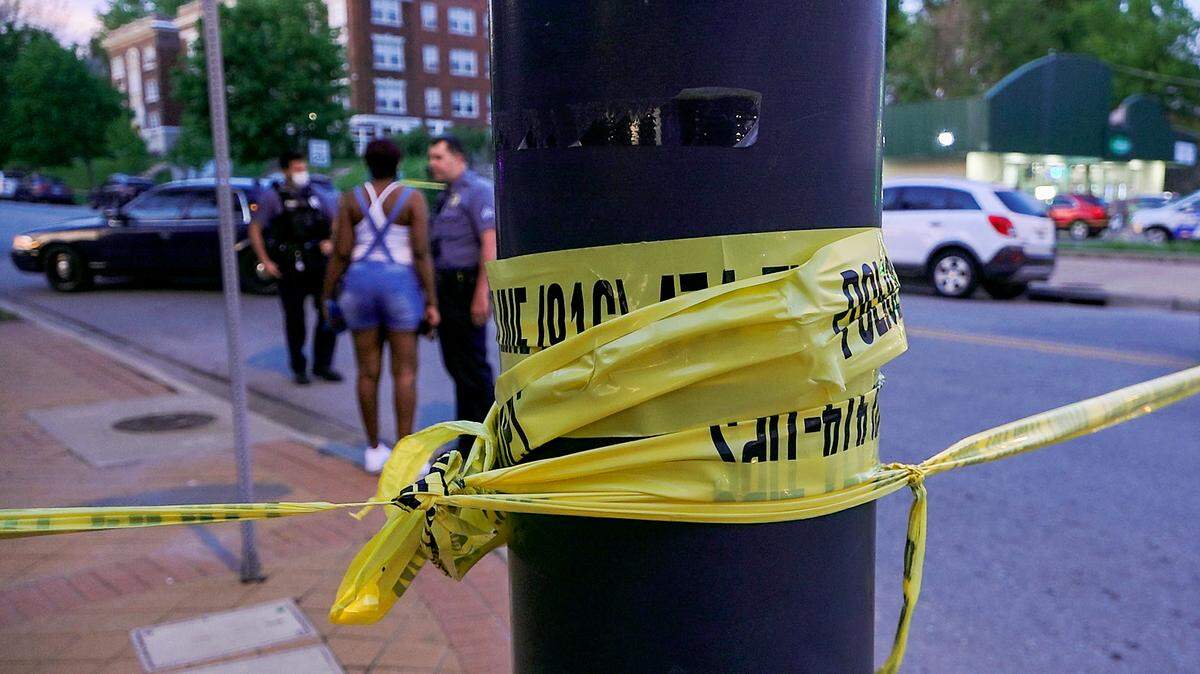
Lawmakers decried the moves as sure to result in officers being pulled from the streets at a time the city is experiencing record levels of homicides.
But the city’s finance director, Tammy Queen, wrote in a Monday email to Lucas that the $42.3 million temporary reduction will have “little to no impact on [KCPD’s] ability to make payments and meet payroll.” The rest of the department’s budget allows all police costs to be paid through next January, she said.
Opponents said the moves were an effective cut from the department’s budget. Rep. Doug Richey, an Excelsior Springs Republican, contended state law, which gives the board of commissioners “exclusive management and control” of the Kansas City police force, prohibits the commissioners from negotiating over how to spend the money.
“The mayor and City Council do not have authority in their capacities to usurp the authority of the police board,” he said.
State Sen. Tony Luetkemeyer, a Parkville Republican whose district includes parts of the Northland, suggested the police commissioners could sue the city in response.
“I’m vehemently opposed to local political control of the police department,” Luetkemeyer said. “This is another example of why this liberal City Council cannot be trusted to control the largest police department in the state.”
Lucas pushed back on Luetkemeyer’s comments.
“OK, what the hell are you doing to actually keep people from getting murdered in Kansas City?” Lucas said. “What are you doing to make sure that there aren’t more shootings in my neighborhood or yours? Those are things I wish they took more interest in.”
Luetkemeyer this year sponsored a bill to lift KCPD’s residency requirement, which lawmakers have sent to Parson’s desk over the strenuous objections of Lucas and other local officials.
Now, Luetkemeyer is one of several lawmakers pursuing legislation to increase the minimum revenue the city must put toward the police department, and to require the city to count more forms of local revenue in that calculation.
“I want that amount to be reflective of what the current needs of the department has been in recent years,” he said. “It hasn’t been updated in decades. Twenty percent clearly is not sufficient.”
Lucas said the proposal may be unconstitutional.
Under the newly adopted budget changes, the rest of the city’s appropriation to KCPD -- nearly $197 million -- can still be spent largely in whatever fashion the KCPD decides, although about $40 million is for pension costs. Lucas’ two ordinances also add $3 million to the KCPD budget, an amount that could be used to hire a new recruiting class from the police academy.
KCPD Chief Rick Smith said in a blog post on May 14 that he has been unable to hire new recruits since February 2020.
Luetkemeyer plans to introduce the proposals at the latest during the next legislative session in January 2022, but is also considering asking Parson to call a special session on the issue sooner.
Parson’s spokeswoman last week called Lucas’s moves “dangerous and irresponsible” but has not said whether he will entertain a special session.
“We’re just going to continue working with the governor’s office to get the swiftest resolution we can possibly get,” Luetkemeyer said. “All options are currently on the table.”
Those bills would only apply to future police budgets if passed.
Richey said he is looking for ways for the state to boost KCPD’s budget in the meantime. He floated using Missouri’s federal COVID-19 aid to replace the $42.3 million.
Any additional funding, he said, “will come with the expectation that KCMO will be on the hook for the money we are able to shore up the budget with, or they would lose another form of funding to offset that … I’m not interested in giving the City Council a windfall of $44 million having taken it from the police department.”
Lucas said Richey’s proposal may be not pass muster, given that federal relief funds come with conditions on how they’re used.
“My biggest concern is, why are they so concerned with Kansas Citians having the same rights as the people of Excelsior Springs have, the people of Parkville have,” Lucas said. “And maybe the senators can tell me at some point but I think this is part of unfortunate culture war type of issue.”
This story was originally published May 24, 2021 at 1:33 PM.