Wyandotte County DA is left out of law enforcement task force seeking ‘objective’ view
A task force on police and community relations in Wyandotte County will include the sheriff, the Kansas City, Kansas, police chief, and the mayor of the Unified Government.
But it will not include the Wyandotte County district attorney.
Mark Dupree, who has clashed with police and pushed for reforms since he was elected in 2017 as the state’s first black district attorney, was left off the list of members announced Monday.
In a statement to The Star, the office of David Alvey, the Mayor and CEO of the Unified Government of Wyandotte County and Kansas City, Kansas, said the task force will be charged with gathering community input and passing that input on to local officials. The members will not be making recommendations for change based on that input.
The group, the statement said, is intended to be an “objective panel” — a consideration that contributed to Alvey’s decision not to include Dupree.
“Mayor Alvey wanted to ensure the district attorney had the opportunity to continue to independently advocate for reform throughout this process, not only as a member of the task force charged with listening and collecting information,” the statement said.
“The intent was to allow the district attorney to remain independent, providing inputs and recommendation as part of the task force’s future public forum process, actually ‘presenting’ before and to the task force and offering his perspective and insight as it moves forward.”
The mayor’s office did not immediately respond to questions regarding what criteria was used to determine whether a task force member was objective and whether any of the chosen members have a history of advocacy.
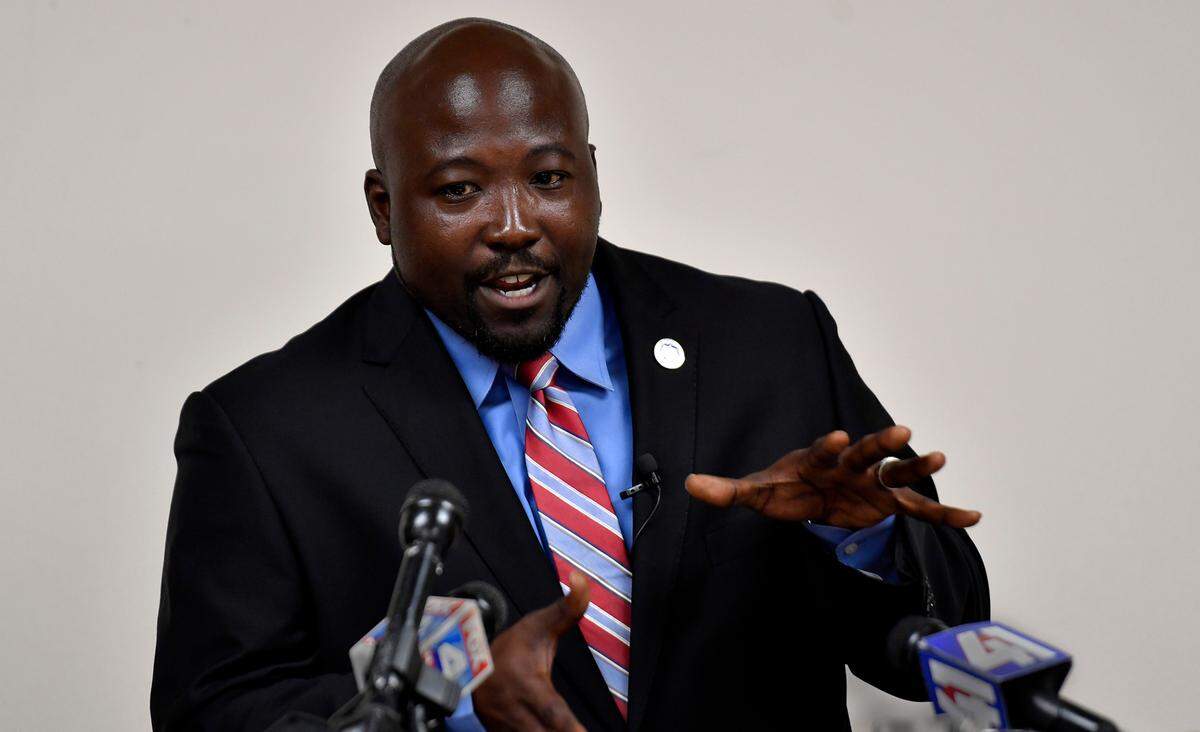
Dupree’s office declined to comment on the task force.
Kansas Sen. David Haley, D-Kansas City, said Dupree’s exclusion from the task force indicated that those planning it lacked an understanding of the scope of the issue at hand. He cited Dupree’s history as an advocate for reform as the very reason he should be included.
“He should be at the table,” said Haley, who represents Wyandotte County in the state legislature. “That is part of the problem you have the same players who have not really shown productivity in community relations before come to the table and meet again. They may not necessarily be productive.”
“Anyone that purely recognizes the scope of this would have to have the foresight to include Mr. Dupree’s voice.”
Haley, a former Wyandotte County prosecutor, said he was glad to see the task force was formed but would have to wait and see what progress was made. He said it is past time for leaders in Wyandotte County and nationwide to address systemic racism and criminal justice reform.
Leaders, he said, must listen to voices that have not historically been at the table and there is no room to simply give “lip service” to the issue.
“There have been allusions that there are systemic problems in the relationship between policing and the Kansas City, Kansas, community and that predatory cops have existed and run rampant in KCK for decades,” Haley said pointing to the Lamonte McIntyre case as well as other incidents and police brutality cases throughout the decades.
McIntyre spent 23 years in prison for murder convictions which were thrown out in 2017. He sued the Kansas City, Kansas, Police Department in 2018, alleging a detective used sexual coercion to manipulate women into providing fabricated statements that led to his arrest.
Role of task force
Members of the task force include Alvey, Wyandotte County Sheriff Donald Ash, interim KCK police chief Michael York, Unified Government commissioner Harold Johnson, the Rev. Tony Carter Jr., Donnelly College student Yareli Castor, Randy Lopez of the Wyandotte Health Foundation, Donnelly College President Monsignor Stuart Swetland and Avenue of Life community engagement director Evelyn Hill.
Alvey, according to his office’s statement, is still reaching out to other potential members.
The task force members, the statement said, will be “objective facilitators” who create opportunities for the public to share their thoughts and recommendations about law enforcement in the community.
“The goal is for law enforcement and local leaders to utilize these learnings to expand education and awareness, review and improve policing policies and procedures, and build upon community relations and outreach efforts to ensure a high level of trust, interaction, and inclusiveness with all groups and populations in historically diverse Wyandotte County,” the statement from Alvey’s office said.
Marcus Winn of the Metro Organization for Racial and Economic Equity said it “remains to be seen” whether the task force will lead to action.
“Police should be held accountable to the people,” Winn said in an email to The Star. “I hope this idea can grow to the meet the demands of the present moment, because people are not satisfied with one more listening session with no plans to offer substantive change.”
He added that he was concerned by a “seeming double-standard” applied to Dupree.
“While it’s true that Dupree has made publicly clear his perspective in the past, the same is true of others, like Sheriff Ash,” Winn said, referencing Ash’s opposition to Dupree’s Conviction Integrity Unit.
“If the purpose is to listen to the community, shouldn’t the committee be made of those empowered to act on what they hear? If the purpose is to form an independent perspective, why are the mayor, chief, and sheriff there at all?”
Kristiane Bryant, who is running against Dupree in the Democratic primary for district attorney, said it is the district attorney’s job to push for reforms but it is also the prosecutor’s job to communicate well.
“I think this is an example of a loss of faith in the current district attorney’s leadership,” she said. “ As the district attorney I would push to be a part of that conversation.”
Past reform efforts
Dupree’s efforts toward reform have faced resistance from police leaders in Wyandotte County.
Ash, York and members of the Fraternal Order of Police opposed the funding of his office’s conviction integrity unit in 2018.
They wrote in a letter that the unit was a “clear deviation from the criminal justice system’s handling of manifest injustice claims” under Kansas law and warning of economic consequences if the cases were mishandled.
At a news conference Wednesday, Dupree said he hoped he would not be met with the “blunt force of the past” in his efforts to fund a unit to investigate police misconduct.
Dupree cited a letter from the Fraternal Order of Police urging former officers not to cooperate with the Conviction Integrity Unit and noted resistance to his efforts to ensure fatal police shootings are investigated by an outside agency.
“Enough is enough. In order for us to have real change we have to have a reality check,” he said.“To have actual change we cannot continue to have an illusion that our system is fair. We can’t have an illusion that we don’t have officers right now who have a litany of complaints about racism and excessive force.”
Dupree urged cooperation among law enforcement in the county to analyze the issues in the system and work to fix it.