Critically endangered creatures take dip in the mud in the Philippines. See them
The nation of the Philippines is made of nearly 8,000 islands in the western Pacific.
Mindoro Island is the seventh largest, and one of the more populated, but it’s also the only home of a critically endangered creature.
With V-shaped horns and black bodies, the tamaraw looks much like a buffalo, but its dwarfed size sets it apart as a unique species.
There are only a few hundred left in the world, and now, trail cameras are helping researchers better understand their lives and behavior.
Between 2016 and 2018, researchers installed a series of trail cameras at the edge of a grassland and forest area where two mud puddles were surrounded by shrubs and grasses on Mindoro Island, according to a study published May 26 in the peer-reviewed Journal of Threatened Taxa.
Researchers hoped the rare creatures would come to the site to wallow, a behavior done by “submerging their bodies in mud/water puddles to cover a thick coat of mud on their body,” according to the study.
“This behavior is mainly done to alleviate heat stress, improving the overall well-being of buffaloes,” researchers said. “In fact, wallowing was shown to be the most effective cooling strategy of buffaloes, significantly increasing skin temperature, milk production and overall productivity under heat stress.”
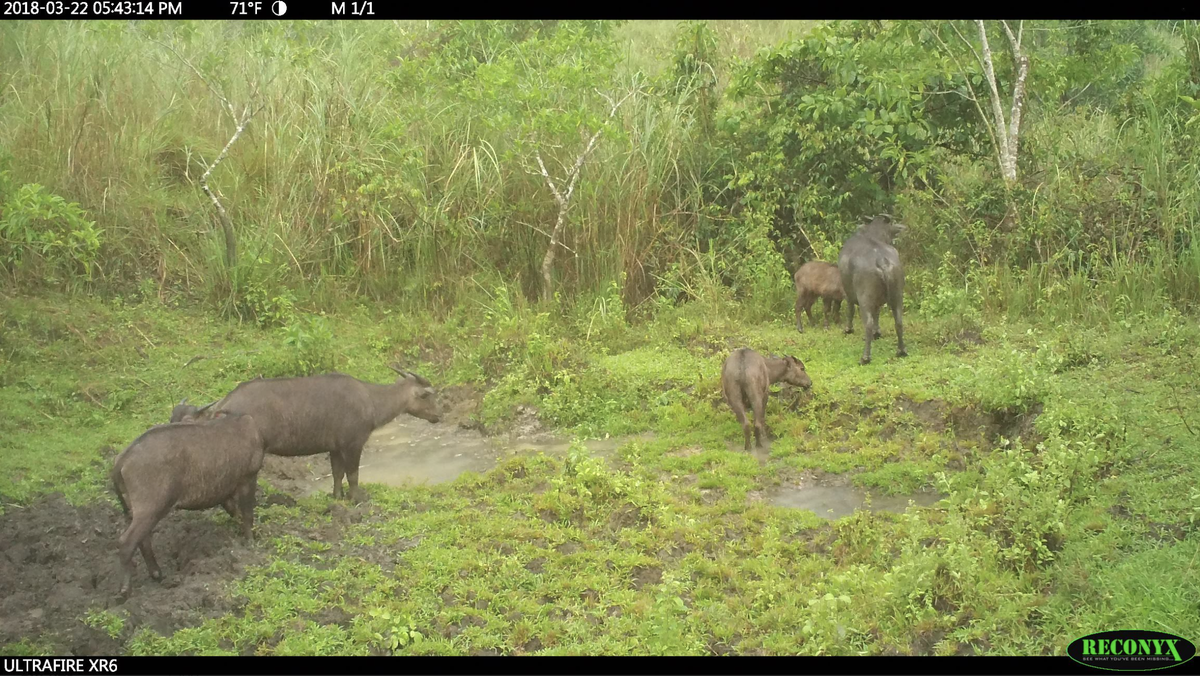
Tamaraw wallowing is poorly understood as most research has focused on quantifying the animals’ small population, researchers said.
Over the course of 1,096 days, the camera traps collected 9,560 photographs around the mud holes, and the images were categorized into six different behaviors, according to the study.
The tamaraws were seen feeding or drinking, moving or navigating, interacting socially, resting and relaxing, wallowing and maintaining their hygiene, researchers said.
The research team noticed most of the wallowing was occurring in peaks throughout the day, but never at night, according to the study. This finding was different from the wallowing behavior of captive populations that often wallow under the cover of darkness.
“This suggests that thermoregulation is the primary purpose of wallowing and not (external parasite) protection,” researchers said.
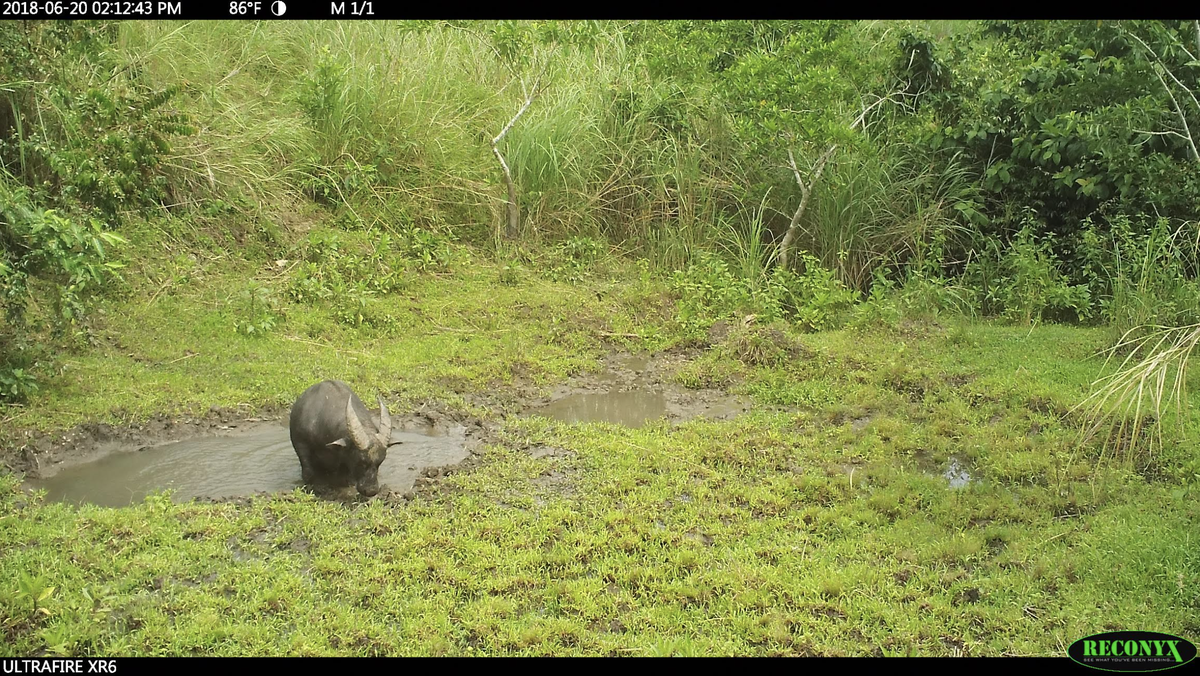
The tamaraws wallowed longer in the wet season compared to the dry, with a peak in the month of May, according to the study.
“Low wallow observations during the dry season may indicate that these bovines search for other wallowing site instead or rather seek shade in forest during hotter hours then the mud holes dry up, which are normally observed behavior of buffaloes,” researchers said.
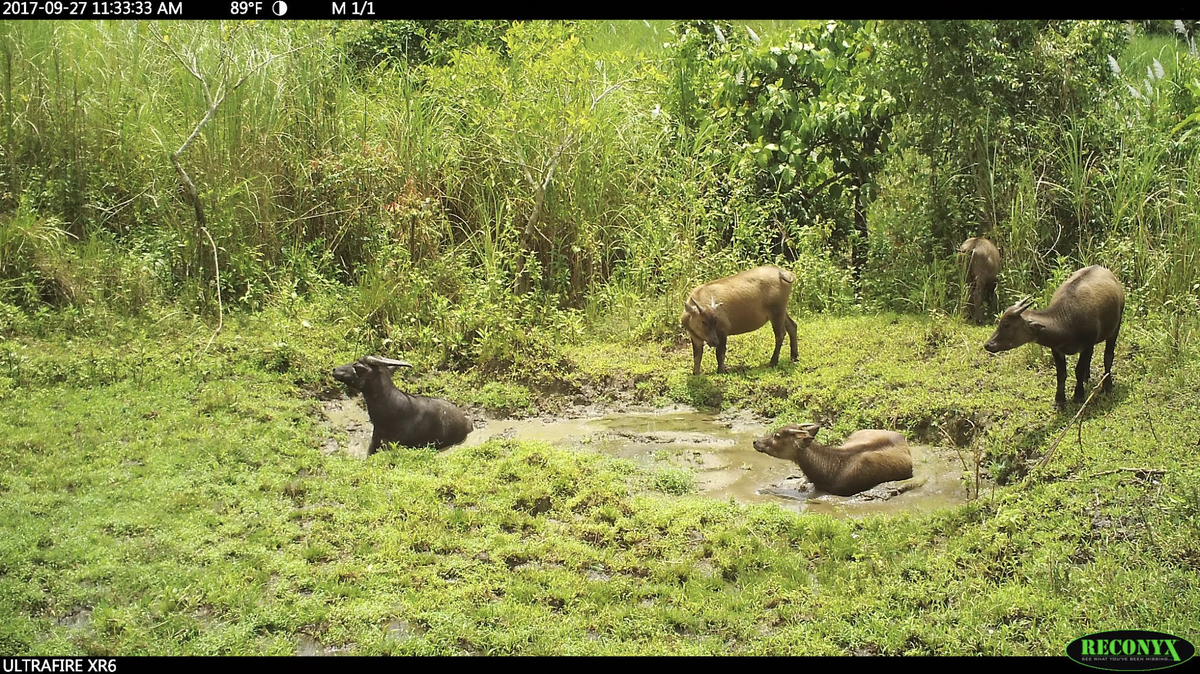
The team also noted that many of the tamaraws seen to prefer to wallow alone, in line with their “solitary nature,” and group wallowing was “rare,” according to the study.
Group wallowing was “only associated with (the) breeding season where bull fights are common in order to assert dominance in a herd and displace the losing individual,” researchers said.
There were once more than 10,000 tamaraws on the Philippine island, but years of hunting, poaching and diseases from domestic cattle caused massive declines in their population, according to Re:wild.
Female tamaraws average one calf every two years, making population growth slow and tedious, the organization said.
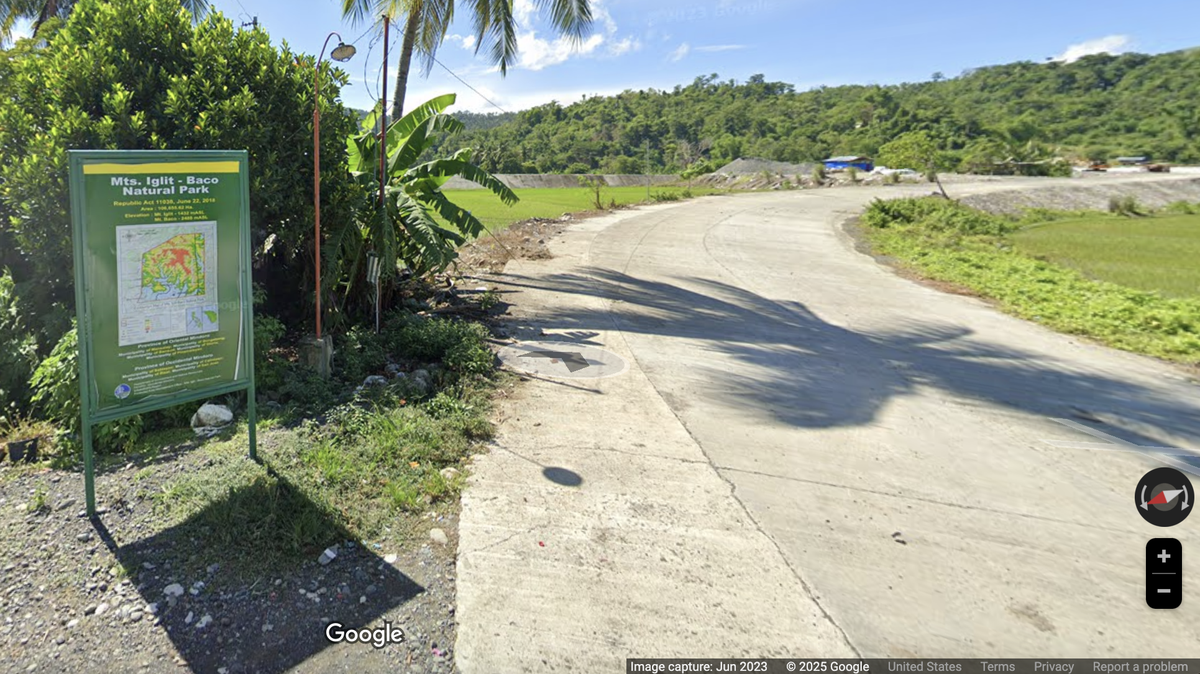
The tamaraws were studied in Mts. Iglit-Baco Natural Park in central Mindoro Island, in the west-central Philippines.
The research team includes Jean-Matthew B. Bate, Nikki Heherson A. Dagamac, John Carlo Redeña-Santos, Emmanuel Schütz and Fernando Garcia Gil.
This story was originally published June 4, 2025 at 10:27 AM with the headline "Critically endangered creatures take dip in the mud in the Philippines. See them."