‘Dwarf’-like creature — kept in terrarium for 5 years — turns out to be new species
In a rainforest of Cameroon, a “dwarf”-like creature perched on a tree. Its coloring helped it blend in with the bark — but not well enough. Passing scientists noticed the brown-eyed creature, captured it and kept it in a terrarium for several years.
It turned out to be a new species.
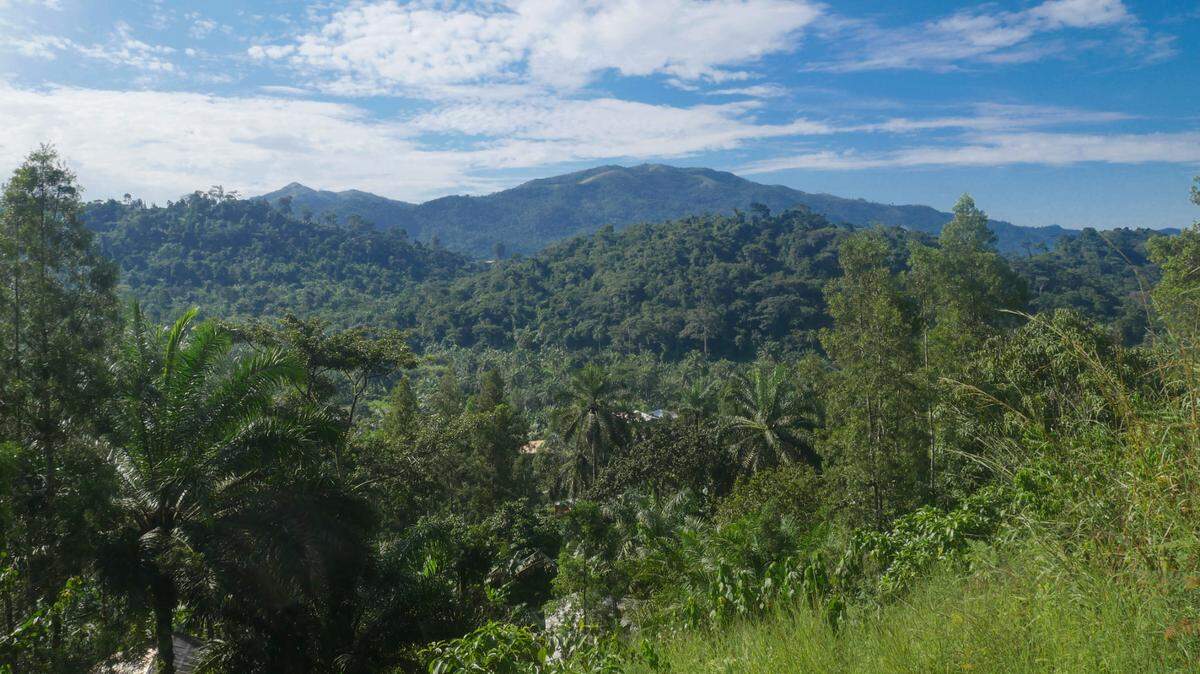
Researchers hiked into a rainforest in Lobeke in 2002 to survey reptiles, according to a study published Nov. 20 in the peer-reviewed journal Zootaxa. During the search, they found a small lizard “resting under a sliver of bark.”
Intrigued, researchers captured the unfamiliar-looking lizard and kept it in a terrarium for five years, the study said. They suspected it might be a new species but didn’t know for sure until scientists in Angola caught a similar-looking lizard in 2023.
Researchers analyzed the two lizards’ DNA and soon realized they’d discovered a new species: Lygodactylus lobeke, or the Lobeke dwarf gecko.
Lobeke dwarf geckos are considered “moderately sized,” reaching about 2.5 inches in length, the study said.
Researchers watched the new species change color based on its mood while in captivity. The gecko shifted between four “mood dependent” hues: “‘neutral’, a ‘distress’, a ‘display’, and a ‘pyjamas’ coloration.”
In its “neutral” state, the Lobeke dwarf gecko was “beige” or “light brown” with a speckling of darker brown and lighter cream blotches. Photos shared by Zootaxa on X, formerly known as Twitter, show the new species’ normal hue.
When stressed, the gecko took on a darker brown hue, and its speckles looked “richer in contrast,” researchers said. When in its “display” state, the gecko became a pale creamy brown color with very few speckles.
While sleeping at night, the gecko put on its “pyjamas,” shifting to an olive brown hue with pale sides, the study said. The coloring seemed to match the leaves, its preferred resting spot.
Lobeke dwarf geckos live in rainforest trees and likely stay in the canopy, making them harder to find, researchers said. The gecko caught in 2023 probably fell from the trees and was found “while preparing a camp site.”
So far, the new species has only been found at two sites: one in Cameroon and another in Angola, just over 500 miles apart, the study said. Both sites are part of the Lower Guinea rainforest and suggest the new species has a wide distribution throughout central Africa.
Researchers said they named the new species after the Lobeke region of Cameroon where it was first discovered.
The new species was identified by its coloring, scale pattern and other subtle physical features, the study said. DNA analysis found the new species had at least 9% genetic divergence from other related gecko species.
The research team included Beate Röll, Pedro Vaz Pinto and Javier Lobón-Rovira.
This story was originally published November 27, 2024 at 12:15 PM with the headline "‘Dwarf’-like creature — kept in terrarium for 5 years — turns out to be new species."