5,000-year-old jade dragon — the ‘largest’ of its kind — found in stone tomb. See it
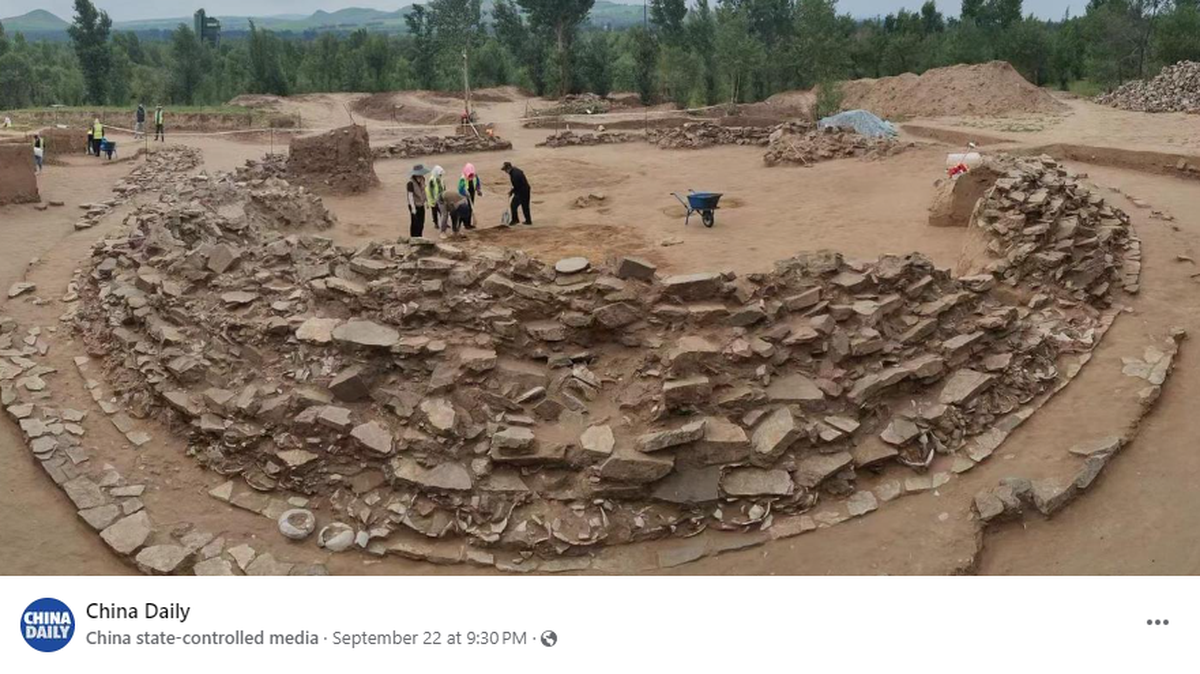
In the sandy dirt of Inner Mongolia sat a circular tomb from a long-gone culture. For 5,000 years, the tomb hid a large stone dragon — but not anymore.
Archaeologists spent four months excavating the ancient stone tomb in Chifeng and found dozens of jade artifacts, China Daily, a Chinese state-controlled news outlet, reported.
But one item stood out: a large jade dragon.
The 5,000-year-old carving was the “largest jade dragon ever discovered from the Hongshan culture,” the State Council of the People’s Republic of China said in a Sept. 23 Xinhua news release. The brown artifact measured over 6 inches long, roughly 4 inches wide and about 1 inch thick.
Photos shared by China Daily on Facebook show the “chubby, pig-headed” dragon. Its features differ significantly from modern-day depictions of dragons but are typical for the Neolithic Hongshan culture.
The Hongshan culture thrived in northern China between 4000 and 3000 B.C., according to Britannica.
Excavations at the unique ancient tomb in Chifeng also unearthed ruins, human remains and pottery, Chinese officials said. Other photos show the site during excavations.
Archaeologists plan to map and conduct radiocarbon dating at the site.
Chifeng is a city in the disputed region of Inner Mongolia, an autonomous part of northern China along the border with Mongolia.
This story was originally published September 24, 2024 at 1:48 PM with the headline "5,000-year-old jade dragon — the ‘largest’ of its kind — found in stone tomb. See it."