Sword found in 19th-century German cellar is something much older — and from far away
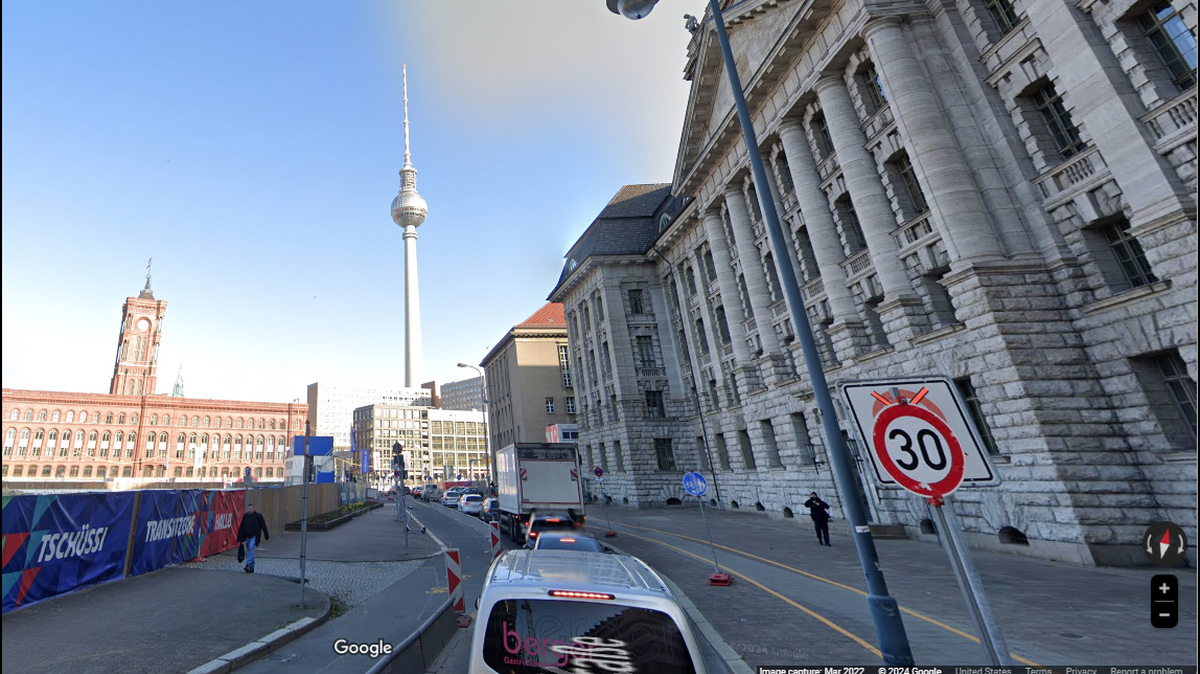
In central Berlin, Stralauer Street is lined with modern buildings a few stories tall. They are pushed back from the street and separate the bustling road from the Spree River that cuts through the city.
Today, the streets are clear and well-kept, but during World War II, the same street was reduced to rubble, according to an Aug. 22 news release from the Staatlichen Museen zu Berlin, or the State Museums of Berlin.
The street was lined with narrow buildings right up to the roadway until the war and redesigned traffic patterns knocked the structures down, the museum said.
But, the cellars and basements beneath the former residential homes and commercial buildings were left relatively intact.
Archaeologists began excavating these cellars in the winter of 2022, the museum said, and found them filled with pieces of the destroyed buildings.
Under the stone, military artifacts from WWII like bridles, stirrups, curbs and harnesses were discovered, and archaeologists said they were likely hastily thrown into the cellars in the final weeks of the war.
When archaeologists reached the residential buildings called “Stralauer Strasse 7-9,” they noticed a heavily corroded short sword sticking out from the rubble, according to the museum.
Based on the other items found underground, archaeologists assumed the sword was a parade weapon used by a German soldier. It was passed to the Museum of Prehistory and Early history to be restored.
Then, as the corroded metal was cleaned and the original sword underneath emerged, archaeologists realized this was something much older — and it wasn’t German.
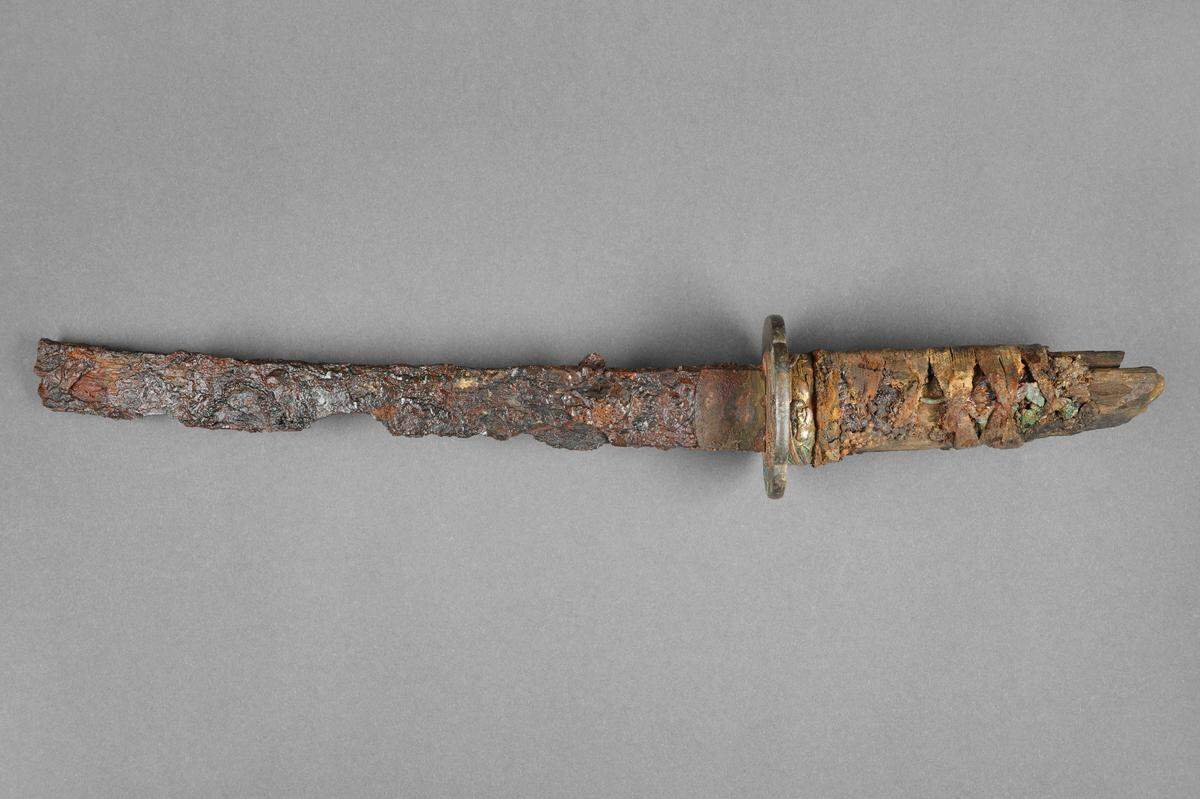
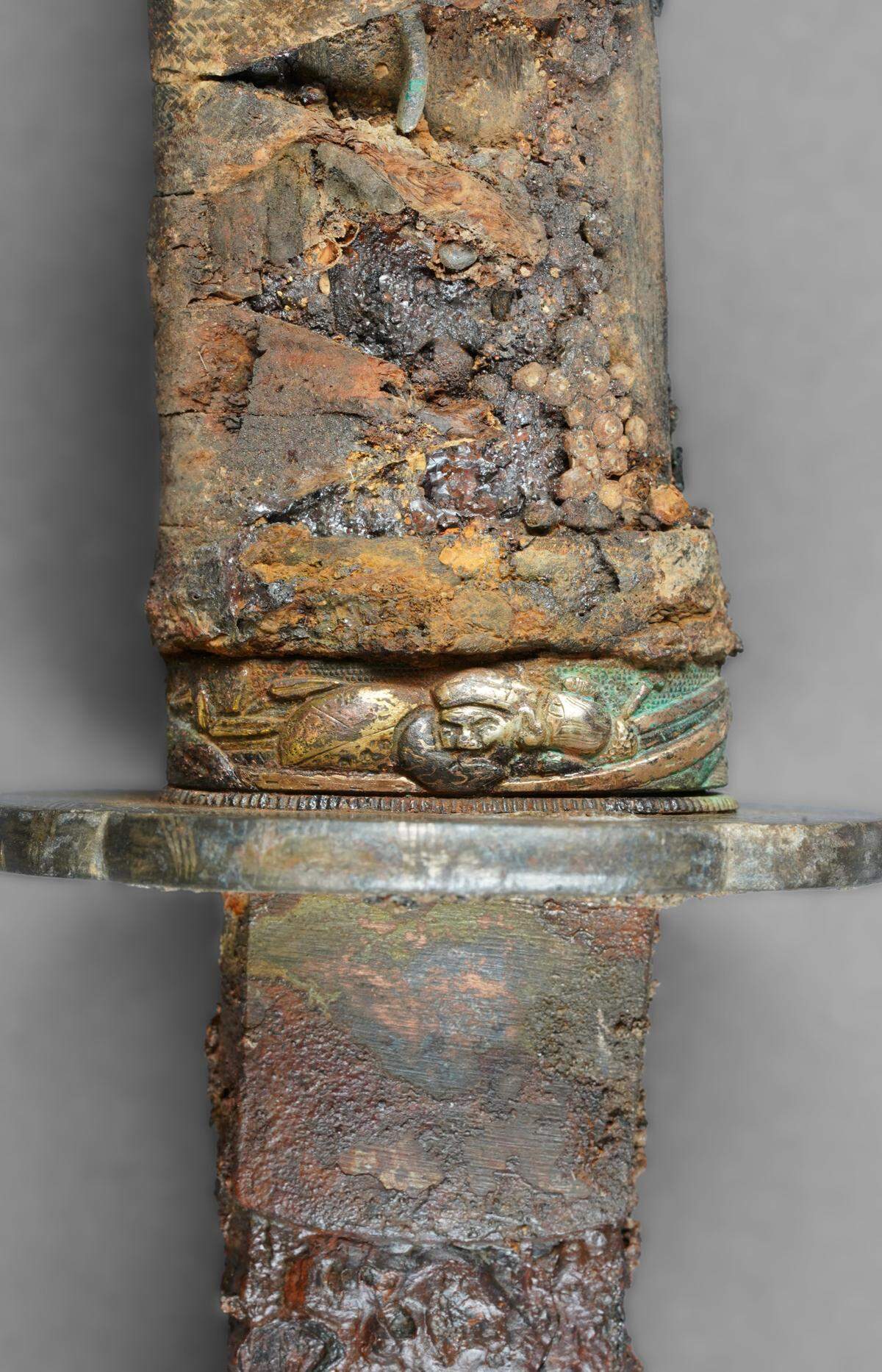
The short sword was not a parade sword, but a sword that had been fragmented and badly damaged, the museum said. The wood handle and some of the cloth wrapping was preserved, allowing archaeologists to see a motif on the handle.
It was an image of Daikoku, one of the seven gods of luck from Japan, archaeologists said. He was holding a hammer and rice sack, his known attributes, and was surrounded by motifs of chrysanthemums and a waterline.
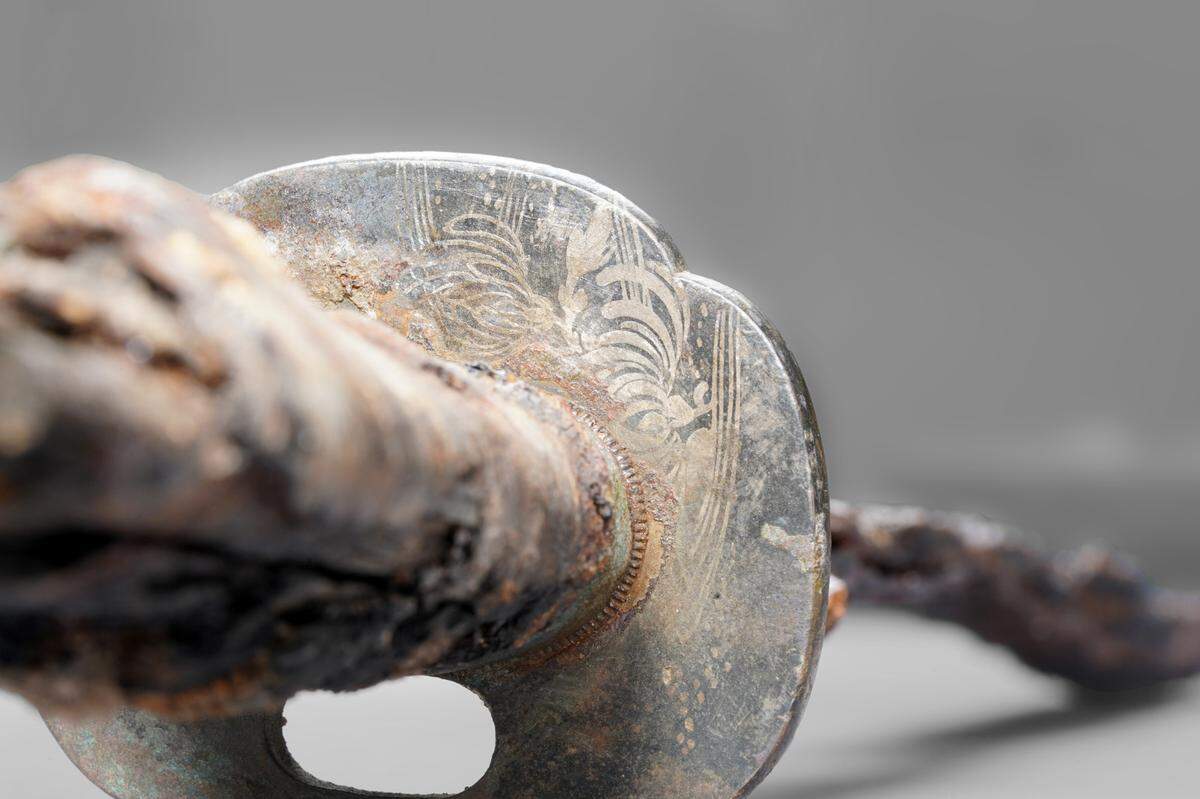
The sword was a Japanese wakizashi, and, based on the artwork, was dated to the Edo period by archaeologists, a time ranging from the 17th to 19th century, according to the release.
Archaeologists took an X-ray of the sword in hopes of finding a blacksmith’s mark, but instead found the sword had originally been longer, with the handle later added to the blade, the museum said.
Since the blade portion of the sword was once a longer wakizashi and is older than the handle, archaeologists said the blade could date as far back as the 16th century.
When it comes to figuring out how the ancient Japanese artifact landed in a rubble-covered cellar in central Berlin, however, the museum said it can only speculate.
There were two diplomatic missions from Japan to Europe and Germany in the late 1800s, the museum said — the Takenouchi Mission in 1862 and the Iwakura Mission in 1873.
The museum said Wilhelm I received Japanese dignitaries at the palace while he was king and then again once he became emperor, locations not far from the Molkenmarkt neighborhood where the sword was found.
However, there hasn’t been any link found between those missions and the owners of the homes along Stralauer street, according to the museum.
For now, it remains a mystery. The museum said excavations along the road will continue and the Museum of Prehistory and Early History will continue to work on the restoration of artifacts discovered.
The sword was found in central Berlin, the capital city in northeastern Germany.
This story was originally published August 26, 2024 at 11:43 AM with the headline "Sword found in 19th-century German cellar is something much older — and from far away."