Perfectly preserved crypts — unopened for centuries — found in Poland. Look inside
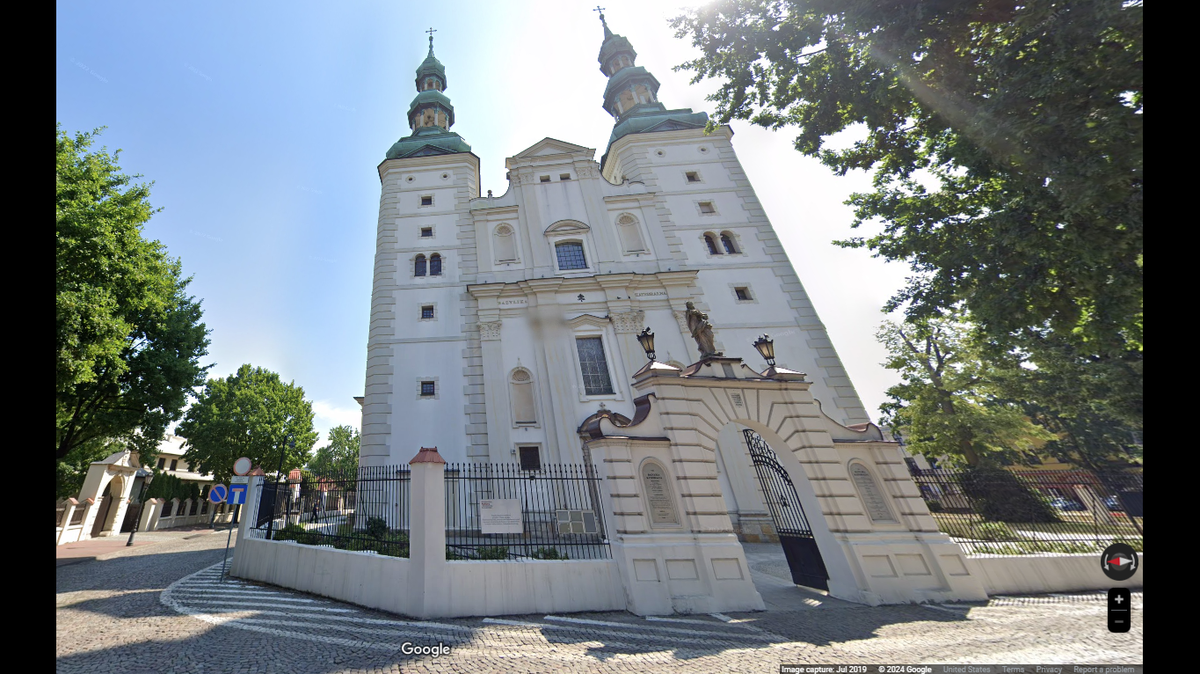
Centuries ago, in a cathedral in Poland, high-ranking archbishops were laid to rest in elaborate crypts.
Despite their notoriety, the location of their burials was eventually lost and forgotten — until now.
During archaeological excavations in the basement of the Łowicz Cathedral earlier this year, researchers accidentally stumbled upon the burials, and were surprised by what they discovered inside.
The crypts had never been opened, archaeologists said in a May 31 news release from the Ministry of Science and Higher Education, with their contents perfectly preserved.
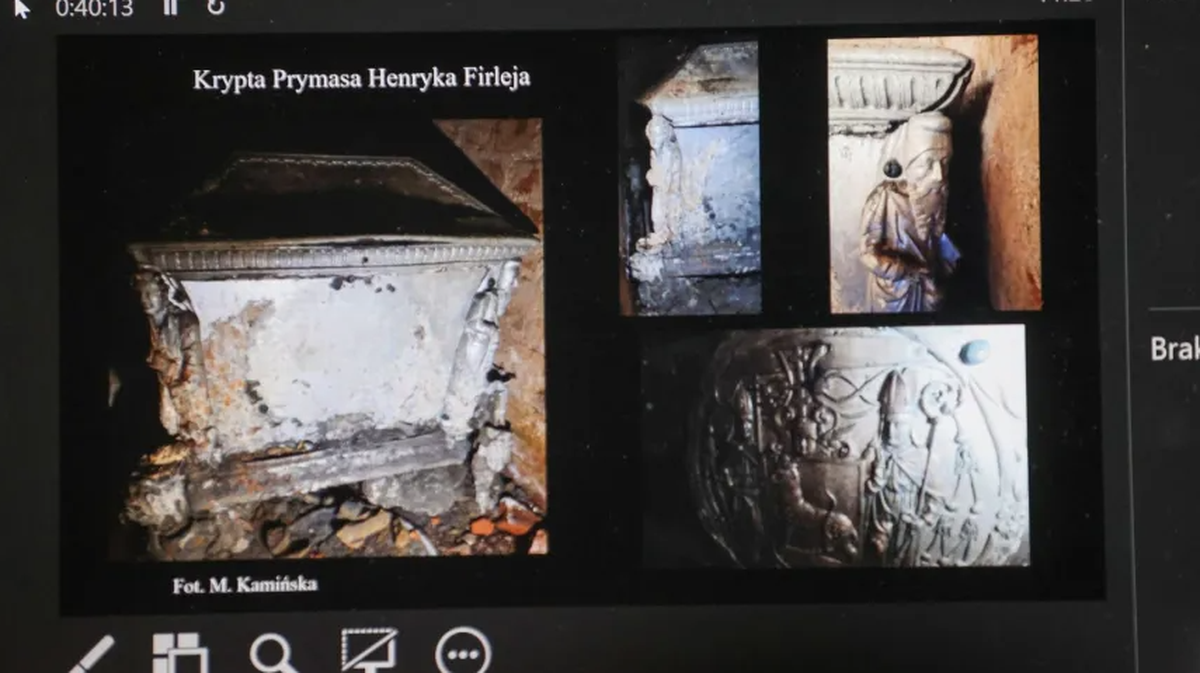
The burials belong to the “Primates of Poland,” a group of archbishops that lived from the 14th to 18th centuries, according to the release.
There are 12 primates buried at the cathedral, but the hidden crypts belong to three, archaeologists said.
A crypt with two coffins, belonging to archbishops Andrzej Leszczyński and Wacław Leszczyński, was found, and a sarcophagus burial of archbishop Henryk Firlej was also discovered, according to the release. Archaeologists believe a fourth archbishop, Jan Przerębski, may also be in a third crypt, but his identity has not been confirmed.
The primates were wearing full ceremonial dress, including robes, shoes and a bishop’s miter, or headdress, that was sewn with gold thread, according to the release.
One archbishop was wearing a beautiful gold ring, archaeologists said, with a coat of arms and cross made of gold. Another primate was holding a golden cross in his right hand, with another cross on a chain.
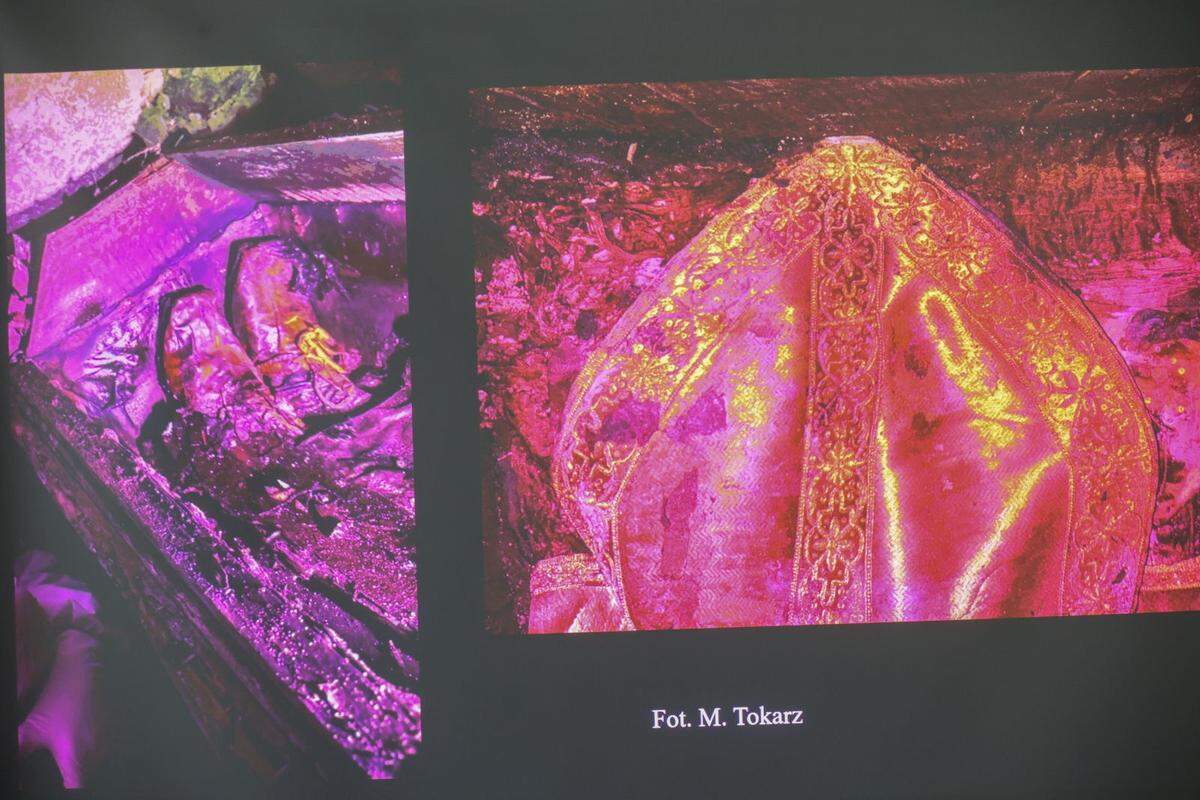
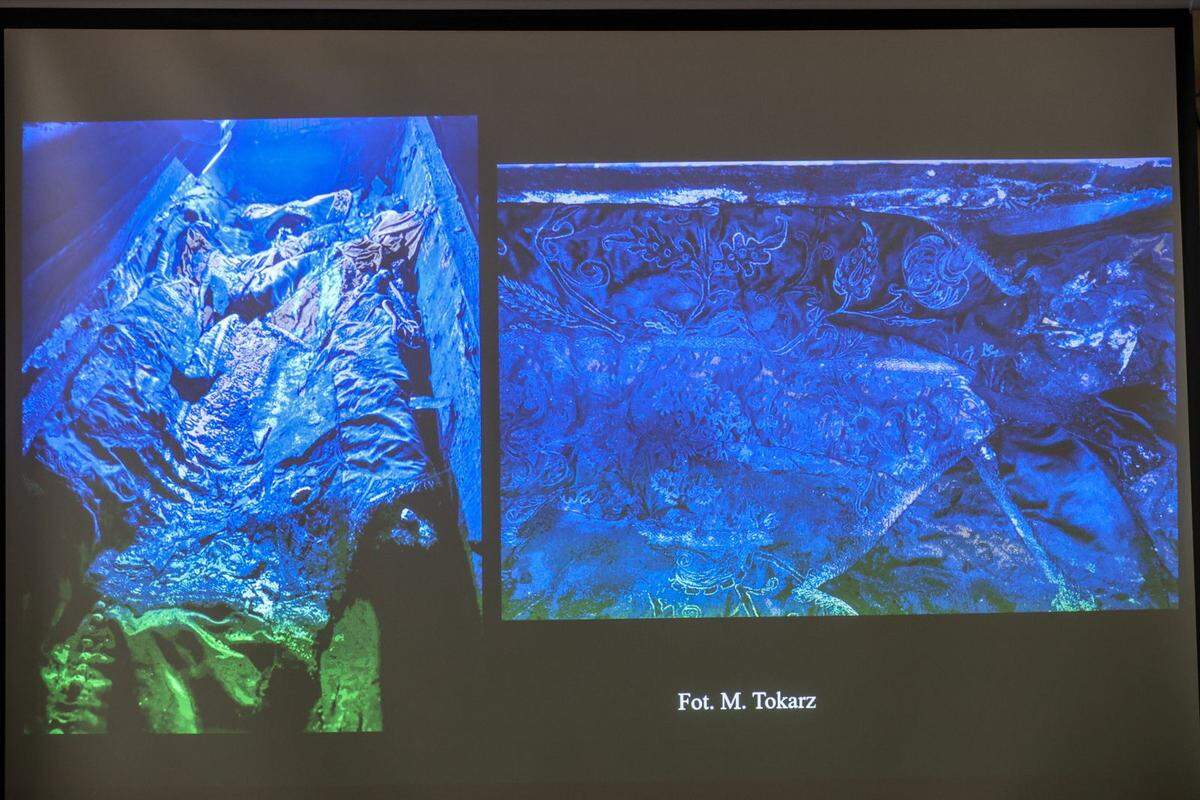
The fabrics worn by the archbishops were in excellent condition, archaeologists said, including gloves, chasubles (the outer layer of bishop’s clerical gowns) and footwear.
Four complete robes, several centuries old, were found nearly undisturbed and will be preserved and likely later displayed, according to the release.
Based on how the clergymen were dressed, they appear prepared for their funeral, researchers believe, and exact dates of their burials can allow researchers to study how the bodies decomposed.
Their bodies will also help researchers learn more about how they lived.
Firlej, buried in the sarcophagus, was afraid he would die, archaeologists said, citing 17th-century records. He had the sarcophagus made from tin and took it with him when he left the bishop’s palace, according to the release.
Wacław Leszczyński had inflammation around the bones of his hands, and Andrzej Leszczyński had broken his hand during his life, causing bones to fuse together and limiting his movement, archaeologists said. This likely was caused by a fall, and would have impacted his work.
One researcher said the discoveries are about more than just archaeological finds, but also the roots of Christian faith in Poland.
And the crypts could have been easily missed.
For now, the researchers can only access the crypts through a 15-by-20 inch hole in the wall, and the rooms are incredibly small, requiring workers to work alone and on their knees as they examine the burials.
Archaeologists worked in ventilated suits in case the fungi and bacteria inhabiting the crypts were dangerous, according to the release.
The excavation is part of a larger project that began nearly a decade ago to build underground routes for tourists visiting the church, archaeologists said.
Since 2015, 400 burials have been discovered on the site of the original church, and the new discoveries are expected to be included in an exhibit once they have been properly examined and preserved, according to the release.
Łowicz is located in central Poland, about a 50-mile drive west of Warsaw.
Google Translate was used to translate the news release from the Ministry of Science and Higher Education.
This story was originally published May 31, 2024 at 1:03 PM with the headline "Perfectly preserved crypts — unopened for centuries — found in Poland. Look inside."