Ancient child burials — found at Neolithic settlement — discovered in France. See them

Once the landscape of countless ancient cultures, researchers and archaeologists are constantly uncovering remnants of the past across Europe.
In the south of France, many of these artifacts were lost over time as the ground was leveled for agriculture.
But in Montagnac, an ancient settlement was spared and has been uncovered just below the base of plowed land, the French National Institute for Preventive Archaeological Research said in a May 28 news release.
Dated to the Neolithic period, between 9,000 and 4,300 years ago, researchers uncovered multiple constructions and graves, according to the release.
The first is a series of carved pits, some lined with stones, that would have been used as cellars or silos for storage, researchers said.

One cellar was shaped like a horseshoe with a step built into one side, suggesting it had an open access where people could come and go, according to the release.
The cellar had deeper pits dug into the base, which would have been used to hold a large storage container, researchers said.
Other pits were made entirely from dirt, and researchers said the diversity of the cellars shows how sophisticated the culture was at the time.
Down a slope, archaeologists also uncovered the remains of two buildings, one of which was likely lost in a fire, according to the release.
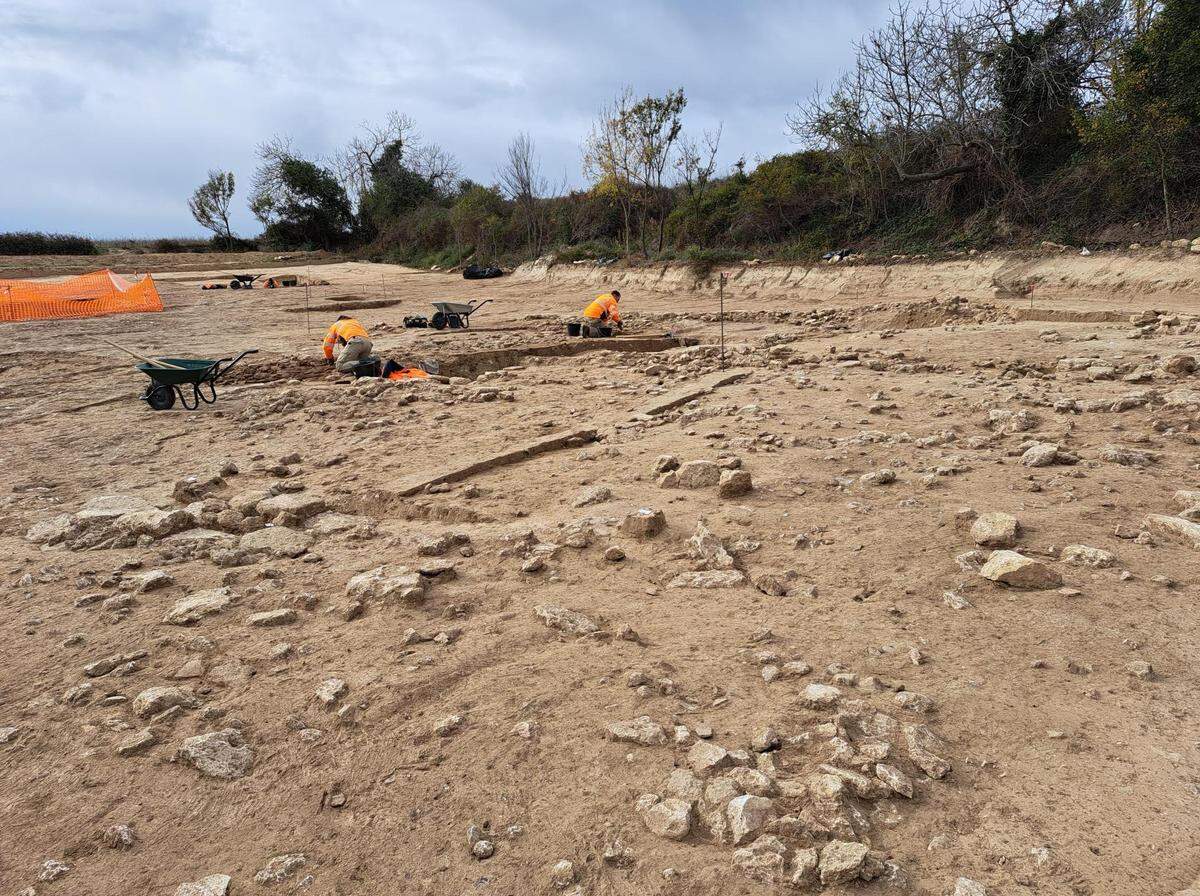
Stone walls made up the foundation of the buildings and raw earth was used at the joints, researchers said.
Burn marks were found inside one building and in the pits surrounding it, suggesting once the fire had moved through the settlement, the rubble was likely cleared by fire, according to the release.
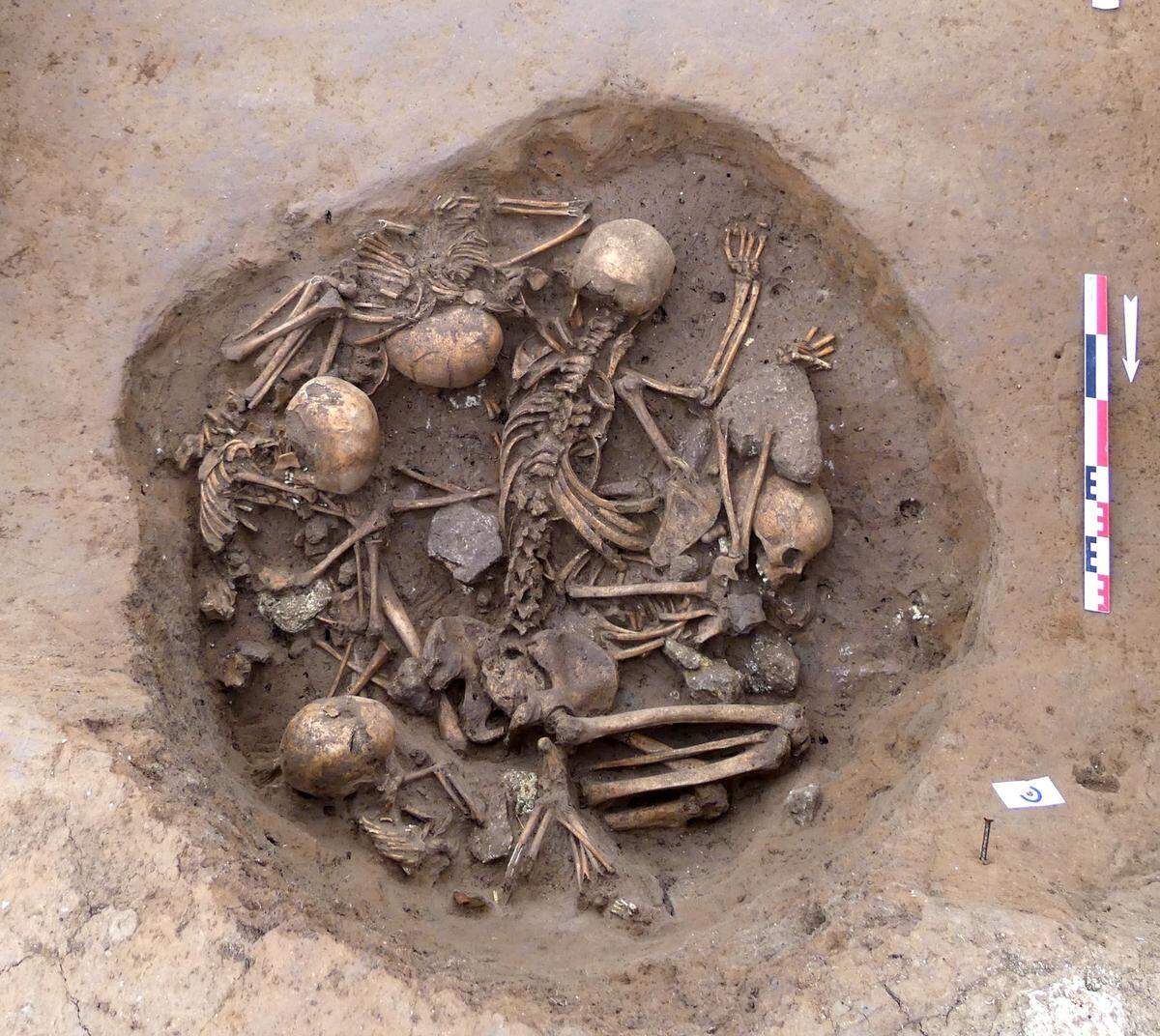
The most spectacular find, according to researchers, was a burial pit found at the bottom of one of the storage structures.
Six sets of human remains were found in a single burial, five of which were buried at the same time, and a sixth was added at a later time, according to the release.
All but one of the bodies belonged to children, with approximate ages of 3 to 14, plus a newborn, and they were accompanied by an adult woman, researchers said.
One 3-year-old was added some time after the first five sets of remains, according to the release, and was buried near the feet of the adult woman, but 6 inches higher in the pit.
The researchers believe the people living at the settlement buried the last child intentionally where they remembered the others were buried.
On top of the Neolithic remains, a funerary monument from the later Bronze Age was discovered, according to the release.
A stone chest surrounded by dirt on a stone mound contained two sets of human remains, researchers said, and another body of a child was unearthed nearby.
The monument was devoid of furniture, common during the early Bronze Age, according to the release.
Montagnac is in southern France near the coast of the Mediterranean Sea.
Google Translate was used to translate the news release from the National Institute for Preventive Archaeological Research.
This story was originally published May 30, 2024 at 12:41 PM with the headline "Ancient child burials — found at Neolithic settlement — discovered in France. See them."