Eyeless creature — discovered in underwater cave — is a new species in China. See it
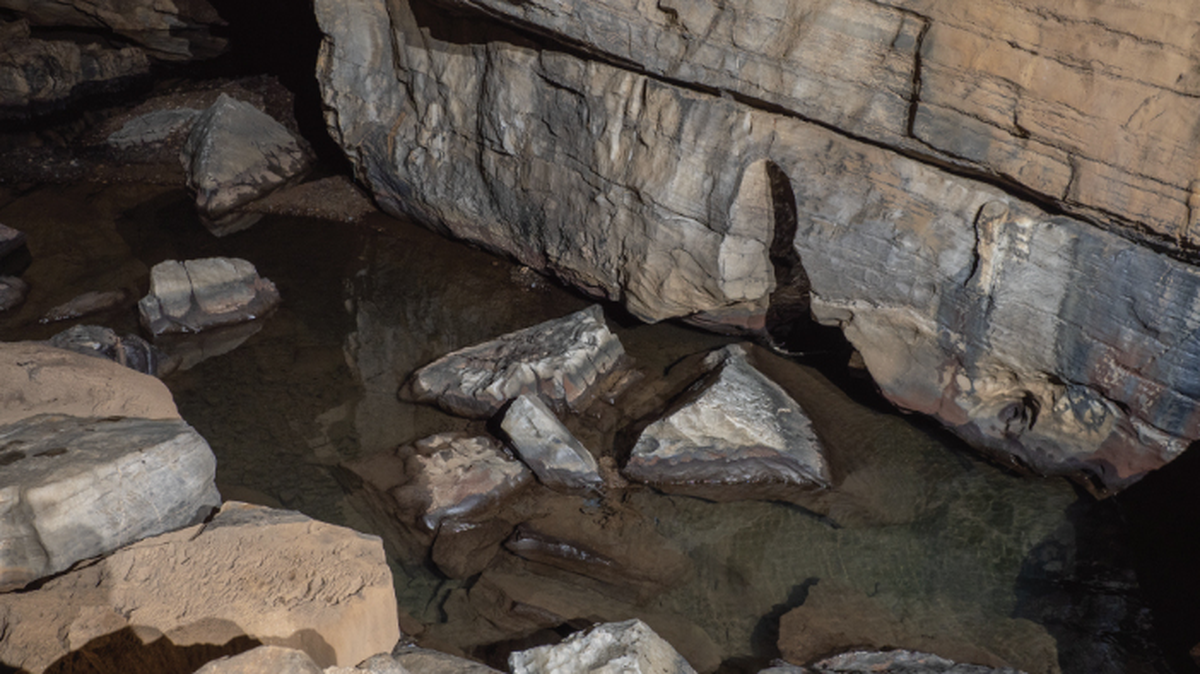
Deep beneath the surface of southern China, a stream runs between the stones in complete darkness.
The land is made of karst, a porous bedrock that allows water to slowly carve away the stone, leaving crevices, caverns and caves.
While these hidden environments may seem unreachable, life has found a way.
Gliding through the water, a pink fish navigates the stones and current — completely blind.
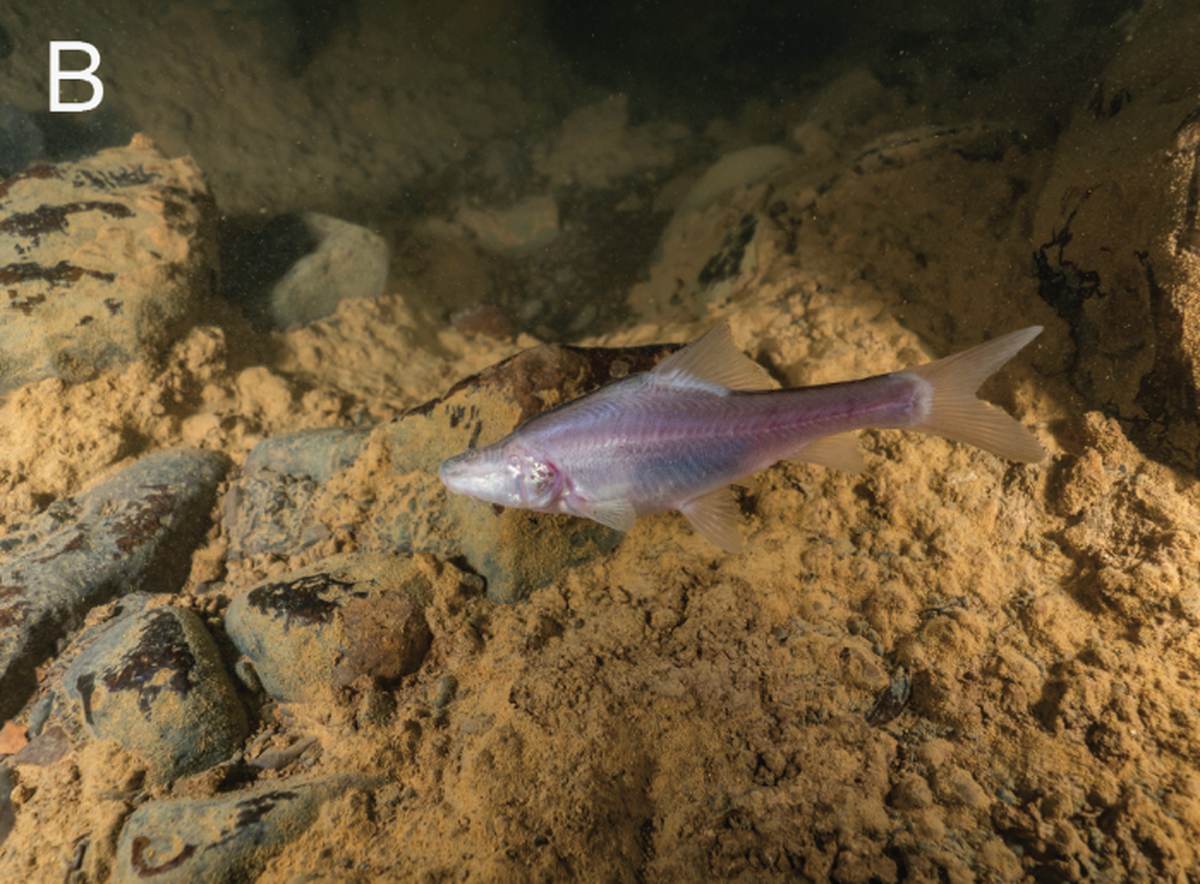
Only 25 of these fish have been found, and they’ve been identified as a new species, according to a May 14 study published in the journal Zoosystematics and Evolution.
Sinocyclocheilus guiyang, or the Guiyang Golden-line Barbel, is about 5 inches long, a light pinkish color, and has a gold stripe running along the top of its body, according to the study.
Instead of the bulbous eyes one might expect from a small fish, some golden-line barbels have empty sockets, and others have “highly reduced eyes, partially covered with skin,” the researchers said.
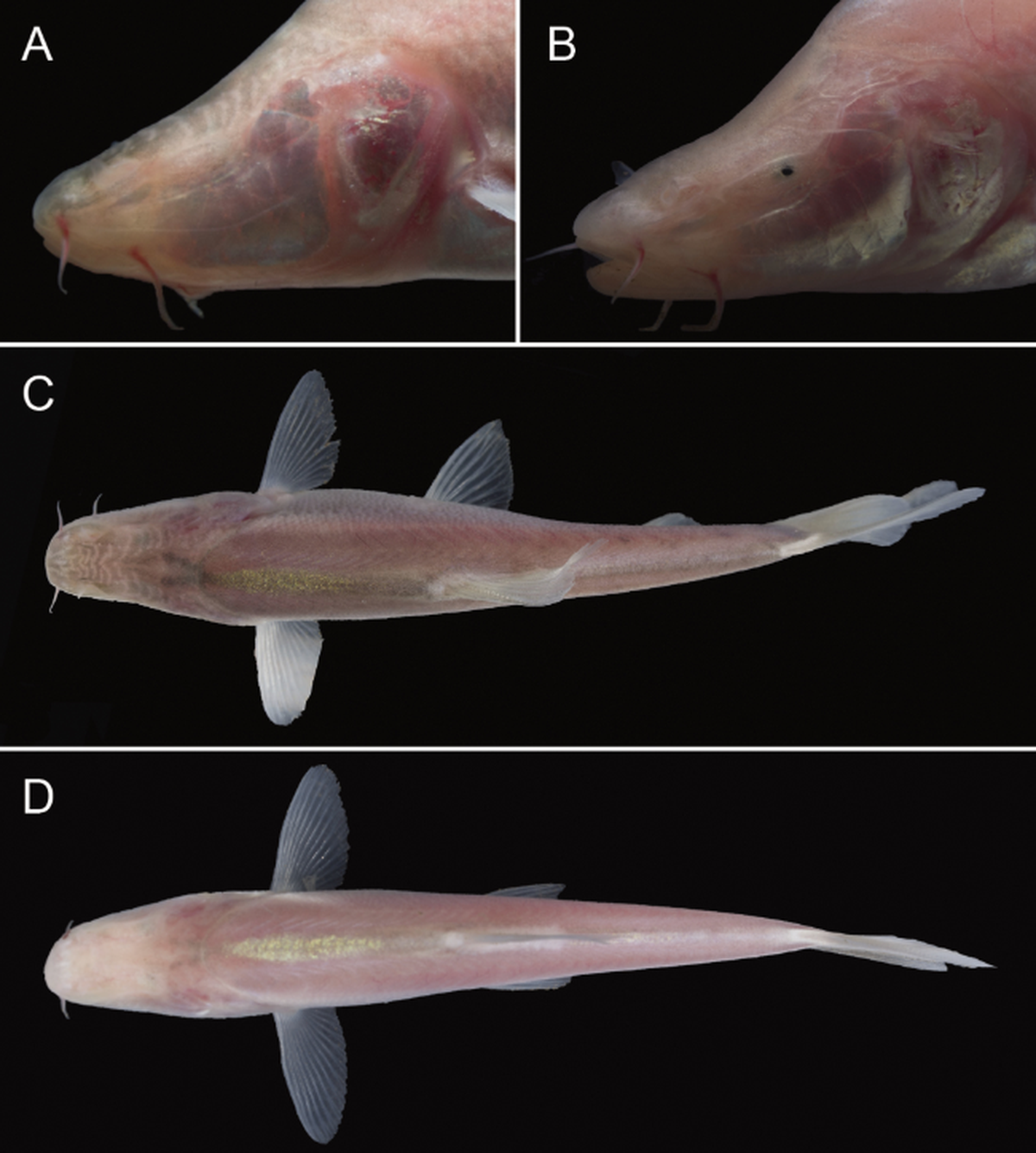
Compared to other subterranean fish species, the golden-line barbel is missing a “horn-like” structure on its head, has shorter fins on the lower part of its body, has “degenerated” scales, and a generally shorter snout, according to the study.
“This species is presently only known from a subterranean stream flowing into the Wujiang River in the Upper Yangtze River Basin,” the authors wrote. “The species inhabits pools of subterranean stream with gravel substrate.”
The fish were discovered during a field survey of the subterranean stream and seven fish were collected, according to the study.
Since not all of the fish have the exact same eyeless structure, the researchers may have caught evolution in action as the fish adapt to a pitch black environment.
“These combined characters are unique within Sinocyclocheilus and represent exceptional cases for evolutionary studies,” the researchers said.
The fish were discovered near Guiyang, a city in south-central China.
This story was originally published May 15, 2024 at 1:34 PM with the headline "Eyeless creature — discovered in underwater cave — is a new species in China. See it."