Ancient dancing figures — carved on stones in Peru — have psychedelic roots. See them
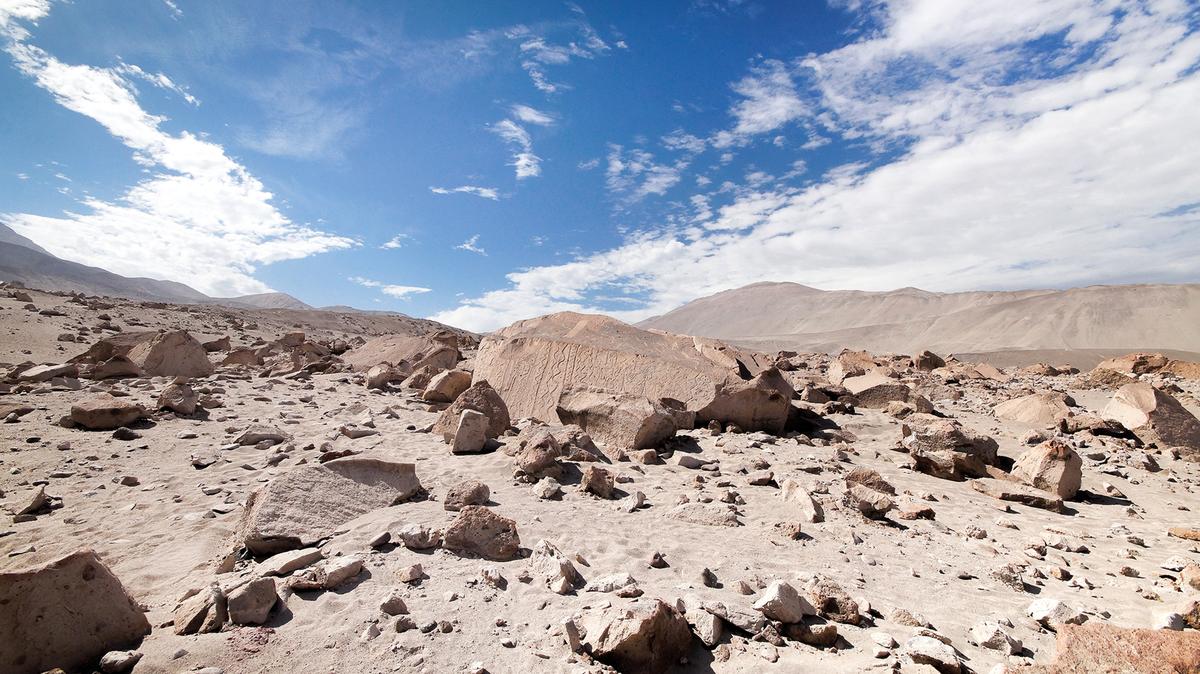
Artists of a series of 2,000-year-old rock carvings on a stone in Peru may have been drawing how music made them feel — with the added help of psychoactive tea.
The carvings were found at Toro Muerto, a desert gorge filled with thousands of boulders, and thousands of etchings, according to an April 3 study published in the Cambridge Archaeological Journal.
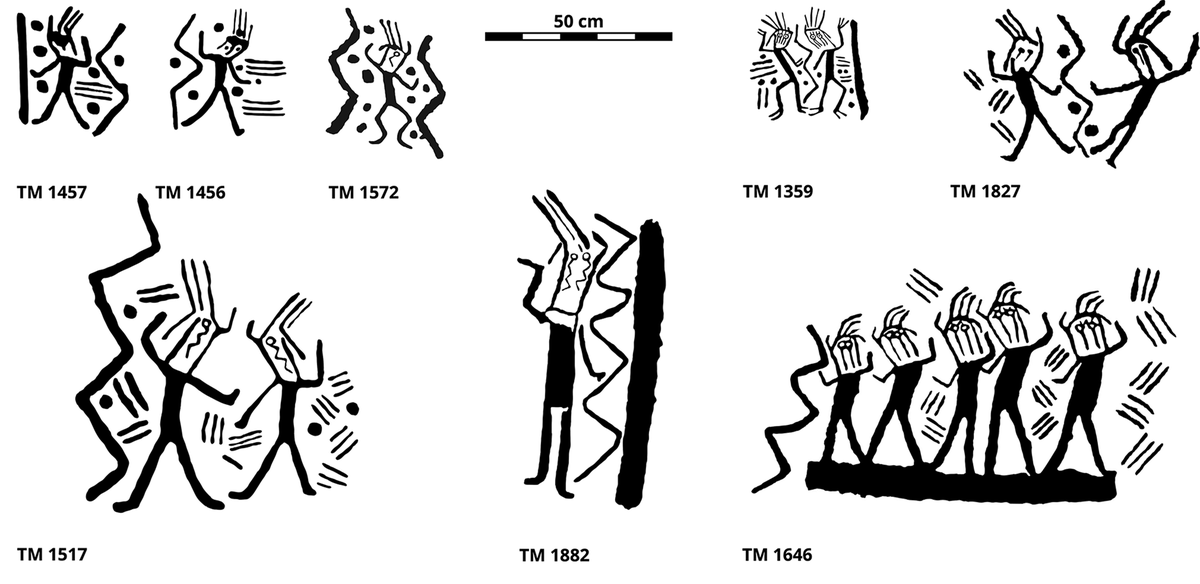
The carvings depict people surrounded by squiggly lines, zigzags, concentric circles, dots and lines, according to the study, and are called “danzantes.”
“A danzante is a schematic representation of an anthropomorphic figure (usually 20–30 cm tall, occasionally larger) most often shown in a dynamic pose with one arm raised and the other lowered, on slightly spread legs (sometimes bent at the knees), with the head presented en face or in profile, with a headdress portrayed in the form of a few parallel lines,” the researchers said.
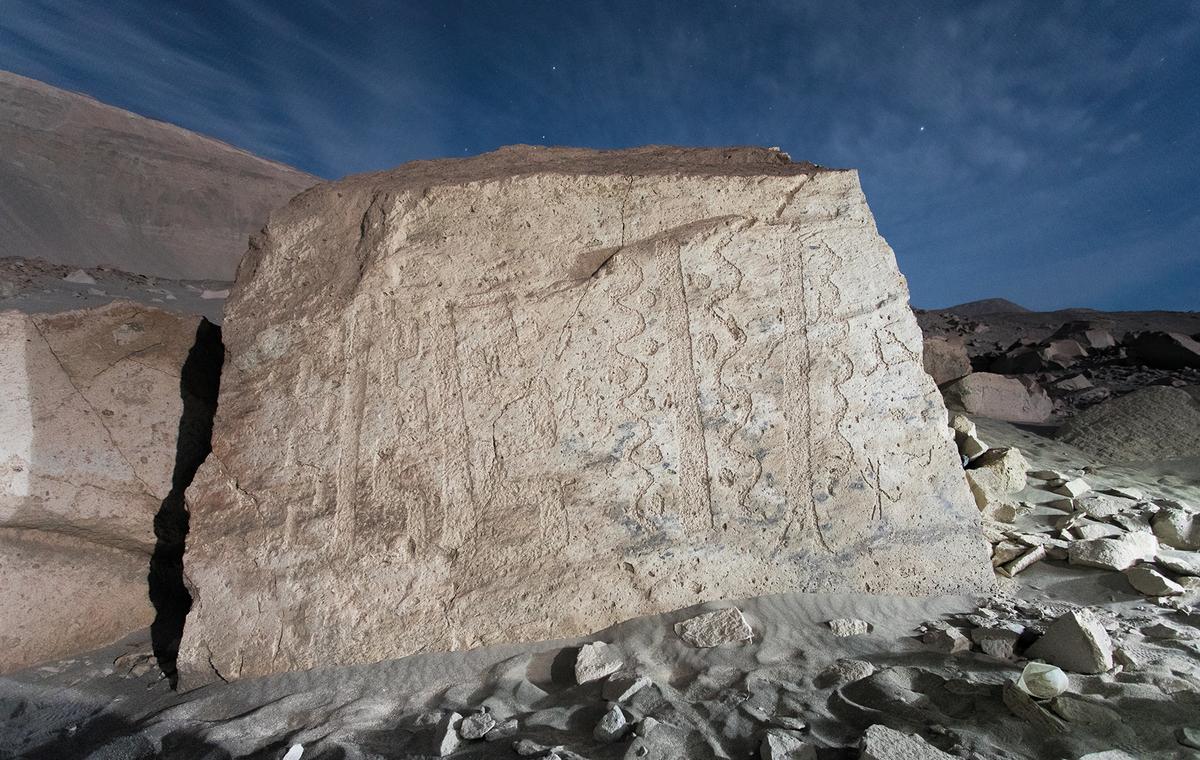
Some of the figures have additional markings to show their faces, while others have more static poses, according to the study, but their “identification as dancers seems convincing.”
The zigzags represent movement, the researchers said, and have been seen on about 12% of the carvings at Toro Muerto.
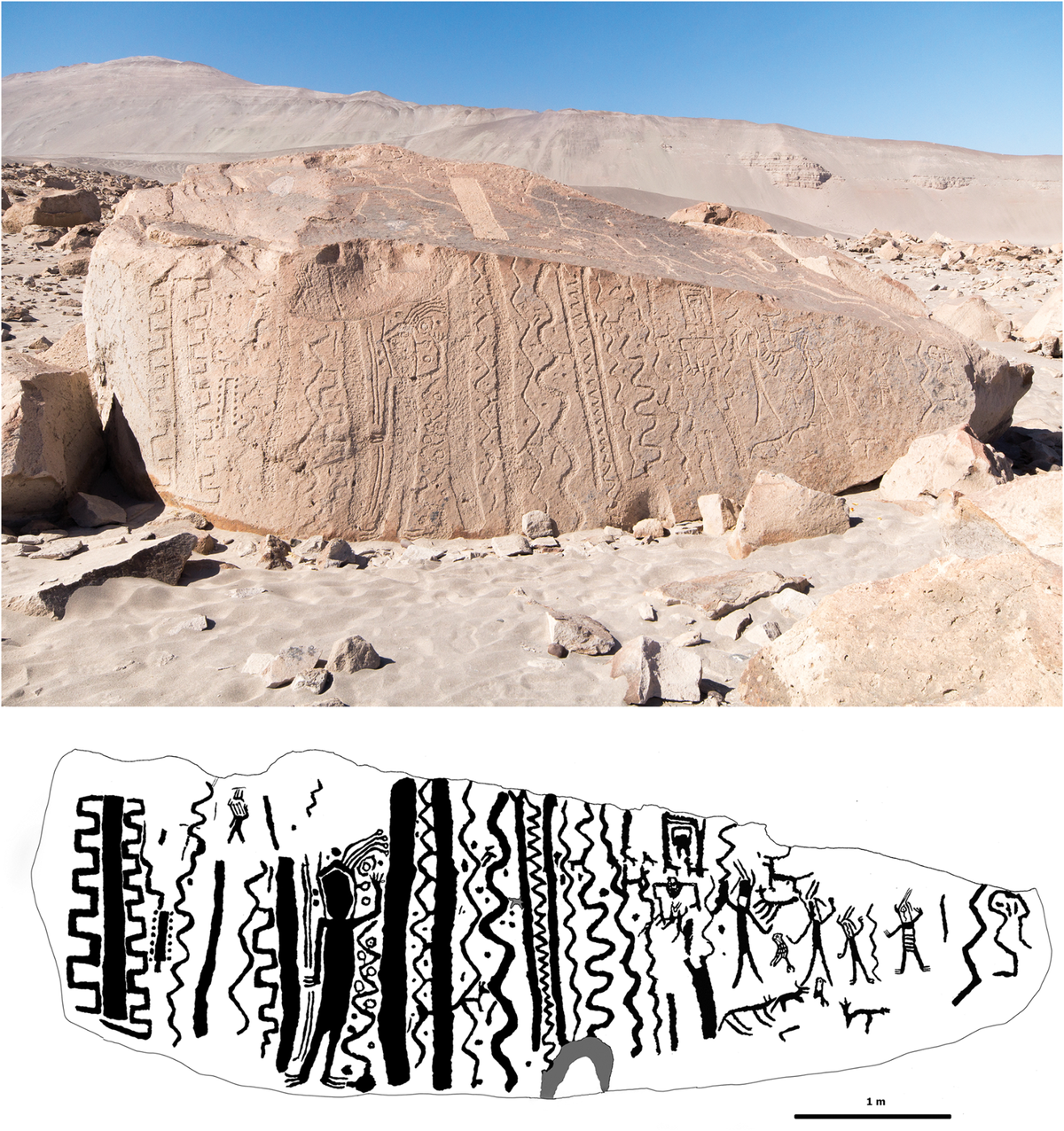
The carving on one particularly “massive boulder,” about 15 feet long, is covered with images, according to the study.
Because the color of the carvings, or petroglyphs, are uniform and spaced, the researchers believe the piece of art was planned before the carving began.
It includes a “main scene” with other images of birds, animals and people on either side of the centerpiece, according to the study.
The imagery shows “surprising similarities” to carvings from the Tukano people in Colombia, who regularly consumed the psychoactive drink yajé/yagé, also known as ayahuasca, that is made from a jungle vine, according to the study.
The Tukano people called their carvings “yajé images,” the researchers said, “meaning that they showed patterns they had seen while in a state of narcotic intoxication induced by consuming entheogens.”
The drawings also had banding, which represented stories of creation, and were often accompanied by rituals, dances, songs and musical instruments.
The zigzag lines, in this context, represent the songs that surround dancers as they have ritualistic experiences, the researchers said.
The Peruvian danzantes were so similar, the researchers believe they also represent reaching the “cosmos” during psychedelic experiences, according to the study.
The ritualism of the ancient people that included “shamanic singing is not a performance about moving or traveling around the cosmos; rather it is a set of journeys away to death and back to life,” the researchers said.
“The Amazonian trope may therefore lead one to suspect that the meaning of the Toro Muerto petroglyphs could have been fluid, that it did not have to be about the precise representation of something concrete, but about evoking a certain state simultaneously constituting a transference to the other world. The petroglyphs may have recalled or embodied the dance, song and cosmos in which the dancer immersed him or herself,” the researchers said.
The study did note that the involvement of ayahuasca was speculative but had context both historically and culturally.
Toro Muerto is in the mountains of southern Peru along the coast of the Pacific Ocean.
This story was originally published April 5, 2024 at 11:44 AM with the headline "Ancient dancing figures — carved on stones in Peru — have psychedelic roots. See them."