2 dead, 12 injured, roads damaged as magnitude 6.4 earthquake rocks Northern California coast
READ MORE
Humboldt County Earthquake
Click the arrow below to read more about the earthquake that shook Northern California.
Expand All
Wednesday’s updates: Newsom declares emergency; 14,000 still without power
At least two people have died in Humboldt County following a strong earthquake that jolted coastal Northern California awake early Tuesday morning, measured by the U.S. Geological Survey at a magnitude of 6.4.
The two victims “died as a result of medical emergencies occurring during and/or just following the earthquake,” the Humboldt County Sheriff’s Office said in a new release.
Sheriff William Honsal, during a Tuesday afternoon news conference at Rio Dell City Hall, said the two residents whose deaths were “associated” with the disaster were a 72-year-old and 83-year-old who “did not get timely medical care, because their medical emergencies happened at the moment of the earthquake.”
The two victims’ identities have not been released. Honsal said at least one of the deaths happened in Rio Dell.
At least 12 other people have been reported injured, Honsal said, up from two reported earlier in the morning — a juvenile who suffered a head injury and an elderly resident with a broken hip.
“We expect that number to go up,” the sheriff said.
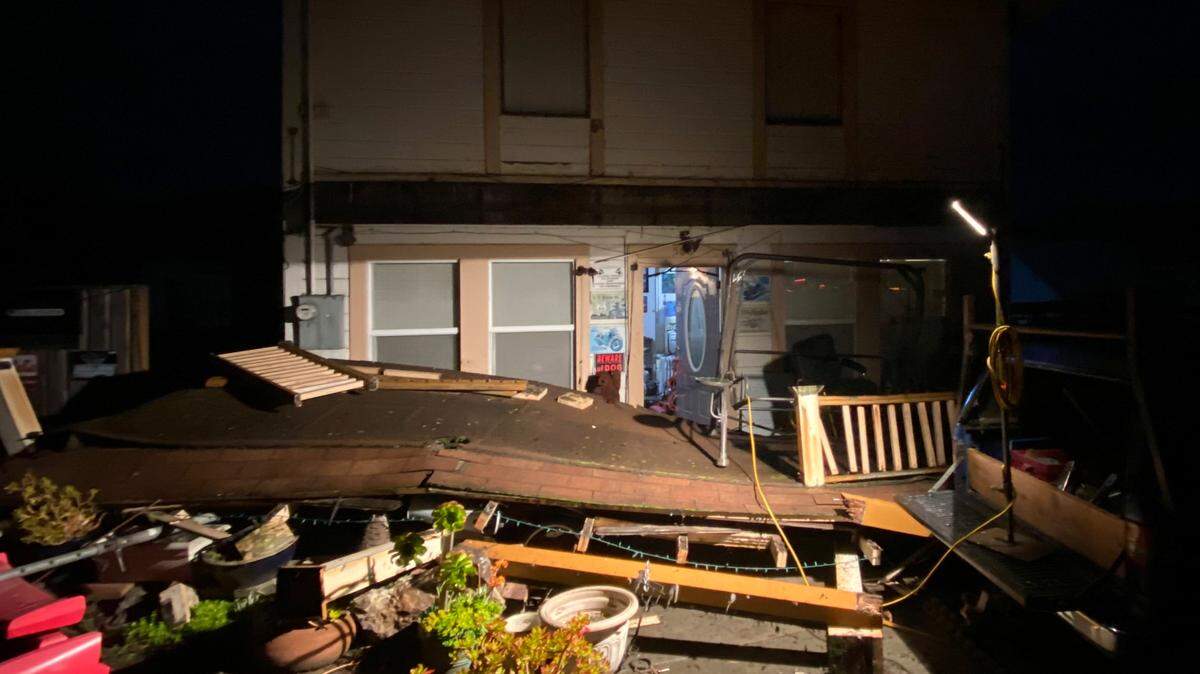
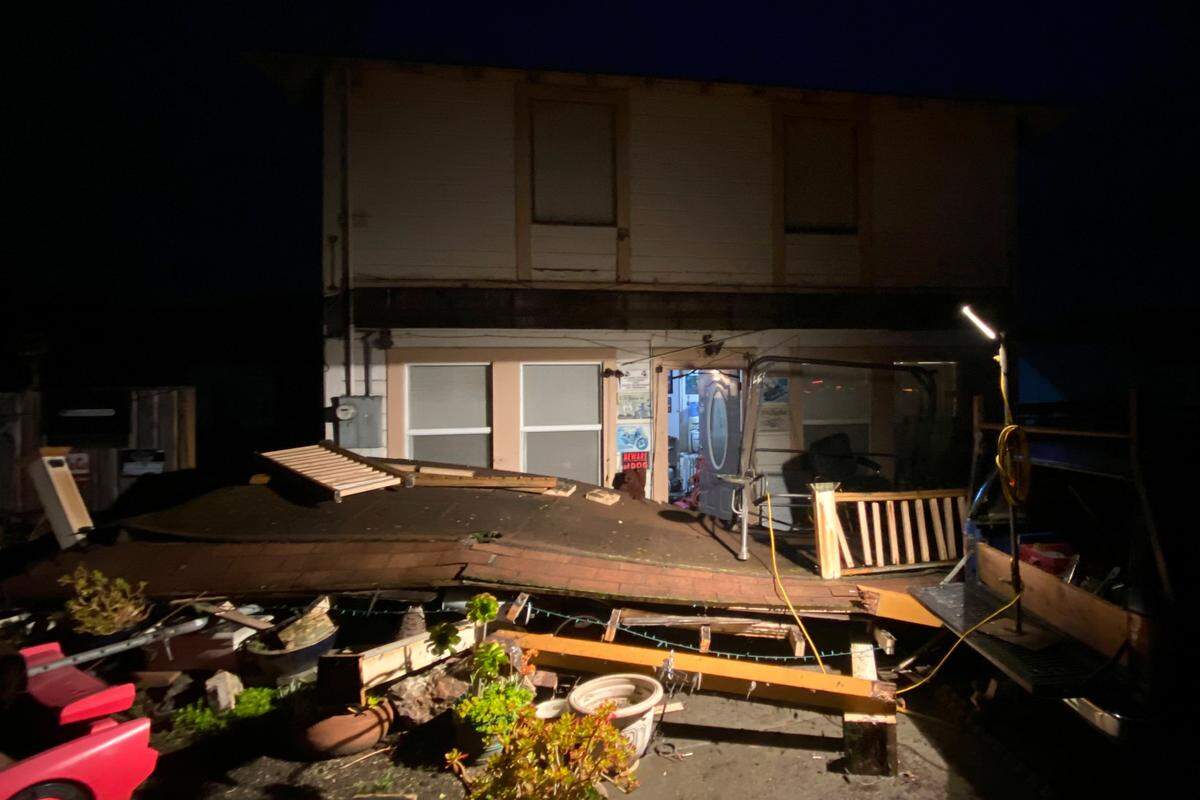
Approximately 15 homes were “red-tagged” and considered unsafe to occupy in Rio Dell, City Manager Kyle Knopp said in the news conference, with about 30 people displaced. The city was preparing for as many as 150 residents displaced by the earthquake. Knopp said crews hoped to be finished with at least 95% of damage inspections by midday Wednesday.
The city of roughly 3,400 people was also without running water as of Tuesday afternoon, with Knopp saying service would likely not be restored by the end of the day.
“We are looking at potentially a 24- to 48-hour situation” without running water, Knopp said. Fire personnel were helping to distribute bottled water to residents.
The Humboldt County Office of Emergency Services reported “widespread damages to roads and homes” throughout the county and warned residents to be prepared for aftershocks.
The earthquake’s epicenter was offshore, about 8 miles west of the small city of Ferndale, population 1,400.
“It was felt widely, as far east as Redding and as far south as the Bay Area,” Mark Ghilarducci, director of the Governor’s Office of Emergency Services, said in a Tuesday news briefing.
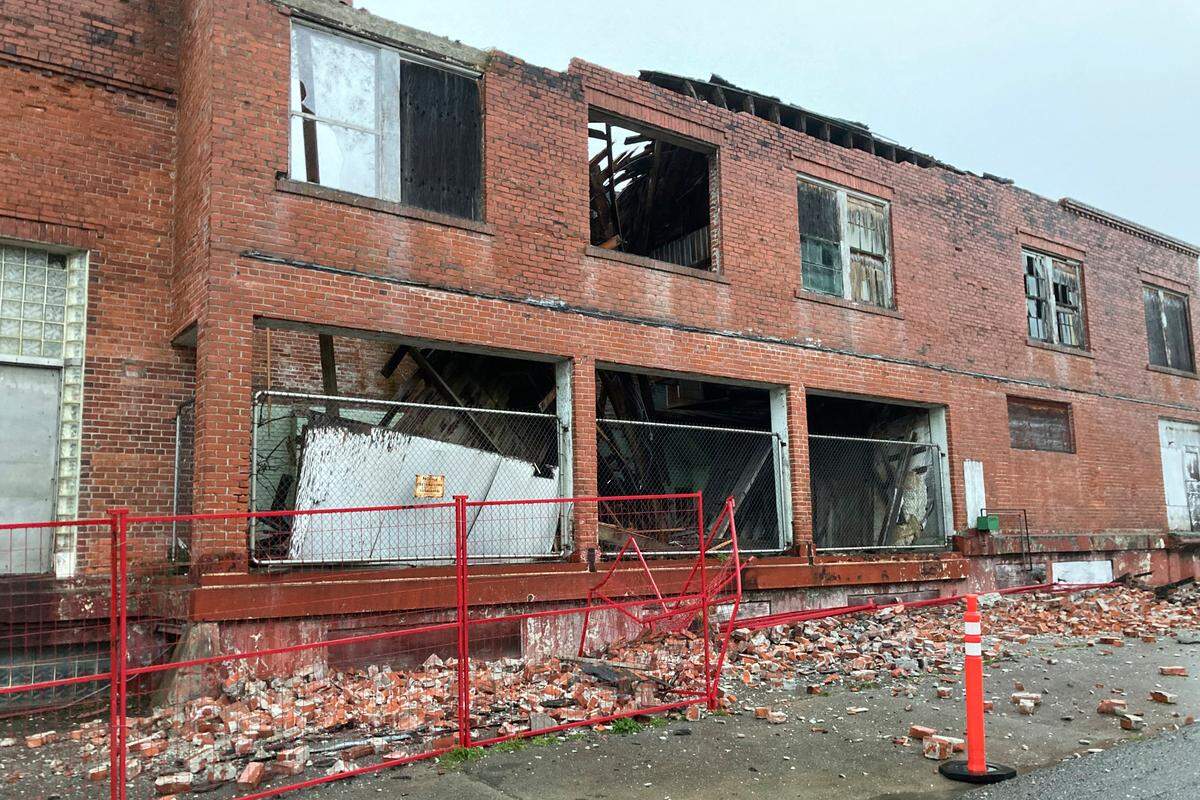
The Sheriff’s Office in its midday news release reported “significant structural damages, including gas and water lines, observed in the Rio Dell community and moderate damages to properties throughout the Eel River Valley.”
Two hospitals in the area lost power and were running on generators, but the scale of the damage appeared to be “minimal” compared to the strength of the quake, said Brian Ferguson, a Cal OES spokesperson.
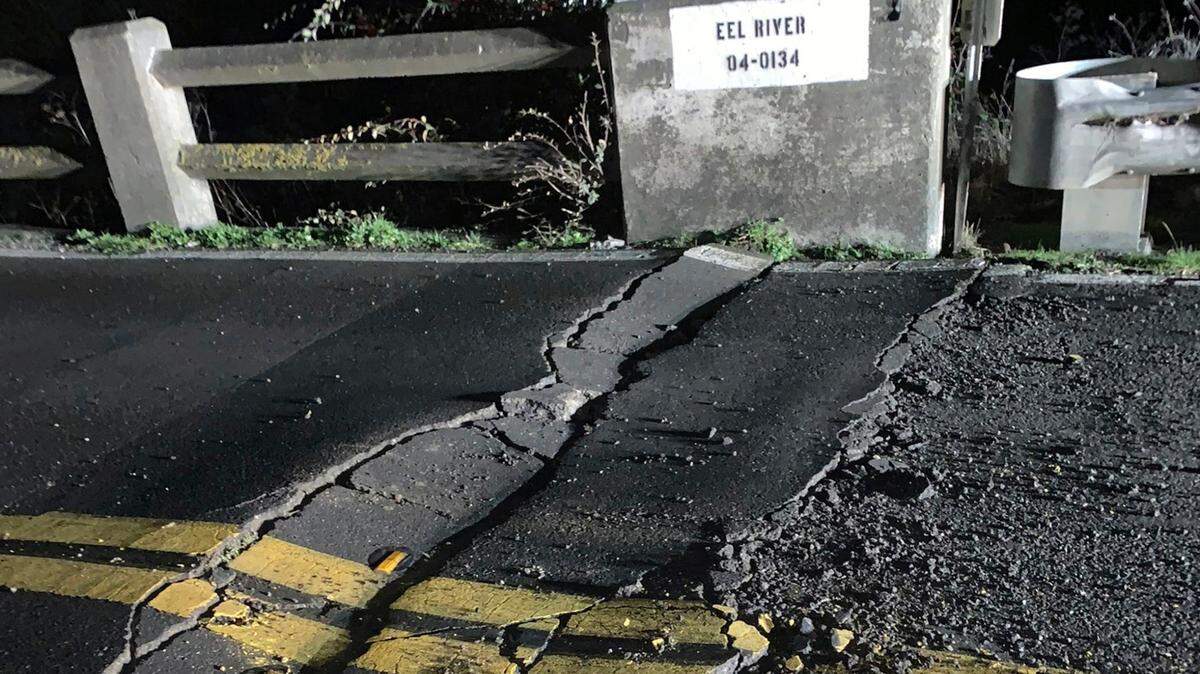
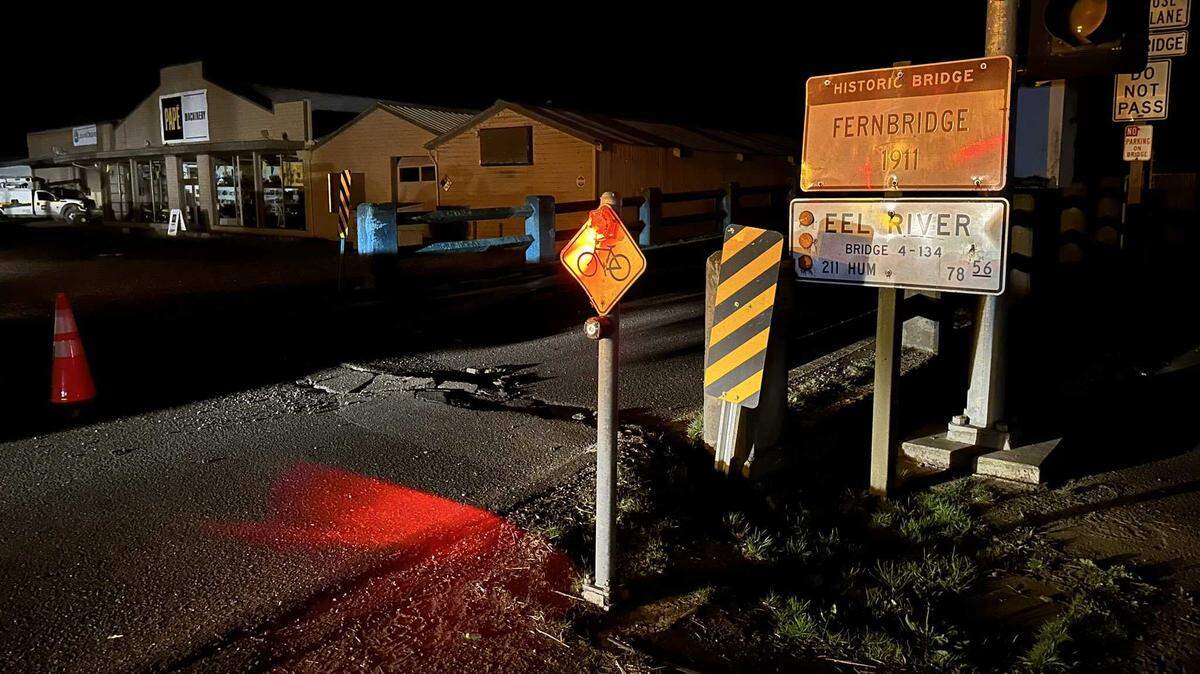
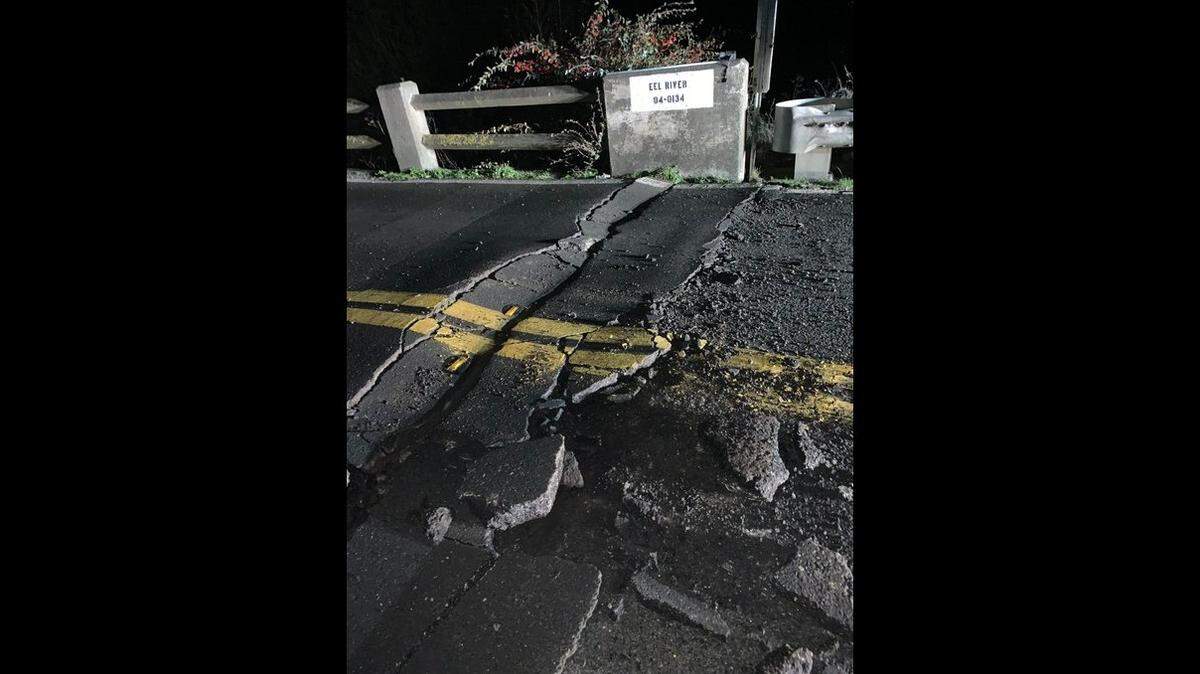
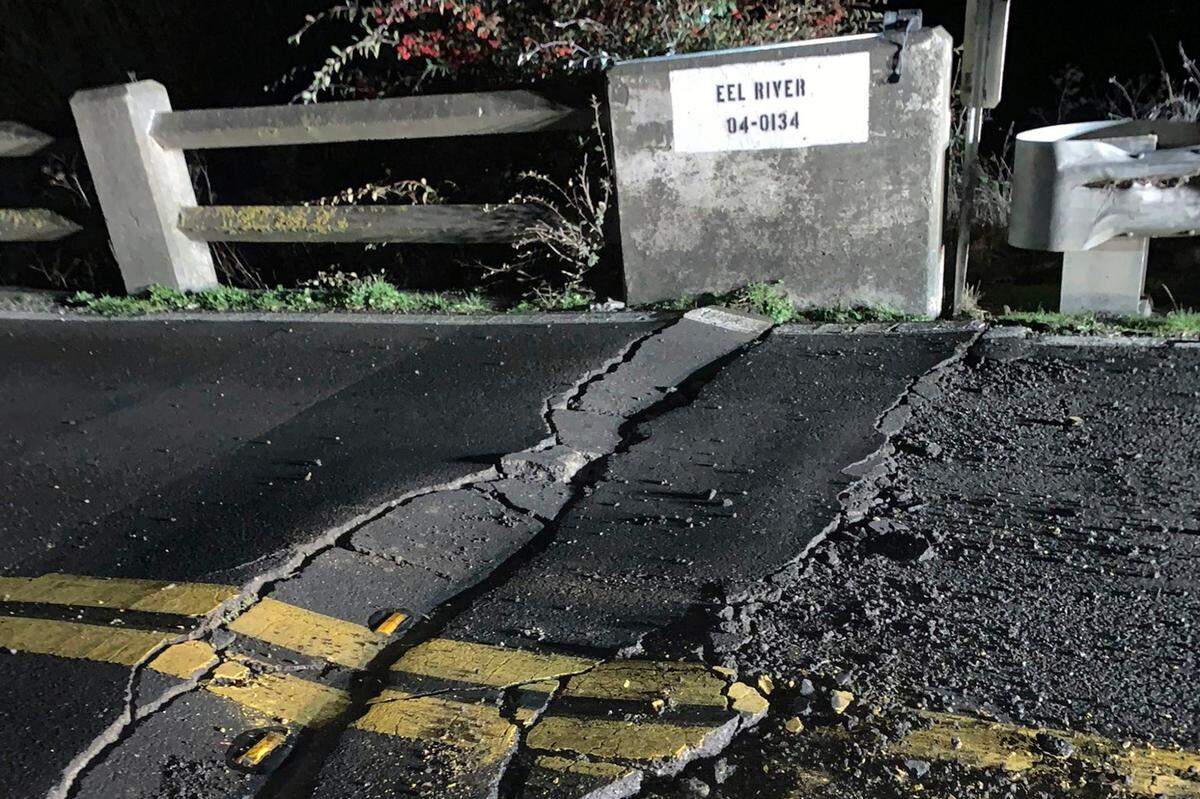
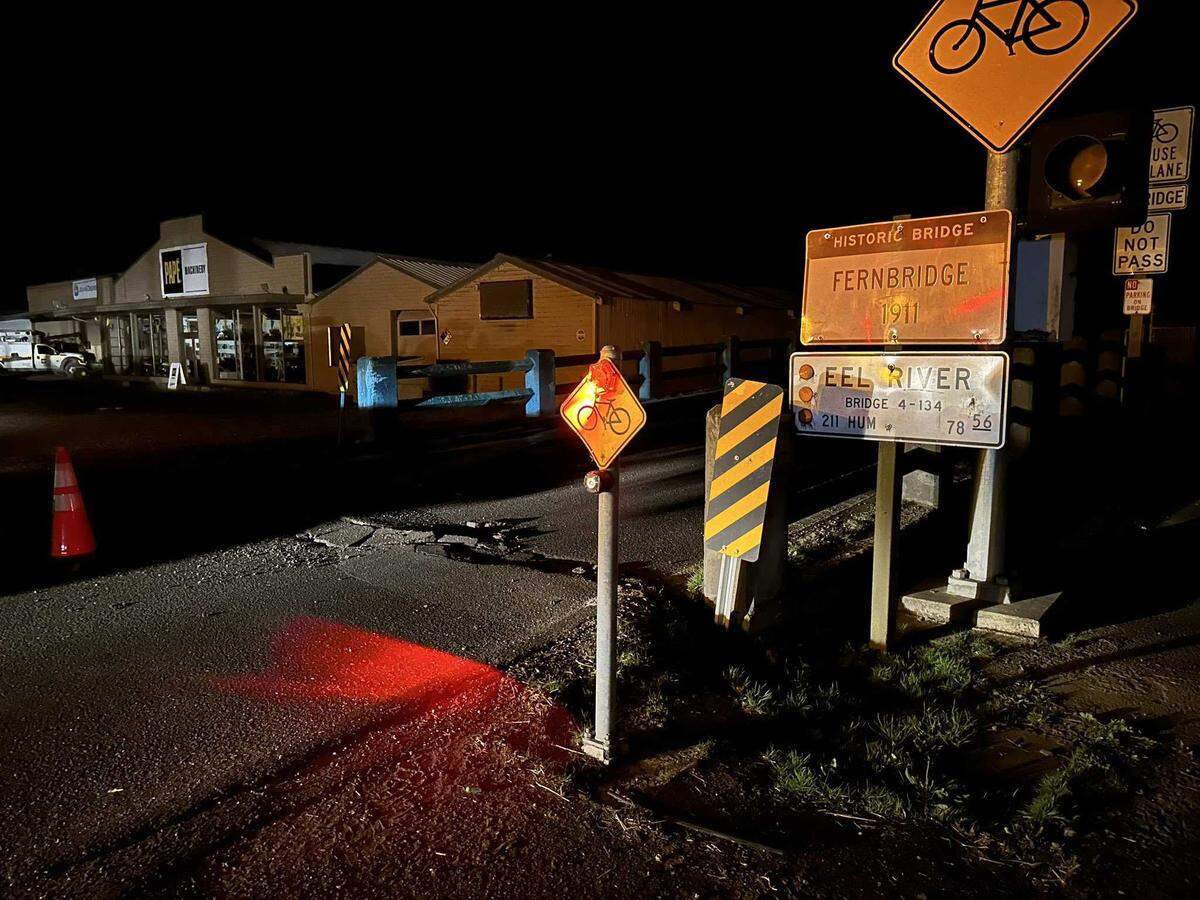
Caltrans closed Fernbridge, a 111-year-old structure carrying Highway 211 across the Eel River, after authorities found cracks in four places. Several roadways were reportedly cracked and “moving” as far as Eureka, according to officials.
Highways 101 and 299 remain open, Caltrans said.
Widespread power outages in region
The temblor struck around 2:34 a.m. and was centered 13 miles west of Fortuna, seismologists reported. Other cities nearby include Eureka (22 miles) and Fort Bragg (81 miles). The area is about a four-hour drive from Sacramento.
Widespread power outages were reported throughout Humboldt County, according to authorities and utility officials. PG&E on its online outage map reported close to 72,000 customers without power as of 7:30 a.m. About 68,000 remained without power by noon.
California ISO, the state’s grid operator, declared a transmission emergency.
“Power is out across the county,” the Sheriff’s Office said on Twitter, urging residents to avoid calling 911 unless there was an emergency.
PG&E said it activated its emergency response plan, and that crews were working not just to restore power but to respond to gas and electric hazards.
The Gold Country chapter of the American Red Cross, based in Sacramento, has opened a shelter for residents at Fortuna Fireman’s Pavilion, 9 Park St., Fortuna, according to Red Cross spokesman Steve Walsh.
A tsunami risk was ruled out by the National Weather Service minutes after the shaking ended. The weather service and USGS estimated that the quake occurred 3 miles offshore at a depth of 11 miles.
Damage assessment could take days
Comprehensive damage assessment will continue through at least Wednesday, Ghilarducci said in a news briefing late Tuesday morning at the Cal OES headquarters in Sacramento County.
“Earthquake damage is always a little bit more difficult to find because you have to get in and understand what the foundation looks like, where the cracks may take place,” Ghilarducci said.
Crews may need to rely on ground assessments rather than making use of aircraft, due to weather conditions expected in Northern California this week, but Ghilarducci said the weather should not have a major impact on response efforts.
The damage assessments will be necessary to determine the scale of disaster aid that will be needed, the director said. No formal disaster declarations had been made at the local, state or federal level as of noon Tuesday.
The disaster response priorities are critical infrastructure; restoration of power, water and gas services; and assisting displaced residents, Ghilarducci said.
Most of the damage has been focused in the towns of Ferndale, Fortuna and Rio Dell. There have been reports of at least one structure fire and a water main break, Ghilarducci said.
Caltrans Director Tony Tavares in Tuesday’s briefing said the state transportation agency has already approved a $6 million grant for a contractor to shore up and repair Fernbridge, which as of noon remained closed to non-emergency vehicles. Repair crews were expected to arrive later Tuesday, Tavares said.
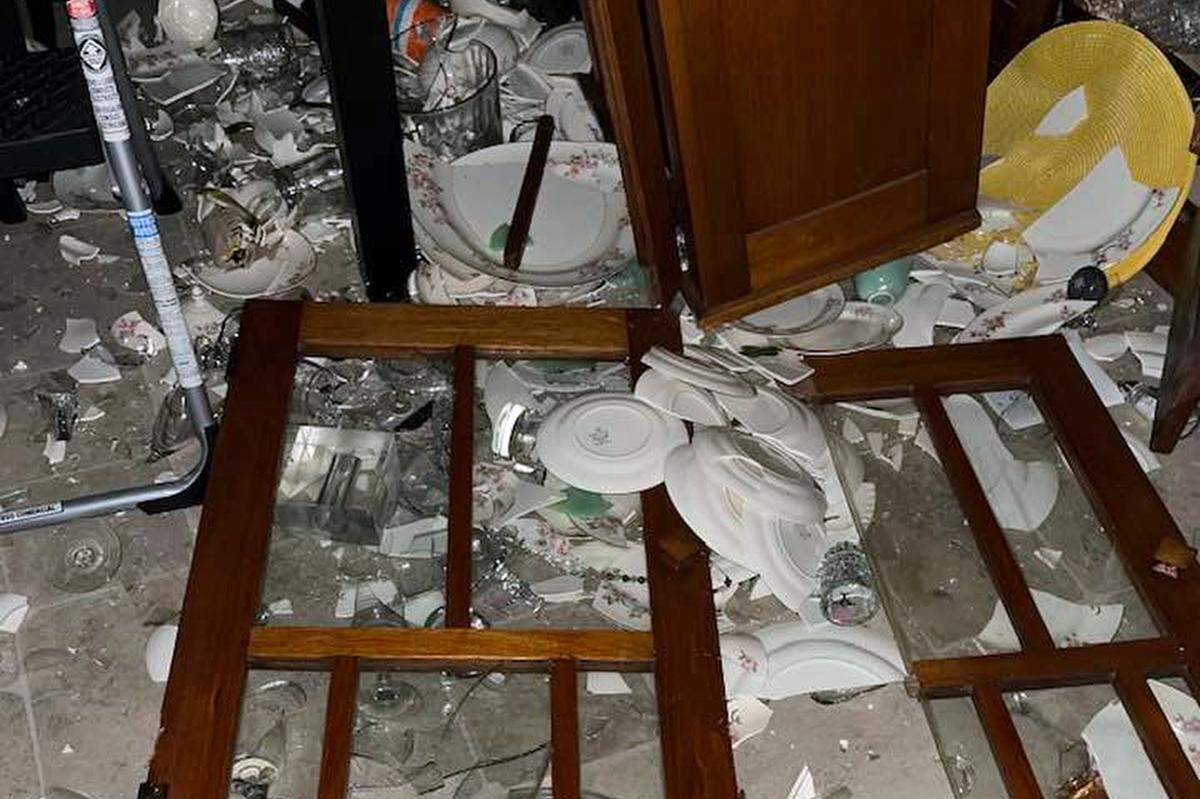
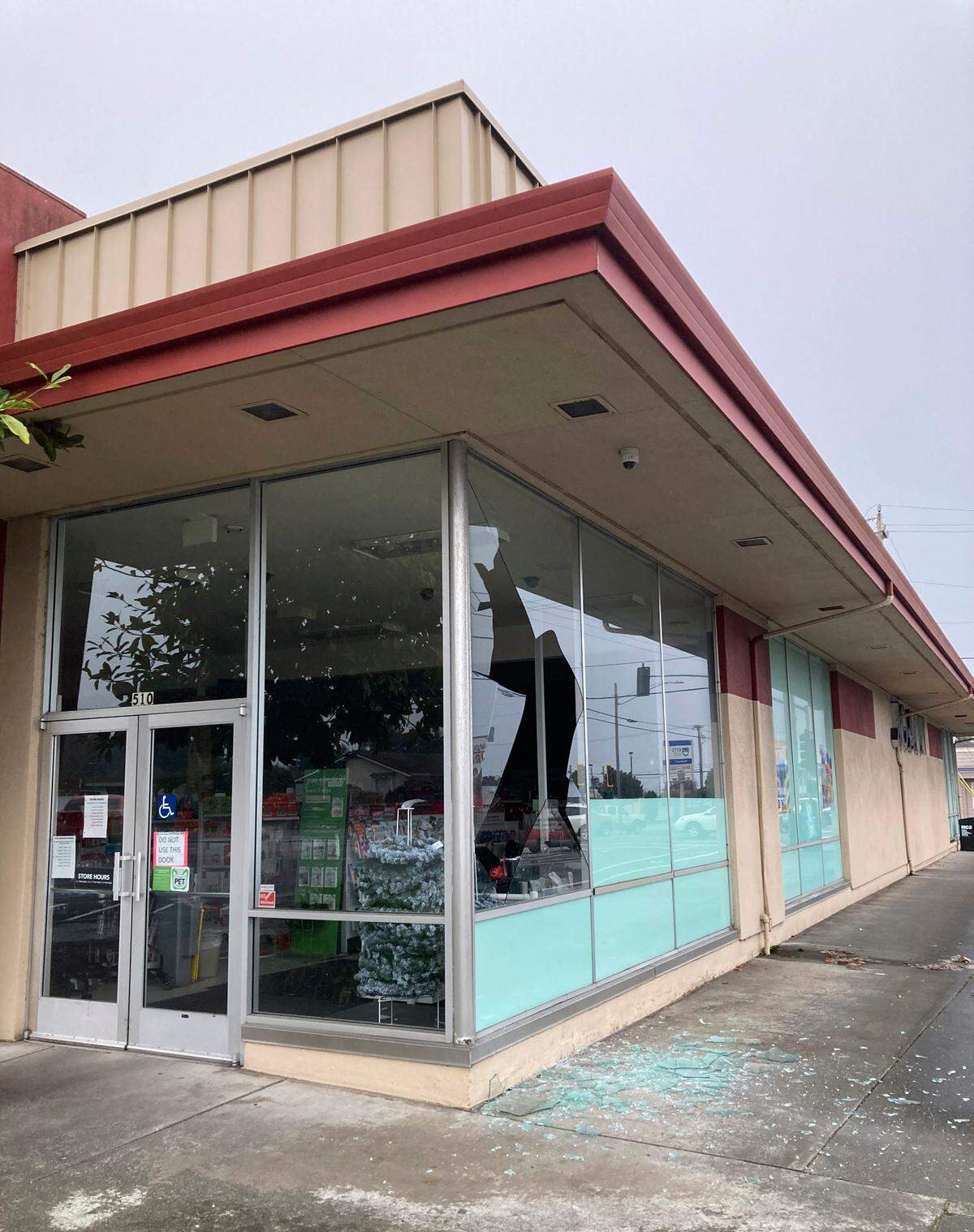
Ghilarducci said Tuesday’s earthquake caused “both structural and non-structural” damage. Non-structural damage, he said, includes things like broken glass or toppled bookcases — items that typically cause most injuries during earthquakes.
Officials urged Humboldt County residents to secure those types of items or move them down from high places if possible, as a precaution against aftershocks.
‘House is a mess,’ roadways damaged
“That was a big one. Power is now out in #ferndaleca. House is a mess,” Caroline Titus, a journalist and resident of Ferndale, wrote on Twitter, showing broken items in her 140-year-old Victorian home.
Mikey Gonzales, a resident of Arcata some 20 miles from the epicenter, remarked on Twitter: “California native and this was the craziest earthquake I’ve experienced!”
Humboldt County, home to some 136,000 residents, is in a region of the state that has a long history of large earthquakes. That includes a magnitude 7.0 quake in 1980 and a 6.8 tremor in 2014, according to the California Earthquake Authority. The region sits at a triple junction of tectonic activity — the Pacific, North American and Juan de Fuca plates intersect just off the coast.
“It’s a complex area offshore, where we have the Pacific Plate, the North American Plate … and some small pieces of other plates,” Cindy Pridmore, a geologist with the California Geological Survey, said in Tuesday’s Cal OES briefing.
Pridmore said that region has seen more than 40 earthquakes ranging from magnitude 6.0 to magnitude 7.0 in the past.
“The reason of Ferndale has so many earthquakes — it has kind of moderately large earthquakes pretty regularly — because you have those three plates coming together and they’re moving in different directions from each other and they’re just going pretty fast,” said Dr. Julian Lozos, a seismologist and professor at Cal State Northridge.
Tuesday’s shaking came one year to the day that a magnitude-6.2 quake rattled the same area, breaking windows and causing other minor damage, according to the Los Angeles Times.
Eureka resident Dan Dixon, 40, said he and his wife were sleeping when the latest quake jolted them awake and shook everything, throwing pictures in their home to the ground. Their infant daughter, he said, slept through it.
“It was probably the most violent earthquake we have felt in the 15 years I have lived here,” he said. “It physically moved our bed.”
Aftershocks continue to rumble
More than 40 aftershocks measuring more than magnitude 2.5 have rattled Northern California following the early morning quake, the USGS reported. Twenty of those temblors had a magnitude of 3 or higher by 11 a.m., the USGS said.
By late Tuesday morning, Pridmore said there had been more than 80 aftershocks.
The largest aftershock, a magnitude 4.6, struck five minutes after the main shock on land near Rio Dell, a town of about 3,600 residents along the Eel River 10 miles inland.
Seismologists said more shaking was expected in the coming week.
The USGS’ aftershock forecast as of 8 a.m. suggested as many as 27 aftershocks with a magnitude of 3 or greater could be expected. The models suggest there’s a 14% chance of at least one aftershock greater than magnitude 5 within the next week.
Residents and journalists in the region were reporting via social media scattered gas leaks and burst water pipes.
One gas leak sparked a fire at a home in Rio Dell. Such damage is commonplace during such shaking, and authorities were urging residents to shut off supplies to homes and businesses.
Other property damage ranged from a possible collapsed structure to felled shelves and other home fixtures.
The Office of Emergency Services said it was ”coordinating with local and tribal governments to assess the impacts of the earthquake and supporting with resources, mutual aid and damage assessment.” The Gold Country chapter of the Red Cross, based in Sacramento, was also coordinating relief efforts.
Early warning system activated
The ShakeAlert earthquake early warning system — which is co-operated by the USGS and covers the West Coast, buzzed cellphones and woke up thousands of residents to notify them of the earthquake.
According to Ghilarducci, the state’s Shake Alert system sent alerts to roughly 3 million people in Northern California, in most cases doing so about 10 seconds before the shaking began for recipients who did feel the shaking.
“The system did operate as we had hoped, and as we’d been working to design,” Ghilarducci said.
About 270,000 people received notifications early Tuesday, said Ferguson, the Cal OES spokesman.
Most who received the earthquake alert in Northern California, however, reported on social media they did not feel shaking.
Very minor shaking was felt in Sacramento, 200 miles to the southeast, and in San Francisco, 200 miles south, according to the Geological Survey’s “Did You Feel It?” self-reporting system.
By 7 a.m., more than 4,200 users told the agency they felt the shaking with reports made as far south as San Jose (250 miles) and as far north as Medford, Oregon (140 miles). By 2 p.m., more than 5,200 people had reported feeling the quake from as far away as Colorado and Arizona.
The earthquake came just days after a small magnitude 3.6 earthquake struck the San Francisco Bay Area, waking up thousands of people at 3:39 a.m. Saturday and causing minor damage.
This story was originally published December 20, 2022 at 5:50 AM with the headline "2 dead, 12 injured, roads damaged as magnitude 6.4 earthquake rocks Northern California coast."