Summer rains flood KCK creeks with human waste. New project could help stop that
Starting this summer, people who live or work in northeast Kansas City, Kansas, can expect to deal with temporary road closures over the next couple of years.
But should all go according to plan, the morning commute frustrations may eventually result in local bodies of water smelling better than they currently do after rainfall. And some creeks and streams might be safer for people to live near.
The Unified Government of Wyandotte County and KCK plans to begin installing about 10,000 feet of stormwater lines and about 900 feet of new sewer lines between 18th Street, Quindaro Boulevard, 12th Street and Parallel Parkway during the summer months. Construction will continue through the summer of 2028, according to the local government.
The project is among numerous ongoing stormwater and sewer line separation projects that the Unified Government is federally mandated to complete in coming years. The government has an agreement with the U.S. Environmental Protection Agency that requires Wyandotte to finish separating its sewer lines across the county, an estimated $1 billion project, by 2044.
Failure to meet deadlines, or falling behind on sewer system maintenance, could cost the government, and residents, more over the course of that agreement – in more ways than one. The government would face financial penalties that would ultimately affect residents. It would also delay projects meant to reduce risks to human health.
Much of eastern Wyandotte County operates on a combined sewer system, which means sewer and stormwater lines are connected and separated by a dam within the underground pipe systems. The combined system is common in areas that have been around for longer periods of time and are less common in areas of new development.
On days when the combined system operates as it should, stormwater flows back into area water bodies. And waste water, which comes from homes and businesses, flows to water treatment facilities.
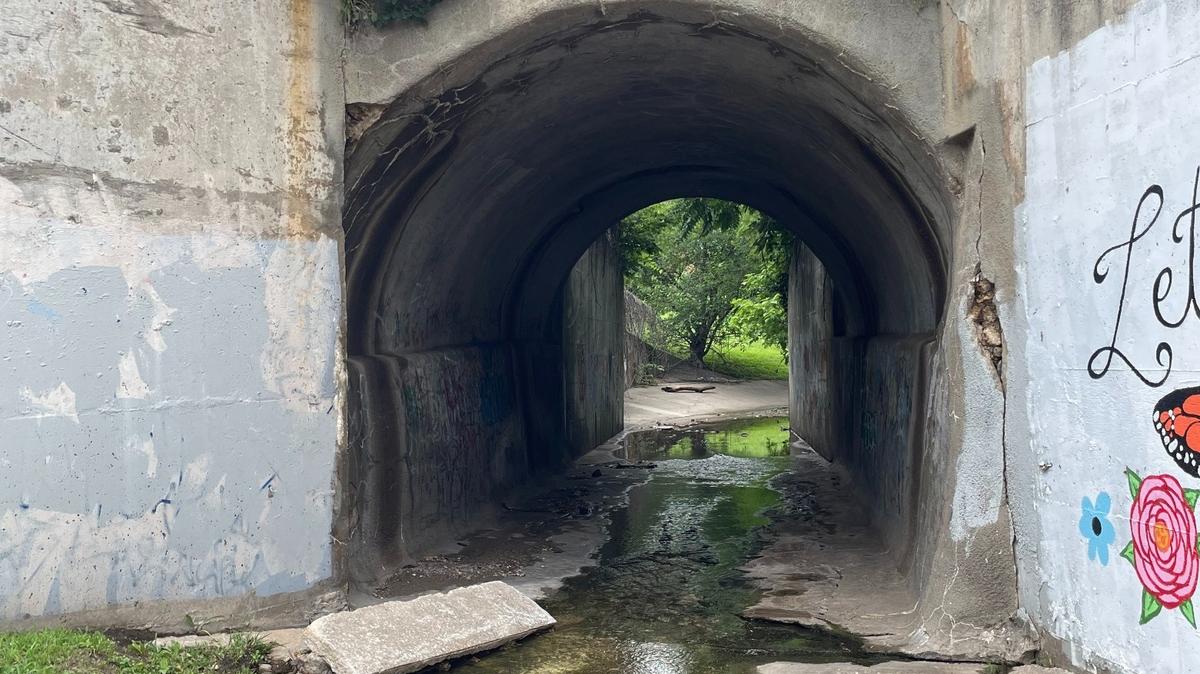
But on days of heavy rain, like Wyandotte is accustomed to during the summer months, wastewater can flood over the dam that separates those pipe systems. Then, wastewater, including fecal matter, mixes into the stormwater and goes directly back into area waterways, like local creeks and streams. That’s called a Combined Sewer Overflow, or a CSO.
When sewage overflows into KCK waterways, that poses a significant threat to public health. It increases people’s risk of being exposed to toxic chemicals that people dump down their drains, and it can pass on harmful viruses and bacteria that can make people sick or even kill them.
That’s why KCK, and communities across the country, are being obligated to separate their combined systems. Separating the system would mean that wastewater lines would no longer be partially connected to storm water lines, which would limit the likelihood of a CSO.
The roughly $16 million project starting this summer is designed to limit the amount of CSOs in the Jersey Creek Watershed in northeast Wyandotte.
The government hopes it will also limit water treatment costs at the Kaw Point Wastewater Treatment facilities and “help address related health and environmental concerns,” according to its website.
These types of projects are largely being paid for through annual sewer rates that people pay to the Unified Government. Residents are on track to pay increased sewer bills through 2044 to help keep the government in compliance.
The government began with 5% annual increases between 2020 and 2023. Bills will increase about 3-4% between 2024 and 2029; then between 2030 and 2044, residents will see 2.5-3.5% annual increases.
People who want to learn more about the combined system separation, and how it will affect them, are invited to public information sessions on Thursday and Tuesday, according to the Unified Government. Those will be held from 5 p.m. to 7 p.m. at the Mt. Carmel Redevelopment Corporation, 1130 Troup Ave., KCK.