Sewage is overflowing into KCK waterways in heavy rain. It’s getting harder to fix
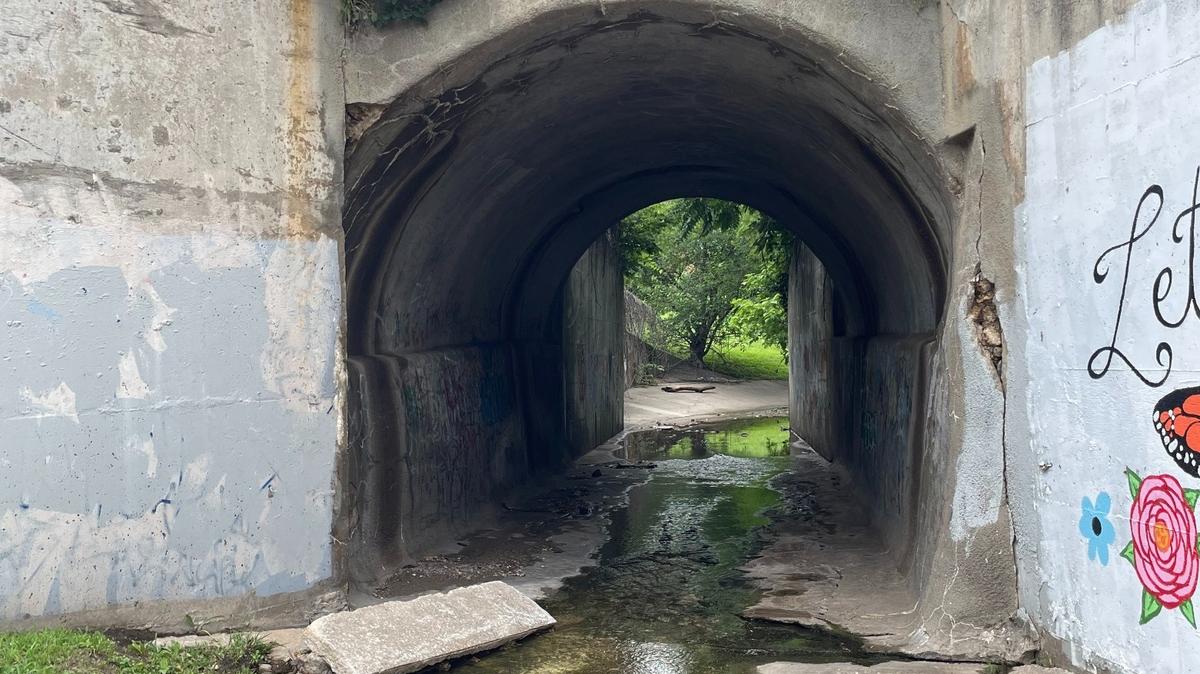
In the six years she’s lived in Kansas City, Kansas, Melanie Zamora had no reason to think the creek behind her home, a place she’d relax as her two dogs splashed in its waters on sunny afternoons, was anything but clean.
“They just go running back and forth,” Zamora said of her pups on an afternoon in late June. She recounted spotting crawfish while walking along the water, noting it would smell a little funky after it rained.
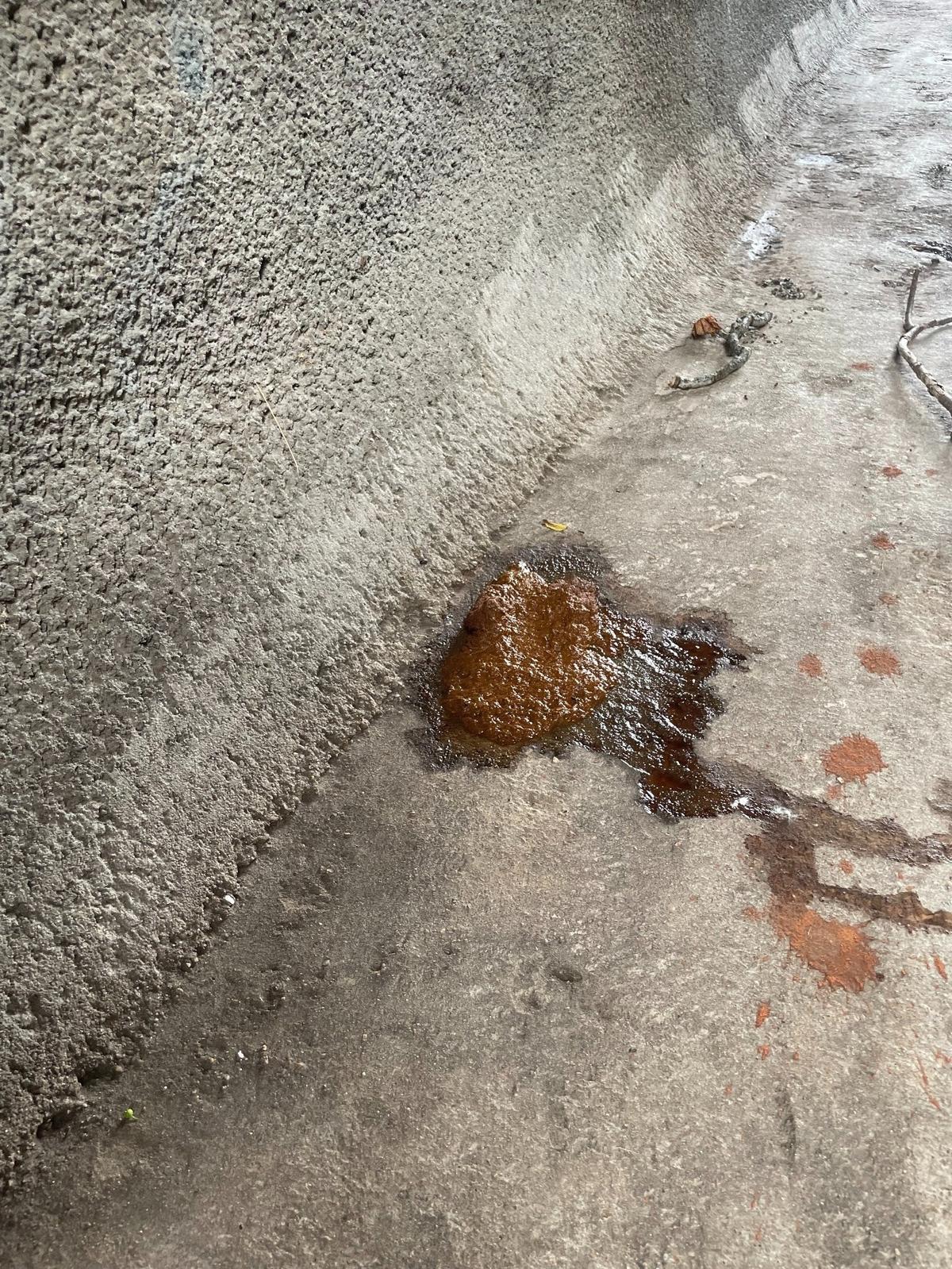
Less than an hour later, new rainfall would make its way into Jersey Creek, which stretches across KCK neighborhoods, parks and flows into the Missouri River. During a recent stroll down the creek, a reporter identified fecal matter that would eventually drift downstream, in the direction of Zamora’s home and the river.
Sewage overflowing into KCK waterways when it storms can pose significant threats to public health and increase the risk of exposure to toxic chemicals, viruses and harmful bacteria that can make people sick and, in extreme cases, can be fatal.
Those risks are why fixing the sewer system north and south of Jersey Creek is high on the list of tasks that the Unified Government of Wyandotte County and KCK must achieve in order to comply with a federal order to reduce the amount of human waste that is flowing into its local water bodies.
But financial decisions the Unified Government is making this summer — in the face of budget constraints and staff shortages — may affect how successfully that, and other mandated projects, go. And the pressure to meet those federal deadlines will lead to residents seeing higher charges on their water bills.
The Unified Government did not respond to multiple interview requests seeking how any of the court-ordered sewer projects — being financed with public dollars — are coming along as of publication time.
Waste in the water
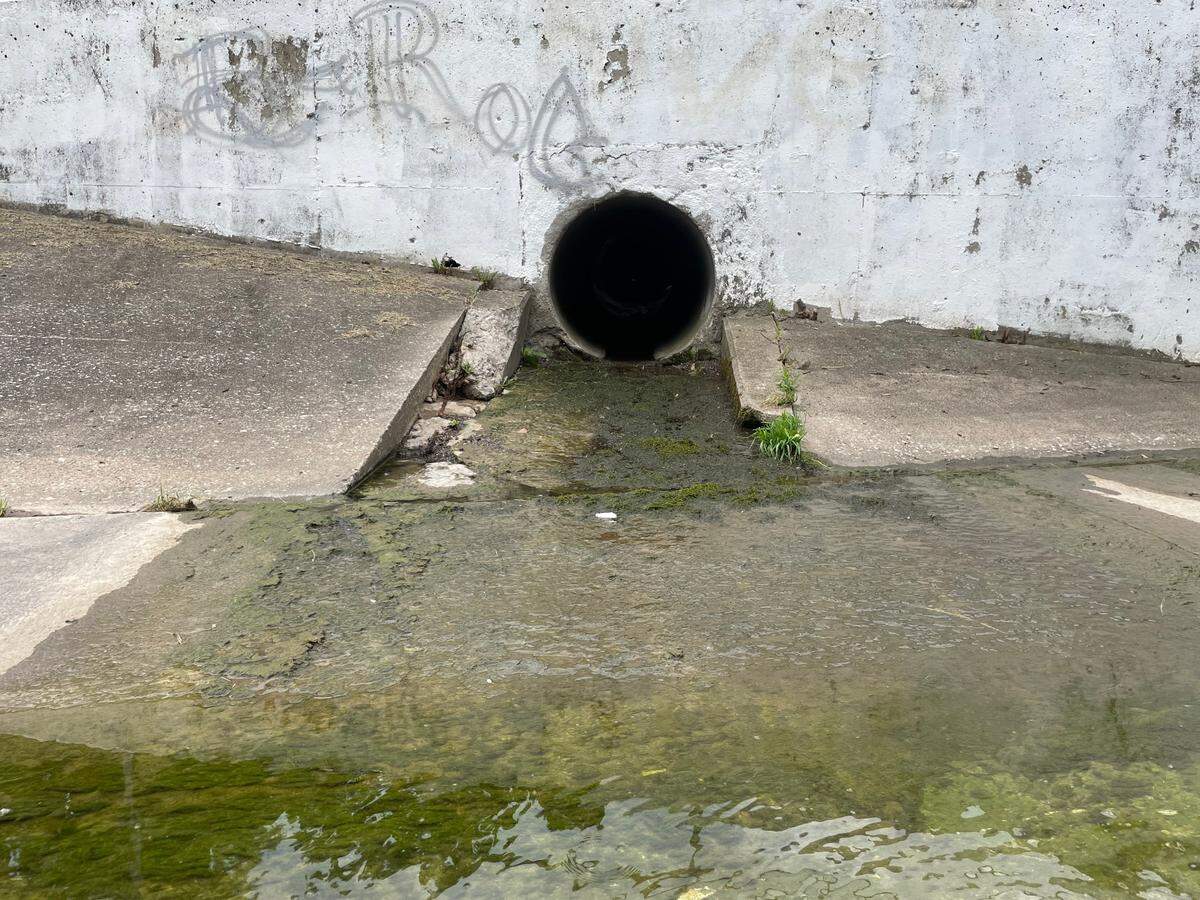
Like many cities with dated infrastructure, Wyandotte County relies on what’s called a combined sewer system, which means that storm and sewage water use the same pipes but have different outputs. The two sources of water are separated by dams built into the pipe system.
When the pipes work like they’re supposed to, sewage water – containing human waste – is directed to water treatment facilities, while storm water dumps back into local bodies of water.
But that changes during an intense storm.
When the water flows too high through the pipes during times of heavy rainfall or ice melt, sewage can ride over the dam in the pipe and join stormwater as it flows into area rivers. That spillover is called a combined sewer overflow, or CSO.
In a 2020 consent decree, the U.S. Environmental Protection Agency mandated the Unified Government separate its sewer and stormwater lines, among several other infrastructure projects, to minimize combined sewer overflows within 25 years.
Separating those pipes would direct wastewater directly to the treatment plants and storm water directly back into streams.
But changing the system is a lengthy, difficult process, especially when KCK’s existing infrastructure is old and often in need of repair, Jeff Miles, the Unified Government’s director of environmental services, said in February.
The Unified Government’s roughly 6 million feet of underground pipe receive and transport about 9 billion gallons of water each year through its five water treatment plants, more than 70 wastewater pump stations and 40,000 manholes. It costs about $108 million per year to treat and process wastewater, Miles said at the time.
Failure to comply with key deadlines or falling behind on sewer system maintenance over the course of the agreement would end up costing Wyandotte County taxpayers more because the Unified Government would face financial penalties. It would also delay the projects intended to minimize risks to public health and the environment.
“If this system is not properly maintained, multiple issues could be created or worsen,” according to the Unified Government website. “Those issues include sinkholes in our streets, stormwater seeping into our sewer system, and sewage overflowing into our creeks and streams or backing up into homes.”
Area drinking water, regulated by the Board of Public Utilities, doesn’t come directly from those rivers, but rather man-made aquifers that store water underground near the Missouri River. That water is delivered to residents’ homes and becomes wastewater when it leaves the home.
Decades-long problem
Negotiations with the EPA to improve area water quality through reducing wastewater overflow had been ongoing for decades before the agency and Unified Government reached an agreement in 2020.
KCK in the 1970s fell into the national limelight for violations that prompted a first federal lawsuit for violations of the Clean Water Act, Miles said. The EPA dropped that first suit after local government officials built the Kaw Point Treatment Plant.
Permitting for the plant required the government in the 90s to establish and submit a long term control plan to regulate its CSOs. They submitted that plan in 2000.
Although overflows did decrease over the course of six years, the EPA later notified the Unified Government that its long term plan did not adequately meet its standards. The agency in the early 2000s conducted a two-year inspection over the Unified Government’s entire program and found significant violations of the Clean Water Act.
“EPA has identified various violations, including but not limited to, dry weather outflows from CSO Outfalls and discharges from the Sewer System at unauthorized locations,” according to federal court documents. Other violations identified in 2009 were “including but not limited to, constructed SSOs (sanitary sewer overflows), continued utilization of CSO Outfalls previously reported as abandoned by the Unified Government, and outfalls identified as CSO discharge points with little or no known stormwater contribution.”
The parties reached a partial agreement in 2013 that outlined some preliminary priority projects ahead of reaching a full agreement. After submitting a few variations of plans for an integrated overflow control program, the parties agreed on a 25-year plan in 2020.
Notable requirements include complying with various permits, regular maintenance, operational plans, evaluations and annual reporting. Capital projects include implementing overflow control measures, separating the sewage system and improving pump station capacity.
Among the key holdups in the negotiation process was finding a plan that the Unified Government could afford while also keeping up with key deadlines, Miles told the commission.
Across the state line, Kansas City, Missouri, also entered a similar agreement with the EPA to fix its pipe system and limit sewage overflow. At the time of the agreement, the city estimated it would cost more than $2.5 billion over those 25 years to finance those changes.
Unequal flooding
The EPA in its consent decree noted that it’s particularly important that the Unified Government address these issues given it serves a largely non-white and non-wealthy population with a comparably lower median household income than other parts of the KC metro.
The eastern, historically lower-income, portion of Wyandotte County has a combined sewer system throughout its entirety. The western part of the county has some – but not all – lines that are separated, according to the EPA.
“The injunctive relief outlined in the Integrated Overflow Control Plan specifically requires heightened control in an area of environmental justice concern, and the resulting benefits of these wastewater control projects are concentrated in the eastern third of the city, where environmental justice concerns are most serious,” according to the EPA.
Eastern Wyandotte County neighborhoods, streets, businesses and churches have previously been subjected to heavy stormwater flooding when storms move across the Kansas City metro.
After evening storms left multiple KCK homes water damaged back in May, Miles told The Star that flooding stemmed in part from debris clogging water lines and those lines having a limited capacity due to operating on a combined system.
Fully separating those lines, as mandated in the terms of the consent decree, would open up some capacity on local stormwater lines and potentially reduce flooding, he said.
Staffing shortages
Miles told county commissioners in a February board meeting that staffing limitations have affected department operations and leave current staff members to work overtime in order to keep up with the EPA’s order.
“It’s hard to perform those requirements of the consent decree when you don’t have enough people, which ultimately we pay more overtime to make up for that because we still have to meet those goals,” Miles said at the time.
Staying on top of upcoming deadlines requires round-the-clock work, and that’s hard to do with notable staff vacancies, Miles told commissioners in February.
Of the 129 authorized positions within the environmental services department, roughly 25 were vacant. The department at its peak was staffed with 184 people, Miles said.
And public works isn’t the only department with operations affected by staff limitations this year.
The Unified Government implemented a hiring freeze and eliminated several vacant positions it deemed unnecessary in an effort to trim millions from its personnel budget for the 2025 year. The move came in response to budget constraints prompted by commissioners’ 2024 decision to stagnate increased property tax revenues in the year ahead as an effort to provide property tax relief to residents that have long called for relief.
The decision to hold off on added property tax revenues at a time when goods and services are more expensive affected numerous local services and government departments, including public works, law enforcement, emergency services, transportation and assistance for elderly residents.
Commissioners this summer must decide whether to deny new revenues for a second consecutive year or to bring added tax dollars to area services. That decision will affect both area tax bills and departments’ ability to serve residents in varying ways.
Higher bills
The Unified Government estimates that between 2018 and 2044, it’ll cost about a combined $1 billion over the course of that time to meet all the EPA’s requirements. Funding for that will largely come from revenues generated by increasing annual sewer rates over the next few decades.
This means Wyandotte County residents are on track to pay increased bills through 2044 to help keep the government in compliance.
The government began with 5% annual increases between 2020 and 2023. Bills will increase about 3-4% between 2024 and 2029; then between 2030 and 2044, residents will see 2.5-3.5% annual increases.
Given a dollar in 2025 doesn’t stretch as far as it did in 2018, it’s not clear how rate increases will stand up against inflation.The Unified Government must pay financial penalties if they miss deadlines or encounter more outfalls than the consent decree permits.