Olathe said it was in on Chiefs talks for 2 years. But KCK found out last second
Kansas City-area residents found out about the Kansas City Chiefs’ plans to move to Wyandotte County not long after county officials did.
Although legislators at the state level had discussed Kansas City, Kansas, as a potential site for the $3 billion stadium previously, that talk stayed behind closed doors at the state level for quite a while, said David Johnston, Wyandotte County administrator.
The office of Lt. Gov. David Toland, which handled stadium negotiations, told leadership within the Unified Government of Wyandotte County and KCK about those plans in late December, Johnston said.
Local leaders were looped in not many days before state, local and team officials on Dec. 23 publicly announced the move, which also includes plans for a training facility and team headquarters in Olathe.
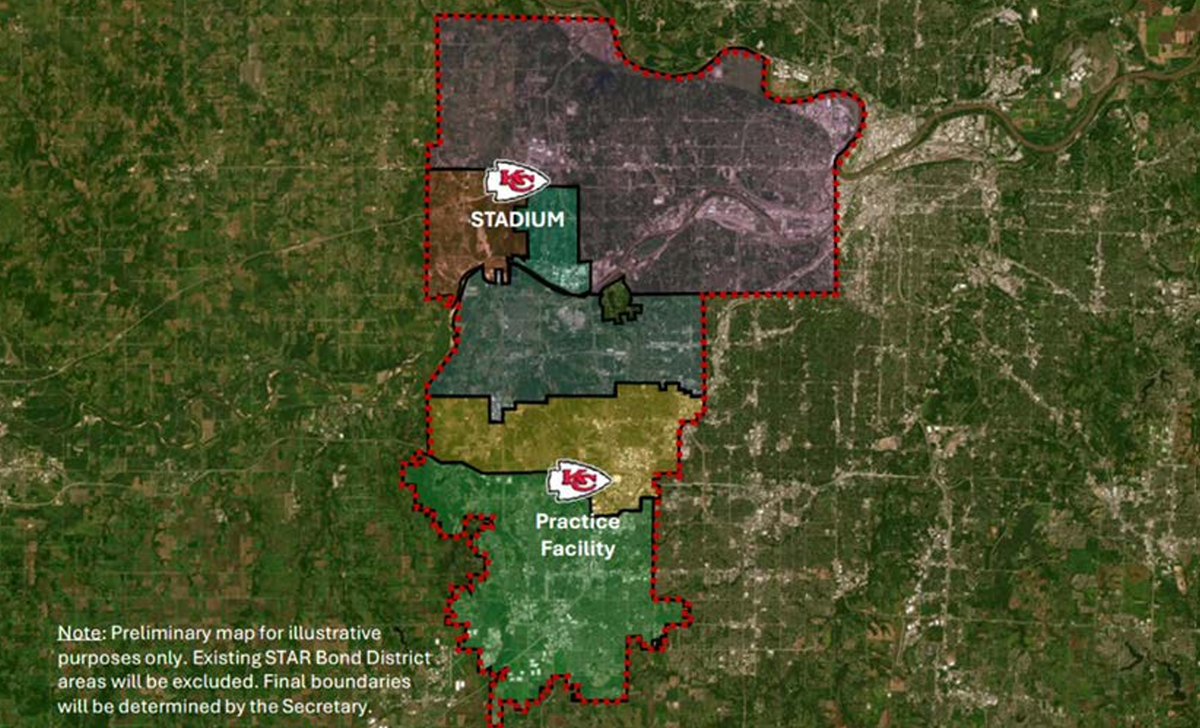
Though Wyandotte leaders were kept out of negotiations, the stadium proposal relies heavily on the county. The district that would divert sales tax money to pay for the stadium would cover nearly all of Wyandotte County, and state and team officials are looking to redirect local sales tax revenue in addition to state taxes to pay back stadium debt. That decision to put local money toward the stadium and any development plans would require county approval.
In the days following the Chiefs’ announcement of their intention to move to Kansas, KCK leaders have made it clear that the local government hasn’t officially locked down a deal with the team.
Mayor/CEO Christal Watson, sworn into office last month, said in a video-recorded statement that the local government is still weighing the long term impacts of a stadium in Wyandotte County, asking thorough questions and trying to get a clearer picture of how the move would affect residents.
A secret process
In Kansas, sales tax and revenue, or STAR, bond agreements that involve major sports teams come with a tight-lipped process.
Documents related to the project — like drafts of the terms or any associated paperwork — will remain confidential and will not be available through the Kansas Open Records Act until the parties execute an agreement, according to the bond agreement state legislators moved forward last month. The bond agreement attributes that confidentiality to a Kansas state statue specifically designed for STAR bond projects involving a major professional sports franchise.
Johnston said that the local government doesn’t have much information to share at this time as negotiations are ongoing.
Shortly after state legislators announced the nearly $4 billion plan to get the Chiefs across state lines, Olathe Chamber of Commerce CEO, Tim McKee, said that the city had been working under a nondisclosure agreement for nearly two years to secure the facility in those cities.
Although the Unified Government confirmed that it is also operating under NDAs related to the stadium project, it declined to share those because the STAR bond statute allows them to remain confidential.
STAR bonds used to pay for the project would be paid off over 30 years using new state sales tax revenues — and potentially also local taxes — generated within a dedicated district. State officials pledged to pitch in, through these bonds, $1.8 billion for the stadium and roughly another billion for the training facility and headquarters.
Typically, STAR bond districts encompass a new development aimed at attracting tourists and its immediate surrounding area, redirecting the sales taxes generated by that development to pay off the debt used to build it.
But the district that state officials proposed to pay back the Chiefs stadium bonds covers nearly all of Wyandotte County and most of western Johnson County. That means new state sales tax money — and possibly local too — throughout that entire area would be put toward paying back stadium debt instead of other government priorities.
Wyandotte County commissioners must vote by Feb. 20 on whether they plan to allocate local sales tax revenues generated across the county to pay for the stadium’s construction.
This story was originally published January 8, 2026 at 6:25 AM.