Independence neighbors pushed to get recall election. Then others sued to stop it
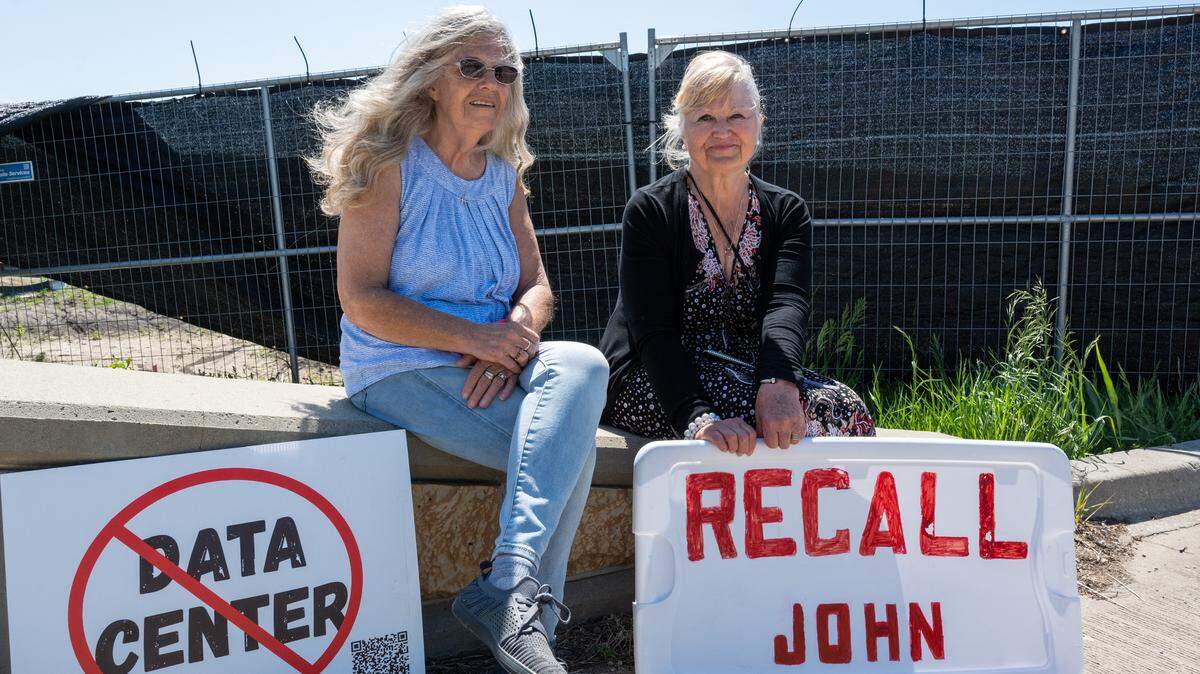
Following weeks of petition drives and door-to-door signature collection by resident critics, the City of Independence has set a date for a special election to potentially recall First District Councilmember John Perkins.
But a new lawsuit, filed by an opposing group of residents in Jackson County court days before the council approved the special election, could potentially halt the recall election before a single ballot is cast.
Perkins was one of five City Council members who voted in favor of $6.2 billion in tax breaks for a hyperscale artificial intelligence data center from Dutch company Nebius. The $150 billion, 400-acre project is currently under construction in northeast Independence and has drawn criticism from those who live nearest, inspiring the formation of multiple local watchdog and opposition groups.
Two of the other council members who voted for the tax breaks, Bridget McCandless and Jared Fears, have since been voted out of office. Recall organizers have also criticized Perkins’ decision not to host town halls or other public information events in the First District before the tax break vote.
Perkins has represented Independence’s First District on and off for 18 years. As the recall effort has progressed, residents who oppose it have highlighted Perkins’ work with historic preservation in his district, as well as his support of city investment in the Englewood Arts District.
Some residents have also pushed back on the price tag of the special recall election. The City Council estimates that the special election will cost $164,400 and will require a budget amendment in order to release the necessary funds.
The City Council approved an emergency measure related to the recall Monday night, both setting the special election date for Tuesday, Sept. 1 and authorizing city staff and officials to set election preparations in motion.
Now, a trio of First District residents — some with their own ties to the Independence municipal government — have sued to stop the recall election from taking place at all.
Suing to stop recall
The lawsuit, filed July 2, asks a Jackson County judge to declare the recall petitions “legally insufficient” and issue an order “prohibiting the Defendants from placing the recall question on the ballot or taking any further action to advance the recall process.”
Signatures for the Perkins recall were collected in two batches. The Jackson County Election Board initially verified about 745 signatures, which was insufficient to trigger a recall election.
Under the Independence City Charter, petitioners had a grace period of 10 days to submit additional signatures and clear any other errors. While organizers did hit the signature threshold after the second submission period, the lawsuit argues that the second batch of signatures were filed after 11 days — one day late — and therefore should be void.
The Jackson County Election Board certified the first batch of petitions on May 27, per city records. According to the lawsuit, Independence City Clerk Suzanne Holland notified organizers of the beginning of the 10-day re-collection period in a letter dated May 28, but with the date scratched out in pen and rewritten as May 29. The lawsuit asks a Jackson County judge to find that the second set of signatures were not filed to the city and county in time to trigger a recall.
The lawsuit also argues that the city’s current referendum process for recalls is unconstitutional and that the recall petitions “fail to identify any way in which [Perkins] was incompetent.”
The lawsuit was filed by plaintiffs Jason and Joyce White and Helen Hurley, all First District residents. It names the city of Independence and the Jackson County Election Board as defendants, along with Holland and Jackson County Clerk Mary Jo Spino.
Jason White was an at-large Independence City Council member from 2002 to 2006 and is currently affiliated with Indy Energy, a nonprofit group that circulates information and opinions on Independence’s municipally owned energy utility. Helen Hurley is the vice-chair of the Independence Human Relations Commission. All three are represented by Greg Leyh, a civil litigator based in Kansas City.
Leyh told The Star that the decision to pursue the recall “sets a bad precedent” for Independence residents. He argued that recalling the councilmember over a disagreement with his vote, rather than a concern about his competence to serve, is ultimately unconstitutional.
“If you could trigger the recall process every time you disagreed with a councilman, you would be imposing costs on the public that are extreme,” Leyh said.
Recall perspectives diverge
Monday’s election ordinance went through an expedited process in order to meet the election board’s deadline to get the recall on a September ballot.
On the dais Monday night, Independence Mayor Kevin King defended Perkins’ vote on the data center tax breaks, urging constituents not to penalize Perkins for what King described as prioritizing the city’s long-term financial wellness.
“We hear of any number of things that residents would like to see in our city…and not a single one of those is free,” King said. “So, as this council member who is being put up for a recall weighed his vote, he had to weigh not just the concerns of those opposed to the data center, but also the concerns of those most at need within our community.”
Meanwhile, Independence Action Committee cofounder McKenna Cobb told The Star that hundreds of District 1 residents put forth time and effort to bring the recall to a vote through signature collection, and that recall supporters feel that “an opportunity to reconsider leadership is what we deserve.”
“We believe this was a fair and correct petition process, and everyone involved in this effort deserves an opportunity to see democracy play out,” Cobb said.
Perkins was unavailable for comment Wednesday afternoon.