Independence may sell off historic properties. What will happen to Vaile Mansion?
When Pam Fulmer walks into the Vaile Mansion in Independence to set up for tours, she says hello to the ghosts first.
It takes Fulmer, one of the volunteers who operates the historic mansion near downtown Independence, about half an hour to set up in the mornings. She turns on chandeliers, checks on dozens of pieces of antique furniture and keeps an eye out for the specter of Sophia Vaile, the former occupant whom some volunteers swear can sometimes be seen drifting down the stairs in a red dress.
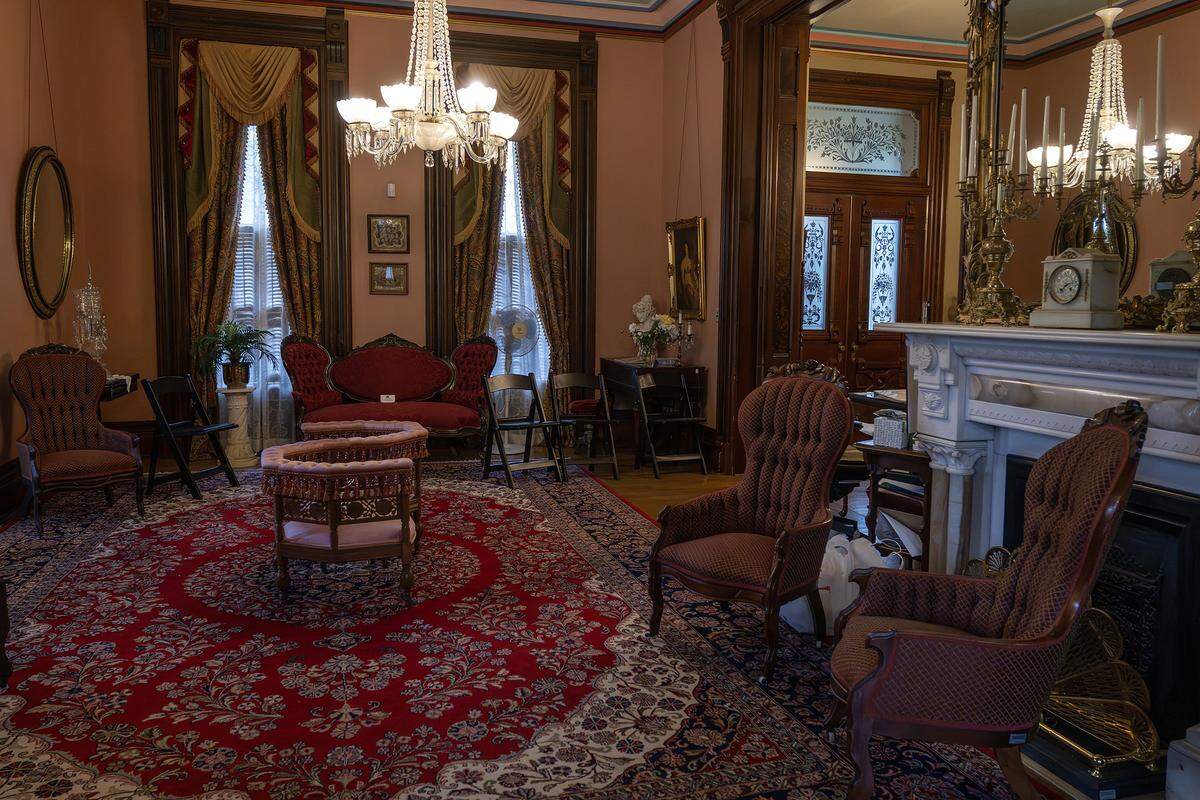
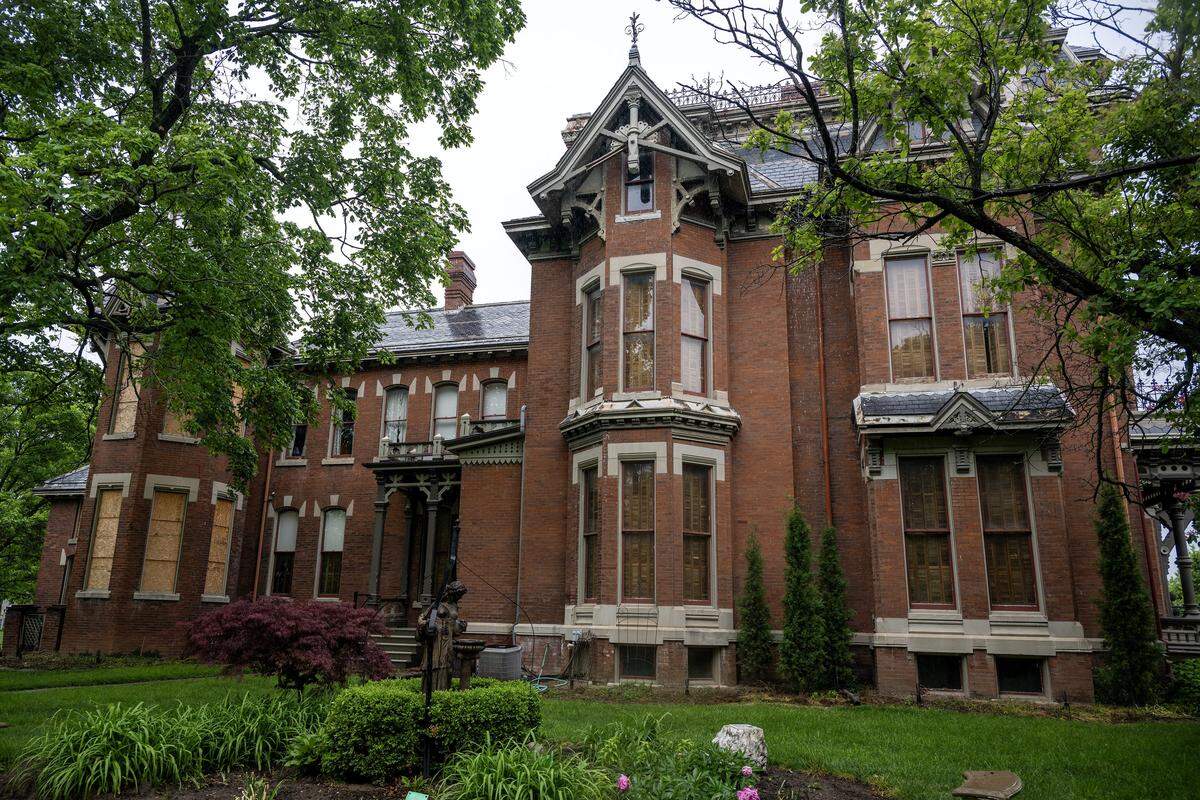
The Vaile Mansion, a 31-room Victorian haven anchoring Independence’s historic district, changed hands three times before its final owner donated it to the city in 1983. Now, the city of Independence is considering selling the property to offset the cost of maintaining it, potentially for a symbolic amount as low as $1.
The Vaile isn’t the only property the city is considering offloading. City officials reviewed a historical sites master plan late last month that proposed putting several city sites under a conservatorship and finding private owners for the two large mansions, or else proposing another bond as a funding source to keep the houses in shape.
The city currently spends between $125,000 and $150,000 a year on operating costs for historic sites alone, recently sworn-in Independence City Manager Troy Anderson said. Selling the Vaile and some of its counterparts, Anderson said, would free up both funding and staffing resources to create a more stable maintenance plan for the city’s other historic sites.
However, the Vaile Victorian Society, the volunteer group that maintains the house and runs tours, worries that once the house ceases to become a public property, the careful preservation work, which the aged property relies on, will be impossible to maintain. Without municipal dollars and attention, the structure could quickly deteriorate beyond repair, said Fulmer, the Society’s publicity representative.
Attendance has spiked since the discussion began at City Council, Fulmer said, with several visitors saying they “wanted to see [the Vaile] before it closed.”
At this point, Fulmer said, the fate of the grand old house feels like a mystery.
“It’s an unknown,” Fulmer said. “I mean, is it going to close? I don’t think so, but we didn’t think they’d sell us.
“So it’s just a big unknown in our minds: Who’s going to buy us and take care of us?”
One house, many lives
The Vaile has been a residence, a nursing home and a historic site. Restoring it to a museum-style Victorian home was a labor of love for the Society, Fulmer said.
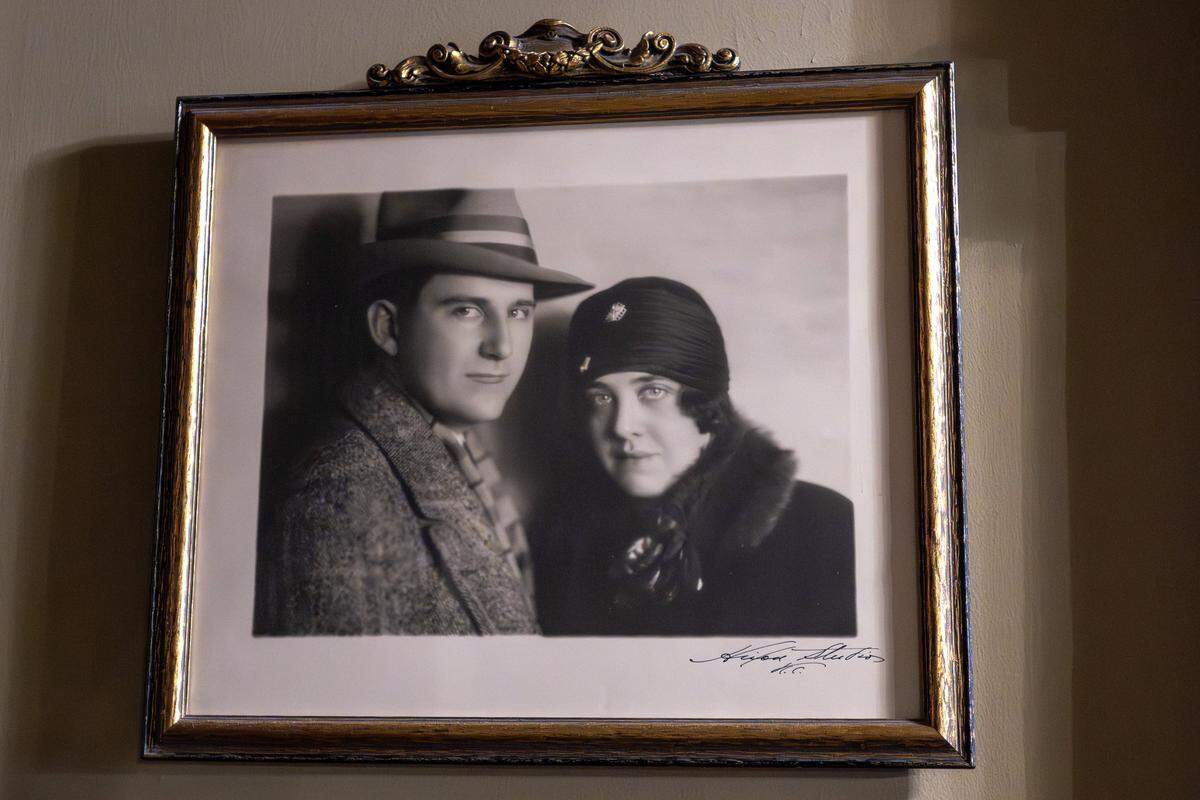
The house was originally built for Col. Harvey Vaile and his wife Sophia in the 1880s for about $100,000, designed by a Kansas City architect with inspiration drawn from the couple’s travels in Normandy, France.
Harvey Vaile had commissioned the house for his wife but never finished settling in, abandoning designs for the top floor after Sophia Vaile fatally overdosed on laudanum while Harvey was on trial. After Harvey died in 1894, the house was donated to the Kansas City Women’s College and briefly housed both an inn and a mineral water company. It was eventually bought by Carey Mae Carroll Sprague, who converted the place into a nursing home.
The house was set to be demolished after Sprague died, but instead it was purchased and partially restored by Roger and Mary Mildred DeWitt in the 1960s.
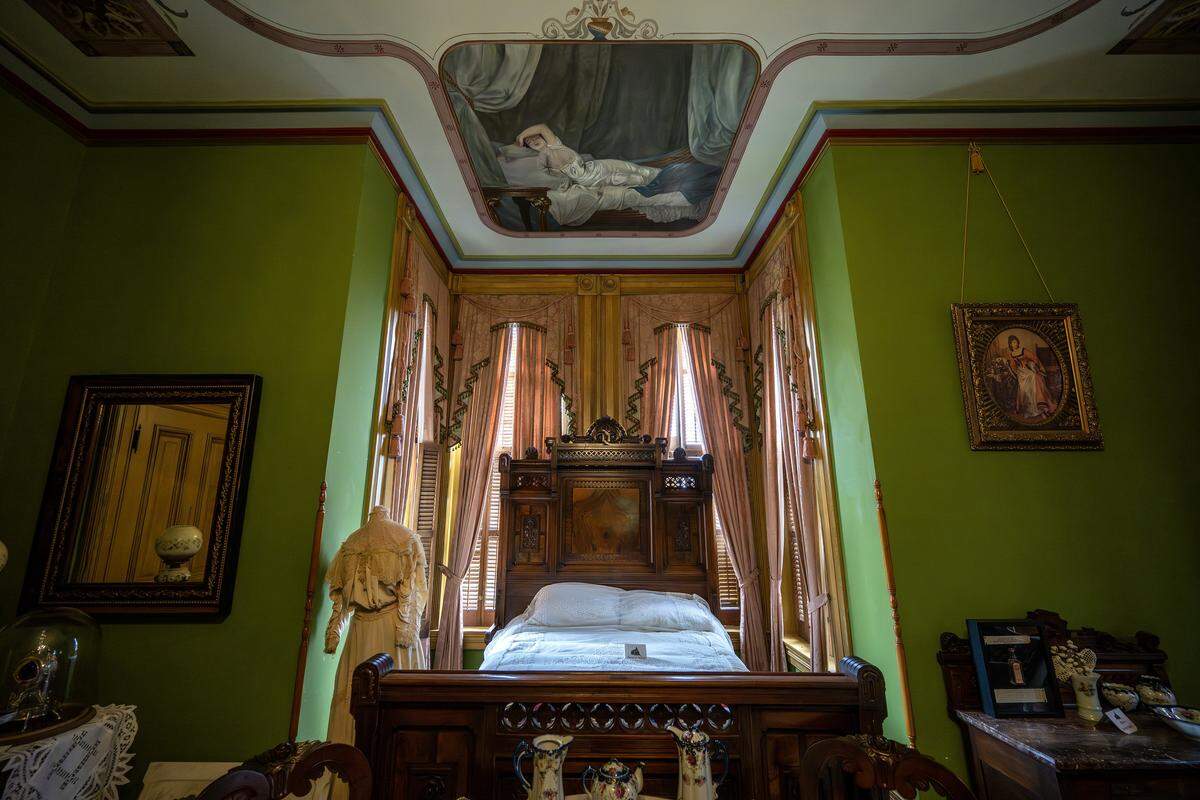
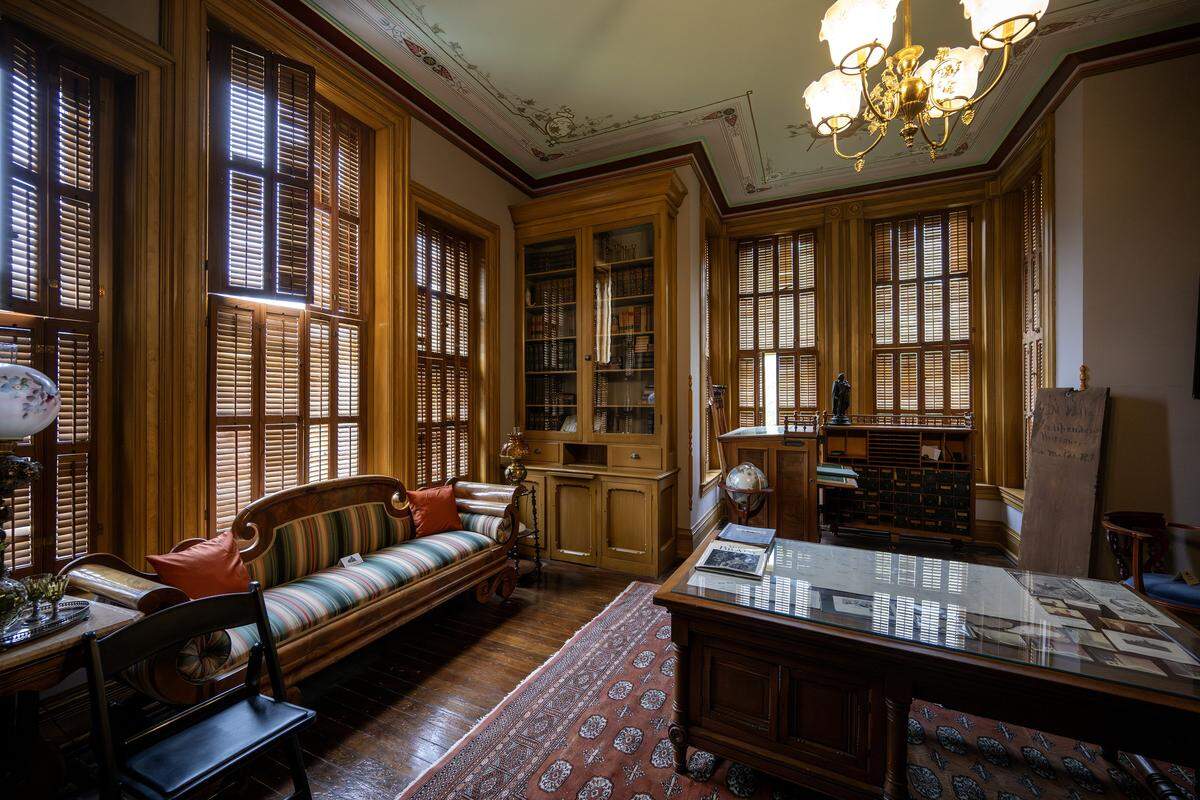
When Mary Mildred DeWitt died in 1983 and donated the mansion to the city, it came without any of its original furnishings, Fulmer said. The Society was able to buy back three original chandeliers, then “went wild” at multiple KC-area estate sales to secure other period-accurate pieces.
“We know what was sold,” Fulmer said. “So we tried really hard to get it back.”
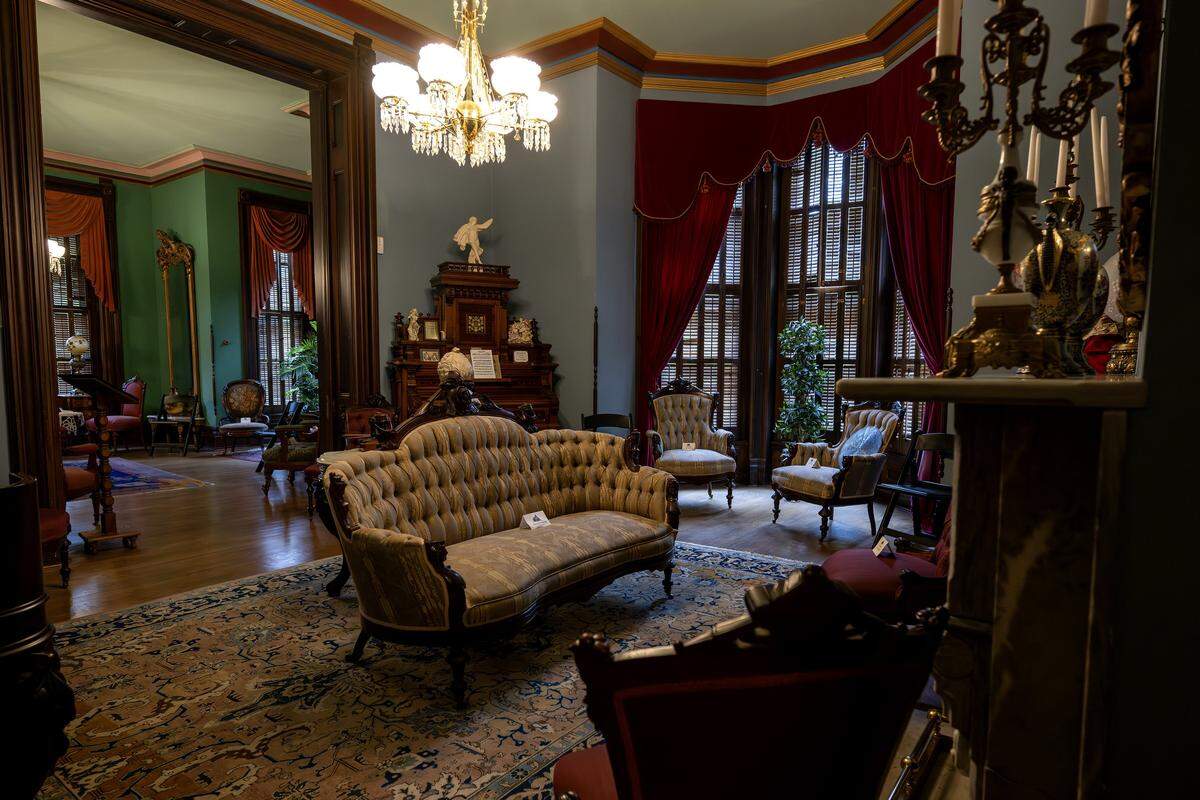
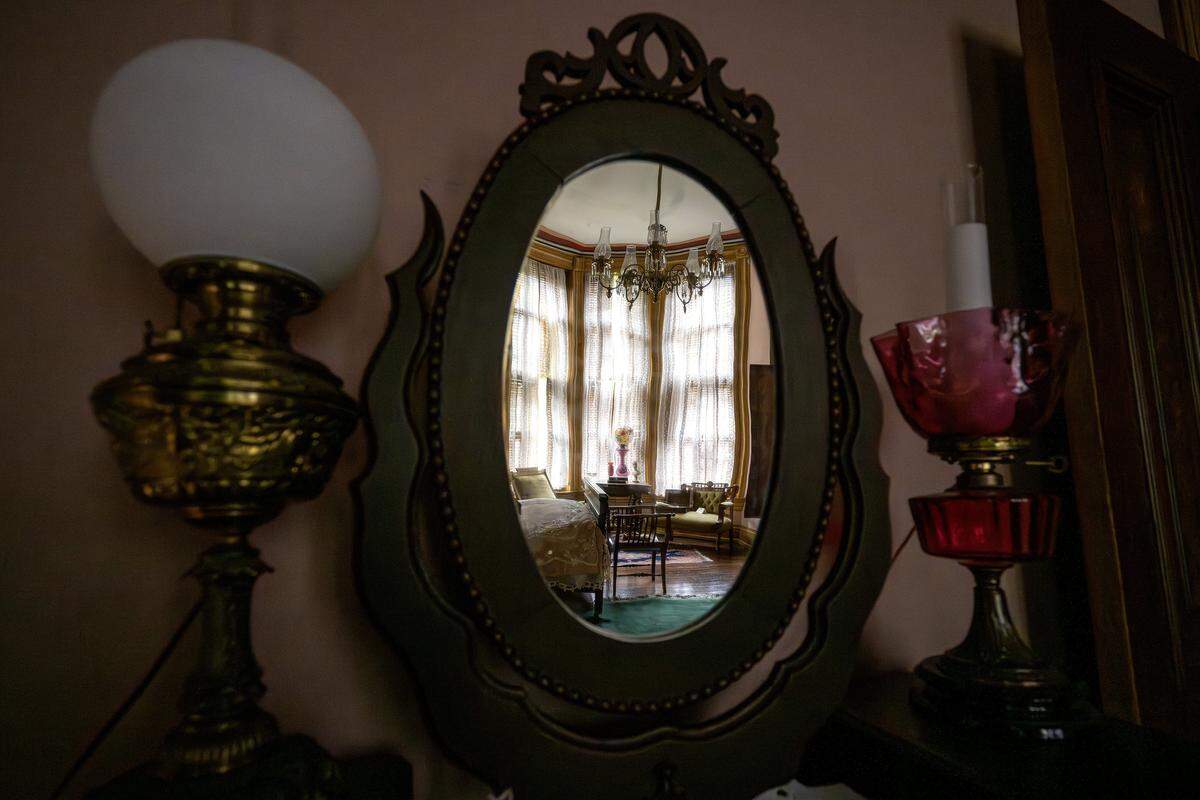
Display pieces in the home include a ‘Tete-a-Tete’ double chair designed for chaperoned “courting,” a selection of woven art made from human hair and a pair of antique French mirrors made with diamond dust. At one point, an artist built scaffolding in the downstairs dining room and spent months restoring the painted ceiling in minute detail.
If the Vaile is sold, an estate sale will likely be held in order to keep up with maintenance costs, Fulmer speculated.
Maintaining the mansion
The city of Independence currently splits maintenance responsibilities for the mansion with the Vaile Victorian Society. Most of the group’s funding for these repairs come from festivals hosted on the mansion grounds, Strawberry Festival in early June, along with Halloween and Christmas celebrations, featuring an upside-down tree dangling from the entryway ceiling.
The Society keeps the inside of the building clean, updated and period-accurate, while the city maintains the exterior, Fulmer said. Sometimes, both groups split the cost of major repairs, like recent upgrades to the eroding south porch.
“They mow the grass,” Fulmer said. “They pay for the electricity… they’ve never taken a forward step toward restoration.”
Fulmer said that as discussions about a sale continue on the council level, the city has been less “attentive” to the house and its recurring costs over the course of the past year. The city recently stopped providing trash and phone services to the property, Fulmer said, and has not yet responded to a maintenance quote for the south porch filed last winter.
The mansion is protected by a conservation easement with the Missouri Preservation Society, protecting the house and a one-foot radius around it from being torn down.
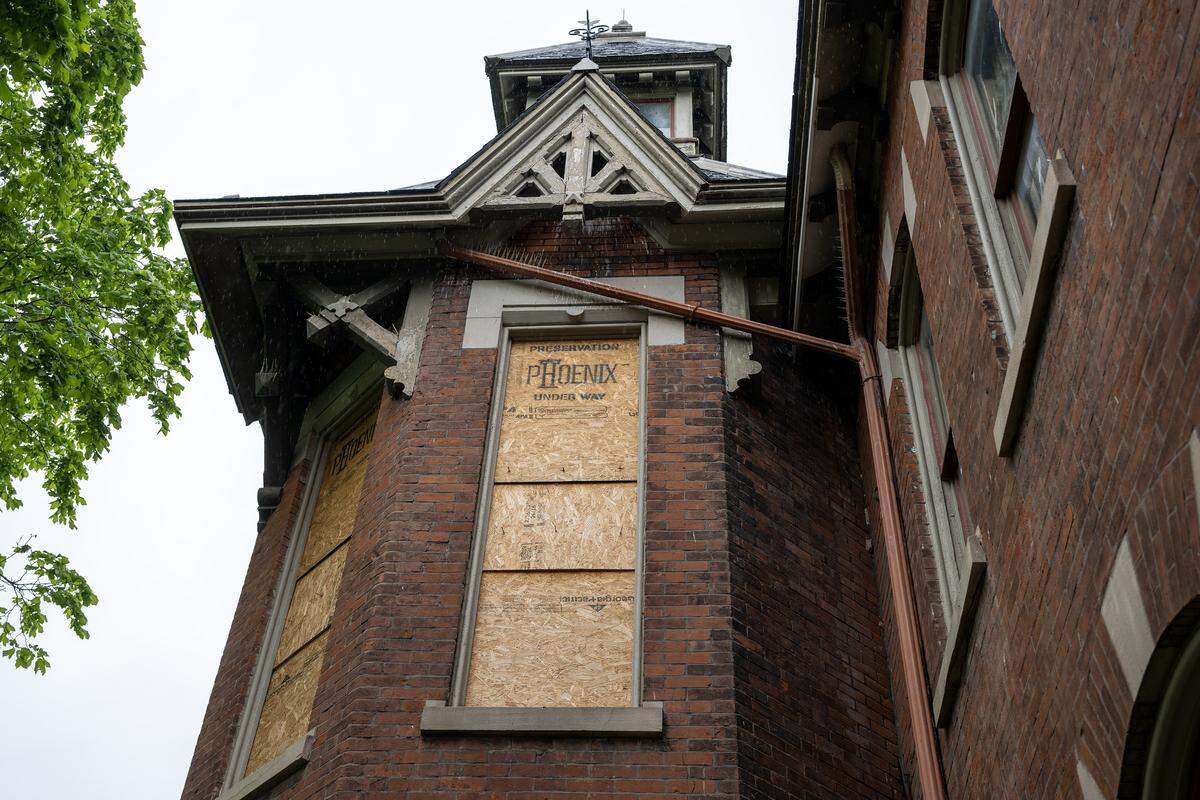
However, Fulmer said that the society worries that if the mansion is sold, even for a nominal amount, then the end of public maintenance funding could have a striking effect on the face of the building. As it is, birds fly into the attic regularly, she said, and cracks continue to grow on ceilings and porches.
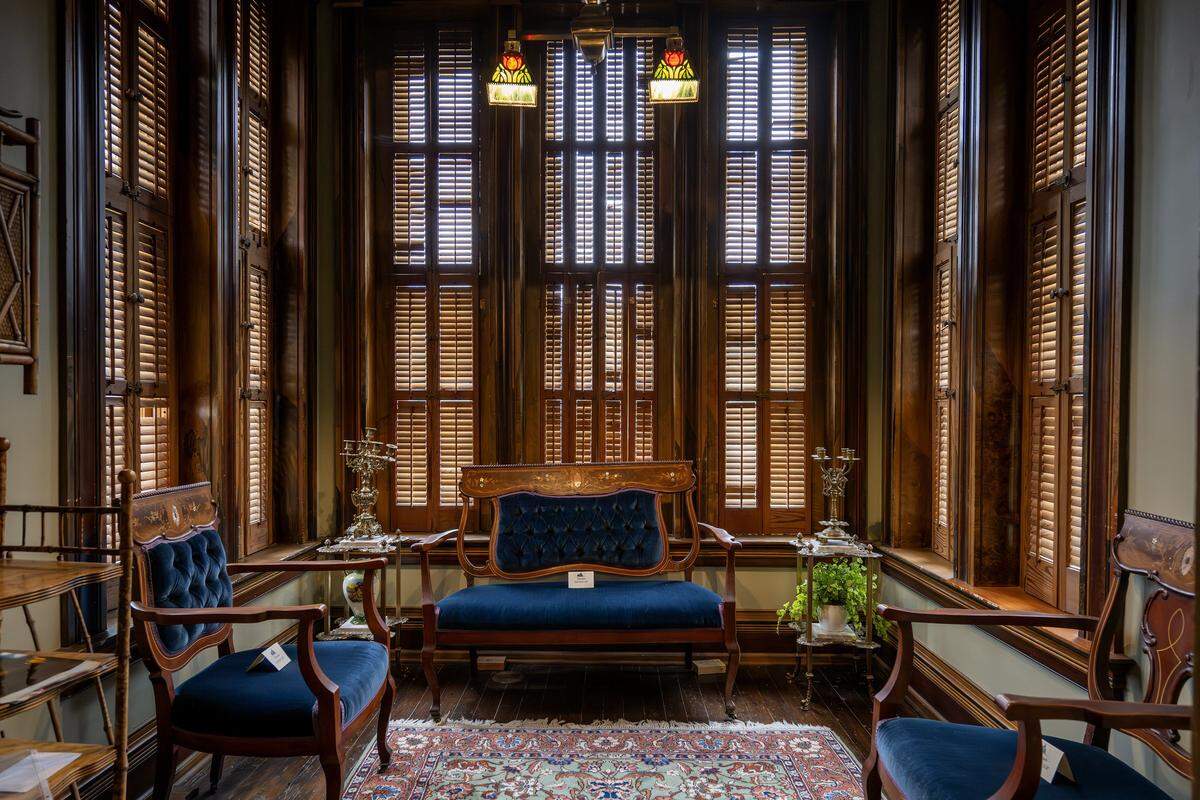
Some windows at the mansion currently need restoring, she said, but will sit boarded up for long periods of time until an artisan can replace them by hand with stained glass.
“We don’t want demolition by neglect,” Fulmer said. “...The south side is desperate.”
Call for community support
Fulmer said that though the potential of a sale raises concerns for the Vaile Victorian Society, its volunteer custodians and docents have been enthused by the growing public enthusiasm for the mansion.
Though its main revenue comes from festivals, the Mansion saw about 10,000 tourists last year, including international visitors, Fulmer said. School groups and paranormal activity societies have also toured the space in the past, Fulmer said, with one group of Fort Osage students even using the mansion to film a video project.
“It tickles us to death,” Fulmer said. “It’s awesome. We are so happy that they want to maintain not only our house, but they want to maintain this as the city of trails… we really have to know where we’ve been so we know where to go.”
The Vaile Victorian Society has also been in talks with the group that takes care of the Bingham-Waggoner Estate, also featured in the city’s sale plans, Fulmer said. Staff from both historic properties have set a date to meet with the city in order to share more detailed concerns.
Though the city’s plan suggests reorganizing the ownership structure of other historic sites, Fulmer said that the Vaile and Bingham-Waggoner are currently the largest and most expensive to maintain.
The city is expected to revisit its historic sites plan at a May or June council meeting, and could also still obtain more funding for the Vaile and other sites through a future bond issue.
Meanwhile, one of the best things that residents can do to support the future of the mansion is to attend its special events this year, Fulmer said, including the upcoming Strawberry Festival. This year’s fest will include about 90 vendors, including food, antiques, plant sales and Mr. & Mrs. Vaile lookalikes.
Whatever happens to the mansion, Fulmer said she hopes that city officials are able to work more closely with volunteers to prioritize the city’s history. During the heyday of national trails carrying Americans to new towns in the West, she said, a significant amount of traffic passed along the Missouri River and through Independence.
“Many people got off right down at the end of Liberty Street to start their trek forward,” Fulmer said. “I’d like the city to promote that story a little more.”
This story was originally published May 8, 2026 at 5:00 AM.