Independence wants to sell off its historic mansions. It’s a bad idea | Opinion
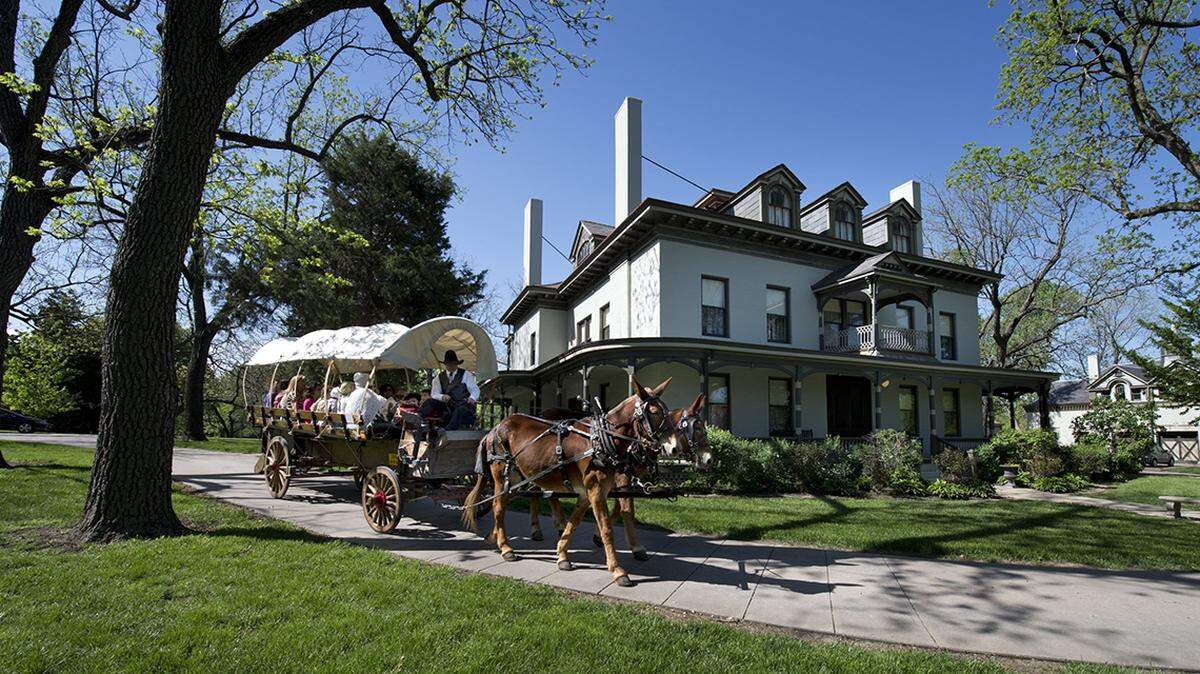
The city of Independence, hometown of 33rd president of the United States Harry S. Truman, is rich in history, from its historic county courthouse where Truman sat as presiding judge, to the home he lived in on North Delaware Street, just a few blocks from the city square.
And now, a St. Louis consulting firm has reviewed the city’s historic sites — as part of a five-year master plan — and has recommended that Independence sell two of its most prominent historical places: the Vaile Mansion and the Bingham-Waggoner Estate.
The recommendation, presented at a well-attended public meeting earlier this week, has caused a stir among residents and history lovers who object to the notion that the city would sell off what they see as key assets and cornerstones of Independence’s history.
I’m with them on this. The city needs to take its time on this one. Decide what is best for these historic sites, but also consider what the residents of Independence want.
History is one of Independence’s main tourist attractions. Those sites, which are both on the National Historic Register, should be — and should always have been — sources of pride for the city. You take care of what you are proud of.
“These are more than just buildings,” said Steve Euritt, president of the Bingham-Waggoner Historical Society board, which manages the estate and owns the artifacts inside it. “These places are our history. They represent who we were and who we are.”
The mansions, as grand as they are, are more than a century old and sorely in need of restoration that could cost the city between $12 million and $15 million.
In 2024, the city proposed a $15 million general obligation bond to pay for restoration projects at the two sites and more. The bond failed by just 170 votes. Some have said it didn’t pass because part of the bond money would have also gone toward building a sports complex that voters did not want.
Former George Caleb Bingham home
The Vaile Mansion, a 31-room Victorian structure sitting on nearly 5 acres, was built in 1881 by Colonel Harvey Vaile, making it 145 years old.
The Bingham-Waggoner Estate, a 26-room mansion located on 11 acres of city park along the historic Santa Fe Trail, was built in 1852 and was famously occupied by artist and Missouri statesman George Caleb Bingham, and later the prominent and wealthy Waggoner family. It is 174 years old.
Both have been functioning as museums and community event spaces for decades, attracting tourists from all over the country who not only visit those sites but also other historic sites, restaurants and hotels in the city.
As the owners of the properties, the city is responsible — as it should be — for paying the basic utility and upkeep costs, such as keeping the lawns manicured, removing snow and handling emergency repairs, including leaks and dangerously, rickety spaces.
Members of the the Bingham Waggoner Historical Society and the Victorian Society, which manages the Vaile, said the city has always done the basics.
But it has not kept up with more expensive restoration projects, which have only increased over the years and gotten more expensive.
“If the city had done what it is contracted to do for 40 years — maintain all restoration on the structure and all the regular upkeep — we wouldn’t be having this conversation,” said Euritt.
City Council members favor keeping homes
Euritt said he would like to see the city maintain ownership of the estate, but not if it isn’t going to be a better steward of the property. “Selling it to a private owner would make me sad,” he said.
However, he said he would rather see it sold to a private owner than fall further into disrepair. On a visit to the estate, Euritt showed me areas around the front porch that are soft to the touch because of wood rot.
But if it were sold, he said, any new owner would first have to put millions into it, agree to keep it open to the public and promise to continue operating it as a museum that hosts several outdoor community events, such as the estate’s annual giant antique sale.
He doesn’t see it becoming a moneymaker for anyone.
Sandee Dougherty, president of the Victorian Society, is completely opposed to selling either site. She worries that a private owner might not care much about the history, would shut the public off from enjoying them, and turn them into bed and breakfasts or event spaces.
Dougherty said Mary Mildred Dewitt, who at one point owned the Vaile Mansion and saved it from demolition in the 1960s before donating it to the city in 1983, “would be turning in her grave if it were sold.”
She has at least two City Council members who are on the side of maintaining ownership of the homes.
Newly elected Councilman Cody Atkinson said he favors giving Independence residents another chance to vote on a bond issue to restore the sites.
“We should be leveraging these sites for education and as tourist attractions and as points of pride for this city,” Atkinson said. “We should focus on the history, preservation and restoration. I see this as an opportunity for community involvement and input.”
Councilman John Perkins agreed, but said he wants to know more about the sites and about ideas for restoring and maintaining them.
Perkins said that in the next 45 to 60 days, city officials plan to hear from the groups managing the sites before any decisions are made.
That’s exactly what needs to happen. And hearing ideas from residents who care about the city’s history might not be a bad idea either. I think Euritt is right when he said, “Let the people speak.”