With western JoCo booming, growing school district seeks voter approval for upgrades
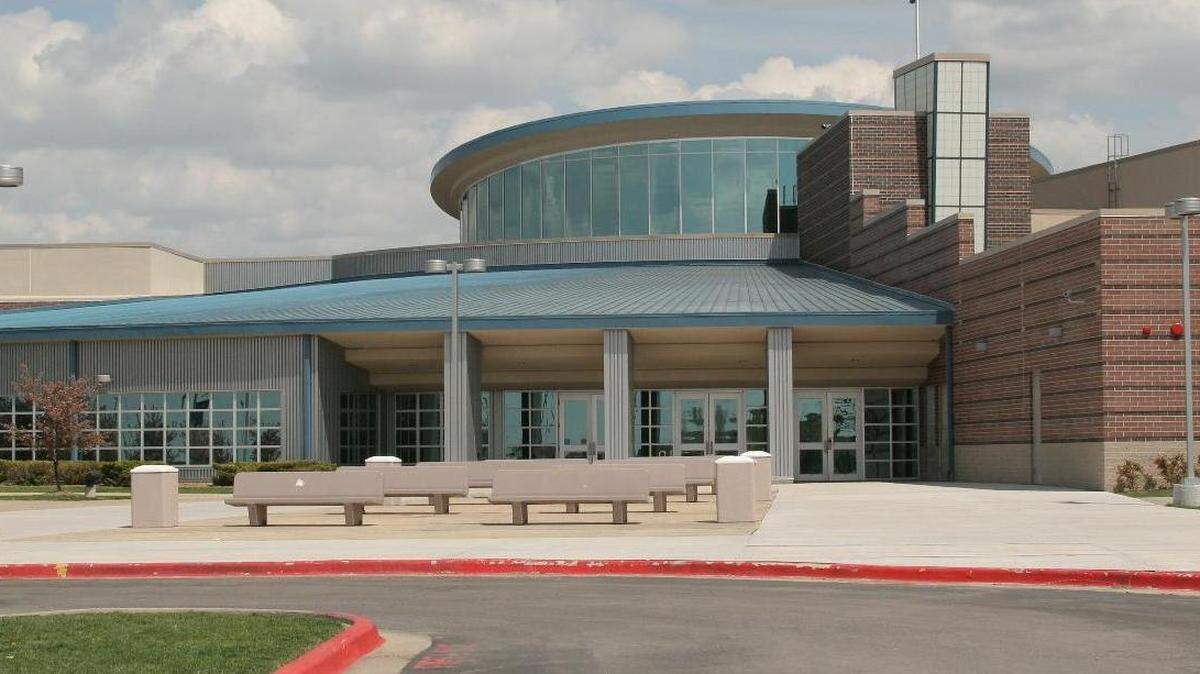
Since the COVID-19 pandemic, the Gardner Edgerton School District has been on a very fast trajectory up, due in part to a wave of major developments in western Johnson County, Superintendent Brian Huff said.
“Our demographer is showing growth the next year and the year after that and it’s pretty sustained,” Huff said.
To keep up with rapid growth, the Gardner Edgerton School District put a $100 million bond on the ballot for district residents to consider for the April special election.
If it passes, the bond will help fund the construction of a new elementary school, convert Sunflower Elementary School into an early childhood education center for students with special needs, replace and improve all playgrounds, provide safety and security upgrades, expand common spaces at Gardner Edgerton High School and its adult programming, and build a new district service center.
The bond needs a simple majority vote to pass, and ballots are due April 1.
Residents have mixed feelings about the bond — with some eager to support the district’s request and others concerned about how it will affect their property taxes and how the loss of Sunflower Elementary, in particular, will impact their daily commute.
“Our district needs to be more creative and find funds besides taxpayers,” resident Mike Mabrey said in a post on the Citizens for the Future of Gardner Facebook group. “There are a lot of residents that don’t have kids in the district and still be on the hook.”
Huff said that this bond will not increase residents’ property taxes, and the loss of Sunflower will lead to school boundary changes. While rezoning the school district has caused tension in the past, it’s something that they need to do in order to adjust to the rapidly growing population, district leaders say.
Residents with additional questions or who want to learn more about the bond can go to an educational forum Tuesday at 6 p.m. in the school district’s board of education room at the administrative offices — 231 E. Madison St.
Keeping up with growth
Multi-billion-dollar industrial development has flooded western Johnson County communities in recent years, transforming their more rural roots into more populous areas. In 2024, almost 7,000 potential housing units were identified for development stages in the next 10 years, according to a presentation given to the school board in January.
The schools are already starting to feel the growth. The district projected to gain 0.3 to 0.4 students per housing unit.
“We are at our limit with a few of our buildings, particularly Madison Elementary. We need to alleviate that crowding,” Huff said. “Keep in mind when I say we’re at capacity, that doesn’t mean the classrooms are over capacity.”
Rather, it means that the district has added classrooms to current buildings in order to maintain average class sizes, he said.
“You feel the size at times when kids are at the playground or lunch when you have all the kids together in common spaces, then it feels pretty darn crowded.”
Since Sunflower would convert to an early childhood education center — which would serve younger students with special needs to get them ready for kindergarten — the district will still have seven elementary schools if the bond passes.
Despite only one high school in the district, the demographer projected that Gardner Edgerton wouldn’t need another high school to keep up with the growth yet. Instead, the high school will see upgrades in its common spaces where there’s higher traffic.
The district will need more space to store supplies for schools and run day-to-day operations, which is why it says it added a new facility to the bond, too.
“We have no ability to hold large orders. We need more space,” Huff said. “Taxpayers don’t want to spend money [on] a few facilities, one is my office and the other is the service center, because there’s no kids in any of those buildings.”
Once the new elementary school is close to opening, the district will look at the current boundaries to spread out students evenly so there’s no “hotspots of full buildings right off the bat.”
Similarly in Kansas City’s Northland, the Park Hill School District adopted its own school boundary changes to accommodate rapid growth despite parent pushback — something Gardner Edgerton experienced the first time around in 2018 that ultimately caused the school board to press pause on any changes.
“We’ll spend several months gathering input and find that happy place where we can find balanced buildings and hopefully keep them balanced in the future so we will have to project where the growth is going to be,” Huff said. “We might have a building that starts out rather empty, knowing we’ll have more growth in the area.”
Losing Sunflower
Aimee Craft started both of her twins at their neighborhood school for early childhood education, but halfway through their last year her daughter needed a more specialized program for autism.
She had to move to the only school in the district that had a dedicated program to help students with their communication skills.
“So I had my twins in different schools for a little over a semester, and when it was time to start kindergarten I had to make the choice of having them in separate schools or the same school,” Craft said. “My daughter’s program was not available at our home school.”
She ultimately decided to send both of her twins, who are now in 5th grade, to Grand Star Elementary, in order for her daughter to receive the specialized programming she needs and keep her twins together.
Craft has lived in Gardner for 15 years and worked as a special education paraprofessional for nearly six years. She’s watched as the special education programs moved from location to location throughout the district.
When she first heard about the proposed bond, she served on a committee and provided input for six months. During her time on the team, she advocated for expansion of the district’s adult programming, inclusive playgrounds, and special education classroom improvements.
Early on, the committee considered building an entirely new building for an early childhood center, but Sunflower Elementary is smaller than most of the schools in the district and the only school that isn’t part of Title I — a federal program that gets more money to schools that serve lower-income families.
While Sunflower families will have to drive their kids to school, it would be easier for the families to adjust rather than a Title I school, which might have families who need students to walk.
It’s also easier for families with children who have special needs.
“As a parent of children not able to attend their home school I absolutely get that, however we have to look at the big picture: the growth of our communities,” Craft said. “I see our most vulnerable population shuffled around from building to building and as soon as our gen ed students that can adapt more easily are talked about being moved, then suddenly everyone is in an uproar.”
“I think we have to consider all of our students, not just the few families at Sunflower this would inconvenience.”
Eight ballot drop boxes across the county — including the De Soto, Spring Hill and Gardner libraries — will be open 24 hours until noon on April 1. Visit jocoelection.org for more information.