4-day weeks, virtual teachers: Staff shortage has KC schools taking desperate measures
READ MORE
Kansas City area schools face teacher, staff shortage
KC-area school districts are struggling to fill teaching jobs and other education positions. They’re trying four-day weeks, virtual teachers and raising salaries.
Expand All
Holly Carlson-Jukes dreams of leaving the job she’s dedicated 20 years of her life to.
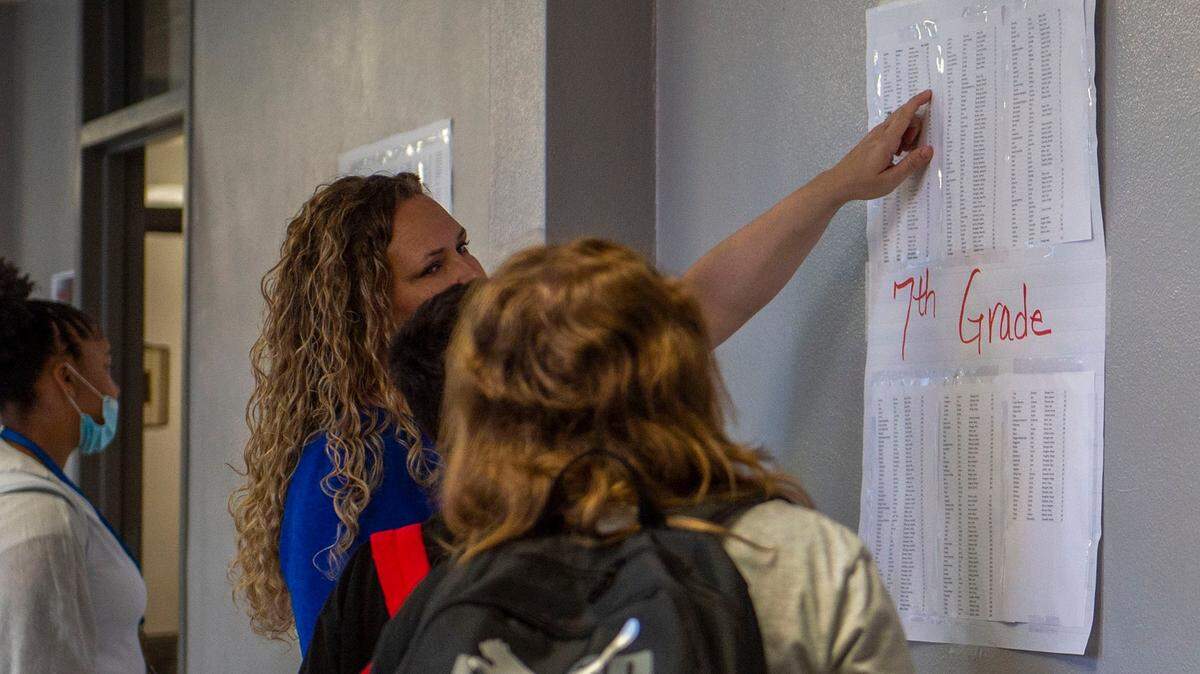
Since her Kansas City, Kansas, middle school started up again last month, most days she’s had to cover other classes that have unfilled teaching positions and not enough substitutes. After school, she clocks in at her second job, framing pictures at a craft store, to help pay the bills.
She is one of the many Kansas City metro educators who feel burned-out and defeated in a field they say has long had low pay and little respect, and now faces mounting workloads because of severe staff shortages.
“We are at a level of despair,” Carlson-Jukes said. “And no one is coming to help. There is no white horse coming.”
This summer, labor shortages reached crisis levels, district officials say, making it harder than ever to educate, transport and feed students.
“This was the most challenging time that we’ve had in my tenure as superintendent in filling all of our positions,” Independence Superintendent Dale Herl said.
With many positions still left empty weeks into the school year, several districts are scaling back operations and finding new ways to keep schools running, while trying to have a competitive edge to recruit and retain enough employees.
▪ Unable to fill enough teaching positions, Kansas City, Kansas Public Schools partnered with a company to hire some virtual teachers from out of state, who are livestreaming lessons to classrooms of middle and high school students on their computers, while a staff member watches the kids in person.
▪ In Independence, the school board has agreed to explore moving to a four-day school week, an increasingly popular incentive nationwide for teachers to work for and stay in districts. Already, about 25% of Missouri districts and 8% of Kansas districts have adopted that shorter week.
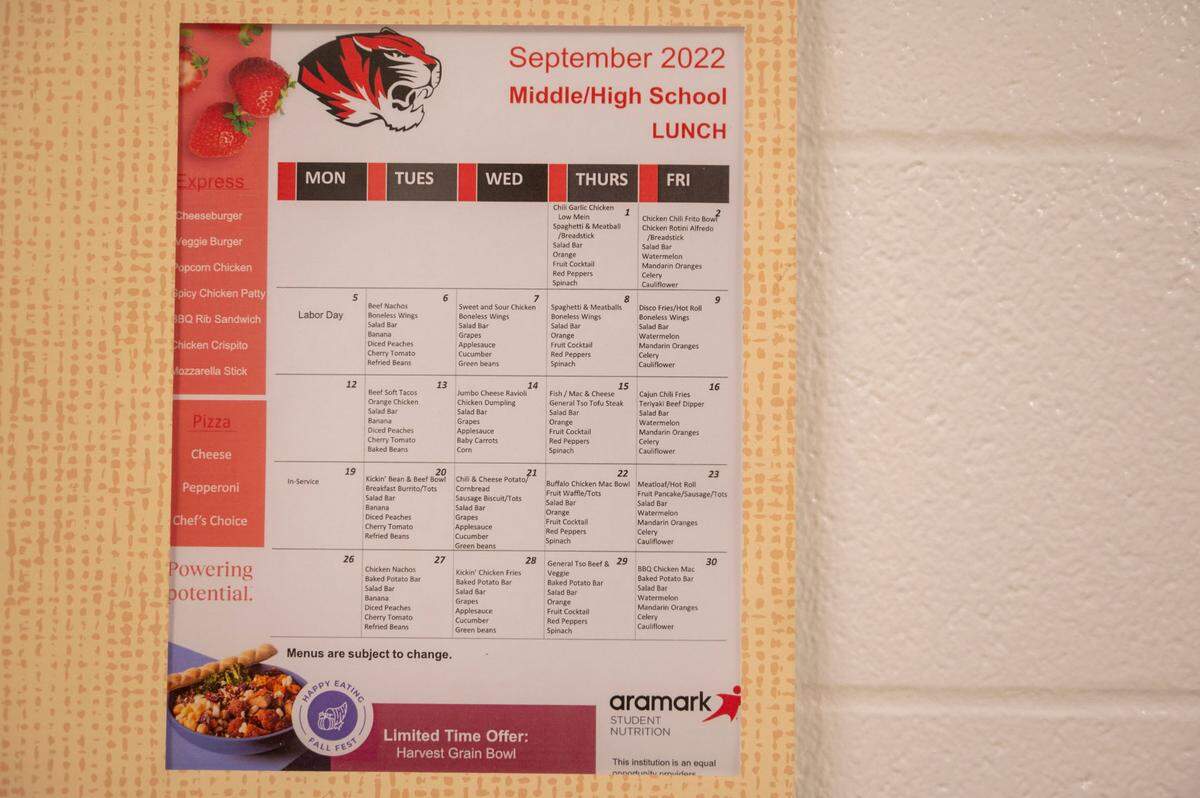
▪ Raytown and Independence, among other districts, have reduced bus routes because they don’t have enough drivers. And Park Hill and Spring Hill offered fewer lunch options because of food supply shortages and a lack of workers.
▪ Kansas City Public Schools has tried to get ahead of expected vacancies by designating additional substitutes to each building. Several districts have brought back retired teachers to lead classrooms. And some, like North Kansas City, have been encouraging their teachers to get certified in new areas where it is harder to find applicants.
▪ With Missouri’s starting teacher salaries ranked the lowest in the nation, the Hickman Mills district last month held a public vote to raise their pay and boost recruitment efforts.
Worst ever teacher shortage
Some district officials said they have hired enough teachers to start the school year, but are still recruiting substitutes and other employees, such as bus drivers and custodians. But other districts are missing employees across the board.
A few educators told The Star that they’ve spent the first weeks of the school year as substitutes, secretaries and aides, giving up their planning periods to help cover vacancies, only leading to more exhaustion.
School leaders say the staff shortage is plaguing Kansas City area districts big and small, rural, urban and suburban.
“We know that there are fewer people going into the teaching profession. Universities have been sounding this alarm for several years. But we have not felt it in suburban Kansas City up until now,” said Todd Schuetz, assistant superintendent of human resources for the North Kansas City school district.
And while it has long been difficult to find certain educators, such as math and special education teachers, district leaders said that this summer they saw a drop in applicants for all subjects. In some districts, slots are being filled with teachers who may be certified, but not qualified to teach the subject they’ve been assigned.
It’s difficult to know exactly how many classrooms are missing teachers, as both Kansas and Missouri won’t collect new vacancy data until later this fall. And data showing the extent of any potential national teacher shortage is lacking.
But in Kansas, education officials have warned that the state is seeing its worst ever teacher shortage. In April, the state had 1,381 teaching vacancies, up from 1,253 in October. Last fall, officials said that vacancies had risen roughly 62% over the year before.
In Missouri, the state reported 2,184 vacancies this spring in elementary education alone, and 983 vacancies in special education.
Locally, KCK began the school year 92% staffed, with about 100 teacher vacancies, spokesman Edwin Birch said. The Blue Valley district in Johnson County was short 90 paraprofessionals on the first day of school. And North Kansas City still needed about 100 more substitute teachers.
Both Missouri and Kansas have lowered requirements for substitute teachers, and Missouri also eased teacher certification rules. Missouri has formed a commission to study recruitment and retention, which will recommend strategies to the state school board in October.
Educators are pleading for long-term solutions, with many arguing that stop-gap measures will not encourage more people to stay in the field — and could harm students’ education.
“It’s really about relationships. Most districts will say, ‘Hey, we’re short 50 people.’ But there’s a difference between being short 50 people and being short 50 people who can build relationships with students,” said Kansas City metro educator and community advocate Sheyvette Dinkens.
“That’s not only a teacher missing from a classroom, but that’s also a teacher missing from a community. And that’s an even bigger problem. A teacher is more than just that person in the building.”
A four-day school week
Unable to compete with large school districts and their bigger budgets, leaders of the Clinton County school district in Plattsburg, Missouri, knew in 2017 that a major change was needed to better recruit and retain teachers.
While the 600-student district couldn’t offer the higher salaries of districts in the Kansas City metro just to the south, Superintendent Sandy Steggall realized it could offer another benefit: a shorter work week.
The district pivoted to a four-day school week, giving employees and students a day off on Mondays. School days were lengthened by 30 minutes so that it continued to meet the number of instructional hours required by Missouri.
The shorter work week became a major selling point during teacher recruitment, Steggall said. Hourly employees started working less each week, but the district adjusted their wages so they kept the same pay.
Steggall said the impact was immediate.
“In 2016-17, we had around 15 staff members turn over. And in the following year, going to a four-day week, we had seven. So it cut that number in half,” she said. “Another positive thing was in our number of applicants. … Applications overall moved from 60 (in 2016-’17) to 107 after the four-day week. So we had fewer openings and more applicants.”
It’s an idea that has grown in popularity in recent years due to the tight job market, both in the corporate world and in Missouri school districts.
Before the COVID-19 pandemic, 61 small, rural school districts in Missouri operated on four-day school weeks, said Jon Turner, a retired teacher and associate professor of educational leadership at Missouri State University. This school year, that number has ballooned to an estimated 141 — roughly a quarter of districts in the state.
In Kansas last school year, 25 districts were on a four-day schedule, according to the state education department.
“The early adopters of the four-day week were often focused on money. These were very tiny rural school districts that were losing student enrollment, and losing funding because of that. So they were thinking about saving money by cutting hours for bus drivers and food service workers and custodians,” said Turner, who has been studying four-day school weeks over much of the past decade.
“But as the numbers began to grow, it became very clear this was transitioning from an economy of scale issue to a teacher recruitment and retention issue. And it was pretty clear a couple of years into the pandemic, this was all about recruitment and retention.”
Will Independence be next?
Independence, with roughly 14,000 students, would be the largest district in the state by far to adopt the condensed week. Turner said the current largest district is Warren County outside St. Louis, with about 3,000 students.
“We started throwing around the idea of a four-day week around January of the past school year. We were thinking through the what-ifs, with everyone anticipating having issues finding teachers. And we certainly already back then were struggling to find enough bus drivers and paraprofessionals,” Herl said.
The school board in August agreed to study transitioning to a four day week, which if approved, could be implemented as soon as next school year. Herl said considering the change will be a lengthy process requiring strong input from the community.
It’s no silver bullet. But Turner, who has visited every district with a four-day model in the state, said that anecdotally, superintendents have seen more applicants — just not always who they expected.
“One thing I hear is that they think they’ll be getting a lot more applicants of first-year teachers straight out of college. And I think they do find that. But I think one of the more surprising findings I hear over and over is they are surprised they are getting applicants from more late-career educators, people getting close to or thinking about retirement,” Turner said. “Those veteran teachers toward the end of their careers seem to be very attracted to this model.”
That’s been true in Clinton County, too, Steggall said. And even during record labor shortages this school year, she said her district had less staff turnover than in previous years.
“I have 91 employees. I had to replace five teachers. That’s unheard of. I have not had fewer than 10 before,” she said.
The four-day model does come with challenges, such as whether to organize child care and feed students on the fifth day to help support working parents. Turner said finding child care can be especially difficult for families of students with special needs. Districts also must determine what to do on that fifth day, such as whether to hold extracurricular activities, plan for professional development or schedule field trips then.
Steggall said that her district began offering child care on the fifth day for a couple of years, but attendance began dwindling as more families figured out a schedule that worked for them or stayed home during COVID, so they ended the program. The district does extend its backpack program, sending students home with food, for the extra day off, she said.
Critics also question whether missing out on a fifth day of learning can lower students’ academic achievement. While students still sit in class for the hours required by the state, some parents worry about their children being at home for an extra day.
“One of the biggest challenges is this perception issue of when we go to a four-day week, we devalue education,” Turner said. “That’s exactly the opposite of what most schools are doing. You have openings and you’ve got no one who will apply for your positions, so what will you do to maintain high quality education? The four-day school week is just one more thing in the toolbox they can use to attract and retain high-quality teachers.”
Still, Turner said that the four-day model is not a lone or long-term solution to the ongoing teacher shortage. And he worries about temporary fixes that result in schools only “stealing” teachers from other districts.
“You can’t just recruit and steal from a small pool. You’ve got to figure out how to grow the pool,” he said.
That fifth day off, he said, could be used to do just that. Missouri State launched an apprenticeship program where paraprofessionals spend their day off working to complete a teaching certificate in two years.
A need for change
Kansas City area school districts for years have braced for a worsening teacher shortage. Then many reported unusually high levels of resignations and retirements during the COVID-19 pandemic, as teachers left their jobs due to heavier workloads and stress.
This past year, several schools temporarily closed because they did not have enough staff to keep students in classrooms.
Denise Souza, a former Kansas City Public Schools teacher, told The Star that she decided to leave her job after 19 schoolchildren and two teachers were shot and killed at Robb Elementary School in Uvalde, Texas, this spring.
Teachers also have been caught in the middle of national political debates over COVID-19 masks and vaccines, how schools teach students about race and diversity, and whether books with racial and LGBTQ themes should be banned from libraries. The result, many say, is a diminishing feeling of respect and reverence for the profession. More attacks on social media. And less support from the community.
And while many feel their jobs have gotten harder, teacher pay has largely been stagnant.
A new Economic Policy Institute report states that teachers are paid less than other professionals with similar college educations. And that has worsened over time.
It says the average weekly wages of public school teachers, adjusted for inflation, rose only $29 from 1996 to 2021, from $1,319 to $1,348, in 2021 dollars. By comparison, inflation-adjusted weekly wages of other college graduates rose by $445 over the same period, from $1,564 to $2,009.
Missouri ranks last in the nation for average starting teacher salaries, at $33,234, according to a report by the National Education Association. It’s 47th in the country for average teacher salaries overall, at $51,557. Kansas places 37th for starting salaries, at $39,100.
“I’m not paid for all of the work that I do,” Carlson-Jukes, the KCK teacher, said. “I’m paid to be a babysitter. And frankly, I’d make more money operating my own babysitting service.”
Kansas City districts have been dedicating more time than ever to attract and retain teachers, making recruitment a year-round effort. Many raised salaries for both teachers and other staff ahead of the school year. In Hickman Mills, voters in August approved a tax increase to raise starting teacher salaries from roughly $38,000 per year to about $45,000.
Districts have invested in grow-your-own programs, helping to fund hourly employees and graduates interested in earning education degrees and coming back to teach for them.
School systems have offered teachers thousands of dollars to stay in their jobs or encourage others to apply. And they’ve beefed up counseling and support services for staff.
Changes in Missouri and Kansas
Both Missouri and Kansas lowered the requirements for who can qualify for a substitute teaching license, allowing high school graduates without college credit to be subs. Missouri also loosened its requirements for teacher certification, accepting teachers who score just below a passing grade on licensure exams, as long as they meet other standards.
Some have applauded the move, saying that the exam can be a barrier to entry for many teachers who would be otherwise qualified. But several educators argue that accepting lesser qualified teachers into classrooms is short-sighted.
“One of my concerns is that states are lowering the standards for teaching. My personal opinion is that’s actually going to worsen the problem because we need teachers who are going to stay,” said Jennifer Waddell, director of teacher education for University of Missouri-Kansas City. “If you continue to fast-track people into the profession without doing anything about quality and support, we’ll continue to see a cycle of over-drained teachers.”
Teachers are demanding better pay, more support, workload readjustments, increased flexibility and relief from burdensome student debt. To tackle those challenges, educators are pleading for states to allocate more money for public education and adopt more equitable funding.
“We have to start having a serious conversation about how the state of Missouri funds school districts. The funding ties directly into what we can pay staff. And when we are 49th in the country, in some cases 50th, in funding education, there’s a trickle down effect there. And that’s going to impact everyone that works in the school district,” Herl said. “Until we start to have serious conversations about how we fund education in Missouri, these issues with staffing are going to persist.”
“There’s a lot of disparity,” Schuetz, in North Kansas City, said. “We have school districts with high local taxes that are able to be much more aggressive in compensation. And school districts whose communities can’t afford those kinds of taxes, and that creates a lot of disparity. It’s the rural districts that have been struggling preceding this. When the alarm was sounded that this shortage is coming, they were feeling it and we were not.”
In Missouri this past legislative session, lawmakers in the state budget included funding to raise starting teachers’ salaries from $25,000 to $38,000 through a grant program. But some have concerns about the funding model because it requires districts to put up a local match, and state funds are not guaranteed after a year.
“We definitely need a dedicated and specific funding source for teacher salaries. Obviously pay is at the crux of this entire discussion,” Doug Hayter, executive director of the Missouri Association of School Administrators, told the state’s commission studying teacher recruitment and retention during an August hearing.
While salary is top of mind — 83% of Missouri teachers said it was an essential or high priority in a recent state survey — teachers are pleading for cultural changes in the industry as well.
“Culture is more of an issue than money to me. Because we got into this field to help students,” Dinkens said. “The culture within your building, whether that’s support, professional development, training, all of that you need.”
Rebeka McIntosh, vice president of the Missouri National Education Association, told the state commission that the industry must allow “educators to do one job that they are such professionals at, and not do the six to seven other jobs they’re doing right now.”
Waddell argued that teachers need to be treated like the educated professionals they are, with more flexibility and better training.
“Teaching is one of the only professions that on day one, you’re on your own. The structure has been set up that way. And the funding models for public education have been set up that way,” she said. “And we need to step up as a community to make sure districts are receiving the funding they need so they can provide the same sort of support that we take for granted in other professions.”
While state leaders study longer term solutions, teachers like Carlson-Jukes remain on the front lines, giving up free time and expending energy she doesn’t have to help fill in the gaps. She said that she’s been navigating a mental breakdown for months.
“I’m really not seen as a professional. I don’t know what kind of professional gets 20 minutes for lunch in a 7:30 a.m. to 3:30 p.m. day. I have no planning period. I can’t even take a pee. Is that professional?” she asked. “You can’t tell me that our government cares about teachers or education. They’re running the system into the ground.”
“I’m absolutely beyond frustrated. That’s where I’m at. I hope other people have more hope than me.”
This story was originally published September 7, 2022 at 5:00 AM.