KC area kindergarten enrollment dropped amid COVID. That could be a problem next year
Jennifer Fontanella has been preparing her son for kindergarten for years. He was diagnosed with anxiety, so she knew socializing with other 5-year-olds would not come easy.
“From the age of 2 1/2 until just recently at 5, he’s been in occupational therapy to learn how to share and be in the same room with other kids. We’ve worked his whole life to get him here,” the Spring Hill mom said.
So it was with sadness that she decided to keep her son at home this school year, knowing that COVID-19’s uncertainty and strict safety protocols would weigh heavily on her child.
“Kindergarten is supposed to be that last sweet year before school gets more serious, and we’re all disappointed he won’t get to have that,” Fontanella said.
With parents unsure about the safety of classrooms or the quality of online learning, kindergarten enrollment has dropped, both in the Kansas City area and nationwide.
Now educators expect next year’s crop of kindergartners to be much larger than usual, so schools will have to adjust. And a lot of those kids will be at least a year older than their 5-year-old classmates.
In some cases, children will enter their first classrooms as first-graders instead — kindergarten is not required in Kansas or Missouri — and educators worry that they will fall behind their peers who are now attending school or getting good home schooling.
An analysis of data available in 33 of 50 states showed enrollment last fall down in all K-12 education. But the Chalkbeat/Associated Press report says kindergarten accounts for 30% of the overall decline.
Some school districts in the Kansas City area report double-digit declines in kindergarten enrollment. Kansas City Public Schools, for example, dropped 18%, Hickman Mills 13%, North Kansas City 12% and Park Hill 6%.
As a whole, Johnson County schools saw a 9% drop in kindergarten. In Olathe, for example, it plummeted 12.5%, from 2,127 students in 2019 to 1,860 last fall. Kansas schools overall saw an 8.5% dip in kindergarten enrollment, about 3,000 students who officials expect will go to classrooms next school year.
Missouri officials said kindergarten enrollment dropped three times more in districts that started the school year only online than in districts that offered some in-person classes.
Nationally, a survey by the Education Week Research Center showed similar drops everywhere, in low-income as well as more affluent neighborhoods, and in both public and private schools. More than half of some 400 school districts nationwide reported a decline.
Blame it on coronavirus.
“Parents were just like, ‘Hey, we will just wait a year,’” said Brad Neuenswander, a Kansas deputy commissioner of education.
Worried about safety
While kindergarten is not mandatory in either Kansas or Missouri, Neuenswander said that “every year most parents just send their kids because kindergarten has been around so long that it is just what parents do.”
But in this pandemic, he said, parents worried about safety despite districts’ efforts to mitigate spread with beefed up rules on hand washing, cleaning, masks and social distancing.
Cakeila Jones, a personal care assistant for a home health care company, was worried about safety for her five children, including her twins, who are in kindergarten.
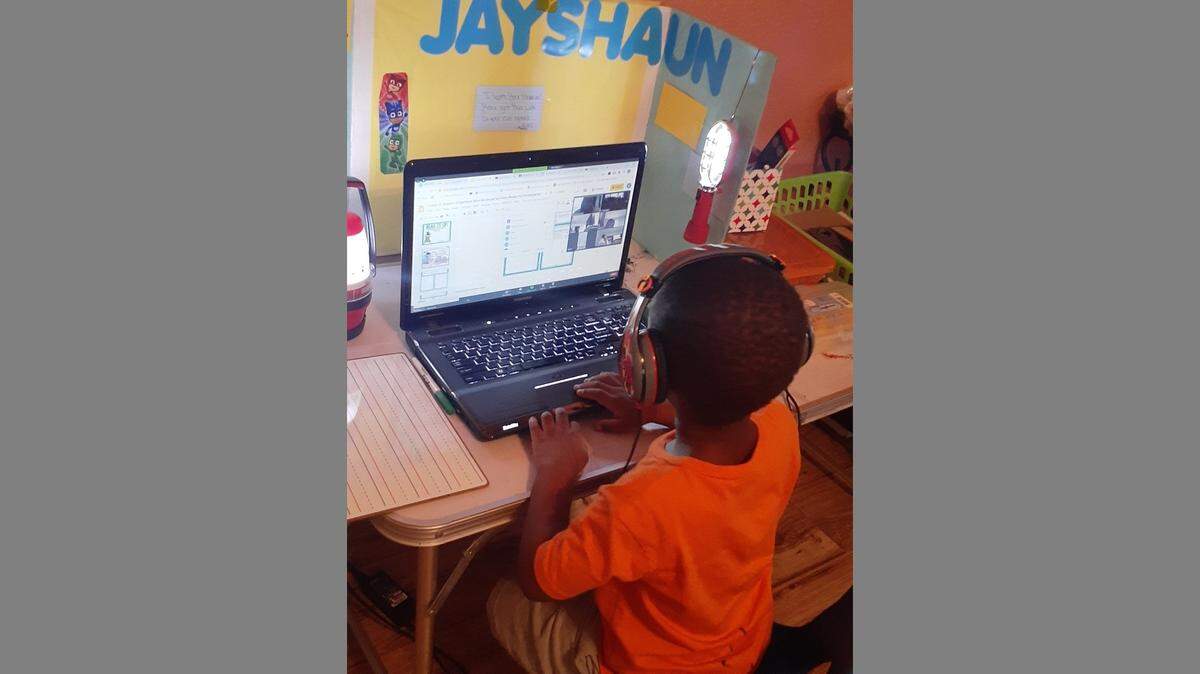
“I’m that mother who is over-the-top when it comes to the kids’ safety,” Jones said. So even though she had to go out to work every day, she was glad to keep her 5-year-olds home, in online classes through Lee A. Tolbert charter school all year. She has three older children, ages 8, 12 and 18, who also had classes online only and could help out with their youngest siblings “and help keep them on track,” Jones said.
But now the charter school, like many other schools in the Kansas City region, plans to return to in-person instruction, and Jones, who lost an uncle and grandfather to COVID-19, is nervous about sending her boys there.
“But I’m going to send them because I know it’s for the best.” While she was able to keep up with lessons on the computer, she doesn’t want her boys to fall behind, she said. “They need hands-on with their teachers.”
Most districts brought their youngest students back into classrooms first, partly because they are less likely to become seriously ill from the virus and also because of child care issues. Many older students have been learning online all the time or in a hybrid mode with some days in classrooms.
For educators, that move “was strategic because we know that kindergarten and first grade lay the foundation for your experience in school to be successful,” said Tracy Hinds, a deputy commissioner of education in Missouri. And, she said, districts know that in-person instruction is more effective than online.
Some parents kept their children at home for safety reasons. Others had no other option: Kansas City Public Schools is only now starting to bring students into school buildings. The Kansas City, Kansas, district won’t bring students back until April 5.
Some parents perhaps just didn’t see the value in trying to do meaningful online-only instruction with a bunch of fidgety 5-year-olds.
Access to the internet and digital literacy also played a role.
“Right now, to be counted, you have to be connected and logging in,” said Mary Esselman, president and CEO at Operation Breakthrough, a child care agency particularly focused on low-income families.
“I had one parent say she tried to get on for two weeks and couldn’t, ‘so we are teaching them at home,’” Esselman said. “But it just becomes difficult on the parent.”
In other cases, parents have to go out to work and children are left with grandparents or other family who may not have internet. And even if they do, Esselman said, “that is a lot to ask of a family member.”
Back in the classroom
With teachers prioritized for vaccine — Kansas started last month, and Missouri will begin March 15 — more parents may be feeling renewed confidence that school buildings are safe.
A 2020 survey by the Civis Analysis, funded by the Gates Foundation, found that nearly 82% of parents who kept their children out of school intended to enroll them once the pandemic subsides.
Neuenswander said some schools, especially those in larger, urban areas, expect to be flooded with kindergarten students in the fall. Many of them will start in kindergarten. But some, depending on the education they received at home or in private child care, may be ready to move into first grade.
“I’m confident that our superintendents have planned for this,” Hinds said, adding that with “a massive number of kindergarten students in the fall,” they are certain students will come back to class at vastly differently levels of readiness.
“Last year one of the biggest words for us was ‘pivot.’ This year one of the biggest words will be ‘innovation’ because we are going to have to think differently. I am all about the notion that students will rise to the occasion with the appropriate levels of support. We might just have to be a little more intentional about that.”
Remediation for kids in first grade might sound a bit extreme, but educators say it could make all the difference in the academic future of some students.
“Kindergarten is more important than most people think,” said Mike English, executive director of Turn the Page KC, an initiative started by former Kansas City Mayor Sly James to get students reading at grade level by third grade.
“There is definitely an impact on third-grade reading if a kid is not attending kindergarten regularly,” English said. “My fear is that those kids who have missed a year of kindergarten will quickly fall behind. When students do go back there has to be a priority put on learning-loss recovery.”
Districts this spring will screen students entering the system for the first time to determine how ready they are to handle first grade. Neuenswander said teachers will get extra training this summer to prepare for addressing social and emotional needs of young children who have spent an entire year away from other children and did not get those important kindergarten lessons on how to work and play well with others.
Some educators are more optimistic.
“I think we are really just going to have to meet kids where they are,” Esselman said. “You would be amazed, when kids get back in person, that engagement with teachers, other children, they will bounce back.”
This story was originally published March 7, 2021 at 5:00 AM.