Hackers hijack Kansas State diversity conference with racist and anti-gay outbursts
Kansas State University’s fourth annual campus-wide diversity and inclusion event was disrupted by racist and anti-gay outbursts from several hackers who Zoom bombed the virtual conference on Tuesday.
University leaders said they are investigating to identify those responsible, but students and guest speakers say K-State is not doing enough to curb racist behavior on the Manhattan campus.
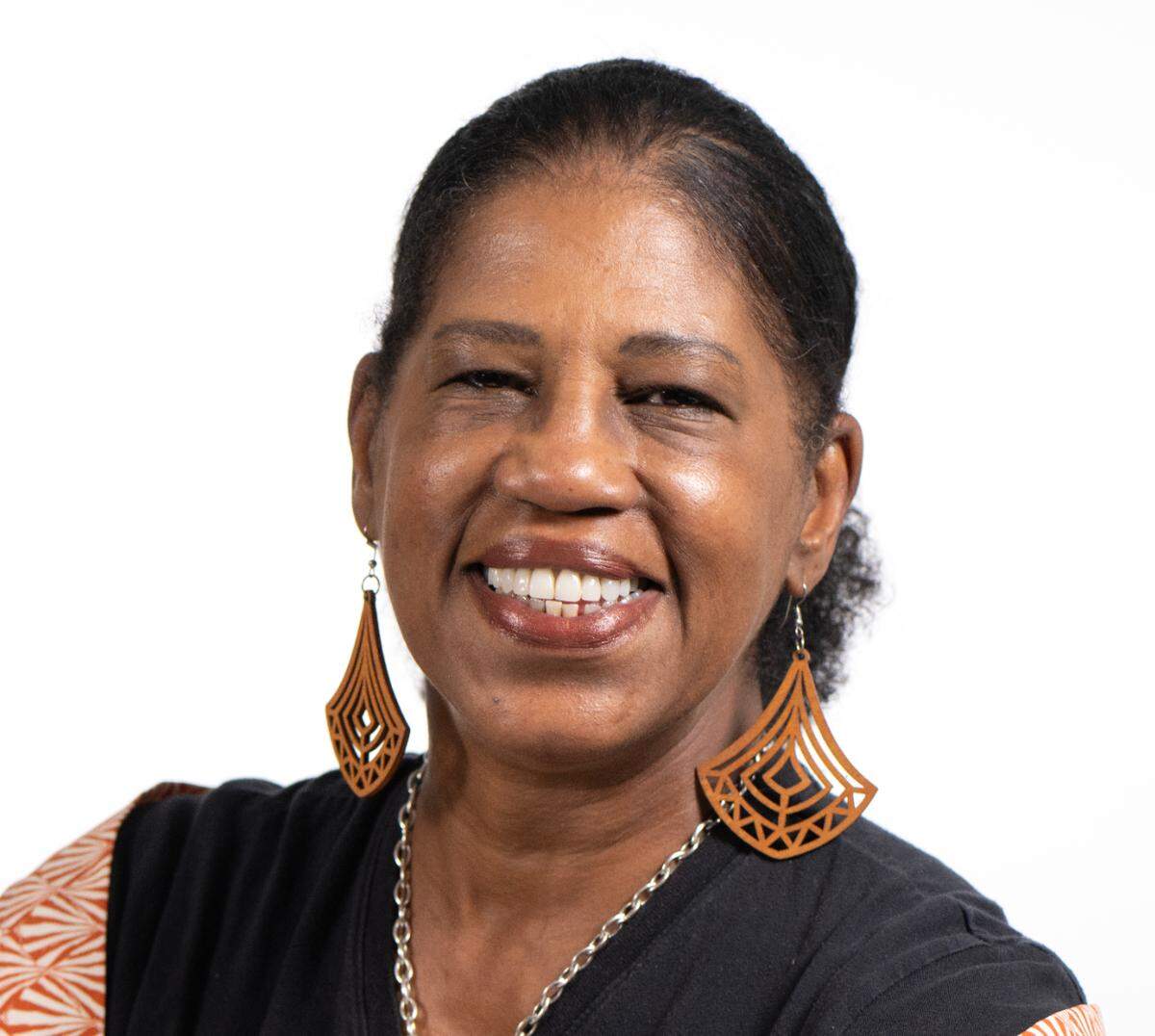
“This is a leadership problem,” said Doug Barrett, an African American photographer who was one of the presenters at the daylong event. He was invited by K-State to talk about how he uses his photography “as a weapon to fight against racism, inequality and poverty,” he said.
More than halfway through his presentation, he was interrupted first with an offensive audio outburst from someone claiming to be K-State student Jaden McNeil, who has drawn fire before for offensive tweets. “Why do Black lives matter?” the person said.
Also during Barrett’s talk, multiple voices interrupted, and at one point a hacker electronically took over the Zoom screen and began scribbling across it.
During the four-hour virtual event, Barrett and another keynote speaker, as well as most of the 19 breakout sessions, were disrupted with offensive language, either through audio or in onscreen chats, said Bryan Samuel, K-State’s chief diversity officer.
He said speakers were on Zoom and routed through YouTube. The university has used this method before for virtual programs. “These individuals got into the chat function of YouTube and then into the Zoom. It was a tough day.”
In another session, author Clint Smith talked about being a Black man in America, and institutional racism. His presentation was interrupted with offensive questions — “Why do you hate white people?” — and one attacking gay people, posted in the audience chat column. Those making the post used names such as Baben McBaby and 97groyper. Groypers, sometimes referred to as the Groyper Army, are vocal supporters of white supremacist, according to the Anti-Defamation League.
A panel discussion of LGBTQI+ issues was also interrupted with offensive comments. Students who attended said some of them fired back at the offenders. Eventually the moderator muted everyone and disabled the chat function.
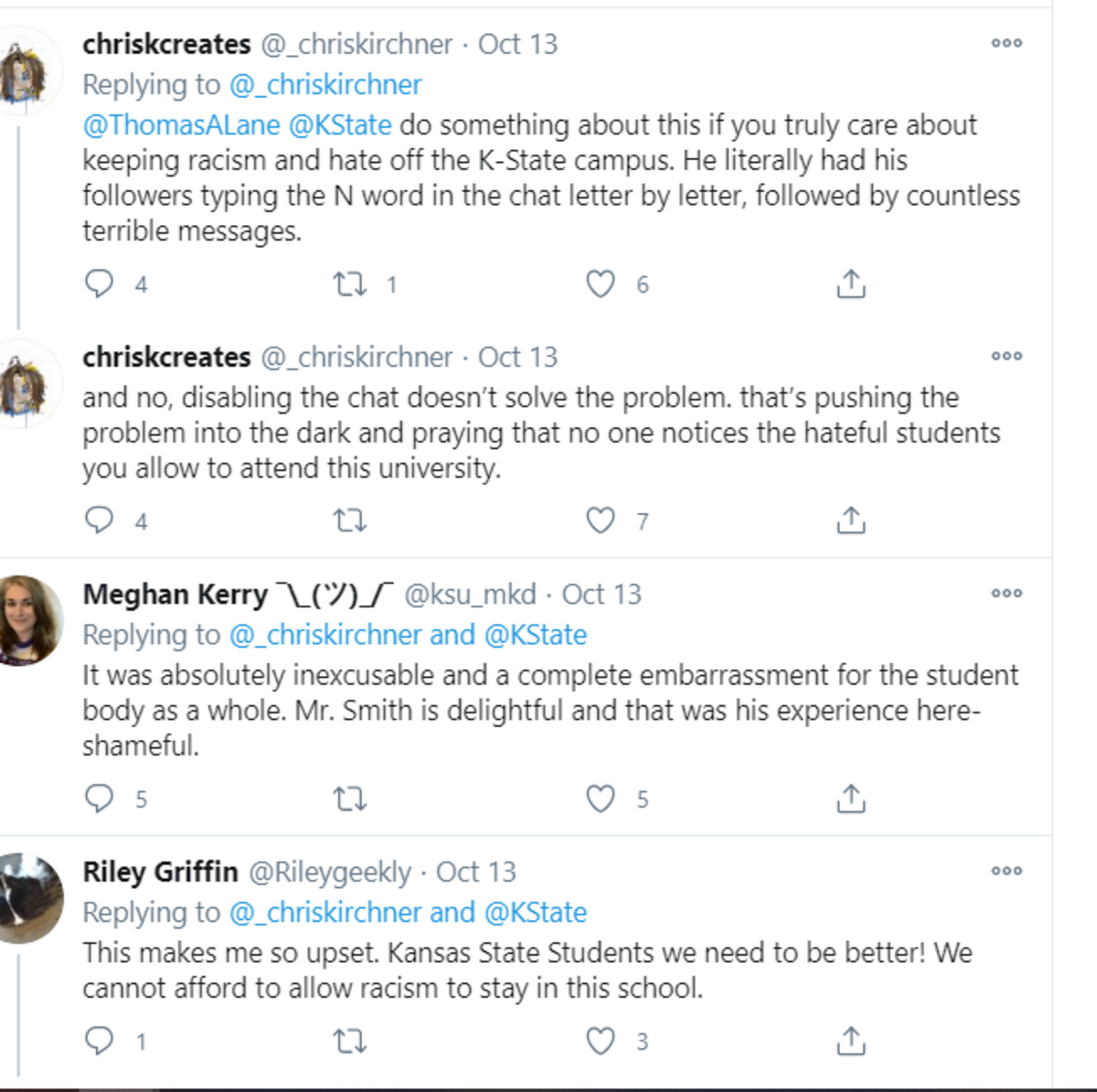
One student tweeted later that a hacker was “typing the N word in the chat letter by letter, followed by countless terrible messages.”
Samuel said the university had intended for the program, sponsored by the university’s office of diversity equity and inclusion, to generate deep scholarly discussion among students, faculty and the general public in Manhattan.
“It’s sad that we had to have that type of behavior take place. I’m not saying individuals can’t freely share and engage about different thought or ideology but that is not what this was. This was designed to disrupt.”
McNeil, on his Twitter page, posted a video of himself commenting on Barrett’s presentation and expressing outrage when the session’s moderators mention removing a participant for putting “white lives matter” in the chat box.
McNeil, a junior in political science is the head of K-State’s America First Students chapter — a controversial group he formed earlier this year. The Institute for Research and Education on Human Rights, a national watchdog organization, has linked America First to white nationalists. However, McNeil’s group has not been recognized as an official student group on campus because it doesn’t have enough members.
McNeil, who has denied being a white nationalist, is identified on the far-right political website Big League Politics as a conservative activist. In an interview on the site, McNeil said he was kicked out of the virtual conference.
“You’re not allowed to say ‘White lives matter’ without them attacking you as a white supremacist and calling for you to be expelled,” McNeil is quoted saying. “I thought college was supposed to be about the free exchange of ideas? Guess not!”
He was not immediately available for comment to The Star.
McNeil first came under fire at K-State in June for making insensitive tweets about George Floyd, whose death at the hands of Minneapolis police sparked global protests against police killing unarmed Black people. Students said the tweets were racist and called for McNeil to be expelled, but university officials said his tweets were free speech and no action was taken.
“Honestly I am not surprised this keeps happening,” one student told The Star. She asked to remain anonymous because she fears retaliation. She said she attended the virtual conference “because I am a white person interested in social justice.” The hackers marred the experience. “People with these attitudes have been harassing K-State people, particularly those students of color, queer students and anyone allied with them. Mostly nothing is done about it.”
Over the summer, some Black students, angry that the university did not act, said they feared being targets of racial violence if they returned to the campus for the fall semester. And in a statement, players on the K-State football team said they refused to “play, practice or meet” until the university devised a policy that would allow a student to be expelled for displaying “openly racist, threatening or disrespectful actions.” They later agreed the university was making an effort and did play.
On Wednesday the KSU Young Democrats again called for McNeil to be expelled and accused him of inviting supporters of his group to disrupt the conference.
In June, President Richard Myers promised a new school policy to “combat racism and bigotry and other forms of social injustice” across campus.
In a note Wednesday to the campus community, Myers thanked speakers and others who participated in the KSUnite conference and said it is reviewing the source and timeline of the disruptions.
“Please accept the university’s heartfelt thanks for sharing personal stories and working to improve our university climate,” the note said. “Participants faced adversity in the form of multiple significant disruptions in many of the sessions. Our moderators, hosts and technology teams deserve praise for their actions to regain control of the sessions and continue to deliver messages of progress and hope.“
Cindy Hollingsworth, a K-State spokeswoman, declined to answer questions from The Star. “Since we are working through our processes, we won’t have any further comment at this time,” she said.
Barrett, who has a photo exhibit in The Marianna Kistler Beach Museum of Art on the campus, is perhaps most famous for his photo of four Black children holding a sign saying “Stop the hate” during a peaceful rally in Junction City, Kansas. The photo this year went viral on social media and ended up featured in Time and Smithsonian magazines and on a billboard in New York’s Times Square.
Barrett told The Star that if the interruption was meant to anger him, it did the opposite.
“It warmed my heart,” he said, “because his rhetoric lets us know that we are doing the right thing here.”
Includes reporting by The Star’s Judy L. Thomas.
This story was originally published October 15, 2020 at 1:17 PM.