KCPD shootings of Black men have been a problem for years. Will one verdict change that?
READ MORE
KCPD officer found guilty in fatal shooting of Black man
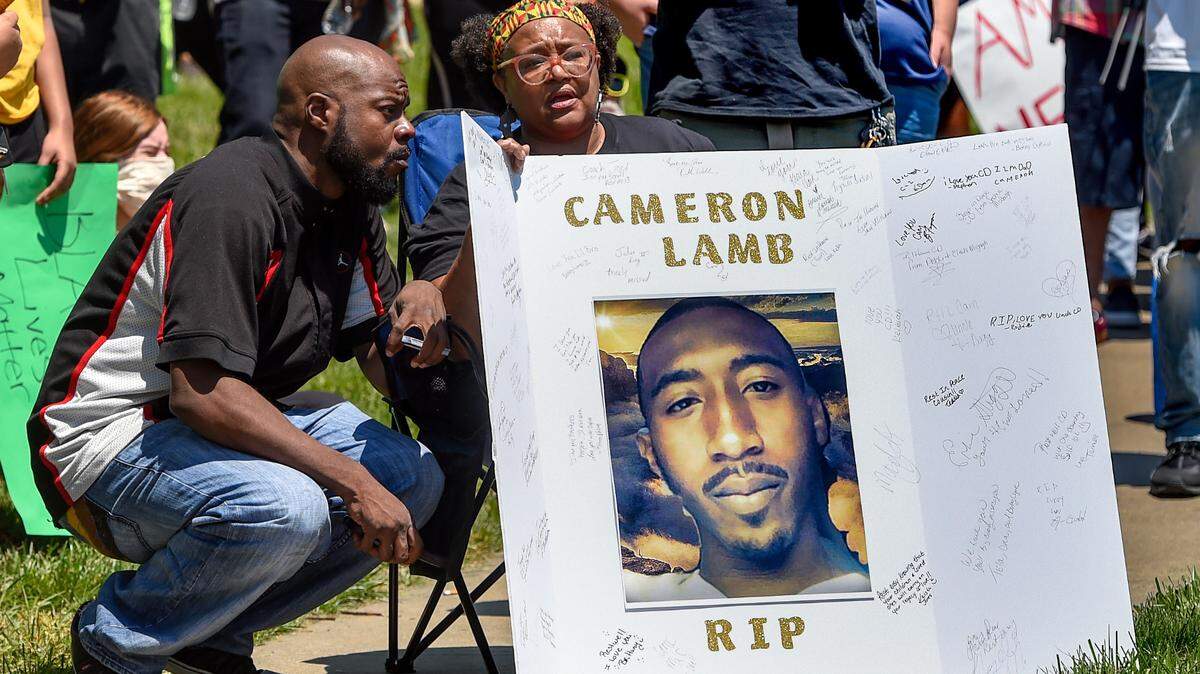
Eric DeValkenaere, a Kansas City police detective, was found guilty of manslaughter on Nov. 19, 2021, in the December 2019 killing of Cameron Lamb, a Black man who was fatally shot in his own backyard. DeValkenaere was the first white Kansas City police officer in 80 years to face a criminal trial in the shooting death of a Black man.
Expand All
The four shots that rang out from a white Kansas City policeman’s gun on Dec. 3, 2019, changed lives and, as of Friday, Kansas City history.
For the first time ever, a white Kansas City police officer was found guilty of killing a Black man.
Detective Eric J. DeValkenaere, 43, convicted of second-degree involuntary manslaughter and armed criminal action in the killing of 26-year-old Cameron Lamb, faces up to 4 and 15 years in prison on the respective charges.
In a city where civil rights leaders have long sounded the alarm about police impunity in killings of Black men, many hailed it as a rare and overdue act of justice. And some predicted that the conviction would serve as a stern warning to the entire Kansas City Police Department.
But across the city, where the disproportionate killing of Black people by police has been publicly known for years, and four other officers still face charges of violent crimes against Black people, the notion that one verdict could change such an institution as the KCPD evoked as much doubt as it did hope.
In one barbershop in Westport, Black Kansas Citians expressed surprise that the officer was found guilty, but were quick to point out that he could still be let off easy at sentencing. And that policing problems in an American city are bigger than one cop.
And some of those who know the KCPD best — Black officers in the department, and attorneys who have faced off against the department in court or on a protest line — expressed serious skepticism of real change coming soon.
“I don’t think KCPD can change, not under the current leadership,” said one Black officer, who has been with the police department for nearly a decade and asked to remain anonymous because he feared retaliation for speaking to The Star.
“You can’t change something that’s been so systemic for this long.”
DeValkenaere was the first Kansas City police officer in nearly 80 years to face criminal charges in the death of a Black man. That’s in a city where police have killed about four people a year, as The Star reported in a 2015 investigation. In a decade of fatal police shootings, 60% of those killed were Black in a city that is 30% Black.
But the verdict meant something both to those closest to the tragedy and police accountability experts observing from afar.
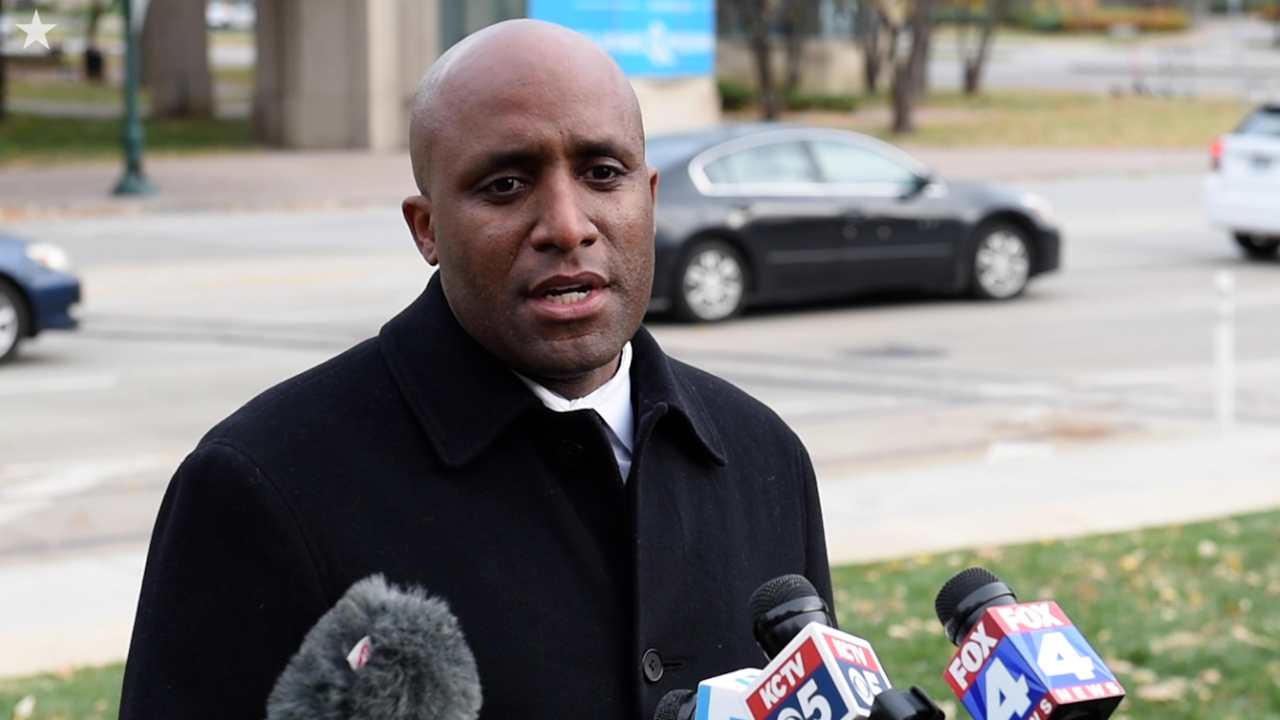
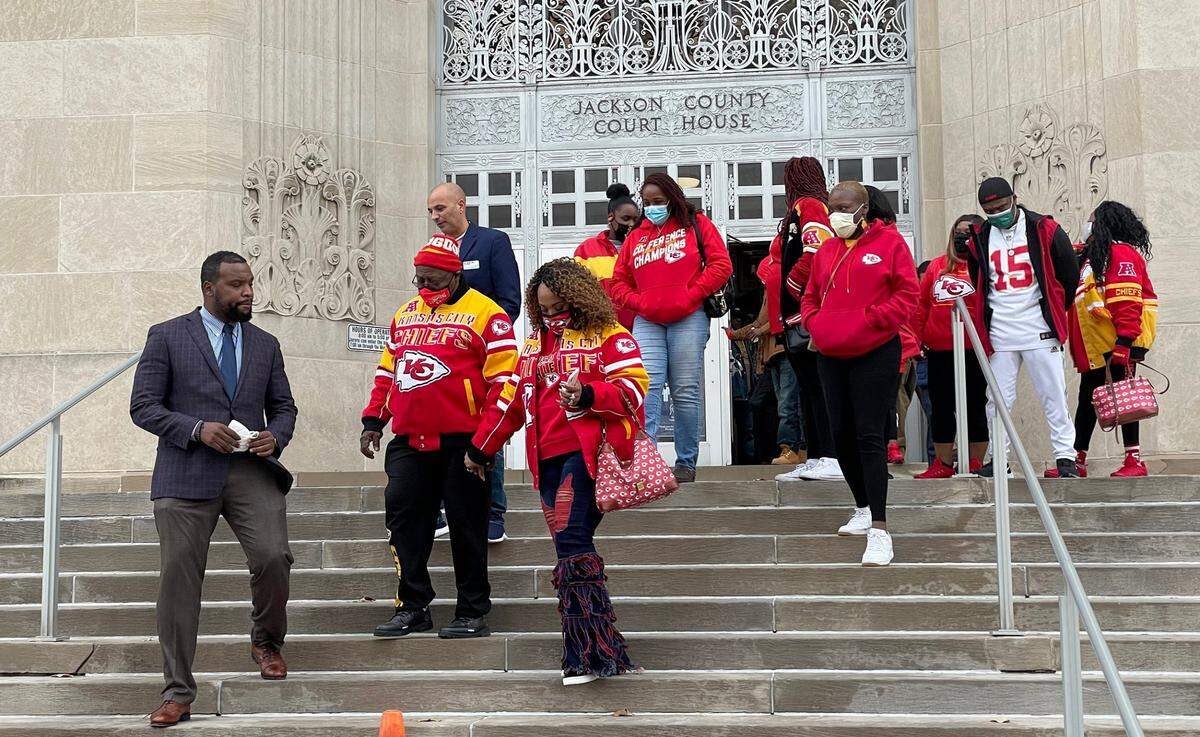
Outside the courthouse Friday, noted civil rights attorney Lee Merritt called the verdict “momentous.”
“This is historic. This means something,” said Merritt, who is representing the family of Ahmaud Arbery, a 25-year-old Black man who in 2020 was killed by three white men in Georgia. One of those men is now on trial there.
Merritt recounted how one of Lamb’s family members told him: “This is going to mean something when you go back to Georgia. It’s going to mean something for Ahmaud Arbery. It’s going to mean something for Atatiana Jefferson ... It’s going to mean something for so many families who have been impacted.”
“These instances of justice in our system are far too rare. But there was something that happened here that was different. And we cannot stop here.”
“If nothing else, “ said Lauren Bonds, legal director with the National Police Accountability Project, a New Orleans-based nonprofit that helps protect people’s civil rights in their encounters with law enforcement, “it signals to police officers that the DA (district attorney) is willing to bring these charges in the future.”
Bonds cited Minneapolis and Baltimore as similar mid-sized cities where the prosecution of high-profile police misconduct cases resulted in reform. Even before Derek Chauvin was convicted in the George Floyd murder, she said, Minneapolis police were making changes to their policies and training and in how they interact with people.
The Freddie Gray case in Baltimore did not result in a conviction, she noted, but it led to a significant probe by the Department of Justice and, later, to policy changes through a consent decree.
“That’s another way these cases can lead to change,” Bonds said. “They draw attention from outside agencies and auditors that can put pressure on the department. I wouldn’t be surprised if today’s ruling caught the attention of the DOJ.”
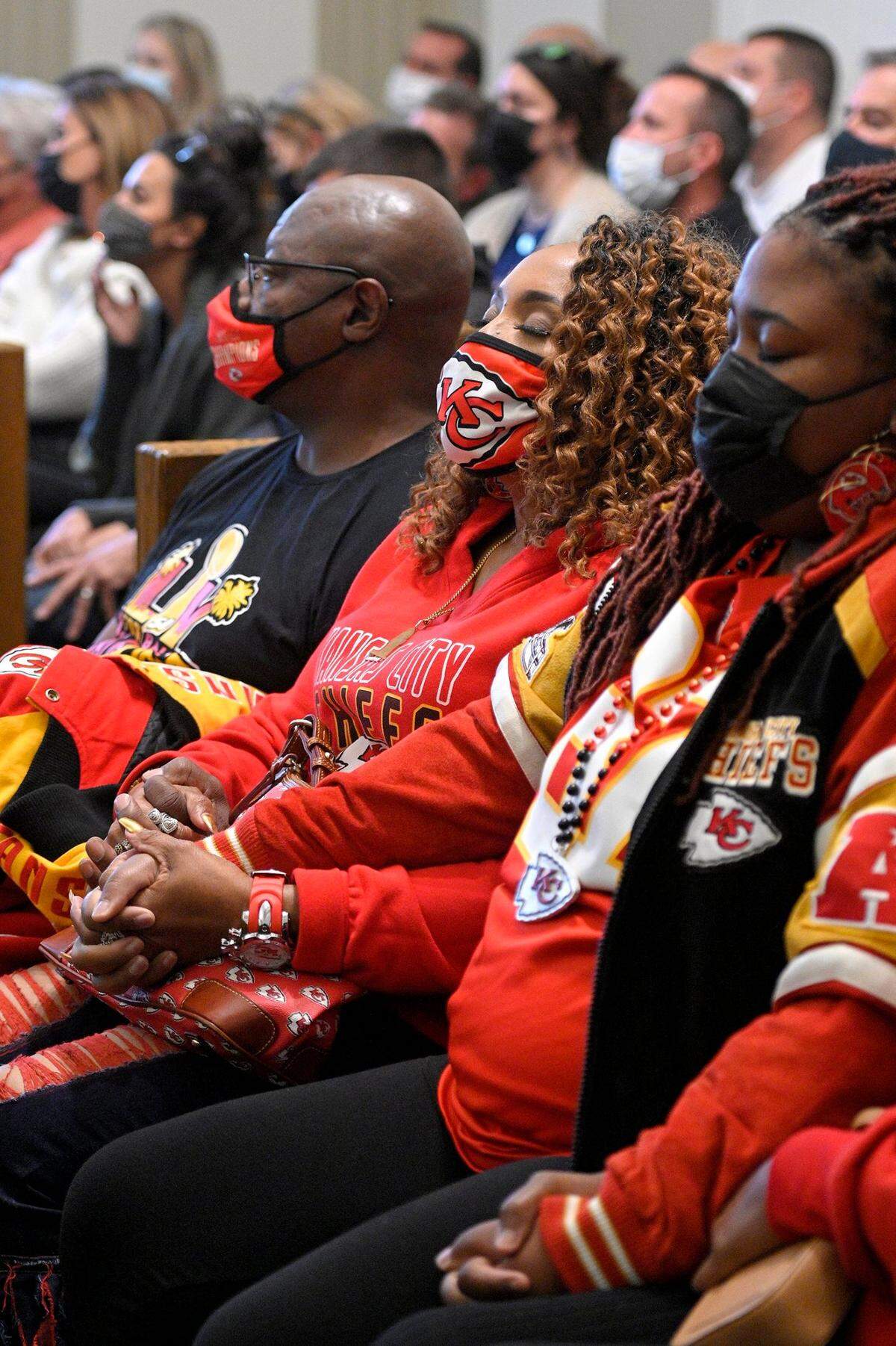
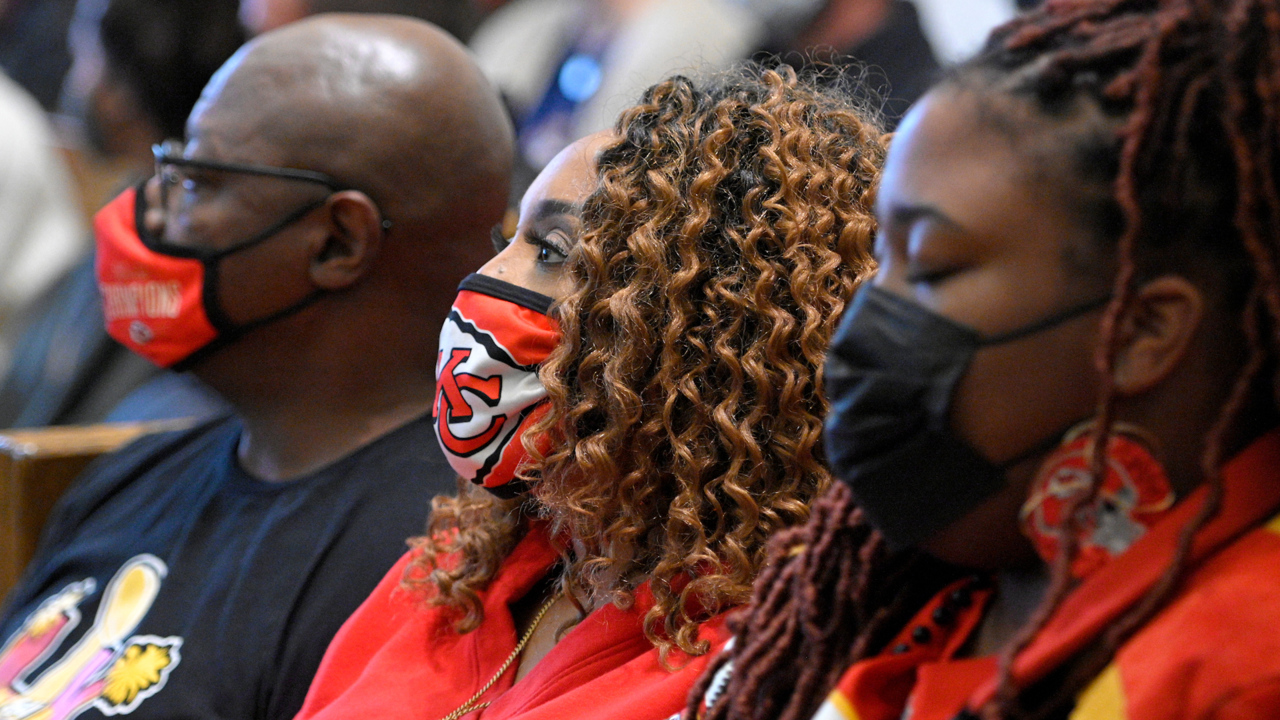
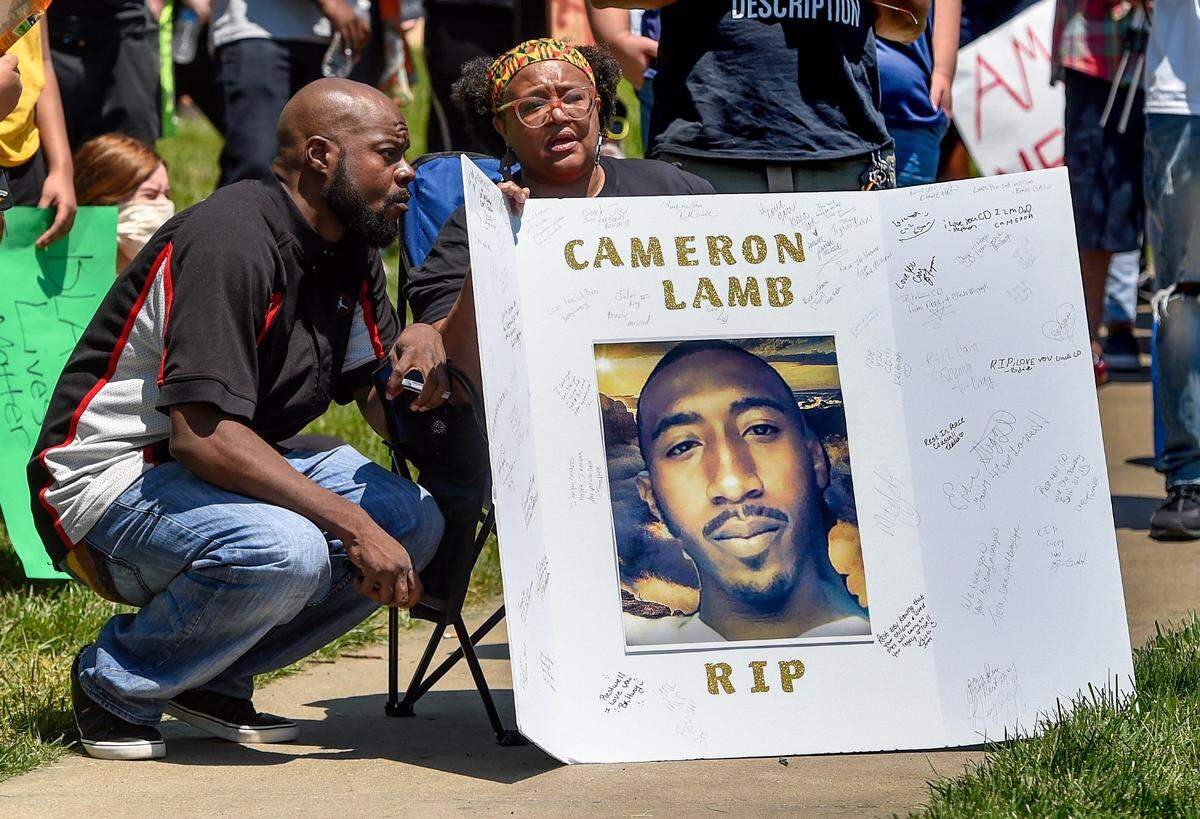
For Lamb’s mother, who stood outside the courthouse feeling overwhelmed, the verdict was personal.
“This has not been easy for me,” Laurie Bey said, “because you know, I go to sleep, he’s there. I wake up, he’s there. So he’s been all over me. So it was very overwhelming, but I knew that the outcome was going to be good.
“That was my son. That was my baby.”
Sending a signal
Lamb was sitting in a truck in his own backyard when DeValkenaere killed him.
A central argument of the prosecution held that DeValkenaere violated his rights by pursuing him at home without evidence of a crime. And prosecutors said police planted the gun they would later say justified the shooting, evoking an old fear about police setups that is rarely brought out in public charges.
The shooting unfolded that day after police investigating a crash reported a red pickup chasing a car. Officers in a police helicopter spotted the truck, which was driven by Lamb, and followed it.
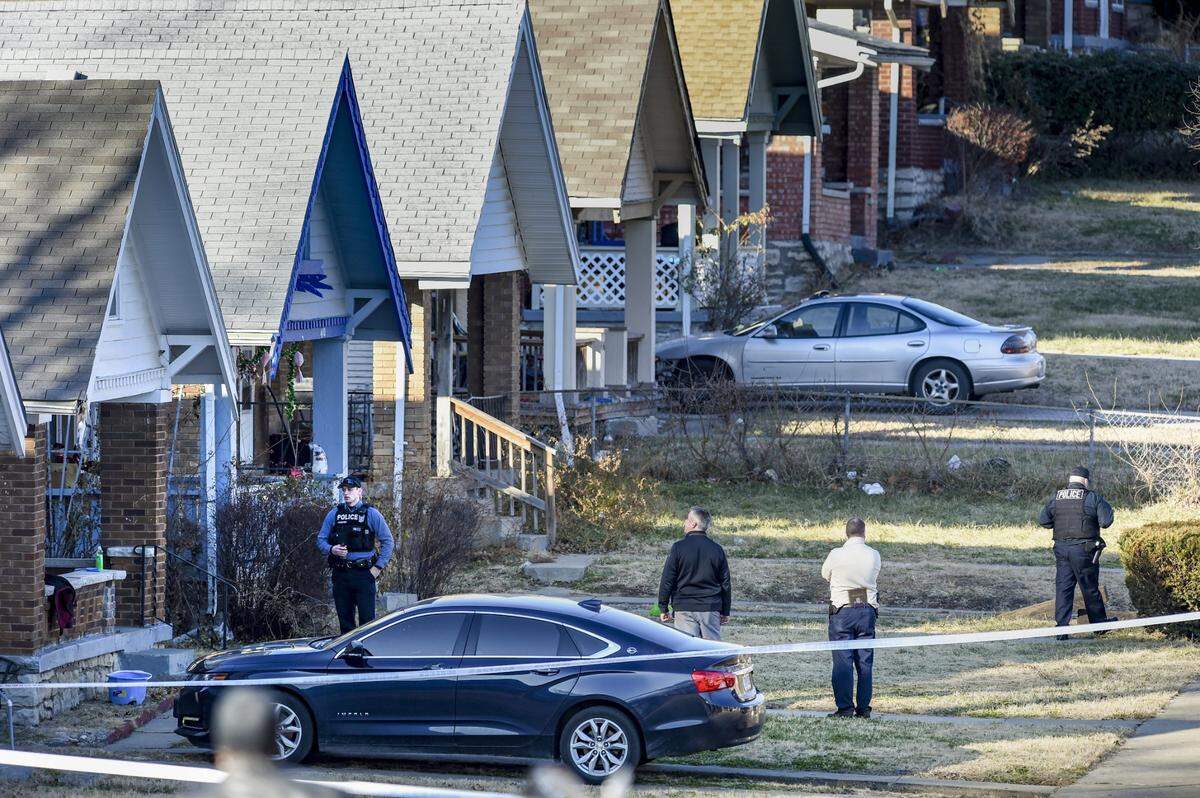
There was no evidence that anyone had dialed 911, prosecutors said, or that anyone was hurt or that a crime had taken place when DeValkenaere and another detective arrived at Lamb’s home at 4154 College Ave.
Only nine seconds passed in the time DeValkenaere moved from the front of Lamb’s home to the back, knocking over a barbecue grill and a car hood in the process.
DeValkenaere said he fired after Lamb pointed a gun at another officer.
Police investigating the shooting found Lamb inside the vehicle with his left arm and head hanging out of the driver’s side window. They said that, on the ground near his left hand, was a handgun.
Prosecutors alleged that the crime scene was staged and the gun was planted.
Jean Peters Baker, the Jackson County prosecutor, had reported problems with the police investigation already, saying her office was stymied when the police department did not hand over a probable cause statement in the shooting.
Heading to court, DeValkenaere’s defense attorneys requested a bench trial, which means it was heard by a judge and not a jury.
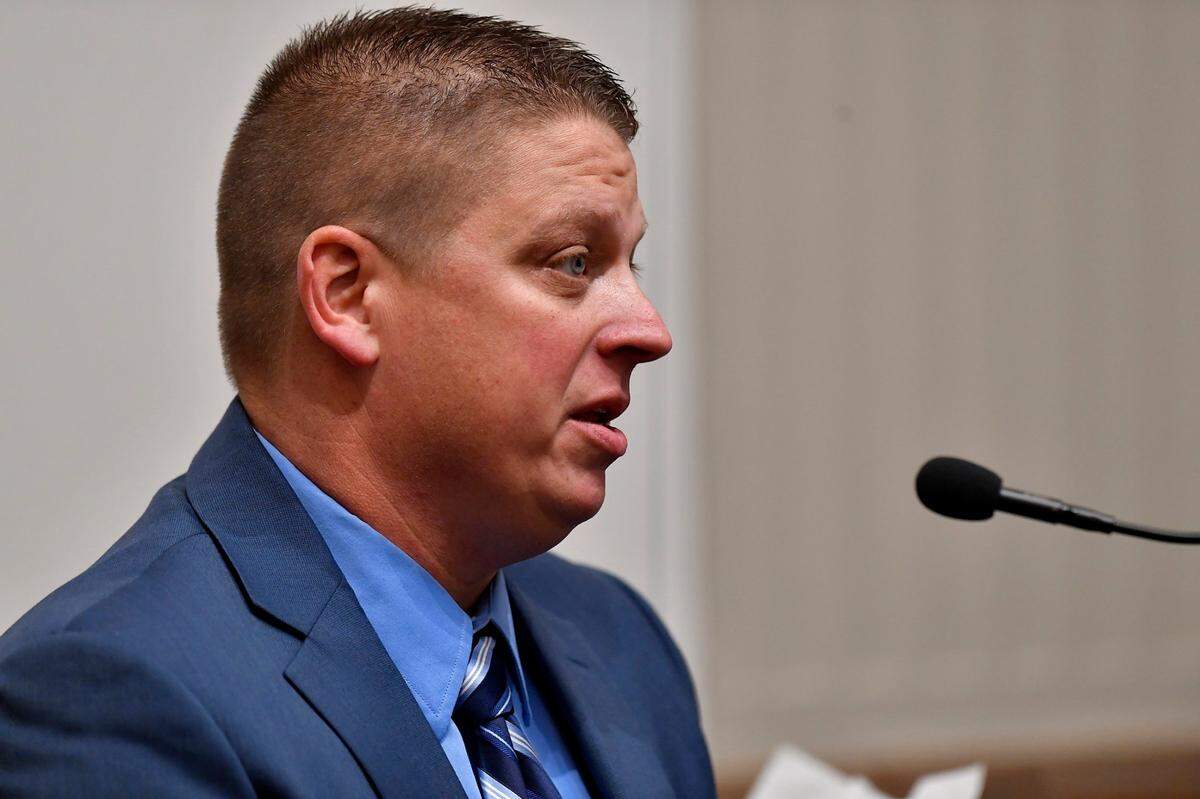
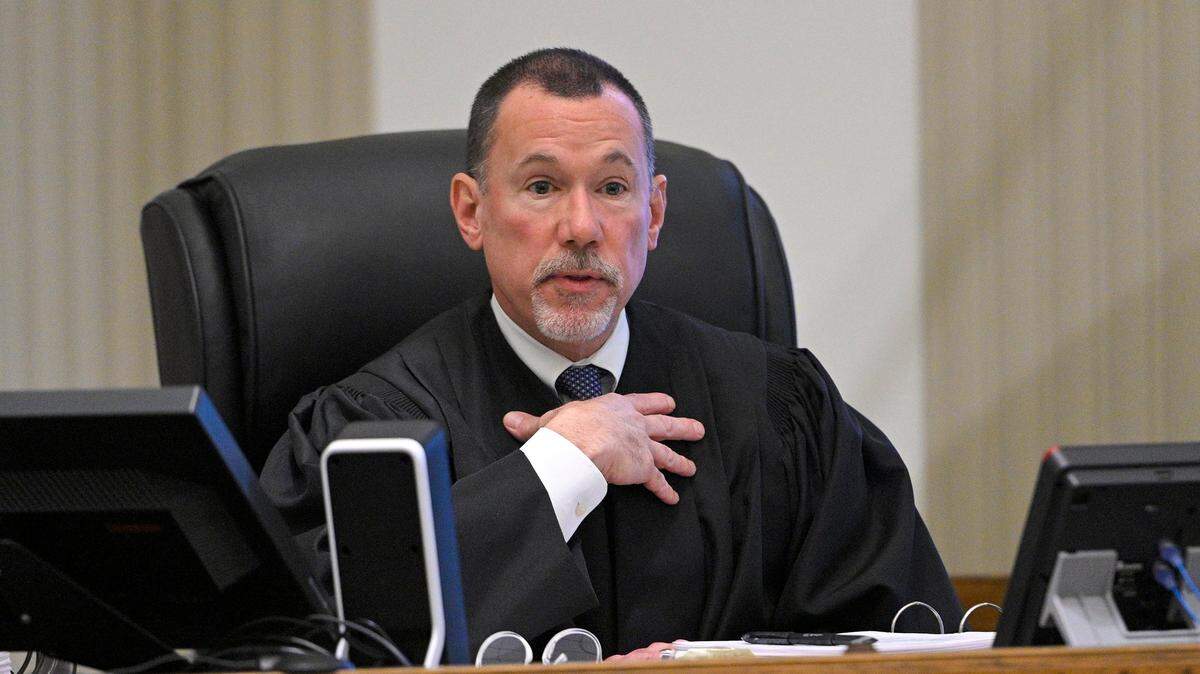
When Jackson County Circuit Court Judge J. Dale Youngs delivered the verdict, he called DeValkenaere and the other officer “the initial aggressors in the encounter with Cameron Lamb,” adding that they escalated the situation when they had a duty to retreat.
Local Black leaders weighed in swiftly on the verdict.
“By convicting Officer DeValkenaere,” Gwen Grant, the president of the Urban League of Greater Kansas City, tweeted, “Kansas City is sending a signal to all police that the days of killing Black people with impunity are over, they will be held accountable. We profoundly appreciate that justice has been served by the court’s decision.”
The Rev. Randy Fikki, of Unity Southeast Kansas City, near Swope Park, hailed the verdict, adding, “Let this be the first domino to fall as we battle systemic racism in our police department and in our city.”
A bigger problem
Henry Service, a Black attorney who helped organize the Black Lives Matter protests in Kansas City, was not at all confident the trial would have a real impact on the KCPD.
He has his own experience with police: He has sued several officers, alleging that in 2019 they pulled him over as he drove his own car and pointed guns at him.
“They’re not going to change anything,” Service said. “What’s remarkable is that in the history of the Kansas City Police Department that this would be the first cop ever convicted of doing anything to a Black person. I mean convicted criminally.
“This is not going to change what they do, no, because it’s so rare that the police are held accountable for their actions. They’re not incentivized to change. They will see this as an aberration, which it is.”
Even as the verdict was announced, four other white Kansas City police officers await trial on charges in which they are accused of violent crimes against Black people.
▪ Officers Matthew Brummett, 38, and Charles Prichard, 49, have been indicted for felony assault and are set to go before a jury Dec. 6.
They are accused of using excessive force in the May 2019 arrest of Breona Hill at a beauty supply store. Brummet and Prichard said Hill hurt herself when she resisted their attempts to handcuff her. But, according to charging documents, video shows one of the officers hitting Hill with a closed fist and forcing her to the ground.
The video shows the officers kneeling on her torso, ribs and upper back while Hill struggles as they attempt to handcuff her. Brummet then slams Hill’s face into the concrete twice and drops his knee onto her neck and right shoulder.
In announcing the charges in 2020, Baker said she was saddened to have been forced to seek an indictment through a grand jury after the police refused to provide a probable cause statement, as happened also in the DeValkenaere case.
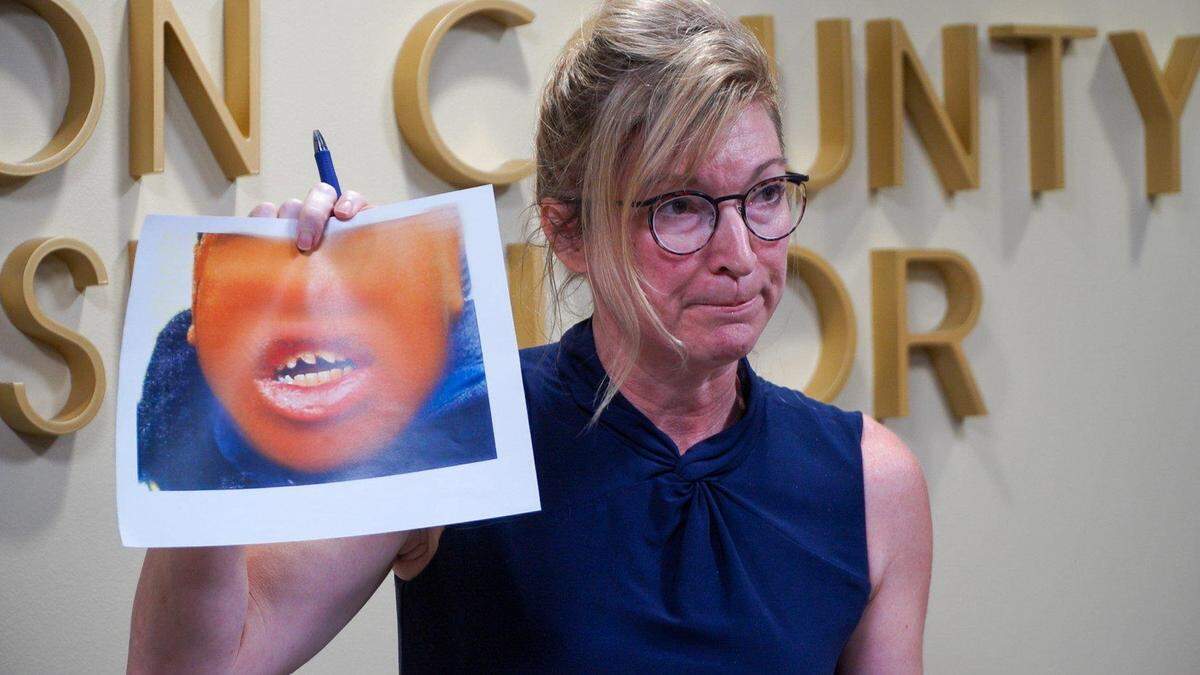
▪ Sgt. Matthew Neal, 41, was set to stand trial before a jury this month, also on felony assault charges, but his trial has been postponed with no set date. Neal was indicted for allegedly placing his knee on the back of a 15-year-old boy’s neck and slamming the boy’s head into the pavement with such force that his two front teeth were broken and it took six stitches to close a cut near his hairline.
Baker again relied on a grand jury to charge the officer. A case management conference is set for Dec. 3.
▪ Nicholas McQuillen, 39, faces a misdemeanor assault charge for spraying a substance like pepper spray, allegedly for no good reason, into the eyes of a teenage girl during last year’s Black Lives Matter protest near the Country Club Plaza.
A grand jury also was necessary for charges in this case. Trial is set to start April 11, 2022.
Jackson County Sheriff Darryl Forté, who led the KCPD for more than five years, said he cannot predict how the department might respond to Friday’s verdict.
“During my career with KCPD high profile incidents were reviewed, discussed and changes were usually implemented to eliminate or minimize similar occurrences,” he said.
Attorneys who have observed the police department for years expressed some hope that the DeValkenaere decision would have a chastening effect.
“It’s really difficult to say with them,” said John Picerno, a criminal defense attorney not involved in the case. “They’re kind of dug in over there. I certainly hope that it does send the message to them that, you know, we’re no longer going to accept a shoot first and ask questions later type of scenario — that you better be justified when you pull your firearm out and shoot somebody (and) only if it’s a last resort. It shouldn’t be your first impulse, right?”
He continued, “I mean, look, they don’t even send probable cause statements to the elected county prosecutor to review them to determine whether or not charges are appropriate. So that tells you it’s sort of an us against them mentality. And, in my opinion, you know, that has to change.”
Attorney David Smith, who has sued the KCPD multiple times for use of excessive force, said any time the jury speaks, the police department is compelled to listen.
“It’s going to take the citizens, through the voices of the jury, to speak loudly in the criminal cases and the civil cases to have any real change.”
KCPD response
For its part, the police department on Friday released a brief written statement.
“Every officer involved shooting is difficult not only for the members in the community, but also the members of the police department,” the emailed statement read. “We acknowledge the Court’s decision.”
Officer Donna Drake, a spokeswoman for the department, later said DeValkenaere has been “suspended without pay pending termination” following the verdict. She confirmed that the department’s Notable Event Review Panel, composed of high-ranking police officials, will examine the shooting for policy and training purposes.
The department has, in the past, also noted that it has made changes.
Following the summer 2020 protests, during which Lamb’s name was among those chanted by demonstrators, the KCPD announced it would no longer investigate its own police shootings. The Missouri Highway Patrol now does so.
Responding to public demand, body cameras are now also issued to uniformed officers. The Kansas City Board of Police Commissioners also approved a policy that prohibits officers from using projectiles like rubber bullets or other so-called “less-lethal” weapons for crowd control.
The moves did little do assuage public discontent with the police department, which in an unusual arrangement is controlled by a board appointed by the governor rather than local elected officials.
Community groups and civil rights leaders have repeatedly called for the removal of Police Chief Rick Smith, citing increased shootings, unsolved homicides, as well as the killings of several Black men and excessive force against Black people.
One Kansas City police officer, who is Black and has been on the force for more than 20 years, did not think the department would change now.
“Not initially, no, I don’t think it will,” said the officer, who asked to remain anonymous because he fears retaliation for speaking to The Star.
“I think a lot of it has to do with the fact that they’ll ignore or personally disagree with the facts of the case of why he was found guilty. I think a part of that is there’s something broken, or something wrong with the subculture or inner cultures of law enforcement and I don’t think that’s unique to Kansas City.”
Part of the problem, the officer said, is that law enforcement officials tend to give their colleagues the benefit of the doubt, even justifying or rationalizing decisions that are unreasonable.
“I don’t think the department changes until the people with that same mentality change, because unfortunately, the chief can leave, but he’s promoted deputy chiefs with the same ideologies that he has.
“Until you get those people completely out of there and you get somebody at that executive level or at the Chief level, with fresh ideas, maybe an outside person, or maybe even local control somewhere down the road.”
‘The police don’t lose’
At Draque’s Barber Shop on 39th Street, a lively discussion followed the decision Friday. Most were shocked at the guilty verdict.
“I thought he was going to get off, they were going to pull some strings or find some loopholes,” said Eddie Vasquez, a barber who moved from Chicago to Kansas City in 2004. His own experiences with the criminal justice system have left him pessimistic about justice.
“I’m glad they gave him a guilty verdict. They need to put them on trial like anyone else. They need to re-evaluate their standards for who they let become a police officer. Train them better, more knowledge of the situations. We need more urban people in urban communities.
“It’s harder for them to sympathize with the community if you’re not from there.”
Many expected, from the same bitter experience, that a police officer would never be convicted no matter what the facts. And some still remained skeptical that a just sentence would be imposed or that it would make a difference without more institutional change.
“I think this will matter if he gets a severe sentence,” said cosmetologist Aisha Hotkins.
“Just saying he is guilty doesn’t hold a lot of weight. They can say he is guilty and give him a couple of years. I feel like it’s really sad, I think they should get harsher punishments. They took a vow to protect and serve, not shoot you down. “
“They have their partner’s back and not our back,” customer Kowem Moffor said. “When something happens they cover each other’s back. When the police department does something wrong, it’s our tax money who has to pay that. It’s like we are paying them to do us wrong.
“No matter what happens the police don’t lose. If it’s not on video that cop will not go to prison because they will lie about what happens. It’s not going to change anything.
“I am not saying the cops are always wrong . . . but what I am saying is the level of conduct we accept from police is unacceptable. “
This story was originally published November 21, 2021 at 5:00 AM.