
South Kansas City groups hold virtual town hall meeting to address violent crime
To address the city’s record homicide numbers, Center Planning and Development Council Vice President Stacey Johnson-Cosby hosted a virtual town hall meeting on Saturday morning with three other South Kansas City neighborhood associations. More than 160 people registered, up from the 130 that signed up for a similar event over the summer.
“People wanted more information, and we couldn’t just leave it with one. My goal this time was to not only bring people to tell us what the issues were, but then to add in solutions. What can we in the community do?” Johnson-Cosby asked.
South Kansas City, like the rest of the city, has seen an uptick in the number of deaths driven by gun violence this year. Johnson-Cosby said the town hall was intended to pull together all the community resources available to combat the problem.
Speakers from various parts of the city were called: public officials, law enforcement, community leaders and organizers.
“We always see the experts talking one at a time — I wanted at one place and one time to hear from all the experts that know what’s going on, so we can all be on the same page,” Johnson-Cosby said. “It sets the foundation, the baseline, so that we all know exactly what’s going on from every angle of the gun-violence problem.”
The panelist emphasized that while enforcement played a role in addressing violence, prevention and intervention efforts in the community were key to lowering the city’s homicide numbers, which reached an all-time high this year.
In order to address violence in Kansas City, Johnson-Cosby said all parts of the city must work together.
“It is absolutely unacceptable. What can we as neighbors do? I’m just so positive that there’s something the community can do to impact that. We can’t just leave it to the police officers or prosecutors to do that,” Johnson-Cosby said. “Whether it’s mentoring or being trained as a conflict mediator, there are things we can do.”
COVID-19 drives up violence
Since quarantine began, Kansas City, like much of the country, has seen its homicide, aggravated assault and shooting numbers rise. The pandemic exacerbated socioeconomic factors that influence gun violence. Over the past few months, thousands of people lost their jobs — and some even lost their homes.
Teresa Perry of Share the Love House, an organization that provides social services to families in need, spoke of the way homelessness and joblessness have impacted crime in the community.
“If you have problems at home, it’s going to spill into the community,” Perry said. “When we talk about violent crime — we can give more opportunities, more things for (people) to get involved.”
COVID-19 also added strain on the city’s departments, making it difficult to combat the root causes of violence. School was previously an avenue for keeping students in a safe and healthy environment. With virtual learning, educators have to find creative ways to develop important relationships needed to help prevent conflict, Center School District Superintendent Yolanda Cargisle said.
Part of these efforts include providing classroom and “one-on-one” mentors for students. In addition, the school district provides additional training for staff to provide conflict resolution.
“We have to talk about a village mentality to address violent crime and the way it impacts youth,” Cargisle said. “Our mentors are still committed to providing support — even virtually. Being able to talk it out, in a manner (students) are able to come to an agreement ”
Trust building
Operation Legend, a federal law enforcement program, was the city’s most recent attempt to address gun violence. While it led to arrests, very few of them were for homicides.
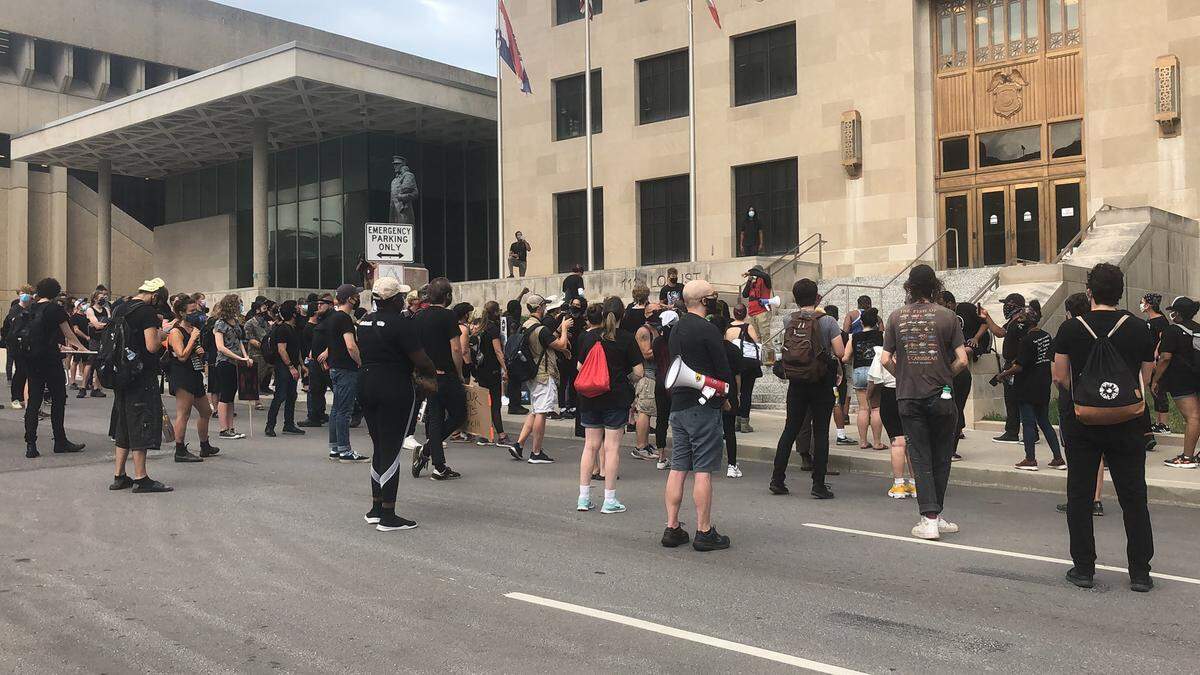
The initiative was met with a lot of wariness by residents, U.S. Attorney Tim Garrison said, in part because of the way it was rolled out.
“One of the things we hear a lot is that law enforcement needs to build trust with the community. Operation Legend did begin during the height of civil unrest in Portland, Oregon,” Garrison said. “When it was announced, a lot of folks misunderstood that to mean there were going to be interruptions of protest. That was not what it was about.”
Although Operation Legend’s time in the city was short-lived, the mistrust residents felt continues to exist.
Kansas City Mayor Quinton Lucas, who was one of the invited speakers at the town hall meeting, acknowledged how laws and policies disproportionately impact communities of color, leading to distrust in the community. Changing that is a focus of the city’s new anti-violence initiative, Reform Project KC, led by the mayor, Police Chief Rick Smith and Jackson County Prosecutor Jean Peters Baker.
“It’s all of our jobs to make sure there is as much trust as possible. It’s not police officers who are writing laws. We need to make sure our laws match what we need to see,” Lucas said. “If we’re building jails, then the jails will get full. If we write a bunch of laws that disproportionately impact young Black men and young Black women, then we need to make sure we’re addressing those problems.”
Chief Smith also emphasized the need for communities and police to work together to address crime.
To build community trust, the KCPD hosts a number of community outreach events like a “trucking treat” community event the department put on today, which is a drive-by event providing treats to children.
Johnson-Cosby, of the Center Planning and Development Council, plans to hold the city’s leaders accountable for the plans they discussed at the event. In a few months, she said she will be holding another town hall meeting to check in with them.
“We’ll come back in the spring and we’ll get an update from the same parties to see if some of the violence reduction measures that are in place now have actually worked.”
This story was originally published October 24, 2020 at 7:20 PM.