Owner of Kansas City ‘rat house’ plaguing Plaza area neighbors sentenced to prison
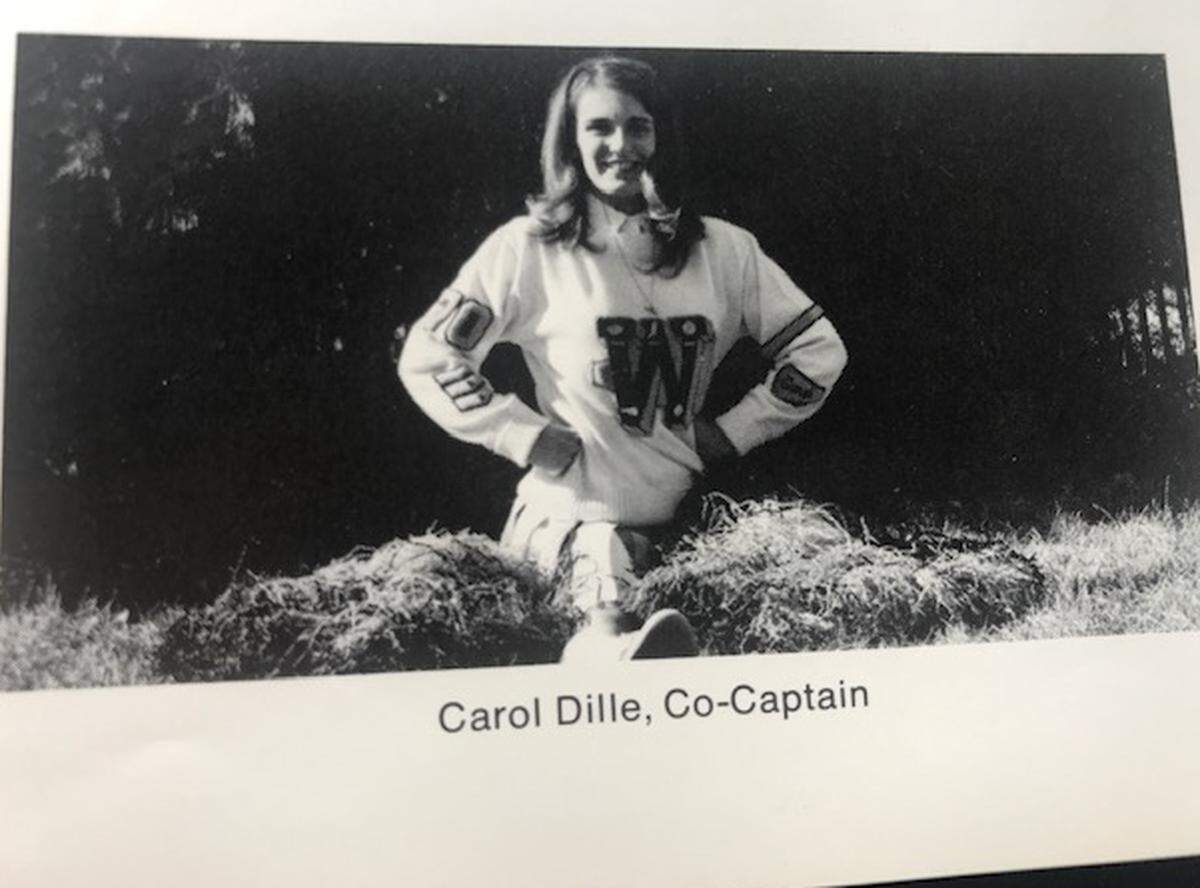
When Carol Dille graduated from Westport High School in 1970, she would leave for college — and later, a successful career with AT&T — as an honor student, co-captain of the varsity cheerleaders, a student government officer and petite and popular homecoming queen attendant.
On Friday, Dille — now 68 and long known to her exasperated Westwood Park neighbors as the owner of a “rat house” whose infestations have plagued them for at least 20 years — departed federal court downtown, sentenced at 11:30 a.m. to two years in federal prison for wire and bankruptcy fraud.
She was ordered to pay $76,601 in restitution for Social Security benefits she stole over three years from her ex-husband.
In his preamble to delivering the sentence, U.S. District Judge Gregory Kays said that in Social Security cases, prison sentences are not often given to defendants, such as Dille, who are first-time offenders. But in her case, he said prison was warranted as a punishment and a deterrent.
“It is difficult to detect people who commit this type of fraud,” Kays said. “The nature of this offense suggests that it was a sophisticated plan. … The timeline of the fraud and how long it has been going on is what separates you.”
He noted Dille’s intellect.
“It’s hard to catch smart, articulate, intelligent people like you, Ms. Dille.”
Before being sentenced, Dille said in court that the case against her was an example for her “of how far I have fallen from the ideals I have held so close my entire life” and “the true essence of who I believe I am.”
Bankruptcy
The charges and sentence — based on her January plea of guilty in stealing her ex-husband’s benefits — are not directly related to the “rat house” saga. But Dille’s neighbors had hoped that her imprisonment and fine would be one of the final steps in forcing her out of her two homes, both decaying and huddled amid a thicket of weeds, at 4933 Westwood Road and 4937 Westwood Road.
But the fate of her homes was already sealed.
Dille, in November 2018, had filed for Chapter 13 bankruptcy, to reorganize her debts and pay back her creditors. In her filing, she claimed to have real estate assets worth $981,000, which included the two homes on Westwood Road, three lots of property in Bates City, Missouri, and a home at 206. E. 66th St., where neighbors have also complained of rodents.
Last month, the federal bankruptcy court judged that Dille’s Chapter 13 petition be converted to Chapter 7, meaning instead of reorganizing her debts, her assets would be liquidated. Dille will continue to live in her home until her imprisonment. The locks on the other properties were changed last week and the houses are expected to be sold.
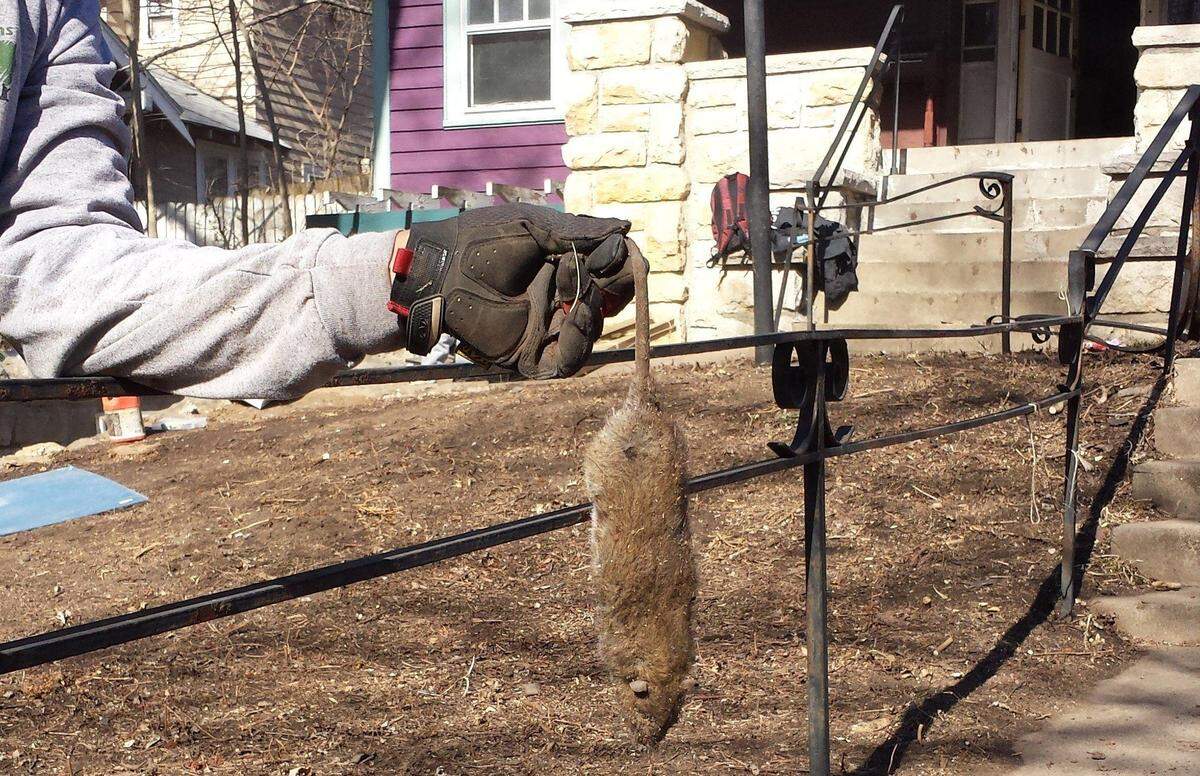
In Westwood Park, the rat problem has centered on Dille’s two bungalows, which sit side by side in a neighborhood just southwest of the Country Club Plaza where residences now commonly sell for between $400,000 to $600,000. Some, modern and more recently built, price around $1 million.
Dille has previously claimed she is targeted by neighbors who want to take and profit from the sale of her properties.
But neighbors’ complaints about Dille and rats, emanating from her property and skittering along their fences and into their own yards (one neighbor says his dog sometimes catches them), date to at least the year 2000.
Dille told The Star in the past that whatever rats have existed come from Brush Creek. The condition of her yards, and the creatures found there, she has said, are a consequence of her being an environmentalist and naturalistic gardener.
“I’m supporting what I believe in. They’re targeting something I believe in,” Dille told The Star in December about her neighbors.
She has consistently denied feeding or cultivating populations of rats, although she also concedes that she would never kill one or hire an exterminator.
“I have a tendency to think that all animals have an appropriate place in our environment, and in our biological systems and on our planet,” she told The Star.
‘Rat infestation’
But her denials were proven false. In November 2013, the Westwood Park Homes Association filed suit to get the state court to remedy persistent problems that the city was powerless to remedy, because Dille refused to allow authorities into her house.
In some cases, city inspectors can go in if they have proof the house is a danger to the occupants. Otherwise, they can’t set foot on the property unless a resident allows it. The association sued in state court under Missouri statute 441.510 that says if a dwelling is considered a threat to health or public safety, the court could appoint an outside “receiver” to fix things.
In 2015, neighbors won, following four days of trial and testimony.
Of her two homes, Dille lives in the one at 4937 Westwood Road. The one next door remains unoccupied, except for the raccoon families neighbors have seen going in and out.
In her written judgment, signed on Halloween day 2014, Judge Sandra C. Midkiff declared that the grounds around the home Dille occupies “is not a ‘naturalized yard.’”
“The house is not in livable condition” for multiple reasons, she wrote, including the “presence of dead tree logs, leaves and branches stored inside and outside the house conducive to rodent inhabitance … and rat infestation.”
She noted that Dille herself testified that the house had no gas or electric service for nearly five years, from 2009 to 2014, and no water for three.
Midkiff set forth a litany of decay, rot and “rat infestation … that existed and continued to exist up to and including the time of trial.”
When the receiver, a since retired Kansas City police officer who also worked in construction, entered to renovate the home, he and his crew exterminated at least 15 rats. They found the underside of a bed’s box spring packed with rat nets. Fecal matter poured from the underside. A refrigerator in the basement was discovered to be loaded with the carcasses of dead wildlife, including an opossum, a squirrel, owl, hawks and other birds. It cost about $144,000 to make the home livable.
Dille fought the removal. She twice filed for personal bankruptcy, a tactic that would essentially stop legal actions against her. The federal courts twice ruled against her.
From 2015 through June 2017, Dille lived in an apartment and neighbors were rat-free. Dille had two years to pay the receiver if she wished to reoccupy the house. But if she was bankrupt, as she claimed, neighbors reasoned that she would not have the $144,000 needed, and the house would go up for sale.
Just before the deadline, she came up with the money. Bankruptcy court filings show that some of it came from the sale of a home in Redondo Beach, California, that she co-owned with her estranged husband, Gerald A. Sanders, and sold in 2016 for $725,000. She received $355,000 from the sale, half of which was supposed to go to Sanders. He never received the money. Dille, in court filings, said that she kept $250,000 in cash in a freezer.
Once she was back in the house, the rats came back.
The charges
The sentence handed down Friday morning came from two crimes that she pleaded guilty to in January before Senior U.S. District Judge Howard F. Sachs. Dille admitted that between September 2013 and October 2016, she committed wire fraud in using the name, birthday and Social Security number of Sanders, to receive $76,601.20 of of his Social Security retirement benefits.
Sanders and Dille married in 1988, separated in 2009, the same year he moved to Indonesia, and divorced in 2017. Sanders moved again and was living in Guam when, in 2016, she offered to help him sign up for benefits and get them direct deposited when he turned 65.
At that point, she had already received nearly two and a half years worth of $1,491 monthly benefits, which were being direct-deposited in a United Missouri Bank account for a nonprofit church she set up at her own address, 4933 Westwood Road, identified as the “Alliance of Divine Love Chapel 102.” The church had no members, and Dille was the only one with access to the account.
When Sanders, who was struggling financially, turned 65 and looked to collect his Social Security, administration officials told him he’d been getting benefits for three years. The Social Security Administration began an investigation.
“Ms. Dille’s treatment of Mr. Sanders is appalling,” Special Assistant U.S. Attorney Courtney R. Pratten wrote in a July pre-sentencing memorandum. “The fact that she could feign sympathy and understanding of his financial plight while continuing to collect his monthly retirement benefits speaks volumes as to who she is.”
Dille was originally charged with with seven criminal counts: three for wire fraud, one of theft of government money, one of aggravated identity theft and two counts of bankruptcy fraud. Dille, who originally said she was not guilty, agreed to plead guilty to one count of bankruptcy fraud — for failing to include the assets of the Devine Love Chapel 102 when she had twice filed for bankruptcy — and one count of wire fraud.
The U.S. Attorney’s Office initially suggested that Dille serve between 31 and 44 months, but in July, based in part on the “callousness” of her crime, suggested she receive 46 to 57 months, mandatory restitution of the $76,000 followed by three years of supervised release.
At Friday’s hearing, Pratten argued that a harsher sentence was justified because, since the time she pleaded guilty in January, Dille had broken her plea agreement by, once again, committing bankruptcy fraud. She attempted to sell part of her property in Bates City for $46,000 without alerting the bankruptcy court.
Unrelated to wire or bankruptcy fraud, Pratten said, Dille also used her defunct Alliance of Divine Love Chapel 102 to apply for and, for a short time, falsely receive government COVID-19 Paycheck Protection Plan funds.

Dille’s attorney, Assistant Federal Public Defender Travis D. Poindexter, made the same argument in court that he did in his pre-sentencing document. He argued that his client should receive no time behind bars. He emphasized that Dille had no prior criminal history, had once been a top student at Westport High and had gone on to have a successful 26-year career with AT&T until her departure in 2003. He said she was repentant.
“Ms. Dille recognizes that her violation of the law was significant and the significant punishment that she faces, up to 25 years of imprisonment,” he wrote. “With that recognition, she admitted guilt, pleaded guilty and accepted responsibility for her conduct.”
The document included friends’ letters of support to the court seeking leniency. One asserted that Dille had a past history of child abuse and suffered from two failed marriages.
“Understandably I think Carol loves and trusts animals and plants more than she does people,” one wrote. “I’m sure she struggles with Obsessive Compulsive Disorder — I’m not a psychologist but I know she has trouble throwing things away. I’ve spend hours trying to help her sort through her garden without much success. She values butterflies, all animals, even rats. … I do not believe that Carol has ever fed the rats, but I also believe she would not poison them. … I do not believe that Carol is a danger to society or herself.”
Wrote another supporter of their once-successful friend’s kindness: “Carol has been a productive citizen throughout her life, and we are asking mercy to allow her to avoid incarceration and enjoy her twilight years.”
Dille is ordered to “self present” herself for prison on Dec. 21.
This story was originally published November 6, 2020 at 2:12 PM.