Judge says police shooting of unarmed man in downtown Kansas City was ‘reasonable’
A federal judge has removed a Kansas City police officer from a wrongful death lawsuit that stemmed from the 2013 fatal shooting of an unarmed man during a foot chase near the Power & Light District.
U.S. District Judge Brian C. Wimes granted William Thompson immunity and ruled that the officer used “reasonable” force when he shot and killed Ryan Stokes, 24, about 3 a.m. on July 28, 2013.
“Officer Thompson believed Stokes was armed and turned to ambush the pursuing officers, and Officer Thompson discharged his weapon to protect the approaching officers,” Wimes wrote in an order this week.
Thompson fired three shots at Stokes, hitting him twice in the back. Stokes died a short time later.
“The fact that Stokes was not, in reality, holding a gun when Officer Thompson shot him is not relevant.” Wimes wrote in a 15-page order.
At the time of the shooting, Thompson said he thought he saw a gun in Stokes’ hand when they crossed paths in a parking lot near 12th and McGee streets. Several officers said they believed Stokes was actually surrendering.
Police later found a gun in a car next to Stokes’ body. However, the handgun belonged to Stokes’ friend and the owner of the car.
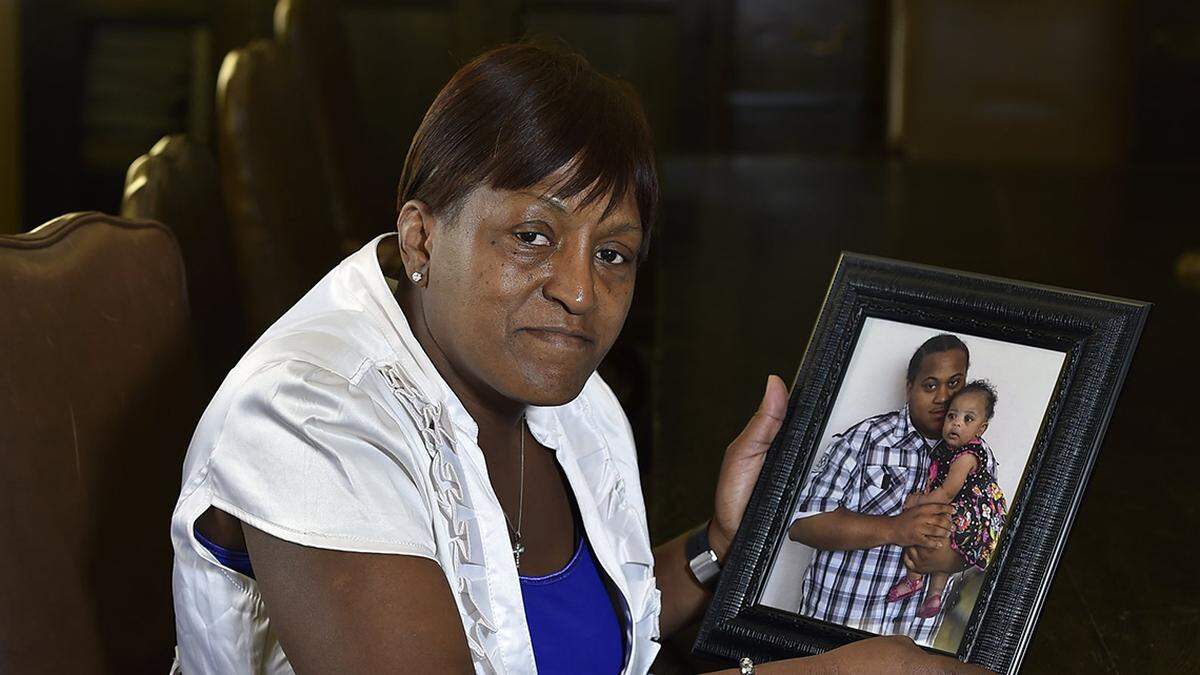
Stokes’ mother, Narene Stokes-James, has maintained that the shooting of her son was not justified. She filed a wrongful death lawsuit against the police department in 2016.
“They don’t want to hear our side of the story,” Stokes-James said. “I will never understand that, what they did to my son. They want to demonize his name and that he was down there causing problems.”
Stokes-James said her son was not armed and did not have a criminal record. As a youth, Stokes participated in police-sponsored athletic activities.
“I want justice for Ryan,” she said.
Brian McCallister, who is representing the Stokes family, said “we are extremely disappointed with the Judge Wimes’ ruling and we are currently discussing our options with the families we represent.”
The lawsuit remains pending in federal court. No criminal charges were filed in the shooting.
A grand jury declined to indict Thompson, and a police shooting panel that reviewed the incident made no recommendations for training or department policy changes.
Concerns about shooting
Among those who have organized protests in support of Stokes’ family is the Rev. Vernon P. Howard, president of the Southern Christian Leadership Conference of Greater Kansas City.
Howard said the ruling was unjust.
“It’s sad for Mr. Stokes and it is sad for his daughter and his mother,” he said. “The African American community has no viable option of an independent authority that can address these kinds of issues.”
After the ruling was issued, the Kansas City Police Department said in a written statement:
“The result of the events is terribly tragic for the family members and all involved. We are sorry for the pain that Mr. Stokes family experienced. We appreciate the process and the work of all involved and respect the court’s decision.”
Police have said the shooting was deemed reasonable because Stokes was fleeing from police and Thompson thought he saw a gun in Stokes’ hand.
Witnesses told police they saw Stokes toss away a gun moments before the shooting. Investigators concluded that Stokes put the gun in the car just before he was shot.
In 2018, the Board of Police Commissioners voted to rescind a certificate of commendation that had been awarded to Thompson and Tamara Jones, the other officer involved in the shooting.
The board said their decision had no bearing on the lawsuit but the award included inaccurate language describing the shooting.
The SCLC and other community leaders have called for more accountability, transparency and reforms in the police department.
Some have proposed creating a safer foot-pursuit policy and appointing a victim advocate team that would reach out to survivors of police shootings and families of those killed.
Howard, the SCLC president, said the Missouri law that allows police officers to use deadly force when they feel threatened must be changed.
“There must be something that both honors the difficult job our officers have but at the same time prevents so many cases like this where a black man loses his life when there was no harm or threat to anyone,” he said.
Wimes wrote that no other witness testified to seeing Stokes with a gun and the radio call did not mention a weapon. Another officer believed Stokes was surrendering.
But it was enough, Wimes wrote, that Thompson thought he saw a gun.
“Officer Thompson’s use of force, which falls within his discretion, amounts to no more than a negligent act in the course of his official duties and Officer Thompson is entitled to official immunity,” Wimes concluded.