
Not ‘CSI’: Despite surveillance video, Overland Park crash van eluded cops for days
Overland Park police aren’t saying how they finally tracked down the van whose driver allegedly fled a double-fatal crash scene Saturday — but they are familiar with the frustration people felt when it took nearly three days.
After all, police had images of the van from surveillance video. Cameras posted at intersections, over businesses, on buses and even people’s front doors seemingly blanket the city, don’t they?
And the photos police distributed asking for the public’s help even showed the back of the van and its license plate area.
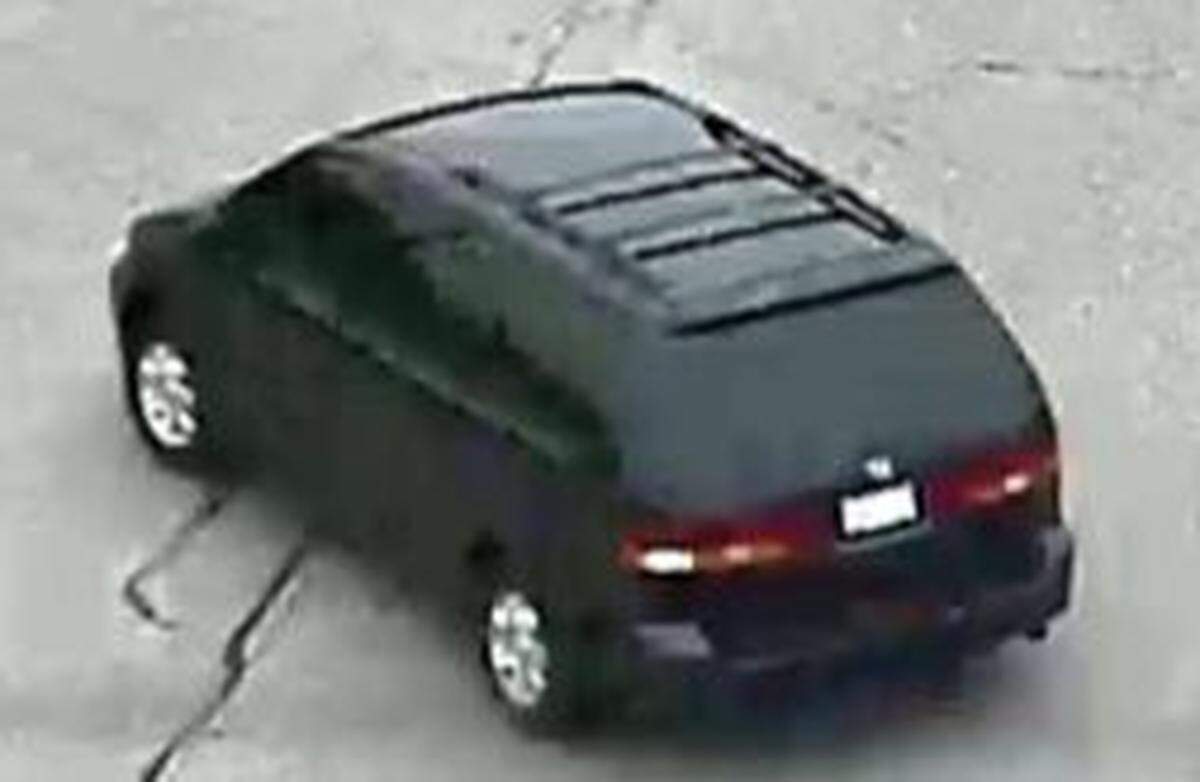
The difficulty, said Overland Park police spokesman Officer John Lacy, is that technology hasn’t advanced quite as far as many people watching television think.
“The CSI shows have really ruined things for law enforcement,” Lacy said. “People think we can digitally enhance photos, zoom in, and the license plate magically appears.”
Law enforcement doesn’t have that technology, he said — at least, “not yet.”
For sure, surveillance cameras “are all over the place,” said Nancy La Vigne, vice president and director of the Justice Policy Center of the Urban Institute in Washington, D.C. They are catching, or deterring, crime more than ever before.
And some cameras with high resolution and wide angles can capture the kind of detail people imagine in tracking potential criminal activity.
“But it exists at a cost,” La Vigne said. “The technology is more expensive and nascent than people think … It’s all about tradeoffs.”
The crash Saturday afternoon in Overland Park killed two people on 151st Street near Stearns Street. The victims were identified as Samuel Siebuhr, 20, and Matthew Bloskey, 18.
The van police sought is believed to have struck the car driven by Siebuhr, which spun out of control and crossed a median into oncoming traffic and hit Bloskey’s car head-on.
Then, police say, the van left the scene and disappeared, until police found it Tuesday. A person connected to the van was contacted by investigators.
Details about how police found the van, and information about its driver were being withheld while the investigation continued, Lacy said.
But in other cases, law enforcement agencies have demonstrated extensive use of the growing network of surveillance video to track fleeing vehicles.
When Kansas City police investigated David G. Jungerman last year in the shooting of attorney Thomas Pickert, court documents show that investigators pulled down video from “traffic cameras, businesses, residences and two ATA buses” to retrace the path of a white van they think was used in the shooting.
Police want witnesses to a fleeing vehicle to get its license plate number if possible — even a partial number. Noting the vehicle’s make and model — in the Overland Park case, a Honda Odyssey — is important.
But also critical is noting the street and direction of travel, because that will set investigators on a trail in search of revealing surveillance video, Lacy said.
Many major intersections are equipped with cameras. Police can also go door-to-door to find video at businesses along a vehicle’s possible escape route.
When police ask for assistance, helpful information goes beyond what people may have seen or heard, Lacy said. Police are also asking people to check their video footage. A vehicle or suspect spotted in one place might lead police down the right road to a better spot.
“Sometimes it takes just a small lead,” he said.
When police know what license plate they are looking for — such as a reported stolen vehicle — many departments have license-plate scanning technology that can connect a database to surveillance cameras and trigger an alert when a wanted plate is spotted.
Some cities have begun enlisting convenience stores, gas stations and other businesses with interests in surveillance cameras to help the city fund a network of high-resolution surveillance in high-crime areas.
Detroit’s Project Green Light has brought some 200 businesses into the program so far, at a cost of some $5,000 each.
But such a high-resolution camera network is harder to achieve on a citywide scale. The camera itself is just a small portion of the cost, according to La Vigne of the Urban Institute.
The costs mount with installation, maintenance, vandalism issues, weather problems, data management, networking and the human costs of monitoring them, she said.
Still, police are thankful for all the cameras that are out there, Lacy said.
And they still want anyone who thinks they might have useful information — including about the ongoing investigation of the fatal crash on 151st Street — to call the TIPS Hotline, 816-474-8477.