
Homelessness still on the rise in Johnson County. Are leaders making progress?
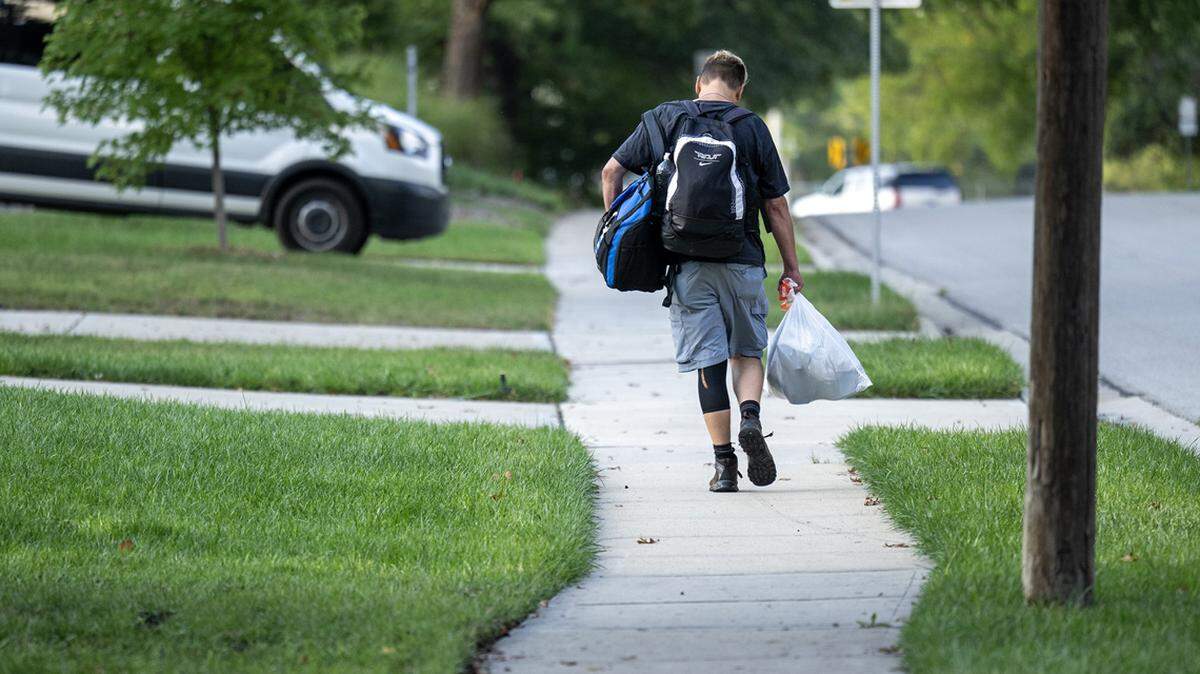
As the number of people experiencing homelessness in Johnson County continues to rise, so does pressure on the county to take more action.
Johnson County’s annual Point In Time Count — a federal requirement that counts the number of people staying outside or in a shelter one night in January — shows that the number of individuals increased by 27% from last year, according to preliminary data.
Johnson County volunteers counted 321 people this year, and 253 last year. Of the 321 individuals counted, 37% of adults had jobs and 52% had some form of income, either employment or disability benefits.
However, as rent continues to increase in the affluent suburban county — and with a limited number of affordable units and shelter options available — it’s become increasingly difficult for individuals living on the edge to either find or keep stable housing, said Rita Carr, the Director of Community Planning for United Community Services. United Community Services, a housing nonprofit, spearheads Johnson County’s Point In Time Count every year.
County leaders have established new policies to make it easier to build affordable housing, with some projects underway, and the county is exploring opportunities for a new temporary homeless services center after a proposal for a more permanent shelter in Lenexa failed two years ago.
“It’s incumbent upon us to continue establishing programs or practices to mitigate (homelessness),” said Mike Kelly, chair of the Johnson County Board of County Commissioners.
Rent costs surpassing incomes
The average income of those surveyed in the Point In Time Count this year was $1,869 per month, “which used to be liveable” in Johnson County, Carr said.
“Rents have just gone up so much that — and you have to make two to three times whatever the rent is to get approved for an apartment,” she said. “Rent has just risen a lot faster than wages.”
According to U.S. Census data, the median rent for a 1-bedroom unit in Johnson County in 2024 is $1,324 per month — representing a 35% increase over five years. While it’s the most recent data available on the Census website, Carr said that UCS knows that $1,300 apartments are hard to find.
“UCS doesn’t provide rent assistance or anything like that, but even I get so many calls where a household, their lease is turning over, and the next lease is $200 more a month,” she said. “A lot of properties are turning over and we don’t have as many new affordable housing options coming online.”
In particular, Carr said she’s concerned about Johnson County’s aging population or residents with disabilities living on fixed incomes getting priced out and risking losing their housing.
“It’s very hard for households that maybe have a voucher or are living on disability income and other kinds of income like that just make it hard for them to find a place to live within our community.”
Serving single adults
Johnson County has done a good job of serving unhoused families, Carr said, but it hasn’t provided as many services for adults without children.
Since the proposal to build a temporary homeless services center failed in 2024, Johnson County has no year-round options available for single adults who are sleeping outside — making it harder for individuals to get back on their feet.
Single adults, particularly those who are aging, are people that Brian, an Olathe resident experiencing homelessness, said he worries about falling through the cracks.
“People that are experiencing hardships, that are experiencing homelessness, that are experiencing housing instability — that are Ubering, Lyfting, Door Dashing just to stay afloat — are also teetering,” Brian said. “They’re treading water. … It doesn’t have to be like that.”
Brian, who requested The Star only use his first name due to privacy concerns, has become an advocate for residents experiencing homelessness after facing his own challenges with finding resources in his hometown.
“In Johnson County, this is a trap. … And there’s no way to get out. You are stuck. It’s like quicksand,” he said. “People can’t start rebuilding their lives until they’re out of survival mode.”
“The longer we wait, the longer people’s lives are going to be at risk, people are literally going to die, and the more this crisis is going to grow.”
He said he’d like to see the county take action to provide more affordable housing units for residents with low income and an emergency shelter to fill some of the county’s gaps.
What’s being done in Johnson County?
Johnson County officials are now trying to close those gaps through new policies and projects, Kelly said.
The board of county commissioners recently approved a new policy that allows the county to identify underused pieces of county-owned land for housing development. Last week, the board approved its first project, which will convert a former EMS station in Overland Park to six affordable housing units for adults with disabilities.
While the board allocated federal COVID-19 relief dollars to support other affordable housing projects — including Metro Lutheran Ministries’ development of affordable housing units and a new Habitat for Humanity project in Olathe — Kelly said there’s still a need for a year-round homeless shelter for individuals.
“That gap is still very real and it’s named pretty directly in this report,” Kelly said. “(It’s) one of the most important things we can do to fill gaps on the housing continuum.”
Johnson County attempted to bring forward a plan to build a permanent shelter at a former La Quinta hotel in Lenexa using COVID relief dollars, but a crucial permit for the plan was rejected by the Lenexa City Council in 2024
Now, the county is in “active conversations with city partners” to find a new location for a facility, Kelly said. There’s no specific timeline for a potential proposal, it depends on the “right location and city partner.”
“We recognize this is a known need and we want to address it in the most effective way possible, but we understand there are real people with a real need in Johnson County right now,” he said.