
Johnson County city creates penalties for sleeping outside in divisive move
Sleeping on public property, in city parks, on local bridges or in a parked vehicle in the City of Gardner could now cost people fines or jail time.
The City of Gardner is the first Johnson County municipality to directly target unhoused individuals with an “unsafe” camping ordinance.
By a 5-1 vote, city council members approved the revision to the city’s Uniform Public Code at their Monday, Feb. 16, meeting. Council member Kelly Johnson was the dissenting vote.
“This attempts to fix a problem Gardner doesn’t have,” Johnson said, sharing her disappointment.
The new ordinance will be a non-class misdemeanor, but does not clarify how fines or penalties will be implemented, leaving it up to the discretion of law enforcement and the local court system.
“It allows the courts to look at the circumstances,” said Amy Foster, the city’s business services manager.
The city noted they do not have state statute guidelines to follow when it comes to handling homeless individuals, and the Gardner Police Department wants to avoid citing and arresting people.
The ordinance forbids using public property for living and sleeping accommodations, storing personal property, making open fires for regularly cooking meals, using any tents, or living in a parked vehicle. City officials consider public property to include bus shelters, public parks, park trails, park benches, park shelters, bridges, or overpasses. Restrictions apply within 10 feet of any doorway, loading dock, stairway, or fire escape and within 50 feet of the centerline of any trail or sidewalk within city limits.
“The overarching goal is to connect individuals with resources that promote stable housing while maintaining safe and sanitary public spaces,” Foster said.
City Attorney Ryan Denk shared concerns about the vagueness of the consequences for violating the ordinance and said the ordinance had to be enforced evenly.
“If you don’t, you could be subject to legal challenges,” Denk said.
‘Proactively preventing a larger situation’
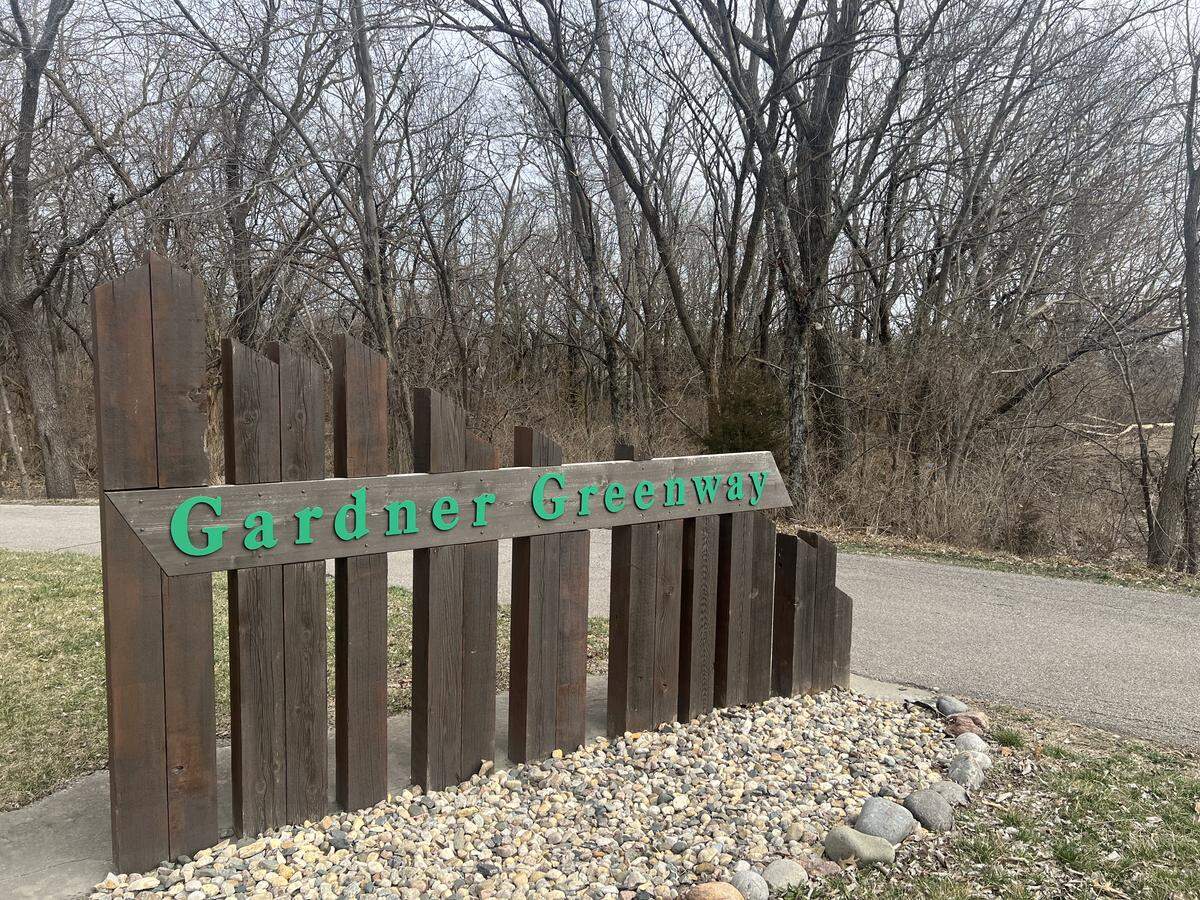
Ordinance discussion centered around one individual the Gardner Police Department has received numerous complaints for sleeping outside on the Gardner Greenway Trail; a trail that intertwines behind suburban homes and through a heavily populated neighborhood, children’s playground and creek bed from Madison Street to 167th Street.
Police Chief Pam Waldeck said the individual was known to have mental health issues, and officers were also concerned about problems that would arise during the winter with no “acceptable” places on city land for living in a tent.
The individual was asked repeatedly to leave the area, but did not want to leave the trail or receive assistance. Police officers recognize unhoused individuals lack financial means and did not want to issue a trespassing citation with a minimum fee.
Waldeck said the ordinance would give officers the ability to address future issues through the court instead of kindly asking them to move along from the area.
“We were trying to help this individual, but we had no tool to compel them to get help,” Waldeck said.
Johnson said while the city’s concerns centered largely on one individual, the ordinance will affect every unhoused person in the community.
“I believe the potential harm to many outweighs the convenience of providing an additional enforcement tool for a single situation,” Johnson said.
City officials were unable to provide clear answers for where unhoused individuals in Gardner could stay. The meeting included a lengthy discussion about people residing in their vehicles, what constitutes public versus private land and neighborhood safety.
“If people are down on their luck and living in their car, I don’t think it has been a problem,” Mayor Todd Winters said.
Waldeck said the spirit of including vehicles in the ordinance was to prevent carbon monoxide poisoning incidents.
“It is really dangerous to live in your car, but I certainly understand if you want to take that out (of the ordinance),” Waldeck said.
Council members Kacy Deaton and Steve McNeer questioned neighborhood safety for residents when it came to parked cars in front of homes.
“When there’s strange cars parked out front it makes people nervous that legitimately live in those areas, own their homes, and they are worried about their safety, and their kids walk to school, playing outside,” McNeer said.
Johnson said she couldn’t picture anywhere it would be acceptable for an unhoused person to reside in their vehicle if the ordinance passed.
Waldeck said the police department couldn’t see an appropriate place for people to pitch a tent that the department could manage.

“Without designated alternatives, we are effectively criminalizing people for existing in public space when they have nowhere else to go,” Johnson said.
Police Chief Waldeck said the city partners with Johnson County Mental Health, and resources and education for an unhoused individual is always their first goal with a citation as the last resort.
“Making sure they are safe, making sure they aren’t freezing,” Waldeck said.
Johnson said the misconception that homelessness is primarily caused by mental illness concerned her.
“Many people in Johnson County are unhoused because they cannot afford housing,” Johnson said. “34% of unhoused adults are employed and 50% report some form of income. The county’s shelter is already at capacity and unable to take additional individuals. Removing the option to camp or live in a vehicle without providing a lawful alternative is, in my view, cruel.”
Waldeck said the police department has a transient fund financially supported by local churches that can be used for a one- to two-night hotel stay in emergency situations.
Deaton said she felt the ordinance was more compassionate by giving the option for a $0 citation.
“One of the issues is we were already fining people who were down on their luck,” Deaton said. “This gives our officers the option to not give a fine.”
Waldeck said putting people in jail was not the police department’s goal, as people are just released again soon after.
“I really wish we could codify the good intentions better,” council member Mark Wiehn said.
Gardner’s unhoused student population
Council member Johnson said 21 students in the Gardner Edgerton school district are currently unhoused.
“Some are able to couch-surf at a friend’s home to remain in school, but this ordinance may push their families out of Gardner, making it harder for families to stay together and for students to maintain stability,” Johnson said.
School district officials said they have 21 unhoused students receiving services through the McKinney-Vento Homeless Assistance Act. The district works closely with the students and families to ensure educational stability by helping students stay at their home school even if they temporarily reside outside the Gardner area, coordinating transportation needs with neighboring districts..
The school district also tries to eliminate barriers to enrollment, assists in free and reduced meal programs and transportation services and connects students to social workers for ongoing support , includingfrom financial assistance, clothing, food, medical care and mental health resources.
“Fortunately, I don’t believe the new ordinance would impact many of our current families,” said Tami Maholland, student support services coordinator. “Most of our families and students are not camping or staying in their car. Most are doubling up with other families or left as an unaccompanied youth with a family member or friend of the family that do not have custodianship or guardianship.”
Unsafe camping ordinances
Gardner city officials and the police department repeatedly said the new ordinance was similar to other municipalities.
Johnson County cities do not have a specific unsafe camping ordinance. Cities such as Olathe have land-use ordinances regulating special use permits for shelters. The county only has one shelter in Lenexa that is currently at capacity every night. The City of Lenexa expanded its Project 1020’s capacity to 50 unhoused people last year, and last month the county gifted them $25,000 in hotel vouchers.
Neighboring Wyandotte County recently implemented an unsafe camping ordinance last fall to address their county’s growing unhoused population. The county currently doesn’t have a homeless shelter to help those in need.
The Star reached out to 6th District County Commissioner Shirley Allenbrand but received no response.
Local State Sen. Doug Shane, who represents Gardner, said homelessness is a real significant challenge not just in Johnson County but around the country.
“If this was easy, we would have solved this problem,” Shane said.
Two problems can happen, Shane said, from not wanting a city’s streets to be filled with homeless people creating a safety problem to a person unable to get out of the “vicious cycle.”
“The big thing is we have tools in place that help get people out of that cycle of homelessness, try to get them back up on their feet, try to get them rehoused,” Shane said.
Shane referenced last year’s Aspen Place condemnation housing disaster in Gardner that left nearly 700 people homeless within 48 hours. Shane recently helped get a bill passed to prevent similar future incidents with landlords.
The state of Kansas does not have statewide unsafe camping ordinances and leaves those decisions to the local authorities.
Garden City officials recently addressed an ongoing issue with homeless encampments taking over their local river and Topeka implemented a similar ordinance to Gardner’s in 2024.
Johnson said she was grateful for the local churches and organizations that help residents in need.
“Their compassion highlights what I believe our policy approach should reflect: addressing hardship with solutions not punishment,” Johnson said.