Johnson County pays for hotel vouchers as winter shelter at capacity every night
Almost a year after Johnson County’s only temporary cold weather homeless shelter garnered the necessary approvals to serve more people, Project 1020 is already reaching its newfound limits.
As a result, the Johnson County Board of Commissioners is stepping in to provide $25,000 in one-time funding to help the organization keep people from sleeping outside overnight.
“We definitely appreciate it and it’s helpful,” said Barb McEver, one of Project 1020’s founders. “Although it’s not a permanent fix, we do what we can for the night and hope we can keep educating people and keep it at the forefront of everybody’s mind.”
Project 1020 is Johnson County’s only temporary shelter that hosts individuals overnight. The nonprofit operates from Dec. 1 to March 31 out of Shawnee Mission Unitarian Universalist Church in Lenexa.
Last February, the Lenexa City Council approved Project 1020’s proposal to increase its capacity in Shawnee Mission Unitarian Universalist Church from 30 people to 50 people.
So far this year, the temporary shelter has reached that 50-person limit every night since opening its doors on Dec. 1.
With no other options for folks trying to seek shelter — as the county currently does not have a year-round homeless shelter for individuals — McEver said she has spent more than $9,000 on vouchers for hotels and motels to give people a place to spend the night inside.
While the county’s one-time funds will help Project 1020 pay for more vouchers during the cold weather season, McEver said she hopes there will be more ongoing conversations to address solutions in a “more long-term fashion, so we’re not visiting this every year, every holiday, every crisis.”
“If we had a long-term approach that would be great,” she said.
A future budget item
The commissioners agreed that this was only a small, one-time action and would like to see more forward thinking to better address the needs of the increasing homeless population in the future.
“I appreciate the item, I think we all care about housing. It’s been an issue we’ve highlighted on our priority list for several years,” County Commission Chair Mike Kelly said during Thursday’s meeting. “We will always have requests for funding and different things we have to consider where we put the limited resources entrusted to us.”
While Kelly said he understands the frustration residents or local leaders may have with the county allocating funds outside of its budget process, Kelly acknowledged that “we don’t exist in a vacuum.”
“We have reserves for a reason … We can take action we believe the community would want us to take,” he said. “The continued challenge of being unhoused in our community is very real and is being exacerbated with federal cuts … so when we can have an opportunity to use the dollars of our fiscal prudence, we are going to do it.”
For the coming fiscal year, Kelly said he’d like to see the county consider similar allocations during its budget process and continue to explore more long-term solutions.
‘Cannot go over capacity’
The request comes at a time when Johnson County is seeing a steady increase in the population of those sleeping outside.
Rita Carr, the director of community planning for United Community Services of Johnson County said that Johnson County has seen a 620% increase in those experiencing homelessness over the last 10 years.
United Community Services, or UCS, is dedicated to ensuring that public services meet the needs of residents, like housing, and acts as the lead agency for the county’s continuum of care for homelessness.
“While hotels aren’t a solution, they can be life-saving for a county that doesn’t have enough beds to meet the needs,” Carr said.
The $25,000 can help Project 1020 bring roughly four to five people inside per night, but Project 1020 is seeing about nine to 12 people who exceed the capacity — meaning the county is meeting about 45% of Project 1020’s needs with the allocation, 3rd District Commissioner Julie Brewer said.
“This request would be more than double if we were meeting the over-capacity figures Project 1020 has been experiencing,” she said. “We are at capacity and cannot exceed capacity in that shelter.”
Going over its 50-person capacity limit could mean that Project 1020 could lose its space for up to a year or longer, since the Lenexa City Council made penalties stricter as part of the capacity expansion.
“What we want, what I want, we need a year-round shelter, desperately,” McEver said. “We needed it yesterday, not in the future. And that’s what we really, really, really need to be working toward.”
Johnson County still needs a year-round shelter
Like McEver, advocates and other housing leaders believe that more long-term housing solutions, like affordable housing and a year-round shelter, need to be a part of the conversation moving forward.
Johnson County attempted to bring forward a plan to build a permanent shelter at a former La Quinta hotel in Lenexa using COVID relief dollars, but a crucial permit for the plan was rejected by the Lenexa City Council in 2024.
“I am so tired,” UCS Executive Director Kristy Baughman said during the commissioner’s meeting. “Everything is so difficult for folks who are service providers, for people relying on those services. We’re tired, things are really hard right now.”
Baughman shared her support for the item while pushing for continued conversations around affordable housing as Johnson County’s housing market and rental prices continue to see increased costs.
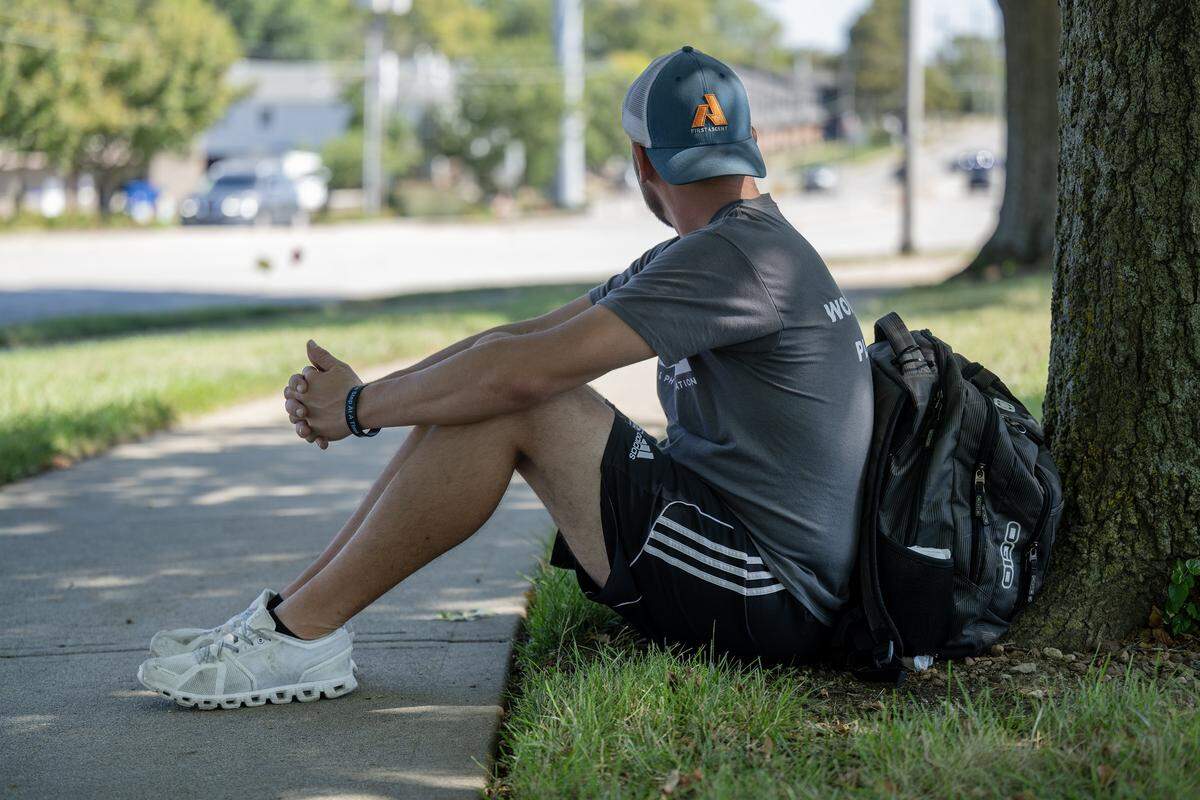
Brian, an Olathe resident who has experienced homelessness shared similar sentiments.
“There’s a lot of needs that need to be met, and I think that was realized across the board today,” said Brian, who requested we only use his first name because of privacy concerns. “And that’s huge, we just got to keep the momentum going.”
Brian has become an advocate for a year-round shelter and a supporter of the organizations that currently serve those that sleep outside after facing his own difficulties trying to access shelter and other services in Johnson County.
While he was sleeping outside, Project 1020’s opening became Brian’s “saving grace,” he said, and expressed his excitement for the allocation, but emphasized that the efforts need to continue.
“Every day we don’t do something, there’s people’s lives that are at risk,” he said. “I think when you join hand-in-hand, when things, when people and communities unite, especially on a government level, it can happen.”