
Take a look at recent, welcome changes to the Public Service Loan Forgiveness Program
The United States Department of Education recently announced sweeping (and welcome) changes to the troubled Public Service Loan Forgiveness (PSLF) program. These changes make it easier for government and nonprofit workers to gain tax-free forgiveness on their federal student loans when working for a qualified employer.
This is welcome news for public servants. Forgiveness has no cap and could reach into the tens or hundreds of thousands of dollars for qualified individuals.
PSLF in its original form requires four criteria to achieve forgiveness:
The right type of loan (federal Direct Loans).
120 qualifying monthly payments (Although many refer to PSLF as a 10-year program, the truth is that one needs to make 120 qualifying payments. This is a subtle, but important, difference.)
Payments under a qualifying repayment plan.
Full-time employment with a qualifying employer (federal, state, local, or tribal government, U.S. military or a 501(c)3 nonprofit organization).
With an announcement on Oct. 6, 2021, the Department of Education temporarily relaxed requirements, allowing many borrowers to receive credit for past payments if certain criteria apply. Specifically, individuals can receive credit toward forgiveness for previously unqualified loans. In fact, any prior payment will count as qualified (Parent PLUS loans continue to be ineligible).
To boil it down to the essence, borrowers still need to have: full-time, qualified employment and Direct Loans (or consolidate into Direct Loans).
The catch? The relief is time-sensitive and has a deadline next year: Oct. 31, 2022. Borrowers might need to act by that deadline to take advantage of this (potentially) once-in-a-lifetime opportunity.
You can read the full announcement at https://studentaid.gov/announcements-events/pslf-limited-waiver.
Who are the best candidates for this forgiveness program?
In my experience, the best candidates are professional degree holders with high debt loads who, of course, work for a qualifying employer and have federal student loans. Many doctors, nurses, teachers and attorneys, in addition to nonprofit professionals and government employees, fit this bill.
The original version of the PSLF program has had its share of setbacks. Many early applicants were rejected for a plethora of reasons. The Education Data Initiative reports that only 2.1% of PSLF applicants have been approved for forgiveness.
The fallout was so bad that Congress introduced a new, temporary program in the Consolidated Appropriations Act of 2018 to attempt to remedy faults in the original. This program is called Temporary Public Service Loan Forgiveness (TPSLF) and focused on helping applicants who tried to gain forgiveness while paying under a nonqualifying repayment plan.
Of course, the PSLF program is not a good fit for all student loan borrowers.
Many employees work outside a nonprofit or government entity and still others have private student loans. These borrowers should know that other loan forgiveness opportunities exist, especially for holders of federal student loan debt.
One of the best options is long-term loan forgiveness, which applies to federal student loans after making the maximum number of payments in an income-driven repayment plan. Additional loan forgiveness programs focus on certain occupations in the fields of healthcare, education, and medical professions.
Luckily, many employers are starting to offer student loan benefits as a part of employment, as well.
Do you need help with your student loans? Here’s a rule of thumb: if your student loan debt exceeds your annual wage, it’s time to get some help.
Borrowers in this situation should seek out a qualified professional who knows the ins-and-outs of student loans, repayment plans and a thing or two about how these fit into your overall financial goals. These individuals are few and far between, but they do exist. The search will be well worth the effort.
Reference: https://educationdata.org/student-loan-forgiveness-statistics
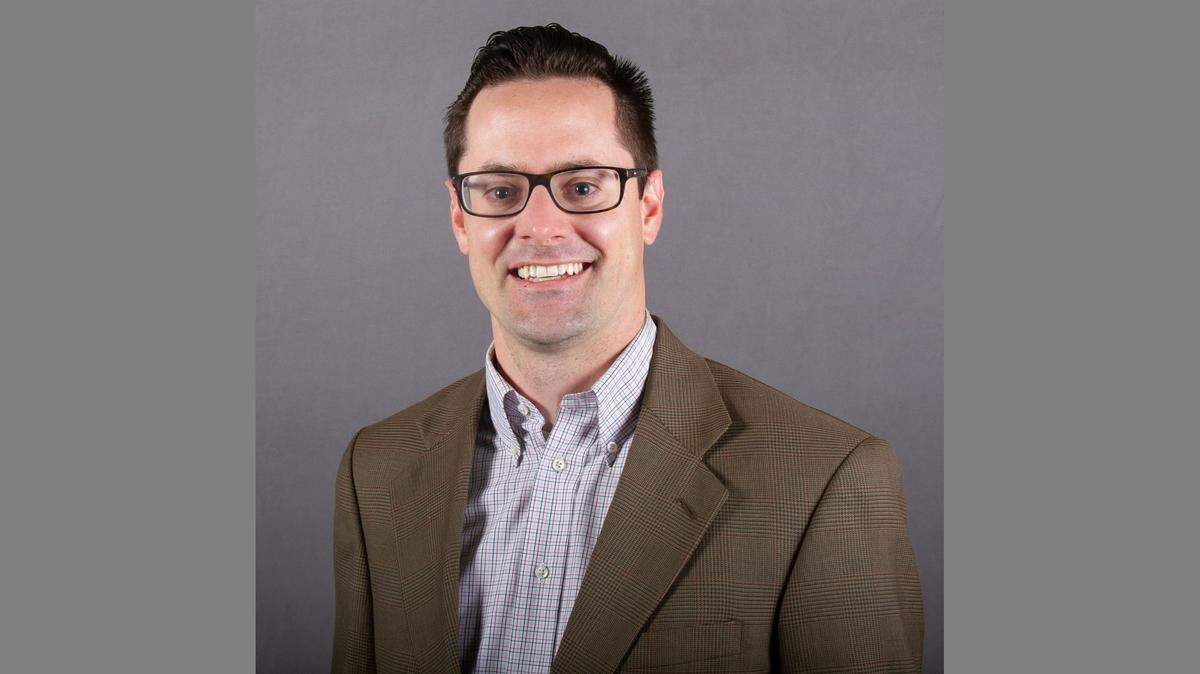
Jason Anderson is a CERTIFIED FINANCIAL PLANNER professional and a member of Financial Planning Association of Greater Kansas City. He is a Certified Public Accountant (CPA) in the State of Kansas and the owner of Gradmetrics, a college and student loan planning firm.
This story was originally published November 30, 2021 at 5:00 AM with the headline "Take a look at recent, welcome changes to the Public Service Loan Forgiveness Program."