
Puny tomatoes or wilted basil? These gurus are happy to get garden back on track
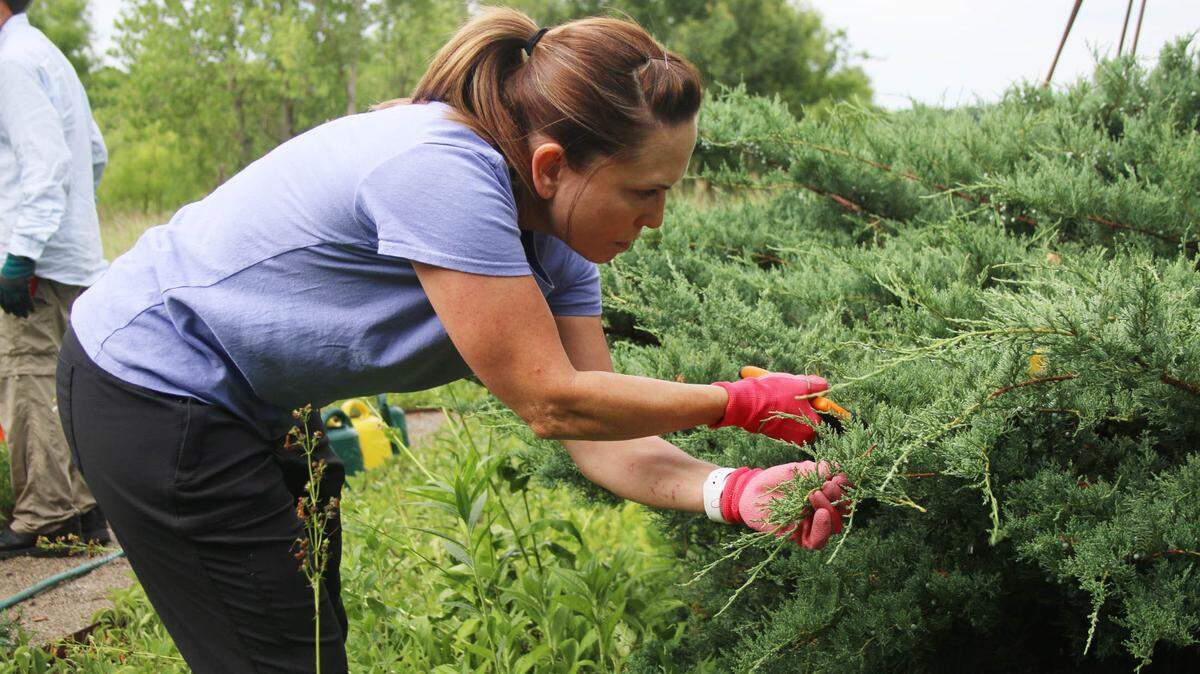
If your tomatoes aren’t as robust as you’d like, help could be closer than you think. Hundreds of people throughout the metro area are part of Master Gardener programs through Kansas State University or the University of Missouri Extension Services. One pro might even live next to you.
Even if you don’t have a convenient expert neighbor, both programs have gardening hotlines where you can connect with some friendly research-based advice.
All these volunteers have gone through extensive training covering everything from soil science to entomology. Dennis Patton, a horticulture agent with Kansas State University Research and Extension, compared it to getting a “mini-college horticulture degree.”
It’s not just about gaining that knowledge, though. The program is about sharing what you learn as widely as possible. The programs require a certain number of volunteer hours and additional training each year.
In Johnson County, Master Gardeners must give 40 hours a year of volunteer time, but typically they give much more.
“When I tell (other programs) our average is, pre-COVID, 125 hours per person, I’ve never heard of another county program that comes anywhere close to that per-person average of volunteer hours, so I think we’re unique,” said Patton, who writes a weekly gardening column for The Star.
Johnson County’s program, with just under 400 active members, is one of the larger ones in the country.
Across the state line, there’s a Master Gardener program encompassing Jackson, Platte and Clay counties. About half of its 300 members are currently active in the program. Applicants don’t have to live in those counties, but all the volunteer opportunities are within the counties’ boundaries.
One of those opportunities is the gardening hotline.
Cathy Bylinowski, horticulture instructor with the University of Missouri Extension, says hotline volunteers are very organized.
“There are a good sprinkling of volunteers that are just as knowledgeable as someone with a bachelor’s degree in horticulture,” Bylinowski said.
One of those voices on the hotline is Lee’s Summit resident Karen Kunz, an emeritus Extension Master Gardener with more than 10 years of volunteer service. When she started as a Master Gardener, she tried all sorts of volunteer work until she found the activities that suited her.
“That’s the good thing to me about Master Gardeners. You can usually find your niche, usually something you’d like to do or are able to do,” said Kunz, who also serves as treasurer for the group. “I’m not a person that likes to go outside and sweat and dig. I’m the indoor girl.”
Gardeners who are outdoorsy find plenty of opportunities to get out in the sun. Both programs maintain various public gardens around town. Typically, they’ll work in each one about once a week, and the gardeners are available to answer questions while they’re on site.
Lenexa resident Adair Weingart has been working on the Monet garden at the Overland Park Arboretum every week for 18 years.
“Seeing the garden change every week — it’s just a blast. We have a lot of fun,” she said.
Some of the gardens are focused on native plants or flowers, but others are booming with fruits and vegetables. All that produce goes to local food pantries.
Last year, Johnson County’s gardens provided more than 4,800 pounds of fresh produce to local food pantries. Bylinowski estimated gardens maintained by the tri-county Missouri program grew between 5,000 and 8,000 pounds at one location and 3,000 pounds at another.
What many know the Master Gardening programs for are their popular garden tours that happen every two years. In Johnson County, the gardens are personal ones grown by master gardeners. In Missouri, they’re not necessarily gardens grown by Master Gardeners, but volunteers are still on site during tours to answers questions about the plants.
This year’s tours, some delayed by the pandemic, have already taken place.
The next big thing on the horizon for Johnson County’s program is the upcoming 2023 International Master Gardener Conference, which will be hosted in Overland Park. Patton said he’s expecting 750 to 1,000 attendees from all over the United States and around the world.
Johnson County is taking applications for its next master gardeners training class until July 16. The application is available at johnson.k-state.edu/lawn-garden/extension-master-gardeners. The program for Jackson, Clay and Platte counties is taking applications at extension.missouri.edu/programs/master-gardener.
Applicants must have graduated from high school in Johnson County. In Missouri, they must be at least 16. The cost is $125 in Johnson County and $200 in Missouri, but scholarships are available.
This story was originally published July 6, 2021 at 5:00 AM with the headline "Puny tomatoes or wilted basil? These gurus are happy to get garden back on track."