
Speed and accuracy driving force behind new Johnson County medical examiner’s office
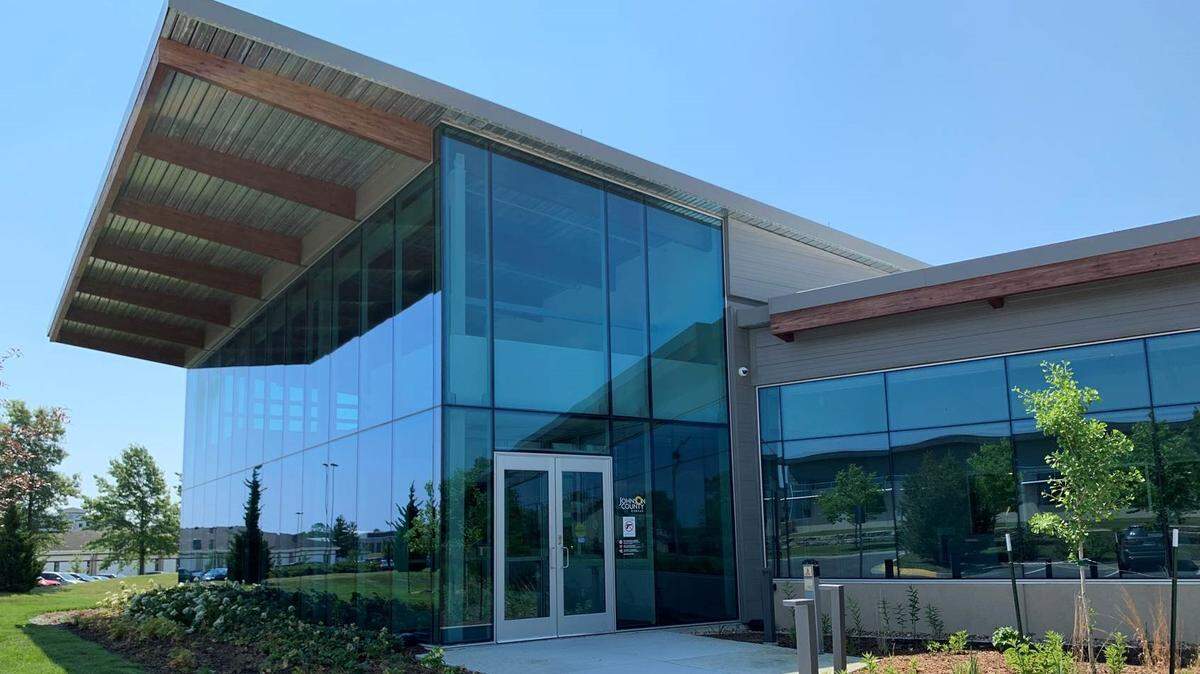
Johnson County cut the ribbon on a 33,000-square-foot medical examiner’s facility in a virtual ceremony Aug. 13.
The equipment at the $21 million Olathe building will allow the county to move many lab tests in-house, giving workers faster results.
Before the opening, autopsies had been done at a private forensic pathology facility in Kansas City, Kansas. A 2016 vote for a public safety sales tax raised the funds for the new building, located at 11894 S. Sunset Drive.
“The driving force was more than one thing,” said Diane Peterson, chief medical examiner and coroner for Johnson County.
“The delay in reports and death certificates that were coming out of the private practice facility” were part of the problem, she said. “But also for the district attorney’s office, for law enforcement and for the previous coroner before me — they all had concerns about the facility itself and the evidence preservation within the facility.”
New tools and workspaces in the building include a training room, a CT scanner, a full-body X-ray machine and equipment for toxicology testing.
The scanner often allows Peterson to identify causes of death without invasive procedures, she said.
“For example, if an individual in hospice has a fall, and there’s a concern about a head bleed because of the fall, I can simply do a CT and identify whether or not that is the case, or if their death was truly due to their hospice diagnosis.”
Having the toxicology equipment is also important. Peterson said it will significantly cut down the waiting time between the autopsy and the signing off on a death certificate. Having that shorter time frame is beneficial for a number of reasons, but it’s especially crucial for getting a certification from the National Association of Medical Examiners.
To get the accreditation, 90% of autopsy reports and toxicology reports have to be done within 60 days.
“Everybody that comes into our office will have toxicology testing performed. What we’re looking for is prescription medication, illicit drugs, alcohol and other volatiles — basically anything that might have cause the death or contributed to the death,” she said.
The accreditation can make a difference in court.
“Some attorneys really do look for that accreditation,” Peterson said. “It should also matter to law enforcement. It should matter to families. They should feel a certain level of comfort with the fact that they know that this examination of their loved one or this individual was done to a high standard, and therefore the results are more reliable.”
Unlike on TV, most of the cases Peterson takes on are natural deaths. Some are suicides, and just a few are homicides.
“Our primary purpose is purely to determine why did this person die, so that we can put that cause of death on the death certificate and answer that question for the family. Since most of ours are natural, nobody is at fault for them,” Peterson said.
The results can have many implications.
“Perhaps I identify something that could be hereditary that could affect future members of a family down the road. Perhaps I find something that is unexpected that could be preventable,” she said.
The data can be important for public health — especially with a situation like the current pandemic for determining exposure. But it’s also key on working for legislation on motorcycle helmet or seat belt laws. It also makes a different for insurance claims.
“There are many, many different reasons to get it right,” Peterson said.
“Perhaps the individual had a double indemnity accidental life insurance policy. If I determine that the manner of death was natural and not really investigate it, and it was really an accident, then that family is out half the money they could get.
“The point of a medical examiner is that we are non-advocates, unbiased. My job is to say what I see and interpret what I see.”
This story was originally published September 1, 2020 at 5:00 AM with the headline "Speed and accuracy driving force behind new Johnson County medical examiner’s office."