Inside the legacy of a century-old Black landmark in KC now undergoing revival
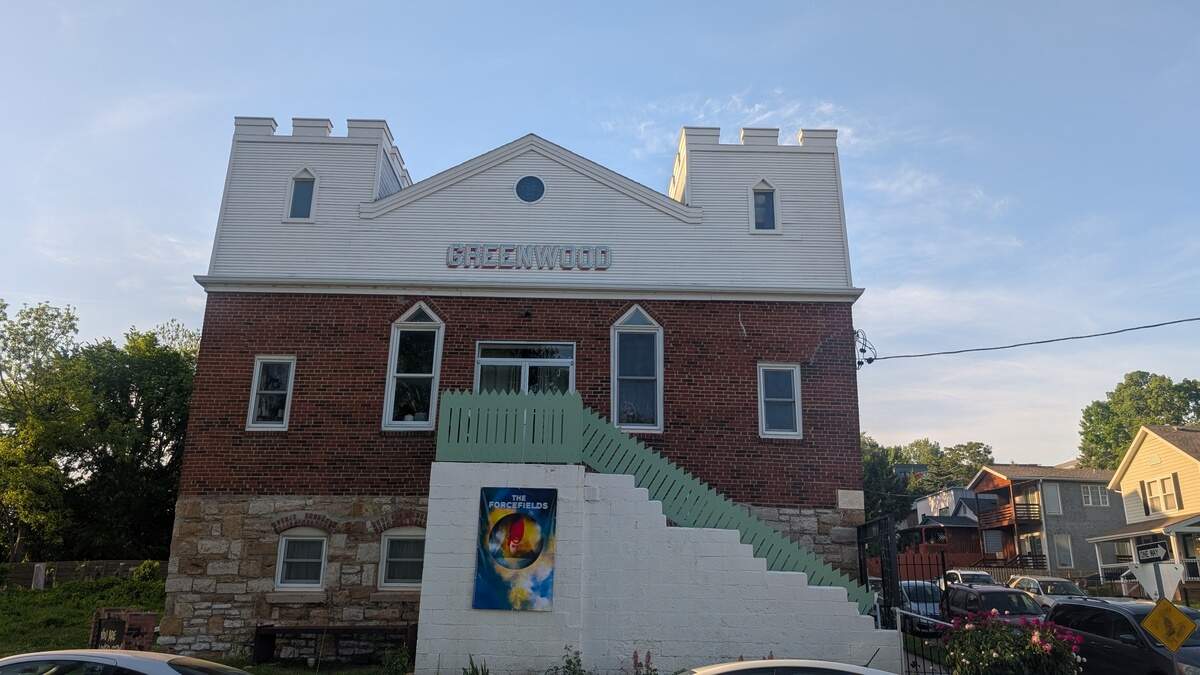
For nearly a century, the brick building at 1750 Belleview Ave. has served as a gathering place for Kansas City’s Black community.
As Greenwood Missionary Baptist Church, generations filled its pews for Sunday worship, choir performances, weddings and funerals. Today, audiences gather beneath the same vaulted ceiling for concerts, plays, dance performances, film screenings and community events at Greenwood Social Hall.
As current director Calvin Arsenia works to purchase the building and preserve it as an artist-led cultural venue, he has also begun uncovering the stories of the people who built it. His research has revealed a history that extends beyond one church to include Black architects, physicians, Freemasons and civic leaders whose contributions helped shape Kansas City.
“I’ve learned about the history that it was built by a Black architect and builder in Kansas City named W.T. Thomas,” Arsenia said. “Many beautiful things have taken place over its lifetime, and I am aiming to learn more about the history and build an archive around not only Greenwood, the building, but also other Black builders and architects in Kansas City.”
Greenwood Baptist construction
The Greenwood Baptist congregation traces its roots to 1892. Construction of the current church began in 1927 when the congregation built its first unit. Unlike many buildings of its era, Greenwood was designed and constructed by W.T. Thomas, a Black architect, builder and general contractor whose office operated at 1816 Vine St. in the heart of Kansas City’s Black business district.
Thomas’ work on Greenwood Baptist Church remains one of the surviving examples of Black-designed architecture from a period when Black professionals often had limited opportunities to practice their craft. Construction continued for nearly two decades before a second unit was completed in 1945, creating the structure that stands today.
A dedication plaque mounted on the building commemorates the expansion, noting it was completed Oct. 14, 1945, under Pastor C.W. Reed and dedicated by the Most Worshipful Prince Hall Grand Lodge of Missouri under Grand Master Dr. G.B. Key.
A legacy of Black leadership
The plaque also reflects the building’s connection to Prince Hall Freemasonry, one of the nation’s oldest Black civic institutions. Historical records show Key served 10 consecutive terms as grand master while building a distinguished career as a gynecologist in Kansas City, St. Louis and Washington, D.C. He also helped support the development of the first Black baseball stadium for the St. Louis Stars.
For Arsenia, those names represent more than historical markers. They illustrate how Greenwood Baptist Church was connected to a broader network of Black institutions that promoted education, leadership and economic advancement during segregation.
“The building also has a couple of names that I think are quite interesting inscribed into the building,” he said. “There’s a lot of obvious connections and legacies to Black resilience and Black ownership and business acumen. I feel excited and honored to be a part of this building’s legacy in this way.”
Greenwood Baptist Church remained a neighborhood anchor for nearly nine decades before the congregation relocated around 2016. As the members aged, accessibility challenges and the growing maintenance needs of the historic building made it increasingly difficult to continue using the space.
Rather than being demolished or converted into another use, the building entered a new chapter through a restoration led by carpenter Jamie Jeffries and artist Peregrine Honig.
Becoming Greenwood Social Hall
Honig transformed the former sanctuary into Greenwood Social Hall, an intimate venue for art, music and community gatherings. Through exhibitions and performances, she sought to honor the building’s history while introducing it to a new generation. Among the musicians she invited to perform there was Arsenia.
Years later, when Honig and percussionist Mike Dillon decided to step away from operating the venue, they approached Arsenia about taking over the lease.
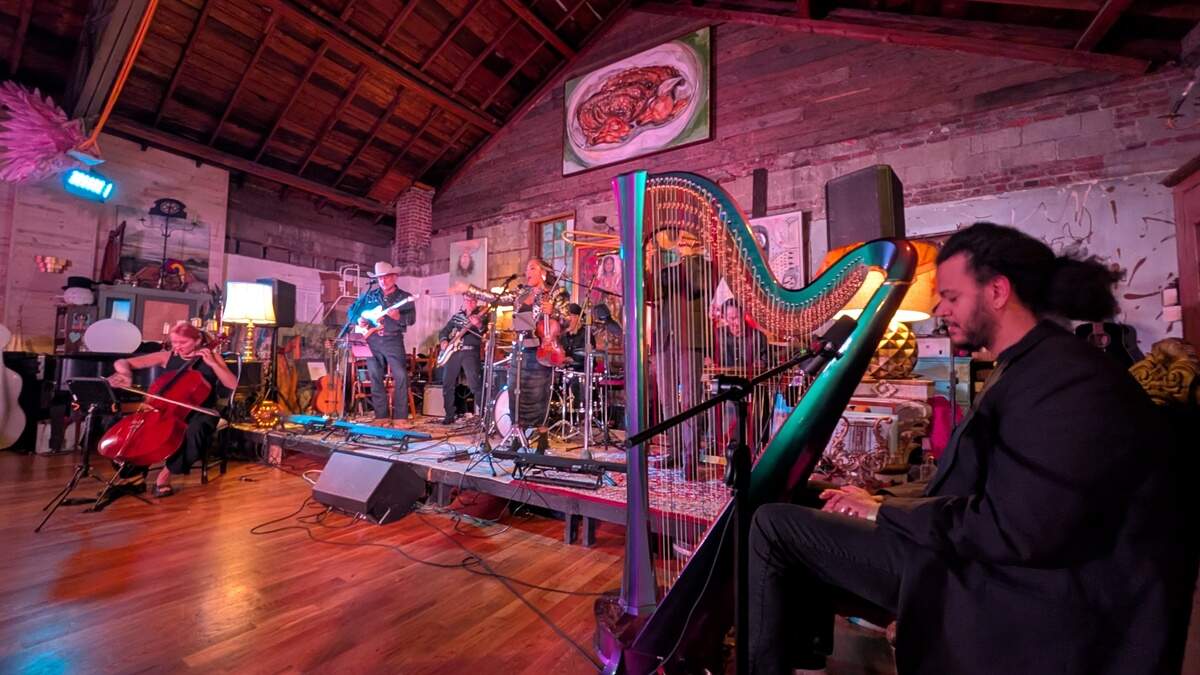
Since assuming leadership in December 2023, Greenwood Social Hall has become one of Kansas City’s busiest small-capacity performance venues. More than 300 events have taken place there, including concerts, theater productions, dance performances, weddings, funerals, workshops, community gatherings and film screenings.
The venue has also become known for its commitment to artists, returning 70% of ticket revenue directly to performers from the first ticket sold.
For Arsenia, however, Greenwood’s greatest contribution is not the number of events it hosts but the environment it creates.
He said acoustic, jazz and classical musicians are often asked to perform in restaurants and bars where audiences struggle to hear them over conversations. Greenwood was intentionally cultivated as a listening room where performers and audiences share the same respect for the experience.
“I have a lot of friends that are musicians,” Arsenia said. “There is a prevailing problem for especially acoustic musicians, but also classical and jazz musicians, where we often find ourselves playing in rooms that are not designed for listening.”
‘Continue the legacy’
That philosophy mirrors the building’s history.
Where Greenwood Baptist Church once brought people together through worship, Greenwood Social Hall now does so through storytelling, music and the arts. The programming has changed, but the building’s role as a place of community has endured.
“My vision is to continue the legacy of moments of transcendence through music and storytelling in the intimate space that is Greenwood Social Hall,” Arsenia said.
His vision extends beyond preserving the building itself. He hopes to create an archive documenting Greenwood’s history while highlighting the contributions of Black architects, builders and civic leaders whose work helped shape Kansas City but whose stories are often overlooked.
“I’m thinking about how to creatively tell the stories of the people who built our city and who were revolutionary in their own right,” he said.
That work is expected to culminate in 2027, when the building celebrates its 100th anniversary. Arsenia envisions a yearlong series of programs recognizing Black architects, scientists, musicians and artists while exploring the people whose contributions helped build both Greenwood Baptist Church and the city around it.
“I feel excited and honored to be a part of this building’s legacy in this way,” Arsenia said.