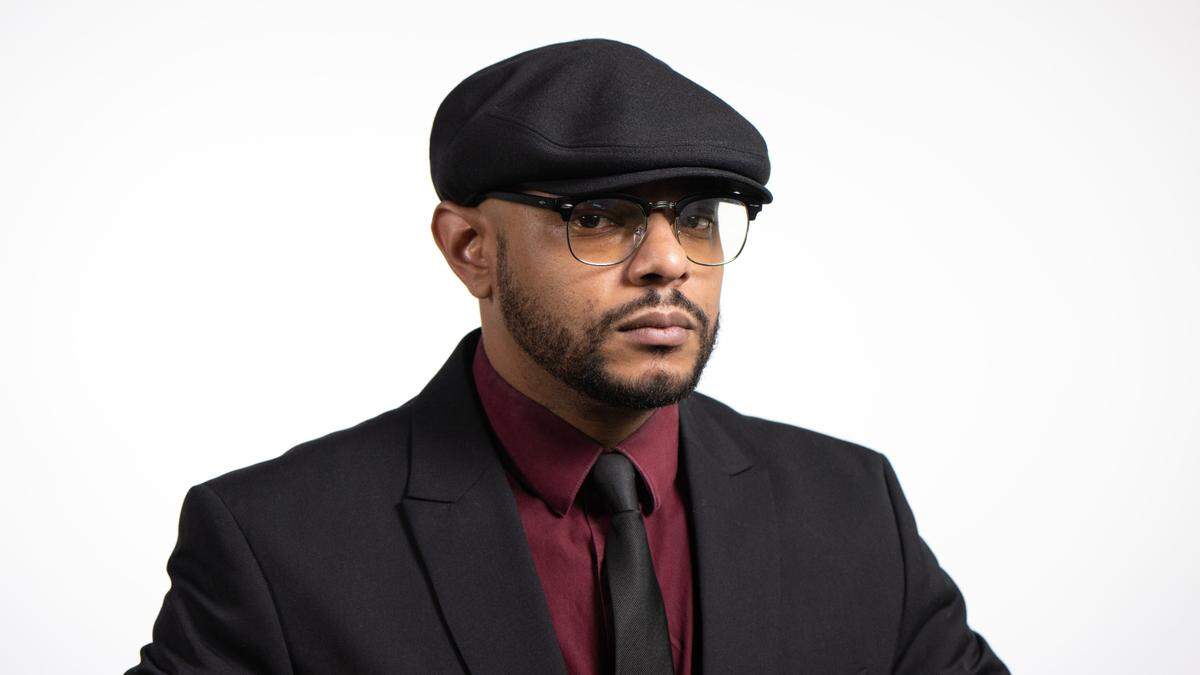
KC harpist defies the instrument’s ‘girly’ reputation, plays to transcend audiences
Calvin Arsenia was 4 years old when he heard the harp in person for the first time and the experience has stuck with him for the rest of his life.
He spent his early years as a musician playing the guitar and piano. He always viewed the harp as an instrument that was out of his reach because men didn’t play the harp. He says that in the hyper masculine environment he was raised in the classical instrument was seen as “girly,” so Arsenia rejected his passion for the harp.
Once Arsenia decided to live his life and create on his own terms, he chose to teach himself to play the harp before moving to Scotland to train under teachers in the harp capital of the world.
When he returned to Kansas City, he decided that he would use his music to challenge the stereotypes and misconceptions about the unique triangular-shaped instrument that straddles two musical worlds — string and percussion.
Recently, Arsenia sat down with The Kansas City Star’s culture and identity reporter, J.M. Banks, and talked about finding the strength to pursue what makes you happy, expanding people’s view of classical instruments and introducing more people to harp music.
Can you begin by telling me about your early life and upbringing?
I grew up in the suburbs of Olathe and was really involved in choir growing up both in church and in school. I quickly found myself learning to play the guitar and piano and was very involved in several different larger churches in South Kansas City. In that time I learned that music was something that could bring people together and facilitate moments of transcendence in a way that conversation or normal preaching could not.
When I was 20 years old, I was invited to go on a trip to Edinburgh, Scotland with my church where we used music as a way to outreach to the local community. It was in my time living there where I made a lot of life decisions and changes and decided to devote myself to the work of bringing people together through storytelling and music, but outside of the church.
How did you start playing the harp?
I think I I’ve always been interested in the instrument. The first time I remember seeing it, I was four years old and I do recall that experience pretty vividly. For me, growing up as an African American male in this macho culture, I was afraid to pursue the harp in my younger years because I was afraid that people would think I was girly. So I didn’t start playing the harp until I was 20 years old. At that point I googled where I could rent a harp from in Kansas City.
I rented a harp and at the time I couldn’t afford to take lessons, so I looked up YouTube tutorials and studied YouTube for the first year. When I moved to Scotland I got a teacher there because the harp is the National Instrument of Scotland. When I moved back to the states I couldn’t see my life without the harp. I moved back to Kansas City when I was 24 years old and started my career as a harpist and singer-songwriter.
What made you want to go into those particular areas for a career?
I feel like the harp is a very class-divided instrument because it’s very expensive and you have to be in certain circumstances yourself in order to even touch one or to see one in person. I think that what I’m trying to do with my work on the harp is to make it the people’s instrument and make an instrument that can tell all of our stories and lose that perception of what is unattainable or what is luxury.
How much does a harp generally cost?
For a classical harp you are ranging from $14,000 to $90,000.
What are the challenges that you face in your career?
People really underestimate how difficult it is to move around and when I’m developing my pricing I’m thinking more about the moving of the instruments and how much it costs to maintain it as opposed to even playing the music. It is very heavy, hard to tune and I had to buy a minivan specifically to lug it around. It is also a difficult instrument to learn. It took me a long time and many, many hours and teachers to be able to do what I do with the instrument.
How do you feel your work impacts the community around you?
I have heard it often said about my work that I offer permission for others to lean into their creative spirits or their whimsy. I want to create for those who want to feel safe in their skin and who want to enjoy opulent things during regular life. I hope that my work has encouraged people to be their more authentic self.
What is the most fulfilling part of your work.
I think challenging stereotypes and really being able to represent several other groups of people subconsciously. I call my harp the Trojan Horse because it gets me into places I probably wouldn’t have been able to with any other instrument.
Are there any misconceptions that people have about harp music?
I think sometimes it’s hard to sell harp music to strangers because they might think that what I do is boring. Harp music has a reputation for being very calming and deeply energizing. What I do is very much the opposite. I think I press into different emotions but I think once people hear me play, they get it. But the challenge is getting people to come into the room. I call the harp the chord machine. It is very good at making chords and has a good balance and extended range.
Are there many other harpists in the area?
I am currently on the board for the Lyra Kansas City Harp Society (KC Lyra Chapter of the American Harp Society) and there are several different harpists who live in the region. Not nearly as many as those that play the guitar, or piano, or violin for that matter. But we do have some top-notch players here in Kansas City and in the region.
Do you have a personal motto or philosophy that guides you?
Create moments of transcendence through storytelling and vulnerability. Because I think that we could learn a lot from each other if we were honest and not afraid of rejection. I think we would progress as a species a lot faster and that we’d have a lot more empathy for one another.
What advice would you give to someone who is looking to follow the same career path as you?
Don’t be afraid to make mistakes. I don’t like to focus on the negative so I would say be excited to make mistakes and to try new things. Just keep your curiosity alive.
For more stories about culture and identity sign up for our free On The Vine newsletter at http://KansasCity.com/newsletters.
This story was originally published December 7, 2024 at 6:00 AM.