As data center wave hits KC, some fear loosening regulations could harm health
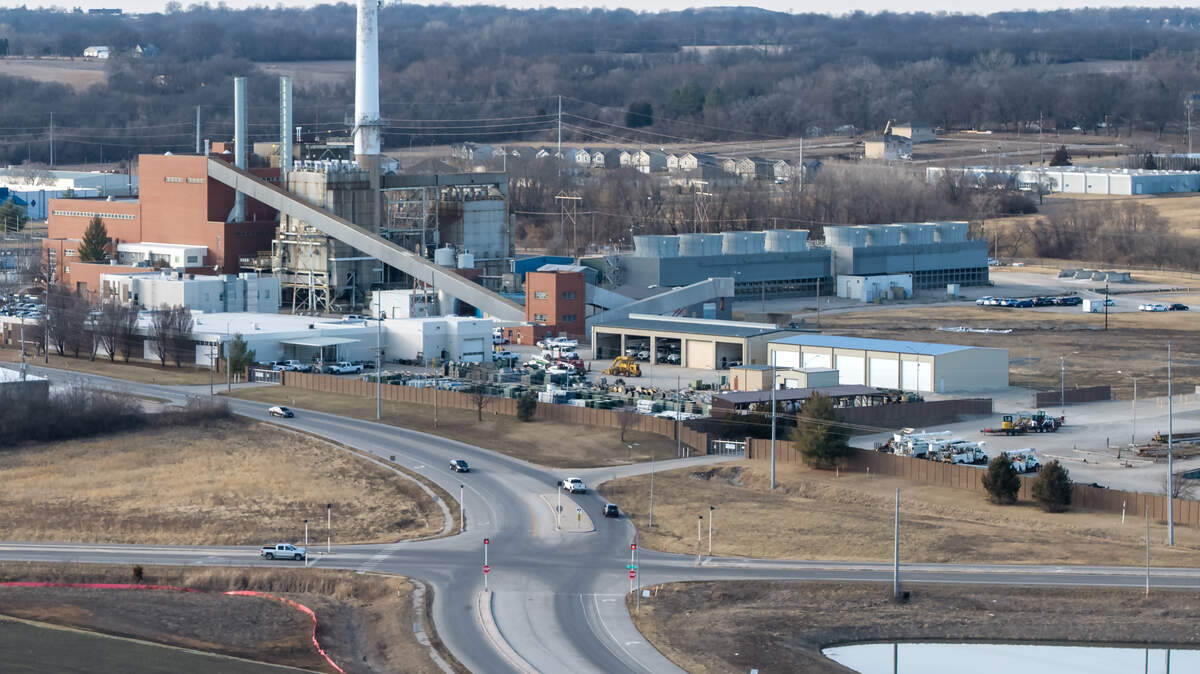
From Independence, where an at least 800-megawatt hyperscale data center is actively underway, up to Smithville and out to far-west Kansas City, Kansas, residents in local rooms are raising questions about how a wave of new data center projects will affect their health, safety, quality of life and the environment.
They’re worried about potentially harmful repercussions of having facilities nearby that use such massive amounts of energy, and they’re asking local leaders to ensure safeguards are in place to protect their families and communities.
Their questions are coming at a time when the landscape around such projects looks different by the day: Artificial intelligence and other new technology are surging. Meanwhile, President Donald Trump’s second term in office is changing the way that an agency tasked with protecting the environment regulates industry.
The Trump Administration is determined to make the United States the AI capital of the world, and federal regulations are being established to mirror that goal.
With that comes updating the requirements of the Clean Air Act to keep up with the ‘digital revolution,’ according to the U.S. Environmental Protection Agency.
As national and area advocacy organizations see the hyperscale data center wave ripple across the map and into the metro, they worry that the Trump Administration’s new script on industry regulations present a direct threat to public safety.
“They essentially contradicted decades of its own practice,” said Abi Vijayan, a senior climate attorney at the National Resource Defense Council, of new federal regulations surrounding data center production.
Those changing national standards are in real time affecting incoming project proposals across the country, including the many incoming — and yet-to-be planned — centers in the Kansas City metro.
“Historically these rules ensure companies maintain proper pollution control,” an agency spokesperson told The Star. “However, many of these requirements have not been updated to reflect technological advancements of the 21st century.”
There are now numerous projects proposed or already operating in the Kansas City metro, including hyperscale models, which in Kansas are classified as using more than 75 megawatts of energy to operate and in Missouri are classified as using more than 25 megawatts. Evergy defines large load projects as exceeding 75 megawatts.
And on both sides of the state line, legislators have passed laws encouraging data center development through tax breaks designed for the facilities.
Controversial turbines
Data center companies are in a global race to produce more AI, faster. And they’re relying on increasingly-strained power grids and fossil fuel-powered turbines to get ahead.
These turbines will be used to operate some larger data centers in the Kansas City metro.
For example Nebius, a Dutch company building a hyperscale data center in Independence, Missouri, plans to use 15 natural gas turbines when it first opens. It will operate using energy produced from those turbines, as well as wind energy, which it plans to purchase from the city of Independence. The project comes as the city plans to reopen the Blue Valley Power Plant to support its energy demands.
As data center production calls on the power sector to produce more energy so they can operate, demand for use of those turbines is also increasing.
“Some of these data centers are looking for cleaner sources of energy, but that obviously results in more costs …” Vijayan said. “It’s just much easier to sort of put these turbines on site and get running more quickly.”
Despite being the fastest way to get centers running, the turbines used to power data centers, like stationary combustion turbines and stationary gas turbines, are linked to nitrogen oxide, or NOx, pollution.
“It really is those sources of energy that are powering those data centers, allowing them to be operational, that then result in serious air pollution, again linked to those health problems,” Vijayan told The Star.
NOx pollution comes from high-temperature combustion, like the burning of fossil fuels. It’s linked to ozone and airborne particulate matter formation, according to the National Aeronautics and Space Administration.
Ozone exposure is linked to trouble breathing and lung inflammation.
Exposure to small particulate matter pollutants, like PM2.5, is particularly dangerous to human health as it’s linked to eye, lung and throat irritation; respiratory illness; heart disease; low birth weights among newborns; and lung cancer, according to the U.S. Centers for Disease Control and Prevention.
More, faster
Under this administration, the EPA has created programming that fast-tracks Clean Air Act permitting to make way for more, and faster, data center development.
“Making America the AI capital of the world is a core pillar of EPA Administrator Zeldin’s Powering the Great American Comeback initiative,” a spokesperson said.
The coalition of environment and health organizations that are suing the EPA are doing so over what they call “unlawfully weak” pollution regulations and for nitrogen oxides produced from gas turbines, and lenient permitting requirements for those turbines.
In some cases, the administration can exempt organizations from meeting federal permitting requirements, said Vijayan, the NRDC attorney.
And although data surrounding the health effects directly connected to data centers haven’t been around for long, there are decades of data linking negative health outcomes to the pollutants that come from those turbines.
The EPA doesn’t have rules that require data centers themselves to report on or off-site emissions, according to the agency. Instead, it regulates the facilities that power those centers.
Stationary combustion turbines and stationary engines, often used for data centers’ primary and backup power, have to meet federal air emission standards. And although the EPA sets its federal regulations, other air permitting agencies at the state and local levels can decide whether to issue permits that allow facilities to emit pollutants into the air.
Data centers, like many industrial facilities, will have to report data to the EPA’s Toxics Release Inventory if they meet a few specific criteria. TRI reports how much of given pollutants are emitted on site, off site, into the air and into water.
Facilities only have to report that data if they are federally classified as an industrial facility, if they have 10 or more full-time employees, and if they manufacture, process or use a specific amount of specific chemicals that would require reporting.
The generators that power data centers in the event of a grid failure do not have to report the emissions that they generate because they’re used to power the center as often as the grid would, according to EPA.
“Such infrequently used and small sources typically fall below thresholds for reporting to EPA as individual point sources,” according to EPA. “While some state or local agencies may collect data about these sources, EPA does not currently collect that information from sources or other agencies.”
And although the agency oversees the federal guidelines in place, it’s also up to local and state regulators to enforce those, and set their own standards. Those have to be at least as strict as federal requirements, according to the EPA.
“Most federal statutes allow states to set standards for stationary sources that are at least as stringent as federal requirements,” according to the agency. “When the EPA approves a program for the state, the state has the primary responsibility and authority for that particular program.”
Public participation
Through her work, Vijayan said she’s noticed that companies seeking to build data centers, and other industrial facilities, often seek out areas that might not have the highest local government oversight or that have less stringent air quality standards.
In some cases, the administration can exempt organizations from meeting federal permitting requirements, said Vijayan, the NRDC attorney. She’s part of the team suing the EPA over those regulations.
But skirting the permitting process means the public doesn’t get to be looped in, she added.
“Permitting allows for public participation, it allows for transparency,” Vijayan said. “And if you don’t have that process, that is just sort of hiding the ball from those communities that are most vulnerable to the risks coming from those kinds of sources.”
Their lawsuit also argues that while setting those regulations, the EPA calculated the financial costs if they decided to instead put specific controls on those turbines so that they’d produce lower emissions. However, the agency did not calculate the cost of the health benefits that would come from stronger pollution control, according to the suit.
“The digital revolution has ushered in new needs and new industries, which demand a holistic approach from EPA to update rules and further cooperative federalism in this rapidly growing space,” according to EPA.