What Independence has said about health, environment risks of huge AI data center
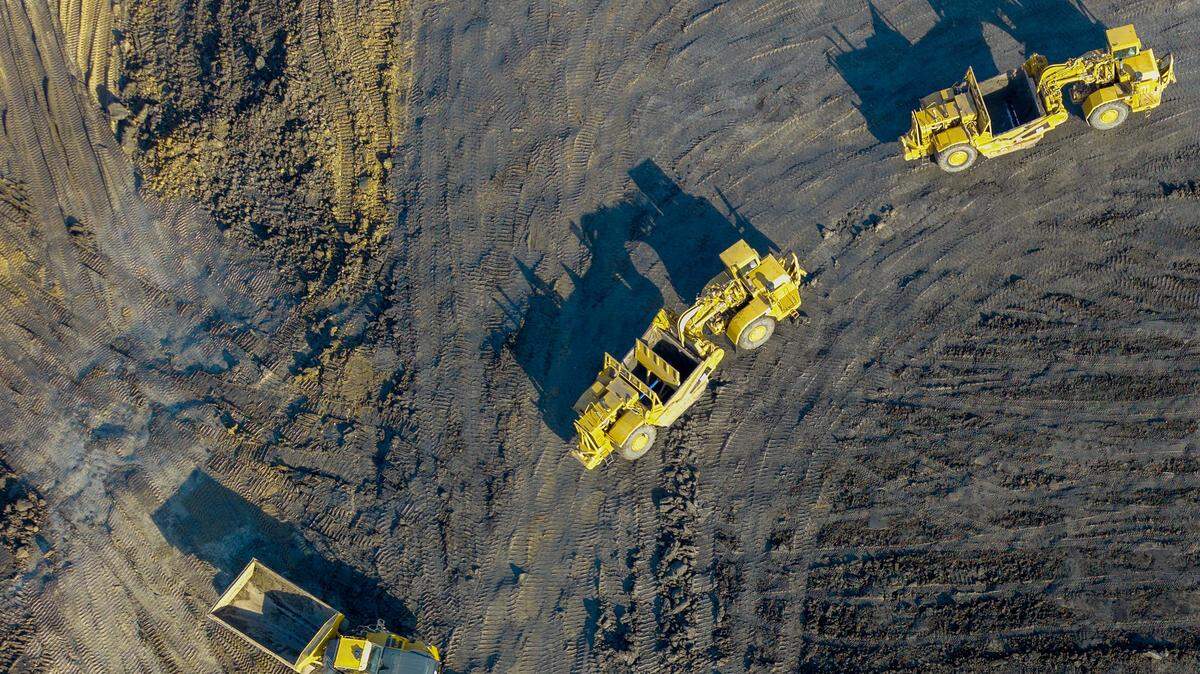
As the city of Independence prepares to vote on significant tax breaks for a proposed multibillion-dollar data center for artificial intelligence, residents’ questions and concerns have increasingly centered on how the 400-acre project will impact the environment around their homes — and their health.
Nebius, a Dutch company specializing in AI services, hopes to make Independence the home of its flagship AI data center in the United States. The data center will cost about $6.6 billion to construct and could contain another $144 billion in specialized equipment, for a total investment of around $150 billion. The Independence City Council is considering $6.2 billion in property tax breaks for the company over the course of 20 years.
At a February 26 community meeting, Assistant City Manager Charlie Dissell said that the data center has generated an unprecedented amount of engagement from both residents and local officials.
“I’ve been working in government for 20 years now,” Dissell said. “I don’t think I’ve ever had a project where I’ve had this level of questions coming from the Council on an hourly basis.”
For Independence residents, some of the most pointed concerns about the data center have had to do with light and noise pollution, water use, wastewater pollution, wildlife welfare and the generation of huge amounts of industrial power. Data centers are relatively new to the region — especially at the massive scale needed to fuel AI — and multiple residents have told The Star they aren’t confident that the long-term environmental effects associated with these campuses have been fully researched.
“Nothing of this size and this magnitude has ever been built this close to residents before,” Independence resident Monica Engle told The Star. “We feel like guinea pigs because there are still all these unanswered questions.”
Here’s what we know about the data center’s potential impact on Independence water, wildlife and other ecological factors.
Water
The data center will use 1.4 million gallons of water per 200-megawatt building, City Councilmember Jennie Vaught said at last week’s meeting. Nebius has narrowed its site plan down to four buildings, each of which will require about a fifth of its stored water to be refilled every year, according to the company.
The majority of this water would be used for cooling purposes, regulating the temperature of the computers and specialized equipment within the data center. The center would use a closed-loop system in which water is recycled, theoretically infinitely, throughout the facility.
The data center is expected to use an additional 400,000 and 635,000 gallons of water per year outside of the closed-loop system, Vaught said. Independence Mayor Rory Rowland previously said that Nebius had initially pitched a model with higher water use but amended its plan after early talks with the city.
City officials have described the data center’s projected water usage as “low” – about 0.07% of the city’s annual 17 billion gallon water capacity, Vaught said – and its wastewater needs as “minimal.” Nebius fact sheets compare its usage to a restaurant or office building.
Both city staff and company representatives have repeatedly pointed to multiple Independence organizations that use more water than the site would on a daily basis, including Centerpoint Hospital and the Independence School District.
However, they have also said that Nebius has not provided the city with a full list of all of the waste chemicals expected to be left behind in water that would pass through the site. The company will need to have this list complete in order to pass the city’s permit process, Vaught said.
Vaught and City Councilmember Bridget McCandless have said that the potential wastewater chemicals that the site could generate would be similar to soaps and detergents.
McCandless previously said that Nebius is still choosing between three external companies from which to buy distilled water for the site.
Dissell said that Nebius doesn’t need permission from federal regulators in order to release industrial byproducts into the city’s wastewater system. However, the federal Department of Natural Resources tests the wastewater on a regular basis, Dissell said, and would report any banned chemicals that Nebius would then need to process out or pull back on creating.
“If something is noticed where this chemical composition wasn’t in the waste previously,” Dissell said, “then we go through processes to figure out exactly where that’s coming from.”
Light and noise
The city’s noise ordinances place different limits on volume in residential and commercial areas, with stricter standards at night. The limit ranges from 50 to 62 decibels, as measured at the closest residential or commercial property line to the site in question.
By comparison, the sound of a refrigerator humming is about 55 decibels, while “normal conversation” is about 60-70 decibels, according to the Yale University Department of Environmental Health and Safety.
Sound limits are tested in the city using a sound level meter, which a health department employee would bring out to a property line to use in person, Vaught said.
An acoustic study is currently being conducted to generate ideas for how to muffle sound from the data center, Vaught said. Possible sound-dampening strategies could include strategically planted trees or special enclosures for Nebius’ backup generators.
The company could lose some or all of its tax abatement as a penalty if it was found to break city noise limits, Vaught said. Similarly, construction plans will need to adhere to city standards for levels of light pollution.
“This is not a suggestion or handshake,” Vaught said.” It is an enforceable law that Nebius must follow or face consequences. Because they are well aware of our ordinances up front before the build, they are engineering these into the build.”
Wildlife and eagles
Northpoint, the Kansas City development company that sold the land to Nebius, had planned to sell the site for industrial use for several years, Vaught said.
Since 2022, Northpoint had entered into talks with four different companies before landing on Nebius. The largest potential client was pharmaceutical manufacturing giant Eli Lilly, Dissell said, with a project proposal that would have needed 800 employees and 105 megawatts of energy capacity.
Northpoint conducted a series of environmental studies at the site in 2022, Vaught said. These included basic environmental impact assessments and studies on threatened and endangered species, cultural impact and water use impact in the area.
At the time, assessors determined that one eagle’s nest was in the area that Northpoint intended to develop, with a nest just off of Missouri Route 78, Vaught said. Development of the land was moved away from the nest, but now another eagle lives nearby, residents say, with a nest on Bly Road.
Residents have also told The Star that they have seen a decrease in geese and other migratory birds in the area, along with coyotes, raccoons and other native wildlife, since heavy construction equipment arrived.
Environmental testing
As construction begins, Nebius would be responsible for paying for any environmental testing and site cleanup required under federal or local law, David Martin, the bond counsel for the city of Independence, told the City Council last week.
Though Nebius could opt to redo any of the environmental studies from 2022, local and federal law does not require the company to initiate another round of testing before construction begins.
Even if the company did order more environmental testing, Vaught said, it’s unlikely that the city could use the results as a basis to stop the project without inviting legal action.
“While we cannot legally stop a compliant project simply to wait and see, we can and will enforce the safeguards available to us,” Vaught said.
However, Vaught said that “environmental impacts are not being ignored and remain subject to regulatory review.”
The power and backup generator systems that Nebius plans to install will be subject to an air quality analysis that must be approved by the Missouri Department of Natural Resources,” Vaught said.
Nebius already secured floodplain development permits and has begun digging runoff ponds along Bly Road to collect stormwater around the data center during heavy rains, Vaught said.
Air quality testing is not regulated on a city level and will be instead subject to state and federal oversight, Vaught said. In theory, these regulations will limit the amount of nitrogen oxide, carbon monoxide, particulate matter and volatile organic compounds released into the air from the data center.
If the company did pull out of Independence after construction, it would be required to take down the data center and restore the land to a “green field condition” within two years of its exit, Vaught said.
Power infrastructure
The data center will require significantly more power than the city of Independence is currently able to generate. Nebius, along with a venture capital group associated with the project, plans to reopen the defunct Blue Valley Power Plant nearby at more than nine times its previous capacity.
The city will start selling natural gas and wind energy to Nebius in late 2026, while the power plant will reopen in stages from 2027 to 2029.
The natural gas-fueled power plant will utilize 15 turbines in its first phase alone, which will generate about a quarter of the power eventually needed to support the AI data center. At peak, the plant will use up to 800 megawatts of energy at a time, which could power between 320,000 and 720,000 homes for an entire year.
Power will be transmitted to the data center through power lines running from the expanded power plant, Dissell said.
Some residents have expressed concern about potential long-term health effects from exposure to industrial power lines. According to the U.S. Environmental Protection Agency, power lines generate electromagnetic radiation, but not in a form powerful enough to damage a body’s cells through exposure.
Concerns about carcinogens and increased risk of cancer from proximity to a data center have also been debunked by multiple peer-reviewed studies in recent years.
If Nebius did pull out of Independence, the company’s exit could have an impact on future plans for the power plant, Independence public information officer Rebecca Gannon told The Star.
“As with all business ventures, if Nebius chooses not to come into the City of Independence, the City would reconsider all agreements made with Nebius,” Gannon said.