
Meet Benny, the dog bringing joy and normalcy to kids at KC-area hospital
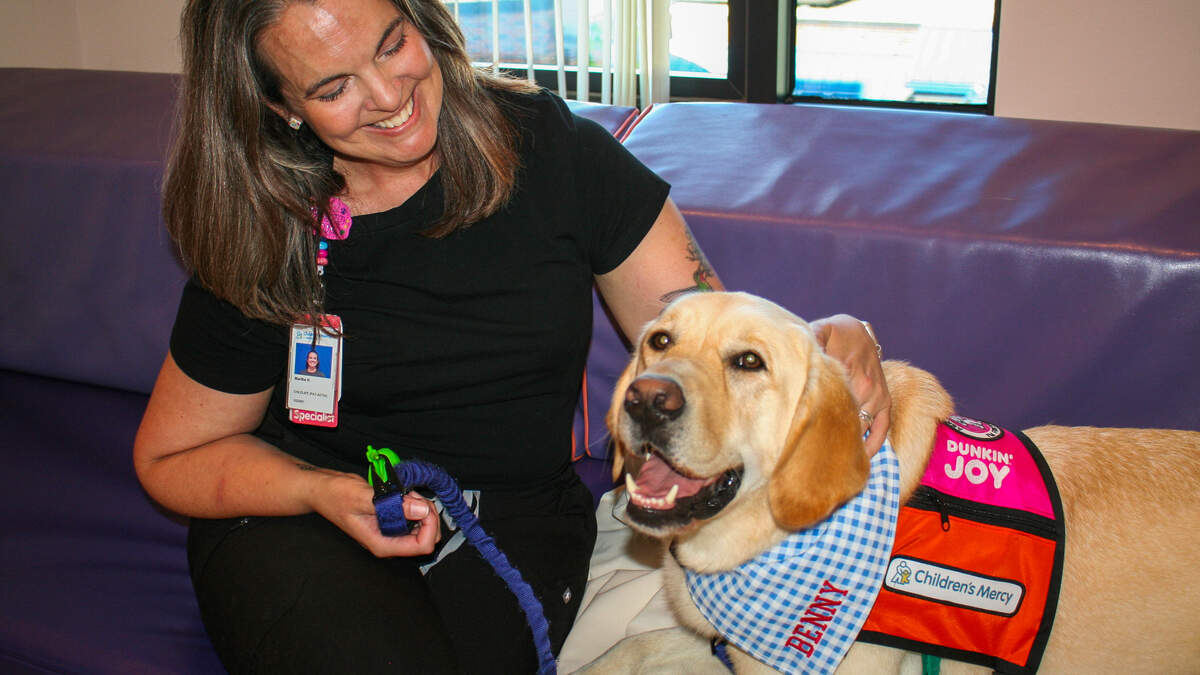
A new furry friend has joined the staff of Children’s Mercy Kansas in Overland Park, bringing joy to patients and caregivers.
Benny, the facility dog, works paw in hand with child life specialist Martha Hartz. Benny is a 2-year-old golden-retriever mix with a contagious smile.
As a child life specialist, Hartz’s job is to make the hospital experience less scary. She works to provide emotional support to patients by reducing stress and anxiety during appointments or inpatient stays.
“These dogs are so good at sensing emotions in the rooms that I really feel like the facility dogs in general really help match what they’re feeling in the room,” said Hartz. “It’s almost like an instinct.”
Hartz is Benny’s primary handler; they’ve built a strong relationship working and living together, she said. When she takes her lunch break, he enjoys his nap time, and when it’s time to go home, Benny is a normal dog.
How is Benny helping Children’s Mercy Kansas
Each day is different since Benny is the only dog to serve the entire Children’s Mercy Kansas hospital. On June 2, he started serving the 52-bed inpatient unit and seeing outpatients, too.
“Our days right now really fluctuate. He is not set to one particular area here or unit,” said Hartz.
They assess the needs of the hospital day by day. Benny may be sitting with a patient while they get shots or blood drawn, or lying with patients who are there for a longer stay. His presence normalizes the hospital experience.
“For a lot of patients, animals in general are something that induces feelings of comfort and love,” said Hartz.
Patients may be missing their pet at home, or be excited at the chance to feel like they have a pet if they don’t have one at home. It brings something normal into the hospital room that’s not intimidating or medical. An entire medical team walking into a room can be anxiety-inducing but with a dog in a patient’s lap, they have a friend in their corner, said Kimberly White, a child life specialist and facility dog handler.
Benny’s making an impact already
Something Hartz does is medical play with the dogs. With either real or play equipment, the handlers perform checkups or other procedures, modeling for kids that the experience won’t be scary.
“I went to ophthalmology the other day, and a patient didn’t want to get eye drops, so I did a little checkup on Benny first to show her that having someone touch her eyes isn’t that scary and helped that patient overcome that fear,” said Hartz.
By incorporating what children know best, play, the dogs model behavior and goals for kids. It can make them feel more motivated and empowered in their appointments, said White.
“Having a dog there brings a level of calmness or just joy in general that helps patients just to relax,” said Hartz. They can also sense emotions, like anxiety or fear, and will pick up on the feelings and provide support, she said.
Benny’s work schedule is consult-based, with staff members or caregivers requesting his services.
“He’s gotten to do a really wide variety of things. Benny is a very flexible dog,” said Hartz.
He’s a great help in physical and occupational therapy, helping kids with their range of motion while playing fetch or going on walks with patients, she said.
“Anytime a kid needs to throw a ball or work on that, it’s, like, super exciting for him,” said Hartz.
Since Benny’s started Hartz has seen a difference. Many families were excited to have a dog to request appointments with.
“It’s really meaningful to be able to come to their clinic appointments and request a dog and not have to go all the way downtown,” said Hartz.
The services can be incredibly helpful in some kids’ cases if they have a fear of needles or other medical procedures.
With Benny coming to the hospital, it makes it easier for families to request a dog for appointments instead of having to travel downtown, said Hartz.
“If that’s something that is really helpful for their child…being able to come somewhere convenient for them and still have that ability has been really helpful for them,” she said.
Support for more than just kids
The dogs are not only a support for patients, but for staff, families and caregivers as well, said White.
In White’s experience, when she worked in the pediatric intensive care unit, she saw parents get stress relief from a dog’s presence while their children may have been battling for their lives.
“When we went in, it was like, we don’t have to think about all the really hard stuff that’s going on right now because we get to love on this dog and just have that time,” said White. It also opened the door for deeper conversations to be had.
Though many may see their jobs as just bringing a dog around, it goes much further than that, said White.
“This is not a place that any child wants to be,” she said. “Until you’re in those moments, a dog snuggling in bed is so much more than just snuggling in bed.”
It enhances the healthcare experience by making it as patient-centered and family-centered as possible, said White.
The facility dogs program
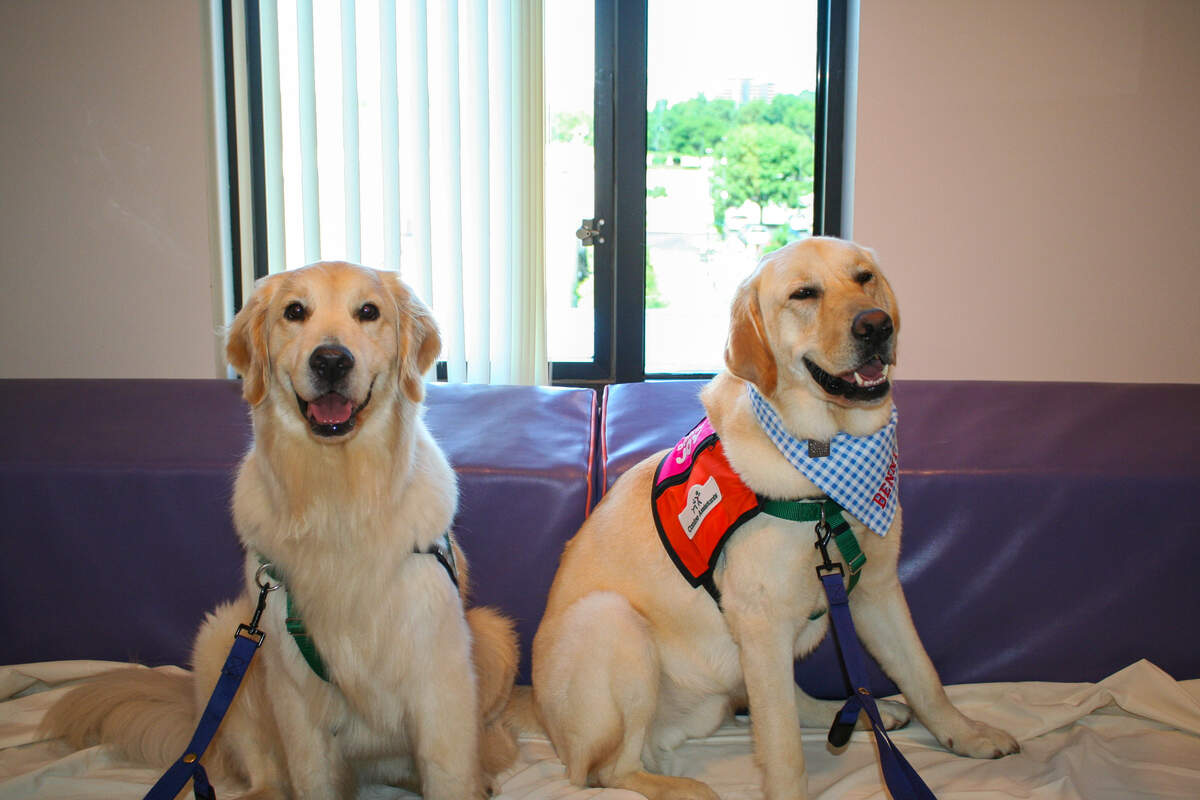
The Children’s Mercy Hospital System has had facility dogs for over 10 years now. The program began with a golden retriever named Hunter, who now works specifically to support staff.
“With only one dog, we could only see a certain amount of patients,” said White. “Over the years we’ve grown, it’s been almost a dog every year or two at this rate, and so that’s been really exciting, being able to provide more intentional interventions.”
With Benny, Children’s Mercy has a total of six facility dogs. There’s also another program, Pet Pals, where volunteers bring their certified therapy dogs to provide support to patients and families.
“There is a big difference between therapy dogs and facility dogs,” said White. “Our facility dogs reach our patients and families in a much deeper way.”
Facility dogs are trained to be more goal-oriented, helping kids reach medical goals that impact their healing, enabling them to get home from inpatient stays. Taking medication consistently is an example of one of these goals. Facility dogs also help with emotional goals, helping kids process the hospital experience.
“Being able to just watch the development of the program over the years and how we’ve really been intentional about how we place these dogs, it’s been really cool to see,” said White.
Benny and the other dogs are bred and raised by a nonprofit called Canine Assistants. They begin training at a week of age and train for about a year and a half, according the the site.
Children’s Mercy got Benny after receiving a grant from the Dunkin’ Joy in Childhood Foundation for the first time.
A grant from Dunkin’ Joy in Childhood
“There was just a need for this type of highly specialized dog, a dog like Benny, to be part of their facility dog program,” said Collins.
The foundation’s mission is to bring simple joys of childhood to kids battling hunger or illness by supporting hospitals, food banks and other community organizations nationwide. They give out general grants and specialized grants, like the Dunkin’ Dogs for Joy grant.
The foundation was created in 2006; the specialized grant that Children’s Mercy received began in 2018. Though a separate organization from Dunkin’ Donuts, the coffee chain supports the foundation. So far, they’ve given 50 hospital grants to get dogs.
“Those dogs, in my opinion; just really a critical piece of a child’s experience when they are in a hospital and it’s obviously very stressful,“ said Molly Collin, Director of the Dunkin’ Joy in Childhood Foundation.
They also provide specialized grants for providing gaming and technology experiences and technology to connect pediatric patients. Dunkin’ Prom, which funds alternative proms for teens who may have missed theirs for medical reasons and lastly, grants to customize hospital spaces to create joy.
“Hopefully, an extended hospital stay will be the toughest moment in a kid’s life, and if we can bring some joy and some levity into their hospital stay, to me, that’s incredibly rewarding,” said Collins.
She and the Joy in Childhood team are looking forward to seeing Benny’s impact at Children’s Mercy, especially since the hospital has been nominated by KC local franchises for other grants in the past.
“You see the smiles, and you see the love every day,“ said White. “That patient might not have done that if the facility dog and child life hadn’t been there. It makes our jobs so fulfilling.”