Seen a phone number on shirts around KC? MADE MOBB merch has local benefit
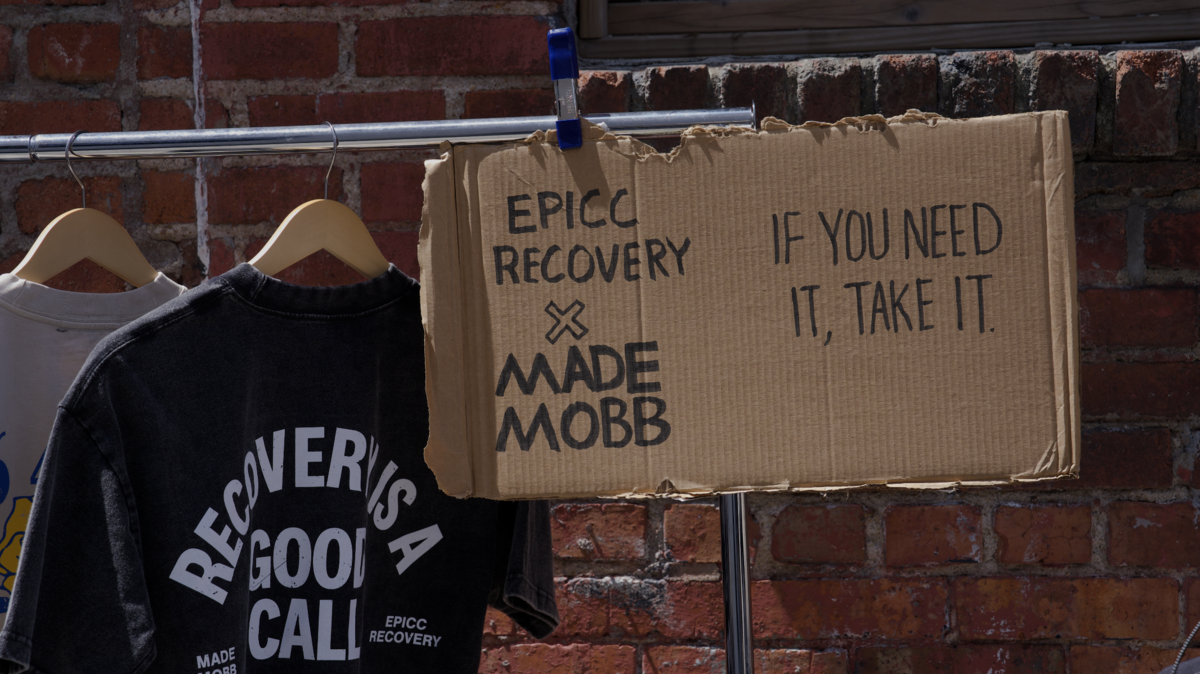
A Kansas City recovery program has turned streetwear into a public health outreach tool, using fashion, lived experience and a familiar local brand to put recovery resources directly into the community.
EPICC, a peer-led recovery support program operated by CommCARE, recently partnered with Kansas City streetwear brand MADE MOBB to launch a free limited apparel collection designed to raise awareness of the organization’s recovery helpline. The campaign places EPICC’s phone number directly on T-shirts, hats and tote bags, transforming the people who wear them into sort of walking billboards for recovery support.
The shirts come in muted colors like black, charcoal and cream with bold fonts featuring roses, some with the words “Recovery is a good call.” The most prominent feature of course is their phone number, 816-412-9417. The design matched perfectly with the clothing brands use of 816 in their apparel.
The initiative launched this May, during Mental Health Awareness Month through MADE MOBB’s First Fridays event in the Crossroads, where thousands of pieces were distributed to the public. Remaining items continued to be handed out through EPICC outreach efforts and at the MADE MOBB storefront for a limited time.
The campaign’s use of actual peer recovery coaches instead of professional models was another deliberate choice. The people wearing the clothing in campaign materials are individuals with lived recovery experience, not actors portraying it.
For Christina Richardson, a certified peer specialist with EPICC, the campaign represents something much bigger than merchandise.
“I think it goes back to having somebody who can relate to you,” Richardson said. “Somebody who looks like you, talks like you, has been through what you’ve been through. We’re not wearing suits or blazers and heels. We just look normal, just like they do. And it’s judgment-free.”
Richardson knows that experience firsthand.
She spent a decade battling addiction to methamphetamine and fentanyl, cycling through homelessness, jail stays and repeated attempts at treatment. Her children were taken. Change, she said, was something she wanted long before she was able to act on it.
“The hard part was putting into action how to get the change,” she said. “It was hard and staying in addiction seemed easier at times.”
Her turning point came after legal trouble landed her on probation.
“The probation officer said, ‘If you don’t get some help, you’ll go back to jail,’” Richardson said. “It really just came down to, do you want a different life or do you not? And then, are you willing to do what needs to be done to get better?”
After entering sober living and rebuilding her life, Richardson eventually found EPICC, first as someone in recovery and later as an employee.
Now, she is one of the people answering calls and meeting others where they are, literally.
EPICC, which stands for Engaging Patients in Care Coordination, operates differently from traditional treatment or crisis response programs. There, peer specialists with lived addiction experience meet callers face to face, often within an hour.
That meeting could happen at a hospital, on the street or at a fast food restaurant, wherever is safest and most practical.
“Anybody who calls that is struggling, we will go and meet them in person within one hour,” Richardson said. “We can introduce ourselves and say, ‘Hey, I’ve been where you’re at. I can relate to what’s going on and I’m here to help.’”
The support offered depends on the individual. For some, the immediate concern is housing. Others may want treatment, medication support for cravings or withdrawal, or simply someone to begin talking through next steps. EPICC can continue working with clients for a year or longer depending on their needs.
Richardson said the biggest barriers often have little to do with willingness and everything to do with survival.
“If you’re houseless, the only thing you’re thinking about day to day is where am I going to go next? How am I going to eat?” she said. “They’re not focused on the more stable things. They’re just focused on surviving.”
The organization receives between 80 and 100 referrals a month, according to Richardson, with most coming from self-referrals, something she said reflects growing community awareness through word of mouth. Hospital referrals make up another significant share.
So far this year, alcohol has become EPICC’s leading referral category, followed by methamphetamine and opiates.
Richardson believes accessibility plays a role.
“Alcohol is more accessible,” she said. “It’s legal, sometimes cheaper than street drugs.”
The streetwear campaign was built around that same idea of accessibility.
BarkleyOKRP, the agency working with CommCARE, helped connect EPICC with MADE MOBB after a previous awareness campaign promoting the 988 suicide crisis helpline. This time, the concept shifted away from traditional public messaging and toward community visibility.
“How do you turn apparel into awareness?” Cozetta Smith of BarkleyOKRP said. “How do you turn community members into walking billboards for a resource that people need?”
Making the collection free was intentional.
Organizers wanted to avoid creating barriers between people and a potentially life-saving resource, while leveraging a brand with strong local credibility.
Smith said MADE MOBB’s cultural reach made the collaboration a natural fit.
“You can’t really talk about streetwear in Kansas City without talking about MADE MOBB,” Smith said. “They made it something people want to wear.”
That distinction mattered. A conventional public health awareness campaign might be seen and forgotten. A T-shirt, especially one tied to a recognizable local brand, moves through neighborhoods, events and everyday life.
For Richardson, visibility also helps confront persistent stigma around addiction and recovery.
“One of the biggest misconceptions is the stigma,” she said. “People think it’s a choice. They don’t think it’s a disease.”
She pushed back on assumptions often made about people experiencing addiction, homelessness or relapse.
“Nobody wakes up and decides, ‘Hey, I want to do drugs and ruin the rest of my life,’” Richardson said. “Nobody knows anybody else’s story unless it’s told.”
EPICC leaders hope the visibility sparks curiosity, conversations and eventually calls.
Another key part of the organization’s philosophy, Richardson said, is that people do not need to be fully ready to stop using substances before asking for help.
“We work with them on small, relatable goals at first,” she said. “Plant the seed that recovery is possible and that they can get there and that they don’t have to do it by themselves.”
As EPICC continues outreach through public events, including upcoming Pride celebrations, Richardson said the long-term goal is simple: help more people.
Right now, EPICC serves Jackson, Clay, Platte and Ray counties, with similar programs operating elsewhere in Missouri.
“To make EPICC a statewide thing would be incredible,” she said.