KC pitches an underground Highway 71 to reconnect East Side to downtown. See plan
Kansas City officials unveiled a new plan to reimagine how U.S. 71 Highway cuts through the heart of the city’s East Side.
The project intends to improve the roadway, also known as Bruce R. Watkins Drive, while reconnecting predominantly Black neighborhoods that were torn apart when construction on the highway began in that area nearly 40 years ago.
The project dubbed “Reconnecting the East Side” wants to address traffic congestion, safety and environmental concerns on the highway, while aiming to boost the local economy by creating more space for future development.
Mayor Pro Tem Ryana Parks-Shaw said during a community summit meeting on Tuesday that the project aims to right the wrongs of the past.
“Reconnecting the east side is about making sure that we reconnect the businesses, the communities that were broken up,” Parks-Shaw said.
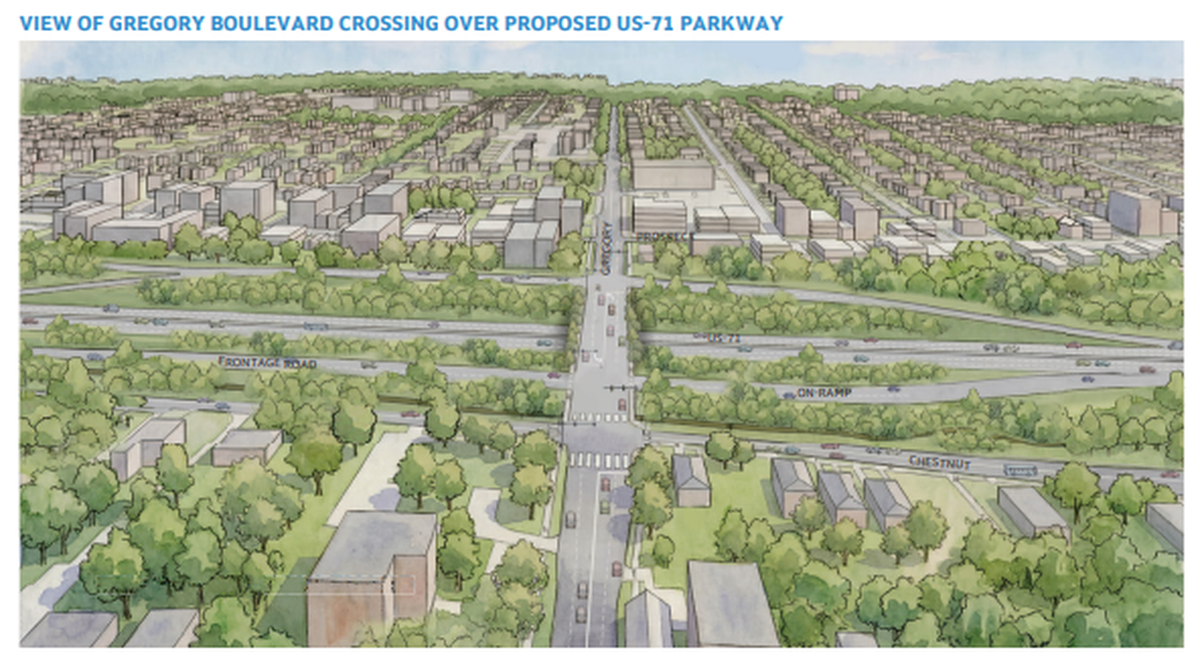
The new plan that officials are calling the “Parkway Alternative” blends parts of earlier ideas to turn a section of 71 Highway between 85th Street and Martin Luther King, Jr. Boulevard into a freeway with no traffic lights. The plan also includes connecting the neighborhoods in that area with new surface streets using bridges that travel over the highway.
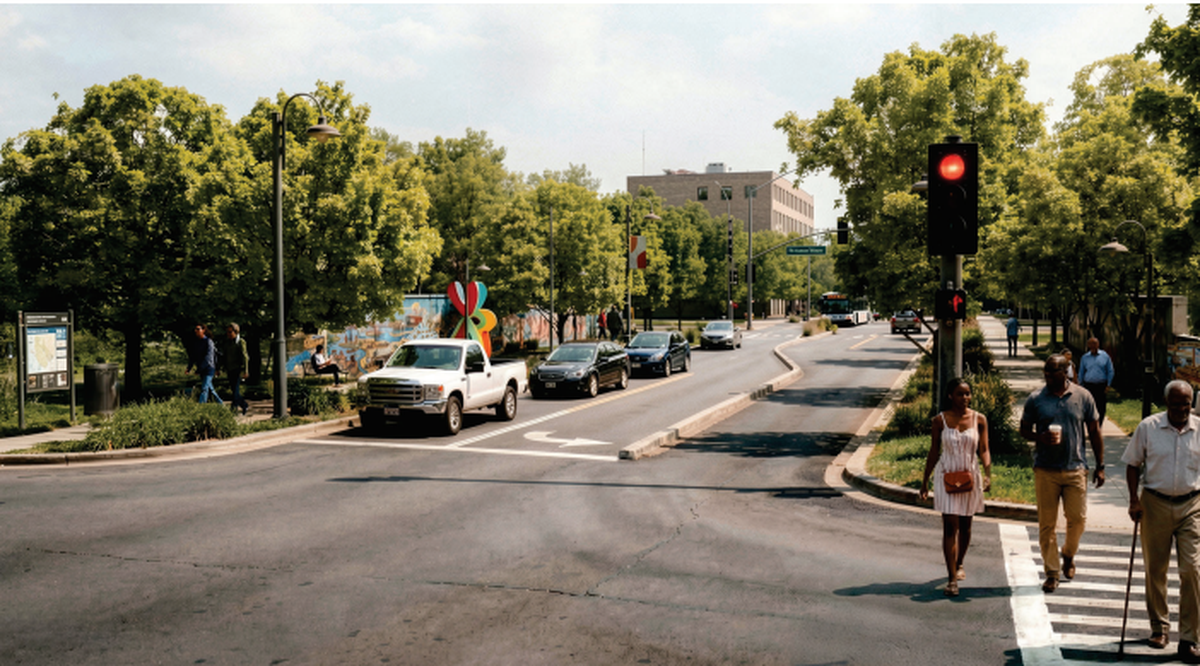
Currently, that section of 71 Highway features multiple street-light intersections that slow the flow of traffic and creates dangerous vehicle and pedestrian interaction points.
The parkway proposal would require lowering the highway deeper than where it currently sits so the surface streets, which would run on bridges over the highway, remain at their current level. It would also include narrowing the highway to create more green space, which could then feature new vegetation like trees or a public transportation corridor for buses or potential future rail.
Ryan McMonigle, a spokesperson for the city’s Public Works Department, said area residents showed significant support for the newest option during the Tuesday meeting. They were asked to vote on the proposal by placing balls in jars marked “yes,” “no” and “neutral.”
The “yes” jar overflowed with votes.
“The project team is really encouraged and really excited to be working with the community to continue to refine ideas,” McMonigle said.
Community focus
Some residents told The Star they hope the project addresses noise and traffic problems, and creates a safer roadway that carries thousands of commuters right by their doorsteps.
Erica Taylor-Murff, who lives in the area, said the parkway seems the safest plan for nearby residents. She said she thinks of her daughter’s dance team that must use the highway to get to practice.
“Things that make it safer elevates community (and) community cohesion,” Taylor-Murff said.
The roadway currently features an intersection at Gregory Boulevard, which is considered one of the most dangerous intersections in the city. The parkway plan would remove that intersection and allow for Gregory Boulevard to travel over the freeway on a bridge.
Meredith Shellner, who grew up in the neighborhood, said she’s neutral about the newest plan, but she knows the city needs to do something to make the roadway safer for drivers and pedestrians.
“Hopefully that will decrease some of the poor driving habits that occur,” Shellner said.
Support from local residents is vital to the project, even more than other city efforts. That’s because of a 1985 federal consent decree that’s meant to protect the civil rights of residents near the highway. Now, any changes to the roadway in that area requires court approval.
Since last year, project staff have been holding community events to hear from local residents about which plan best suits their needs, while also acknowledging how the original construction of the highway damaged the community.
Jason Waldron, the city’s transportation director, told the audience at this week’s summit that their support would help overturn the federal consent decree, freeing up local residents to decide what the future of the roadway looks like.
“Let us let the community tell us what this roadway needs to look like,” Waldron said, “instead of the courts telling us.”
Earlier visions
The project is a partnership between the city, the Missouri Department of Transportation and the Mid-America Regional Council. It’s backed by a $5 million federal grant and an additional $2.5 million of city and state funding.
Prior to the meeting on Tuesday, officials had previously proposed three options to reimagine U.S. 71.
The first option featured tearing out U.S. 71 and returning the area to its original grid street system. The second option turned the section of U.S. 71 into a boulevard, similar to Ward Parkway. And the third option removed all street lights and intersections to create a freeway.
McMonigle said those options all had different drawbacks. Area residents did not support returning to the original grid system, suggesting it would be an insult to what was lost.
Meanwhile, community feedback split support between the boulevard option and the freeway option. But the boulevard plan only slightly met the needs for improving safety and addressing noise and air quality, while the freeway plan would have been more costly and harder to design.
Project planners decided to craft the newest proposal incorporating the best features of each. McMonigle said that was possible because of the feedback residents provided.
“People have really jumped on board,” McMonigle said, “and are really excited to be part of the process and to make their voices heard.”
The project team will continue to gather feedback on the proposal until next month. Residents can share their comments on the city’s Reconnecting the East Side website.
Project planners will take that feedback to court this summer for review of the federal consent decree.
If the court allows the project to move forward, McMonigle said city planners will create more detailed plans to prepare for construction in the future, which could still be years away.
This story was originally published April 9, 2026 at 1:21 PM.