This Kansas City highway is a ‘barrier’ to East Side, locals say. What could the city do?
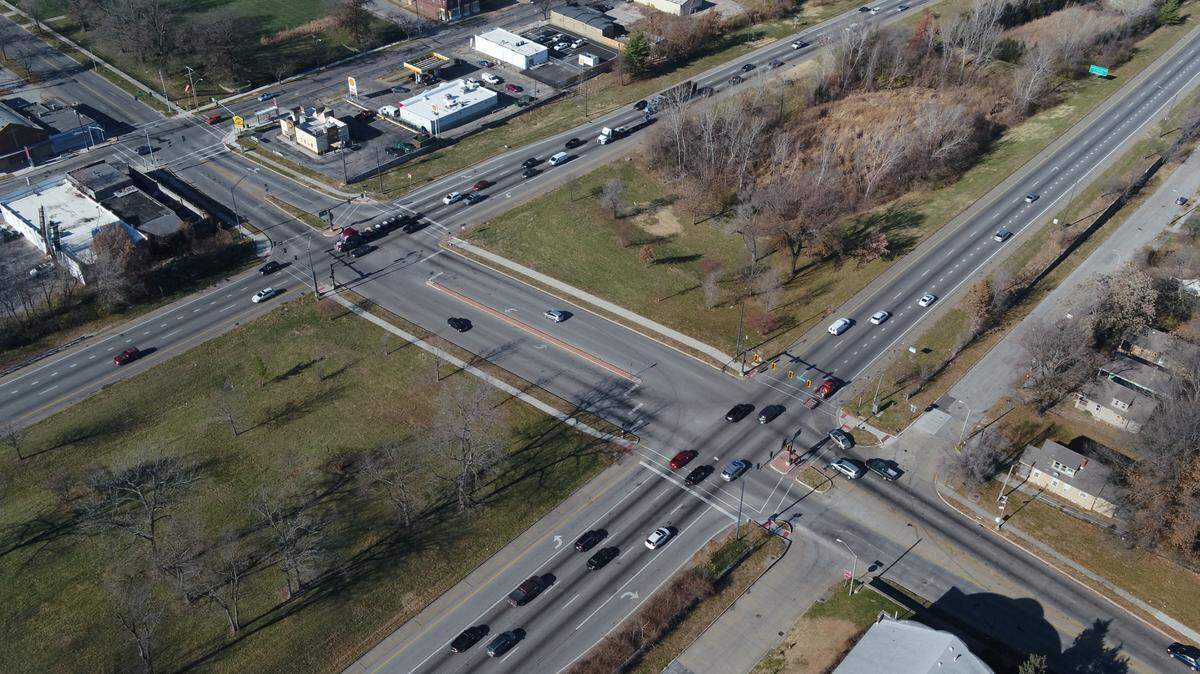
As a kid growing up on Kansas City’s East Side in the 1990s, Jay Jones heard that 71 Highway was going to be a luxury. Jones thought he would be able to hop on the highway to easily move around the city.
But as construction continued, Jones realized 71 Highway was “a barrier.”
“It keeps you from going from … the next street over because of the highway,” Jones said.
The Southeast High School grad remembers playing “Russian roulette” trying to cross the highway on foot to get to Prospect. Now an environmental organizer with MORE2, Jones moved north of the river to get cleaner air for his son with asthma.
If he had his way, Jones would see a 71 corridor with trees and other sound barriers shielding neighborhoods from noise and air pollution.
Jones was one of the approximately 45 residents, city officials and community leaders came to Southeast High School on Saturday, March 22, to share their thoughts on the city’s Reconnecting the East Side initiative.
The project aims to be the first step to reversing the negative effects of Highway 71, which cuts through predominantly Black neighborhoods in Kansas City’s East Side. Currently the city is working to identify the priorities of residents and what needs to be fixed. Then the project will move toward finding solutions to fixing those problems.
Kansas City is using a $5 million federal Department of Transportation grant and $2.5 million from the city and the Missouri Department of Transportation to complete the initiative. A similar project is happening in the predominantly Latino West Side neighborhood.
What are the problems with the East Side and Highway 71?
Jason Waldron, Kansas City’s transportation director, shared aspects of the problems with the 71 Highway, which displaced 10,000 people and was completed in 2001. He said that three of the most deadly intersections in the city are located off of the highway known as Bruce R. Watkins Drive — Gregory, 53rd Street and 60th Street.
Two pedestrians and eight motorists were killed on the road from 2019 through 2023. The highway has over twice the average crash rate of Missouri expressways. According to Kansas City Health Department data, higher rates of asthma and fewer hours of sleep, have been found in areas around the highway in addition to decreased property values.
“When I see those numbers and that tells me, OK, this design is not quite right. We shouldn’t be seeing those many pedestrian incidents on a highway,” Waldron said.
Not just a pass-through
Danny Herron remembers a time before 71 Highway, when Prospect was the main thoroughfare from downtown Kansas City to southern suburbs. Herron’s mom owned a beauty salon at 59th and Prospect, one of the businesses that lined the street. When 71 highway was built, traffic moved to the highway from Prospect, leaving the once thriving avenue a “ghost town,” Herron said.
The resident lived on the East Side for most of his life until his house right off the highway burned down. One of his neighbors was killed crossing the highway.
Herron envisions a booming East Side that is more than a way to get to the Zoo and southern suburbs. His message to officials, “Don’t keep talking. Show results.”
What’s the plan to reconnect the East Side?
The community meetings happening now are the first step in what Waldron described as a decades-long “legacy project.”
But Waldron mentioned that they will work on short-term solutions, which could include adding lighting or changing traffic signals. He didn’t share a timeline for possible small changes.
Conversations with residents will continue through December, when officials will take the plans from the public to get legal permission to make changes, according to the project’s website. That would involve addressing the 1985 Federal Consent Decree, which specified that US-71 would be built as “less than a highway and more than a parkway.”
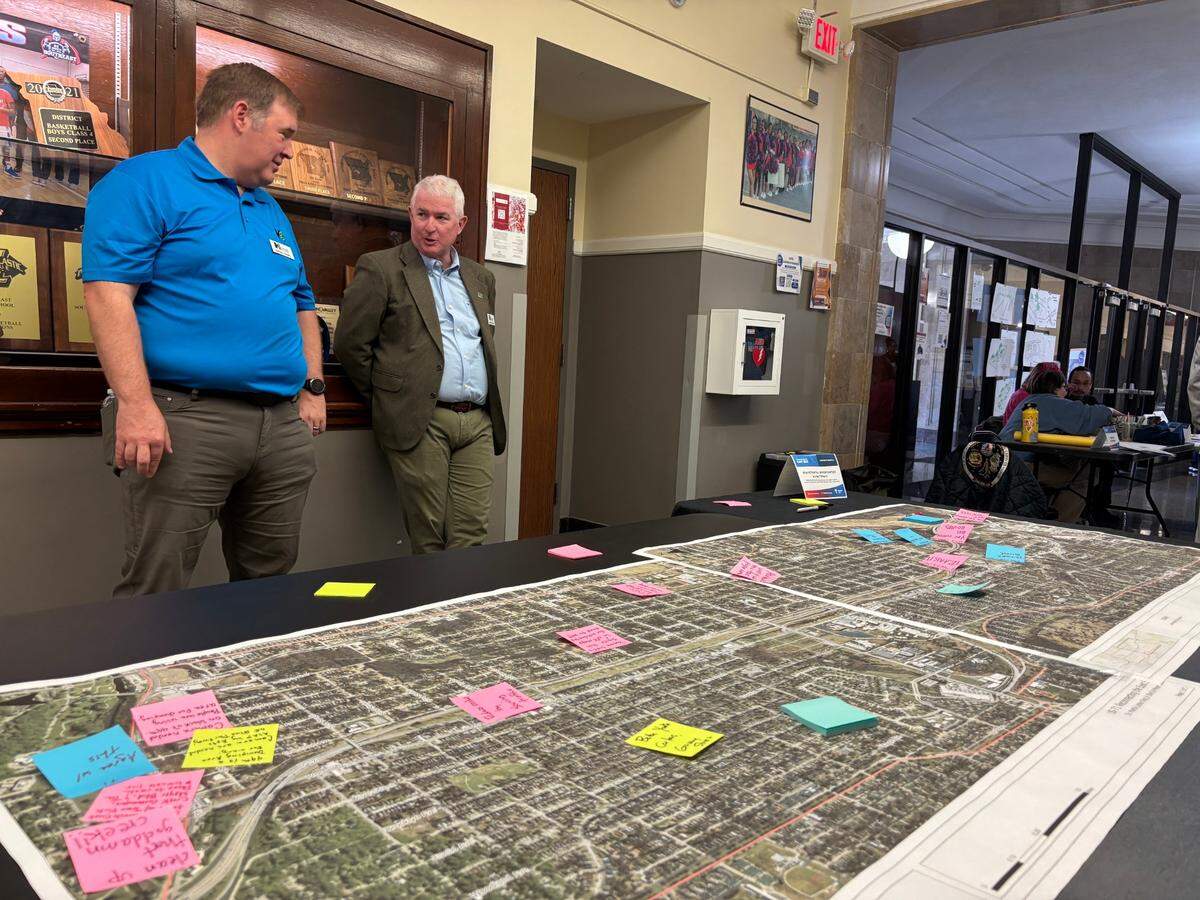
Residents placed sticky notes with ideas for changes to the 71 corridor on an aerial map of the highway. Many notes called for safer pedestrian crossings and more public transportation, while others called out specific issues, like a dangerous on-ramp and a block that’s overrun with illegal dumping.
One unsigned sticky note stated, “How can the corridor serve those who live in it, rather than those who drive it?”