
KC-born James Gadson, R&B drummer who played for Jackson 5 & Harry Styles, has died
AI-generated summary reviewed by our newsroom.
- KC-born James Gadson shaped soul, funk and R&B across decades
- He played on hits from Jackson 5 and Bill Withers to Diana Ross and more
- Family recalls his humility, faith, long career and wide musical influence
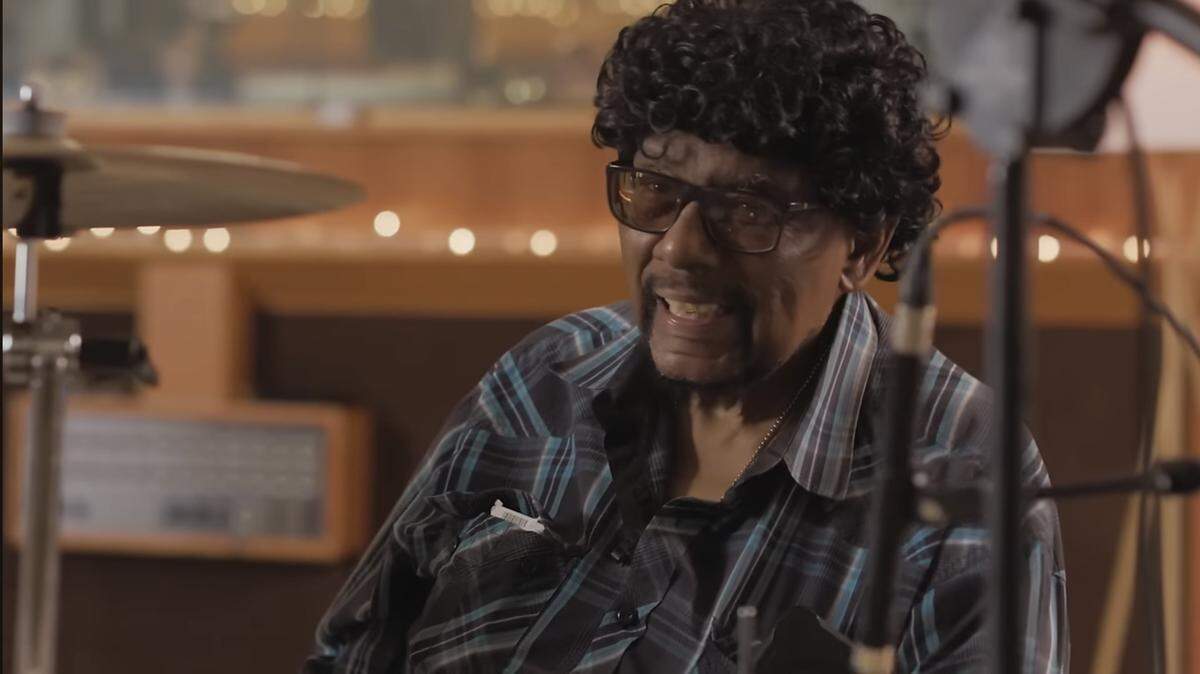
When she hears a song, Robbie Gadson Herndon can always tell that her brother is playing the drums. Over more than 60 years as a studio drummer, a career rooted in Kansas City, he provided the beat for huge hits.
A devout churchgoer who raised a stepdaughter, grandkids, great-grandkids and two nephews with his wife, James “Gat” Gadson didn’t boast about his reknown as a sought-after drummer.
That’s him with Bill Withers on “Lean on Me.” On Gloria Gaynor’s disco anthem, “I Will Survive.” “Dancing Machine” by the Jackson 5. “Love Hangover” by Diana Ross. He has a credit on Harry Styles’ second studio album, “Fine Line.”
Over decades as a studio musician in Los Angeles he worked with and has been sampled by a who’s who of the music world. Aretha Franklin. Paul McCartney. Kelly Clarkson. Leonard Cohen. Ray Charles. Norah Jones. B.B. King. Justin Timberlake. Beck. Anita Baker. Lana Del Rey. Florence and The Machine.
Gadson became one of the most recorded drummers in R&B history. He taught himself how to play drums in Kansas City, the birthplace of a unique sound that other drummers yearn to learn and duplicate.
When Gadson died Thursday at his modest Los Angeles home where he built a studio in the garage, tributes poured in from all corners of the music world.
“He was part of so many hits that each of us has lived our musical lives through the drumbeats of James Gadson,” wrote Soul Tracks online magazine.
“Few drummers in modern music have shaped the sound of soul, funk, and R&B as profoundly over the past five decades.”
Questlove, drummer for The Roots and musical director for “The Tonight Show With Jimmy Fallon,” wrote a tribute on Instagram that included a clip of Gadson playing.
“Some drummers are soulful. Some drummers are funky. Some drummers are a rockin. Some drummers are swinging——but NO drummer, has impacted the art of breakbeat drummer (danceable drums) like James Gadson.” he wrote.
“James Gadson is breakbeats defined. These are just a fraction of 60 years of quality drumming — even in the last 20 years he did some of his best work. The Beat Will Truly Go On…..& On….. Rest In Beats Legend!”
In another Instagram tribute Ray Parker Jr., known for writing the “Ghostbusters” theme song, declared: “He changed the world.”
The world knew Gadson’s drumbeat. But Herndon knew his heartbeat — his love of family, faith and Kansas City. Though he headed west to California as a young man to find work in music, he came back to KC often.
“I’m just so happy he’s getting the recognition he deserves,” she told The Star. “He was so low-key. He was just so humble. Just a nice man. I’m so proud to say he was my brother.”
Playing in Ollie Gates’ club
Gadson was born in Kansas City on June 17, 1939, to Thomas Harold Gadson and Arlethia (Hopson) Gadson.
Musical talent ran deep in the family. Thomas was a drummer and vocalist. One of the sisters played cello and African drum.
Gadson, who also sang, taught himself how to yodel when he was a child and got good enough to win a radio talent show.
He and his brother Tutty — who sang and played guitar — performed in nightclubs around Kansas City as underage teenagers, unbeknownst to their mother, Herndon recalled.
When it became clear that Gadson was more interested in music than studying — he didn’t graduate high school — mom sent him off to the Air Force.
Education was important in Arlethia’s home. Four of Gadson’s siblings earned college degrees.
By the time he got out of the Air Force, Tutty had a popular band in Kansas City called The Derbys. Unable to find work, Gadson joined the band as keyboardist and lead singer.
When the band’s drummer quit, Tutty told his brother to “see what he could do on drums,” said Herndon, Gadson’s younger sister.
So Gadson taught himself how to play the drums.
“They traveled around in a funeral hearse,” Herndon said. “Tutty had it painted red with a big white derby painted on the side. The Derbys were sought out to perform for most of the big African-American parties and events throughout the Kansas City area and the Midwest.”
From time to time, Herndon, one of her sisters and two cousins sang with the band. They were The Derbettes.
Herndon said the band’s agent, a local white lawyer named Allen Bell, booked the band in “many diverse establishments across the country. Some were in the South, and racist and unwelcoming.”
They played on the Chitlin’ Circuit that allowed Black entertainers during segregation to play mostly safe, friendly venues.
In Kansas City, The Derbys regularly played at OG’s, a popular Kansas City jazz club at 31st Street and Indiana Avenue owned by Ollie Gates before he became a barbecue king.
Gadson began rubbing shoulders with famous musicians here, backing up singers who came to Kansas City on tour, Otis Redding and Sam Cooke among them.
From jazz to R&B
He moved to Los Angeles in the mid-1960s.
“He had some friends working out there as musicians who told him to come out and he could get a job,” Herndon said. “He was used to playing jazz and they needed an R&B drummer, so he didn’t last very long with the gigs they got him.
“He didn’t have the kind of drumming skills they were looking for at that time, even though he was a good drummer in Kansas City.”
She said her brother “almost starved to death” before he became drummer for the widely-sampled Watts 103rd Street Rhythm Band, led by singer and guitarist Charles Wright. He credited the job to the Lord.
“God has always walked with him and talked with him,” she said.
They were studio musicians, a group that on its own scored hits such as “Do Your Thing” and “Express Yourself.”
His first time in a studio, “I didn’t really know how to play R&B, it was awful,” Gadson told Modern Drummer magazine in 2007. “I wouldn’t even charge them it was so bad. I felt bad about wasting their studio time.
“I couldn’t keep a steady pattern because I was coming from a free-jazz mindset.
“The first professional thing that I cut was with Dyke & The Blazers. Then I recorded with Charles Wright and the Watts Band on ‘Express Yourself’ and ‘Love Land.’
“On the latter song, I sang and played drums. My studio chops really came together after I came out to L.A., when I first started working around town and doing certain gigs.”
When he met Hal Davis, the legendary Motown producer hired him to sit in on the recording session for ‘Dancing Machine’ by the Jackson 5.
“I remember the first Motown session I did, which was The Jacksons’ ‘Dancing Machine.’ We were out there creating and I put that 8th-note hop in, and they said, ‘hey, do that again,’” Gadson told Modern Drummer.
“They liked what I was doing, and they said, ‘let’s keep him because he has good time.’ And then the song became a hit.”
He began making a name for himself after working on Withers’ 1972 album, “Still Bill,” drumming on “Use Me” and “Lean on Me” with a sound that became a template for R&B and soul sounds that followed.
“Gat was a very talented drummer, but equally gifted as a vocalist,” Herndon said. “Many don’t know that he co-wrote and contributed to many of Bill Withers’ greatest hits.”
The hits he contributed to in the disco era alone are solid gold.
Cheryl Lynn’s “Got to Be Real.”
Smokey Robinson’s “Cruisin.’”
Tavares’ “Heaven Must Be Missing an Angel.”
Peaches & Herb’s “Shake Your Groove Thing.”
Thelma Houston’s “Don’t Leave Me This Way.”
Jazz guitarist Jeff Parker recalled working with Gadson in an Instagram tribute Friday.
“The last time we convened, he noticed me glaring at his drum kit in wonder — I knew that there had to be a LOT of history there,” Parker wrote.
“He looked at me and said, ‘Jeff, that’s my disco kit.’ I said, ‘Are those the drums on ‘Love Hangover’?” He nodded and said, ‘They’re the drums on a whooooole lot of records.’”
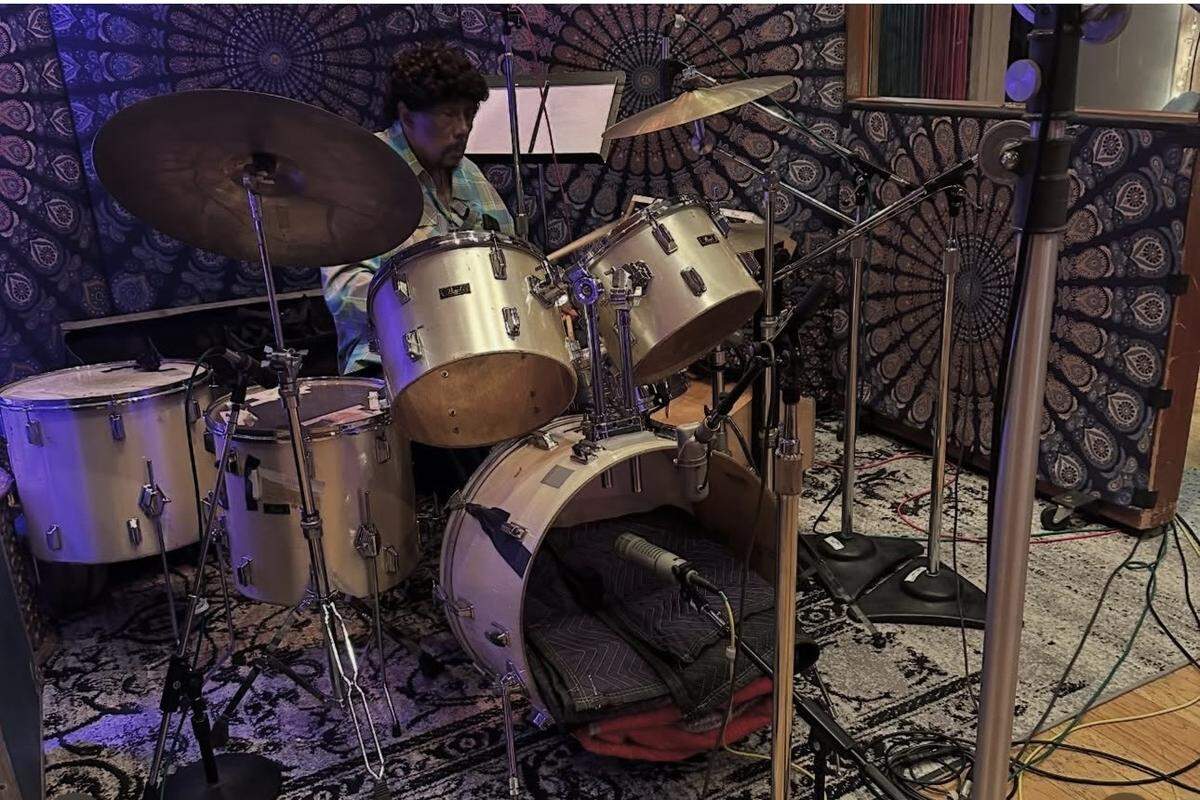
Gadson rarely spoke to his family about the stars he worked with, said Herndon, who knows that some of the people who worked with him in California know little about his private life. He didn’t share a lot.
“He was very soft-spoken and a good man. He was so nice to so many people and so humble. The celebrity ... that didn’t mean anything to him. He was just a nice person who would do anything for anybody,” she said.
“I knew him as a sister. He was always there as my brother.”
Once, when he came to Kansas City with The Temptations, he invited her to the concert and she went. (Just don’t ask her what she thought of them.)
Because he didn’t share much about his work she is just now finding out “that he was often not given the credit for much of his work,” Herndon said. “Sometimes it was racism, sometimes greed and/or jealousy.”
She hopes that someone in Kansas City will step up and find a way to honor how he shaped America’s music landscape with talents born and raised here.
Flea, bassist and a founder of Red Hot Chili Peppers, wrote on Instagram that he was lucky enough “to have played with him on many occasions and to have been his friend.
“His legacy will live on through a zillion joyful dances humans will do to his beats, to heal and feel free.”
With her brother’s passing, Herndon is the last of her siblings still living. She worked more than 30 years for the U.S. Department of Housing and Urban Development. She retired in 2006 and now mostly lives with her son and his family in Houston, though she still calls Kansas City home.
She spoke every day to her brother, but he had not shared the health challenges he faced in recent years. He was a 30-year survivor of prostate cancer, she said, and had recently fallen and reinjured his spine, compounding damage from an accident years ago that she never knew about.
He was “still up and going,” she said, until his wife, Barbara, found him unresponsive in their home on Thursday.
Funeral services in Los Angeles are pending.
Since Thursday Herndon has been binge-watching videos online, watching her brother play and talk about his career.
Once reminded by a fan of the great recordings that will forever bear his stamp, the ever-humble Gadson replied, “thank you. I’ve been truly blessed. I was in the right place at the right time – a lot of times.”
Editor’s note: Writer Lisa Gutierrez listened to one of her all-time favorite jams, “Got To Be Real,” while writing this story. She never knew that was Gadson on drums. She says: “Thank you, James.”
This story was originally published April 4, 2026 at 3:19 PM.
.jpg)