KC’s battle over mini liquor bottle ban continues as shop owners pack City Hall
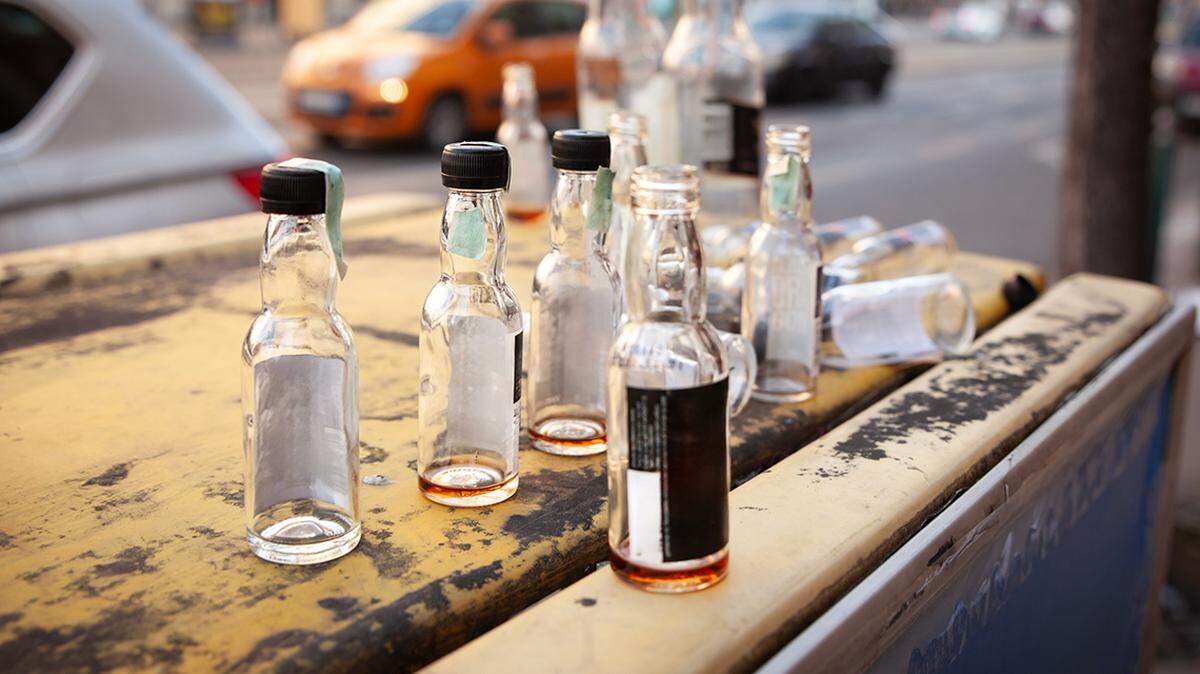
The battle over Kansas City’s proposed mini-booze bottle ban continues.
On Tuesday, some 100 people — most representing convenience store owners, liquor store owners and others in the liquor and beer industry — packed a 10th floor meeting room at City Hall, with at least 30 spilling into the hallway, to hear a council committee’s decision regarding a proposed ordinance that would ban the sale of mini liquor bottles, as well as single-serve containers of beer and malt liquor, in significant parts of Kansas City.
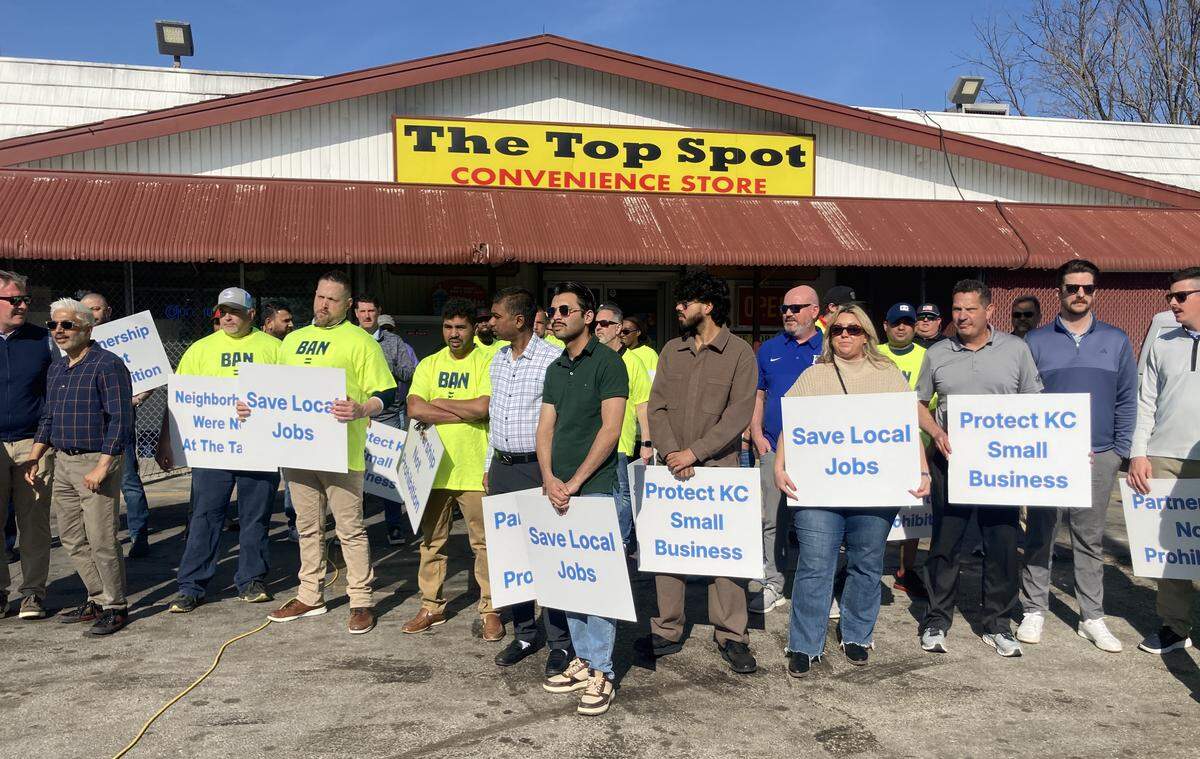
Liquor and convenience store owners see the ordinance as an existential threat, one that could rob them of between 30% and 50% of their revenue and perhaps lead to the shuttering of their stores.

Sponsored by Mayor Quinton Lucas and 3rd District Councilwoman Melisa Robinson, the ordinance, first presented in February, is one they see as protecting neighborhoods that have been beset by crime, litter and nuisance behaviors that they link to the sale of the products.
“A lot of us have lived with this issue for the entirety of our lives — the entirety of our lives,” said the mayor, who was raised in the 3rd District on Kansas City’s East Side, known to have a high density of liquor stores. “. . .This is communities that are trying to say, look, we don’t want to live like this, and with this, every day.”
Lucas is one of five members of the council’s Finance, Governance and Public Safety Committee, chaired by 6th District At-Large Councilwoman Andrea Bough.
At the end of the lengthy discussion, the committee, which also includes 2nd District Councilman Wes Rogers, 4th District At-Large Councilman Crispin Rea and 5th District At-Large Councilman Darrell Curls, voted unanimously to forward the ordinance on to the full council for discussion on April 9, albeit without a recommendation on whether to pass the ordinance or not.
The lack of a recommendation reflected mixed sentiments
None of the council members disputed that crime and drunkenness, mini liquor bottle litter and nuisance behaviors are problems to be addressed. The question that drove debate, however, was whether the ordinance, as written, was the correct tool to respond to those issues.
Over the course of the meeting, the mayor appeared to be the only one of the five-member committee who was in favor of it. The ordinance has support from a number of neighborhood groups.
Bough suggested that the boundaries of the “retail alcohol impact areas” that the ordinance outlines could perhaps be more narrowly tailored. She noted that it covered about 34 square miles of Kansas City.
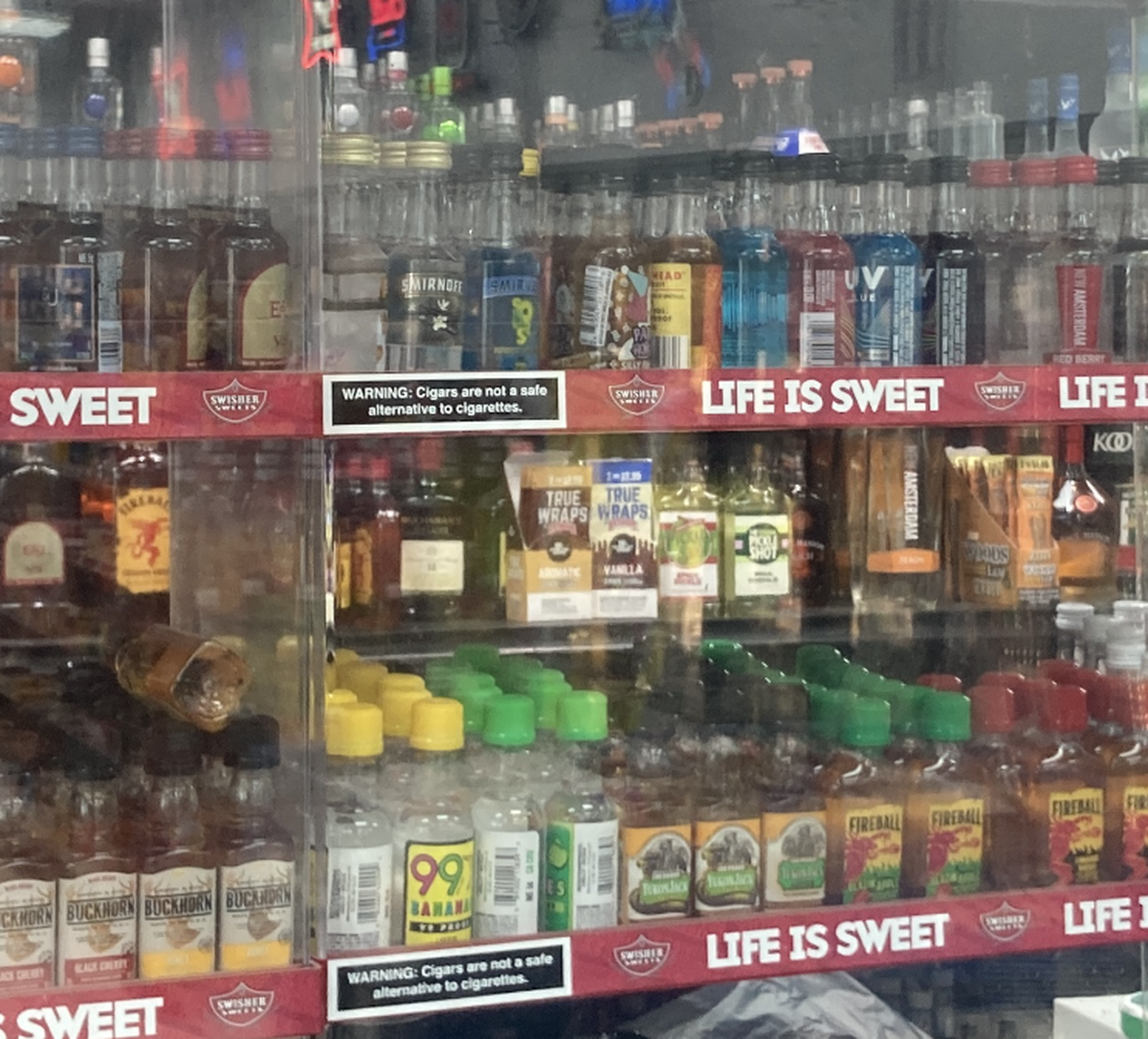
As currently written, the ordinance would ban the sale of single-serve containers of beer and malt liquor, as well as 50 milliliter mini bottles — also known as shots, shooters and nips — in major parts of downtown, Westport and along the Prospect Avenue, Independence Avenue and Blue Ridge Boulevard corridors.
But the ordinance would not ban the sale of the items from grocery stores.
“I don’t think that we can just paint a broad brush over everywhere that this ordinance impacts,” Bough said.
Bough suggested that, instead of a broad ordinance, perhaps a limited pilot program could first be initiated in specific areas to see if, in fact, banning the sale of mini bottles and other products would have a positive effect on reducing crime and other issues.
Rogers, whose 2nd District encompasses much of the Kansas City, North, concurred.
“I’m completely on board with addressing the issues that are being presented here,” he said. “I'm concerned about the current ordinance as drafted, but not with the big picture of coming up with solutions.”
Rea questioned how the boundaries of the areas of the sales ban were drawn. He suggested that the city could perhaps do more through regulated industries, such as a three-strike method that might allow the city to levy fines, charge fees, or perhaps revoke licenses of liquor stores or convenience stores where issues repeatedly arise.
“I still think we have some of the tools here that we could tweak and be more strategic with,” Rea said.
Curls of the 5th District emphasize that sales of liquor in minority communities has long been an issue.
“I can agree we have a problem,” he said. “We are here to create policy, and we try to create the best policy as possible. And I’m not sure the way that this is written, that this is the best policy.”
He continued: “Granted, we know that the liquor industry is always targeting minority communities. That’s a fact. And I say that to address the liquor industry. Because there is data that shows that they have targeted minority communities.
“How do we address the issues that we are wanting to address, where there is trash and litter in the streets, whether it’s people loitering at gas stations or liquor stores? I would suggest to you that it’s a bigger problem than just banning miniature bottles of liquor.”
Curls said the issue is lack of investment in the 3rd and 5th districts.
But three other council members — Robinson, of the 3rd District, who sponsored the ordinance, 3rd District At-Large Councilwoman Melissa Patterson Hazley and 6th District Councilman Johnathan Duncan — also sat in on the committee meeting.
All expressed strong support for the ordinance, perhaps not as a cure to issues, but as part of a solution.
“It is a huge problem,” Robinson said. “But how do you take care of a huge problem? You take it one bite at a time. And this is one solution amongst other solutions to address the issues that we’re facing.”
She spoke of the toll that the concentration of stores that sell liquor have on residents.
“These are real people,” she said. “They’re not driving by. They’re living in these communities. We are living in these communities, and when we’re having to deal with these conditions, it’s very hard to keep hope alive.”
Duncan agreed.
“We can’t remove the liquor stores that are already over-proliferated in poor, working-class neighborhoods, most concentrated in the 3rd and 5th districts,” he said. “But we can reduce their harm. And while I agree that I don’t think this ordinance is perfect, I don’t want us to be suffering from what I often see us do: paralysis by analysis, of just simply saying, ‘Well, it’s not quite there yet.’ . . .I don’t have a vote on this committee, but I do hope that we move something forward, because I think it’s important.”
Paterson Hazley suggested that while the ordinance may not be perfect, something needs to be done.
“If you have one area of the city that is overburdened, then sometimes, as policymakers, we have to step in and do something just as drastic,” she said. “And so that’s why I think this is a worthwhile effort. Because for some reason, over the course of 25 years, we’ve allowed 10 liquor stores to open in walking distance of each other. Policymakers, now and in the past, didn’t catch that that was going on, and didn’t interrupt it, didn’t do anything about it.”
She said of residents, “some people cannot pack up and leave. And so we have to create an environment that‘s better for where they are.”
Frank Fazzino, owner of The Top Spot, a convenience store at 26th Street and Brooklyn Avenue, was disappointed that the ordinance was sent to the full council.
“It means more questions,” he said. “I mean we have businesses to run. If the city would just take care of the loitering and the people breaking the law we would be in great shape.”
He added that, overall, the vast majority of liquor and convenience stores that sell mini bottles and single-serve containers of beer and malt liquor have no problems near their stores. The issue is not one of liquor sales, but of problem individuals and the enforcement of existing laws.
“Instead they want to put us out of business, the law-abiders,” Fazzino said, “and they’re taking up the side of the law breakers.”