Banning mini liquor bottles could close shops, make crime worse, KC retailers say
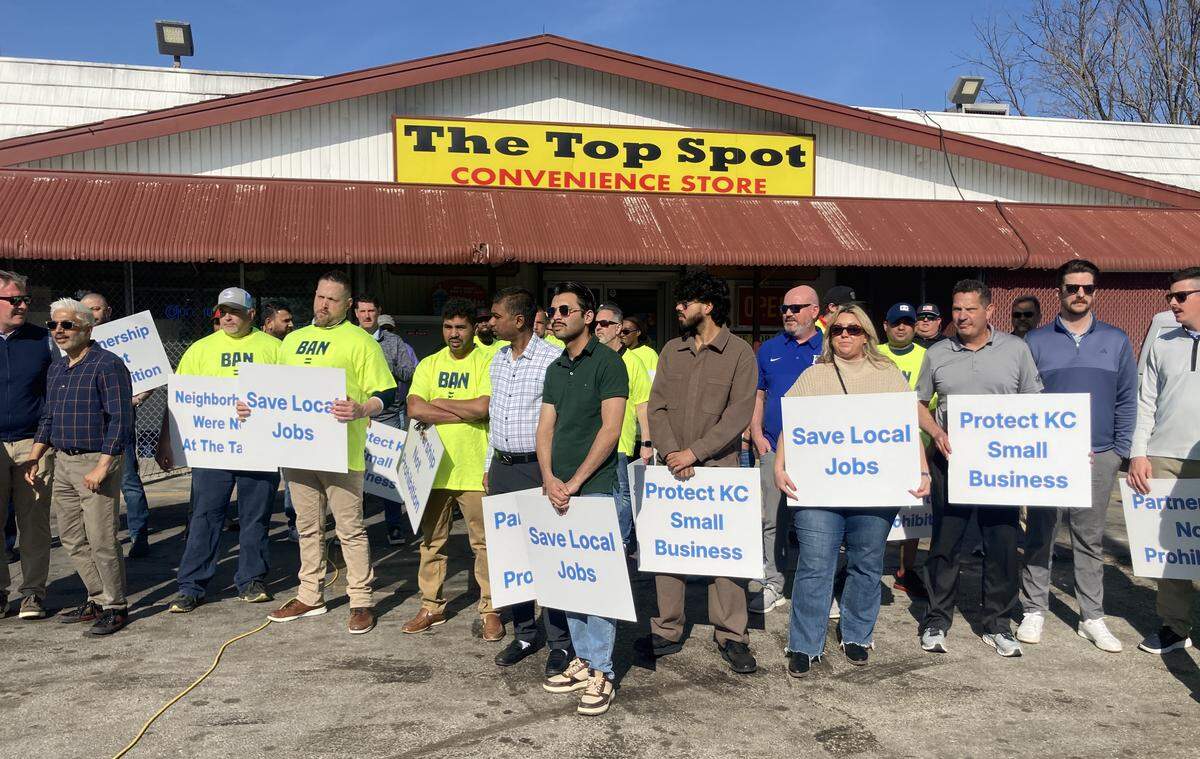
Some 70 people — convenience store owners and employees dressed in fluorescent yellow T-shirts bearing the message “BAN = JOB LOSS” — gathered Monday morning outside The Top Spot Convenience Store, 2640 Brooklyn Ave., to rail against a proposed ordinance that, if passed, would ban the sale of mini liquor bottles in certain parts of Kansas City.
The ordinance, scheduled to be discussed Tuesday before the Kansas City Council’s Finance, Governance and Public Safety Committee, would also ban the sale of single-serve containers of beer and malt liquor of 40 ounces or less.
Sponsored by Kansas City Mayor Quinton Lucas and Councilwoman Melissa Robinson, the amendment was put forth in February as a means to decrease crime, litter, public drunkenness and other disturbances.
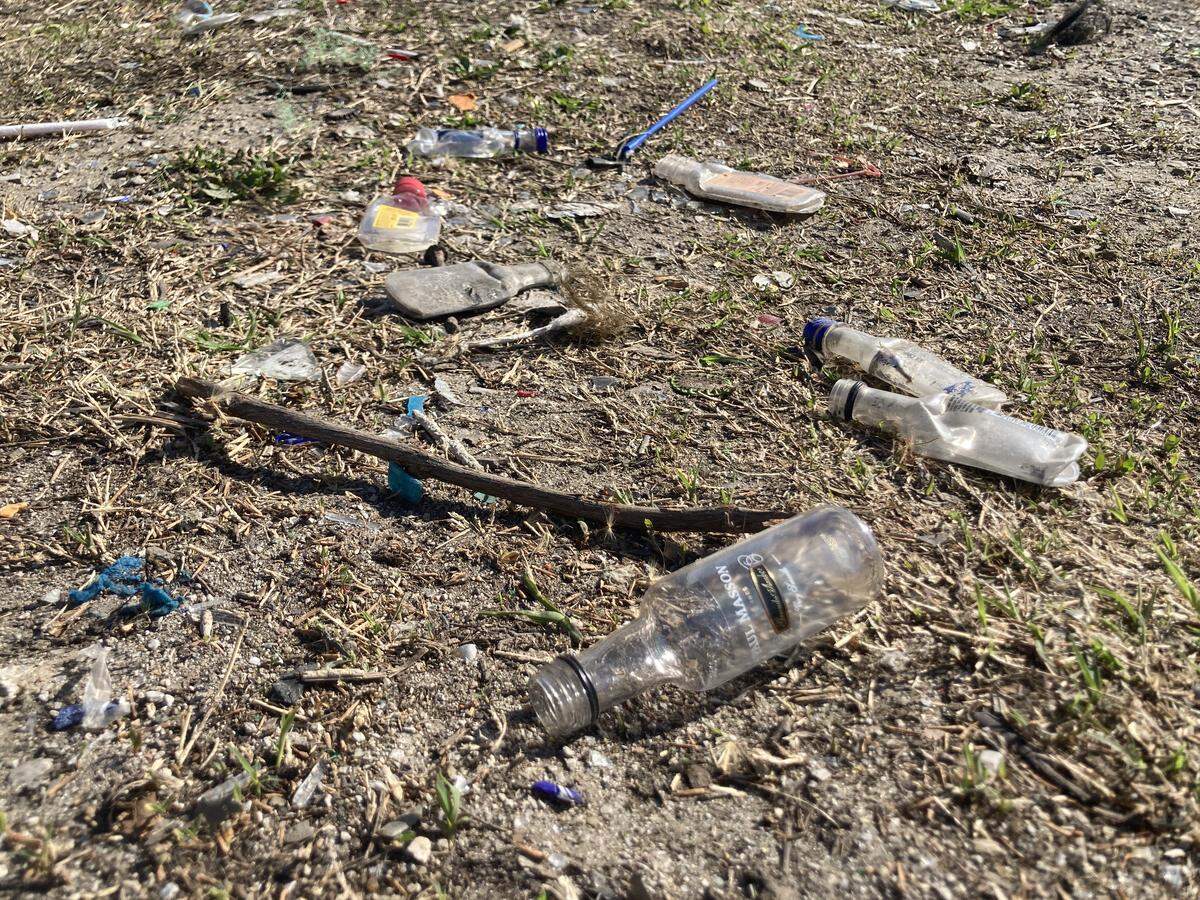
“Look, I understand that everybody wants to make some dollars, particularly exploitative dollars, in my opinion, off certain communities,” Lucas told the Star Friday. “But I think a lot of people have said enough. Enough of the trash. Enough of the nuisance crimes, enough of the violence that arises from it.”
But retailers say the proposed ban, itself, should be shut down.
Losing 30% to 50% of revenue = job losses
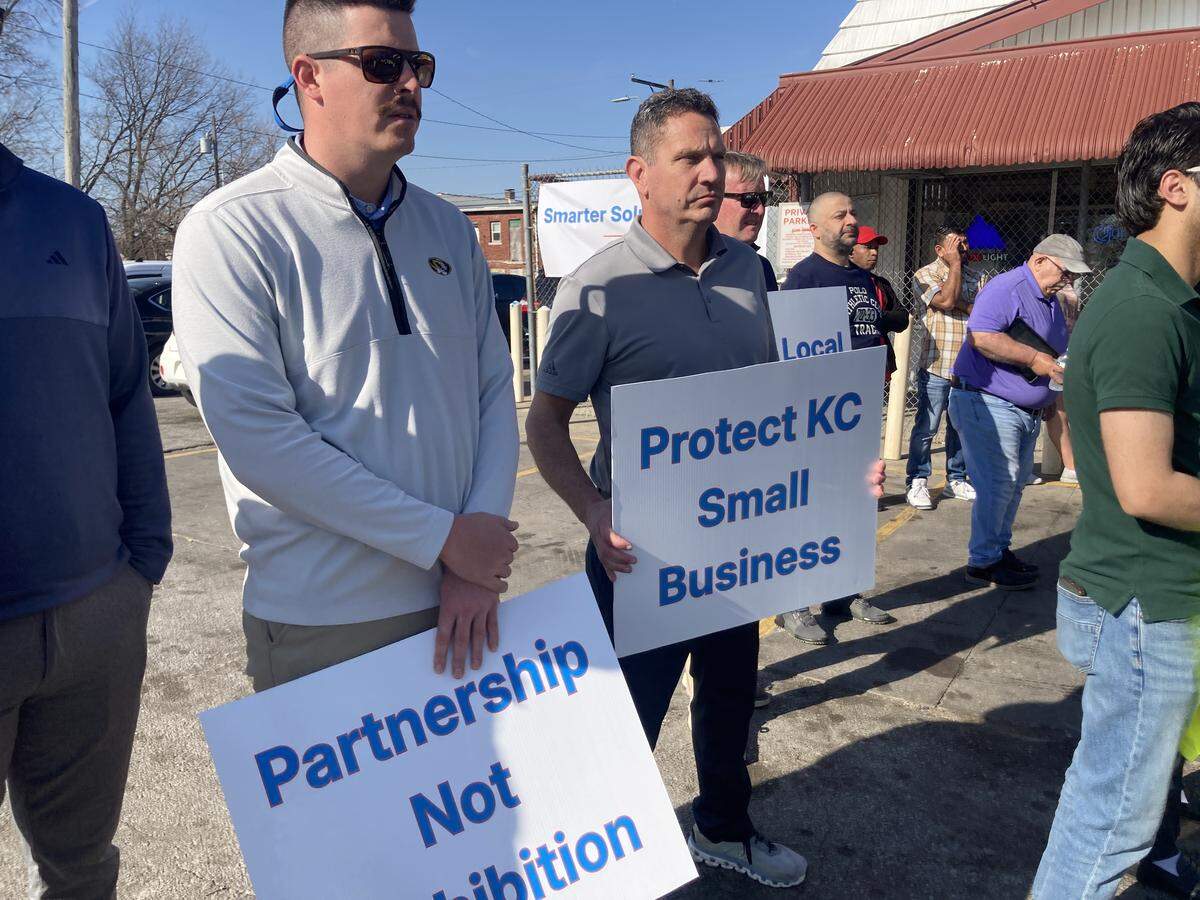
Holding white placards, printed with protest messages including “Partnership Not Prohibition,” “Save Local Jobs,” and “Protect KC Small Business,” the owners of some 40 Kansas City convenience stores laid out what they predicted would be the dire consequences of what they deem to be an ill-conceived amendment.
Among the effects, they suggested, could be the loss of upwards of 1,000 jobs and $130 million in economic activity, shuttering as many as 33 convenience stores that provide customers not only liquor, but also food and sundries.
“I’m standing here today not just for myself,” Frank Fazzino, Top Spot’s owner said, speaking into a microphone set up in the front parking lot of his store, “but for dozens of local store owners, our employees and the neighborhoods we serve every day.
“We all agree on something important: We want safer, cleaner, stronger communities. That’s not up for debate. The question is how do we get there?”
The amendment, which applies to single-serve containers of beer and malt liquor, as well as the 50-milliliter, tiny bottles known as minis, shooters, shots or nips, would ban their sale not citywide, but in five geographic areas designated to be problematic “retail alcohol impact areas.”
It is the merchants in those areas that include downtown and Westport, and the corridors along Independence Avenue, Blue Ridge Boulevard and Prospect Avenue, who are fighting the amendment and who, on Monday, said they plan to show up en masse at Tuesday’s committee meeting.
“The retail alcohol impact areas ordinance is not the answer,” Fazzino said. “This policy doesn’t just regulate products, it threatens livelihoods. It targets small, independent businesses, most of them minority owned, while leaving others untouched just blocks away. . . .”
“For stores like mine, single-serve products make up as much as 40% of our revenue. Losing that isn’t a minor hit. It’s devastating. It means not being able to pay employees... It means closing our doors for good... When a neighborhood stores closes, it doesn’t just disappear. It leaves a hole behind — a dark storefront, a boarded-up building. And we all know what follows: More opportunity for crime, not less.”
‘I would have to fire people’
Kay White, the owner of WW Crown Liquor Grocery & Grill, at 27th Street and Benton Boulevard, said she employs 25 people. Mini liquor bottles and single-serve containers, she said, comprise about 30% of her revenue.
“I would have to fire people,” White said, if the ban goes into effect. “Which means the money I get in the store, it wouldn’t circulate in the neighborhood. It wouldn’t stay in the neighborhood because we don’t have enough to employ them, pay utilities, or anything for them to provide for their families.”
She complained that city leaders did not consult with store owners and other constituents prior to presenting the ordinance amendment in February.
“We have a voice and we’d like to be heard,” White said.
White, along with others present, also said she believes the city has been both unfair and discriminatory in drawing the boundaries of where the ban would take effect.
“It’s a form of redlining,” White said, comparing it to historic racial discriminatory mapping. “You stop me (from selling) at 27th and Benton, but you don’t stop the guy at 27th and Indiana, which is two blocks over?. . .It’s a form of discrimination.”
Shawn Chourdy, who owns 25 liquor and convenience stores in the Kansas City area, likewise estimated that the mini bottle and single-serve liquor sales account for between 30% and 40% of his business. His chief complaint regards what he sees as the ordinance’s inequality.
“My biggest concerns is how they are deciding the line,” he said.
Chourdy is not in support of a ban, but if the city is going to establish one, he said, he thinks it would be only fair to make it citywide and to include all stores.
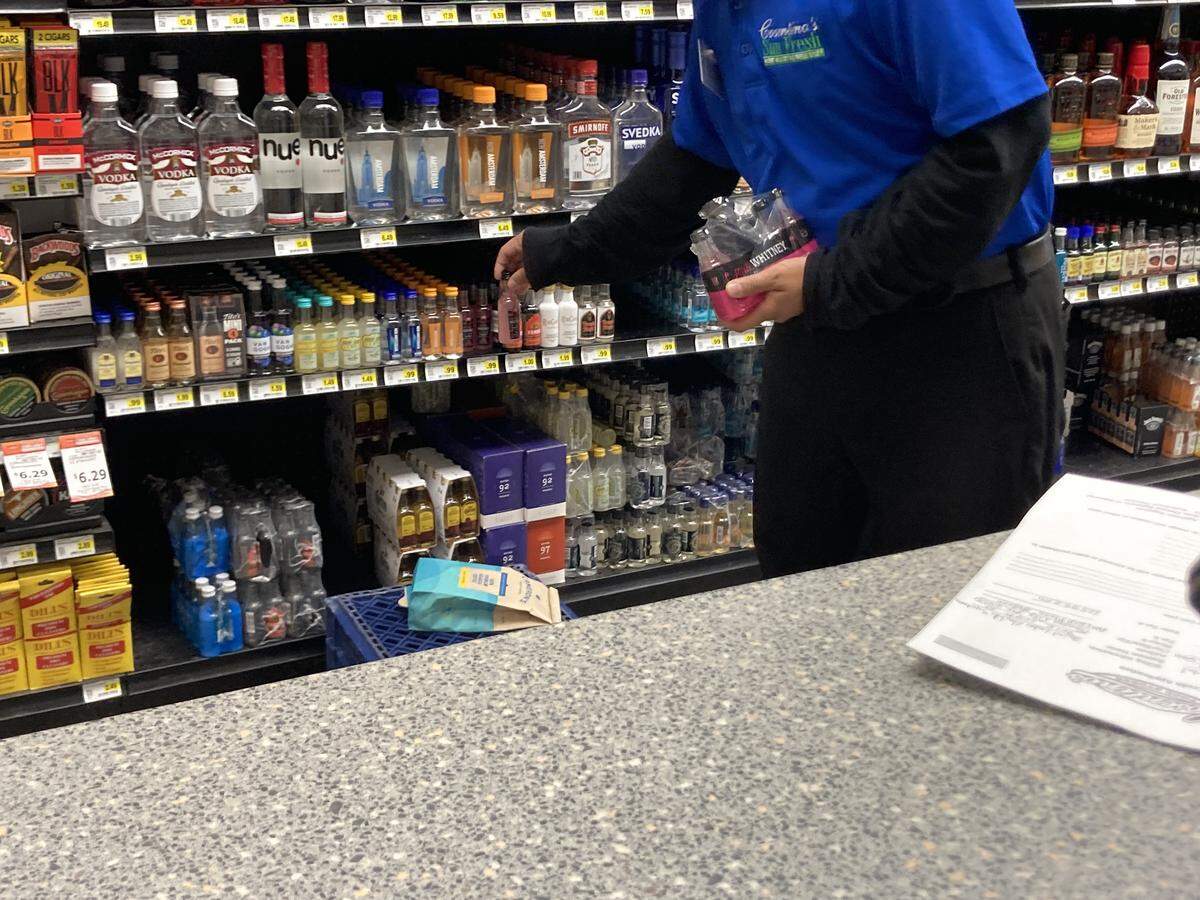
The ordinance’s language exempts grocery store, even though they carry the same products as the liquor stores and convenience stores.
The areas where sales would be banned
As currently defined, the “retail alcohol impact areas” include:
- Midtown extending from 27th Street to the north and 47th Street (Emanuel Cleaver II Blvd.) to the south, State Line Road to the west and Troost Avenue to the east.
- Downtown (The Central Business District) extending from the Missouri River to the north, 18th Street to the south, Broadway to the west and the collection of highways, Interstates 29, 35, 70 and Bruce R. Watkins to the east.
- Independence Avenue Corridor extending, approximately, from Gladstone Boulevard to the north, East 18th Street to the south, Forest Avenue to the west and Interstate 435 to the east.
- Prospect Avenue-Southeast Corridor from 23rd Street to the north, I-435 to the south, The Paseo to the west, and Jackson Avenue to the east.
- Blue Ridge Corridor from 83rd Street to the north, 119th Street to the south, Hickman Mills Drive, Bennington Avenue and Newton Avenue to the west and James A. Reed Road, Eastern Avenue and Food Lane to the east.
Keith Murrell owns four In-N-Out convenience stores within those boundaries, at 4502 E. 24th St., 5510 Prospect Ave., 3201 E. 52st St. and 5550 Troost Ave. The mini bottles and single-serve alcohol, he said, account for upwards of 50% of his revenue. A ban, he said, would force cuts.
“I have over 25 employees,” Murrell said. “I wouldn’t be able to keep everybody.”
Former Kansas City Chiefs safety Deron Cherry also spoke at the gathering. Cherry, who played for the Chiefs between 1981 and 1991, is the owner of the United Beverage Co., a major beer distributor in Kansas City.
“This is a bad ordinance and it should be banned,” Cherry said.
“So Kansas City leaders,” he said, “we are standing out here united. We have our employees and business owners that will be affected if this ban goes into place. We don’t want to see all those folks be affected. More importantly, we don’t want to see the city suffer. . . .This will definitely hit the purse strings from a standpoint of tax revenue and jobs. . . . You say you don’t want to put people out of business, but that’s exactly what this ordinance will do.”
Those that support the ordinance include the Urban League of Greater Kansas City and The Santa Fe Neighborhood Association.
“As neighbors in the Santa Fe community, we’ve seen firsthand how these retail practices impact our daily lives,” Marquita Taylor, representing the Santa Fe Neighborhood Association, said in a prepared statement when the ordinance was first introduced. “We appreciate city leaders taking resident concerns seriously and working toward solutions that will help restore safety and pride in our neighborhoods.”
Pat Clarke, the president of the Oak Park Neighborhood Association, appeared at the gathering to say that a ban that has the potential to close stores that residents rely upon may not be the answer to crime and litter and other behavioral problems that are being linked to the liquor sales.
Clarke came seeking a compromise and open dialogue.
He arrived at the event with an 11-point agreement, a memorandum of understanding, that he was asking store owners to sign committing them to, among other points, not selling liquor, beer or wine to individuals who appear intoxicated at the time of purchase. It also committed them to providing security at their properties. Business owners with repeated violations, the agreement said, would “risk” revocation of their liquor and/or business license.
“I’m not supporting the bottles either way,” Clarke said. “Yeah, they’re on the ground, They get tossed everywhere. But when you take them out, the bottles get bigger because the small bottle drinker (is) going to start drinking big. . . .But like I said, here’s an opportunity to change all that. That’s my stand here. . .I’m trying to create a conversation.”
This story was originally published March 30, 2026 at 4:56 PM.