Late radio host dedicated five decades to opening doors in Kansas City media
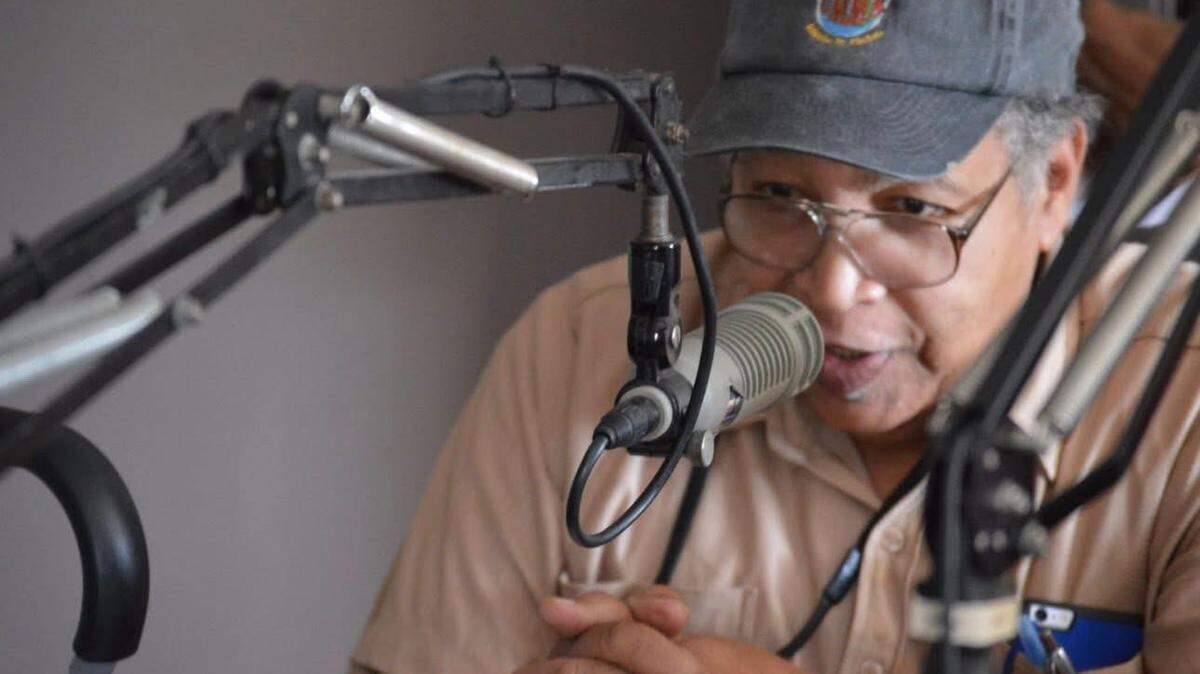
M.C. Richardson spent more than five decades building doors where none existed. As the host of “Guess Who’s Coming to Kansas City” on KKFI, he discussed community and culture across the metro while also creating opportunities beyond the microphone.
Over the years, he used his role as a prominent local media personality to serve as a voice for the community and to reach young people searching for direction.
To his daughter, Gina Taylor, Richardson’s impact is simple.
“He was a visionary,” she said. “He loved the community and never stopped working for the community.”
Richardson, founder of the United Minority Media Association and a longtime Kansas City radio host, died Feb. 6. He was 86.
His life traced an arc of local Black media advocacy, from a time when minority voices struggled for access to an era when many of the journalists and broadcasters he mentored entered the profession.
“That was his life,” Taylor said. “He did it 52 years. It was an avenue that he could go into the schools. He could mentor young people into journalism and any kind of media.”
Founded in 1974, UMMA became one of the region’s leading organizations dedicated to advancing opportunities for people of color in broadcast and print media. Under Richardson’s leadership, it connected students with working professionals, created scholarships and helped aspiring journalists gain entry into spaces where they were often overlooked.
“Daddy’s purpose in life was to help people succeed,” Taylor said. “He gave so many people their start in TV, radio, magazines, anything related to journalism. He just wanted to mentor people to their success.”
That drive to widen access defined him at work and at home. Taylor remembers spending much of her childhood alongside her father as he worked in the community, planting the seeds of her own commitment to service.
She described a father who was direct, disciplined and unrelenting in his expectations. Though he is gone, she said, his advice remains constant.
“Be yourself. Not to be scared to enter doors that maybe weren’t made for you. Always work, educate yourself,” she said.
Education was nonnegotiable in their household. Richardson stressed the importance of learning and growth, and Taylor recalls him as a lifelong student, always refining his craft. She believes his passion for using his platform fueled his desire to continually improve.
That growth was reflected in his decades at KKFI. His program, “Guess Who’s Coming to Kansas City,” ran for more than 25 years and featured authors, elected officials, athletes and artists visiting the city.
“Anything coming into Kansas City, they were on Daddy’s show,” Taylor said. “He just made a difference in their lives and helped people open doors they would not have been able to open by themselves.”
Unlike many radio hosts, she said, his on-air personality mirrored his presence at home. The same humor and warmth heard in the studio were present around the family table.
His catchphrases became shorthand for his persistence.
“The show must go on,” Taylor said. “If something fell through, he would say, ‘The show must go on,’ then he would regroup. He never took no for an answer.”
That persistence extended to fundraising and advocacy. If an event lacked funding, he found sponsors. If a student lacked tuition, he leveraged relationships with college presidents and chancellors. He established book scholarships and intervened on behalf of young writers and broadcasters.
“There are a lot of people who wouldn’t be in journalism today because they didn’t have the money,” Taylor said. “He worked with the colleges. He knew the chancellors. He knew the presidents just to say, ‘Give this person a chance.’”
His commitment did not waver as his health declined. Even after losing his sight in his final years, Richardson continued organizing, calling elected officials and advising others.
“Even in his latter days, when physically he wasn’t able to do as much, he still was organizing, still calling the mayor, still calling the senators,” Taylor said.
Taylor said her father’s dedication to opportunity was not limited by race, religion or background.
“He didn’t care who it was,” she said. “If you wanted to do anything in media, he was going to help you.”
As she reflects on the man who impacted so many, she is comforted by the lives changed because of him. What she will miss most, she said, is his constant direction.
“Him bossing all of us around in the family, telling us that we needed to get involved, that we needed to make a difference,” she said.
At his funeral service, she heard from those whose careers began with a phone call, a scholarship or a spot on his show.
“Listening to the people that he touched,” Taylor said. “Hearing about their lives and how he gave them a start when they knew they wouldn’t have been able to enter doors without his encouragement and his networking. He gave people opportunities they normally would not have had.”