76 Kansas & Missouri law enforcement agencies arrest people for ICE under Trump

A Christmas Eve drive in southwest Missouri was the last time two Guatemalan men living in Branson were free from the grasp of Immigration and Customs Enforcement.
That morning, cars streamed down I-44 outside of Springfield, taking in the record-breaking warm air. But the men’s truck inched along, allegedly driving as slow as 25 miles an hour on the interstate, where the minimum speed is 40, according to the citation of the incident.
That was enough for a corporal with the Missouri Highway Patrol to pull over the truck, driven by a 38-year-old man living in Branson, who according to court records did not have a U.S. driver’s license or vehicle registration. His passengers were a 19-year-old and a 15-year-old.
Instead of just arresting the driver, the trooper transported all three to the Greene County Jail, where the older two remained for weeks.
Along roads across the nation — including in Missouri and Kansas — routine traffic stops like this have been turning into life-changing immigration cases, where people are detained for minor violations and jailed indefinitely before possibly being deported.
These stops are part of controversial agreements between ICE and local and state authorities that allow officers to detain people on behalf of ICE, in exchange for the promise of money to buy vehicles and equipment, as well as salary reimbursement.
Because of the 287(g) program, ICE agents are free to descend on places like Minneapolis and Chicago, while local police officers make immigration arrests in cities and rural areas in Kansas, Missouri and all over.
But some see these agreements as trouble.
“When you sign a 287(g) agreement, everyone who is an immigrant is concerned. Everyone who’s not an immigrant is concerned. Everybody’s freaked out,” said Jessica Pishko, a lawyer and journalist who wrote a book on sheriffs, including their role in immigration enforcement.
The Christmas Eve arrest was typical for those under the 287(g) program, according to Pishko.
Plans to open an immigration detention center went through in Leavenworth, Kansas, but dissolved in Kansas City. All the while, ICE agents in the Kansas City area continue to arrest people at restaurants and parking lots.
And local police departments and sheriff’s offices, through the 287(g) program, perform the duties of ICE while wearing their respective badges.
“(The agreements have) given local and state law enforcement an incredible amount of power to racially profile,” said Stephanie Alvarez-Jones, an attorney with the National Immigration Project, which consists of immigration lawyers and experts.
It has created, she said, “a direct pipeline” from traffic stop to detention and possible deportation.
While local law enforcement does this work, Alvarez-Jones said ICE can “continue on in their cruel business as usual.”
A Trump-popularized program
Starting in early 2025, ICE began heavily promoting the task force model included in the 287(g) program as one way to get to its goal of arresting 3,000 people for ICE each day.
This model, which was previously abolished in 2012 because of documented patterns of discrimination and racial profiling, became popular again under the Trump administration.
Agencies in Kansas and Missouri also have agreements under the jail enforcement and warrant service officer models, where in jails, officers can serve immigration warrants and question detainees about their immigration status. However, the task force model is the most controversial and fastest-growing type of the three.
Famously, Joe Arpaio of Arizona’s Maricopa County was one of the first to enter the task force agreements in the 2000s, and officers allegeldy targeted Latino people for traffic stops. The discrimination was documented through multiple lawsuits, which cost taxpayers $350 million as of 2025.
The task force model has not changed between Arpaio’s days and now, according to Alvarez-Jones.
“Everything that was wrong about the task force model to begin with has continued,” she said.
A flyer directed at local law enforcement on the ICE website promised increased safety: “Your Agency + Federal Law Enforcement = SAFER COMMUNITIES.”
In addition, the flyer touts the benefit of “possible eligibility for federal payments.”
These promotions appear to have worked.
Before Donald Trump came into office, there were two agreements in Kansas and none in Missouri. Now the two states have a combined 76, including two agreements with statewide agencies — the Missouri Highway Patrol and the Kansas Bureau of Investigation — that cover every county in each state.
While Missouri has more agreements — 48 in Missouri versus 28 in Kansas — Kansas’ agreements affect more people.
More than 1.1 million Kansans, or 37% of the state’s population, live in an area with a municipal or county 287(g) agreement. This includes 40% of the state’s Hispanic and Latino population, according to 2024 census estimates. In Missouri, close to 800,000 people live under a local ICE agreement.
In the Kansas City area, no municipal or county agency has entered a 287(g) partnership. However, agencies in the St. Louis area, Springfield, Topeka and Wichita have signed these agreements. In Missouri especially, many agreements are in small towns like Wheaton (population 427) and Walnut Grove (population 528).
Information about arrests conducted by ICE is hard to come by, and even more so, the arrests under 287(g).
ICE did not answer The Star’s repeated questions over months about the number of people arrested through 287(g) agreements, the number of officers trained, and the curriculum and length of training. In addition, ICE denied The Star’s records request for information about immigration arrests in Southwest City, Missouri, one of the participating police departments.
The Star obtained documents from the Missouri Highway Patrol through a Sunshine Law request that showed the agency arrested 19 people for immigration-related offenses through its ICE partnership in 2025.
People were handcuffed outside of a feed store, on the side of I-70 and inside an apartment. People were stopped because of alleged speeding, drunk driving or receiving a stolen flatbed and heavy machinery.
In the early hours of an October morning, a trooper arrested a 20-year-old from his home on a country road in the north-central Missouri town of Milan. A few hours before, the young Hispanic man was pulled over by the Milan Police Department for speeding, according to police records. The local officer found that he didn’t have a driver’s license and tipped off the Highway Patrol.
These are stories from just one agency. There are more stories from the 75 other law enforcement agencies in Kansas and Missouri with these agreements.
In a little over a month this fall, local and state officers arrested 24 people for ICE in Missouri and three in Kansas, according to Department of Homeland Security data compiled on the Deportation Data Project.
All of the individuals were Latino, hailing from Mexico, Honduras, Guatemala, El Salvador and Ecuador.
Twelve have since been deported or left the country.
A preschool-age boy born in 2023 was one of them.
One Missouri town’s experience
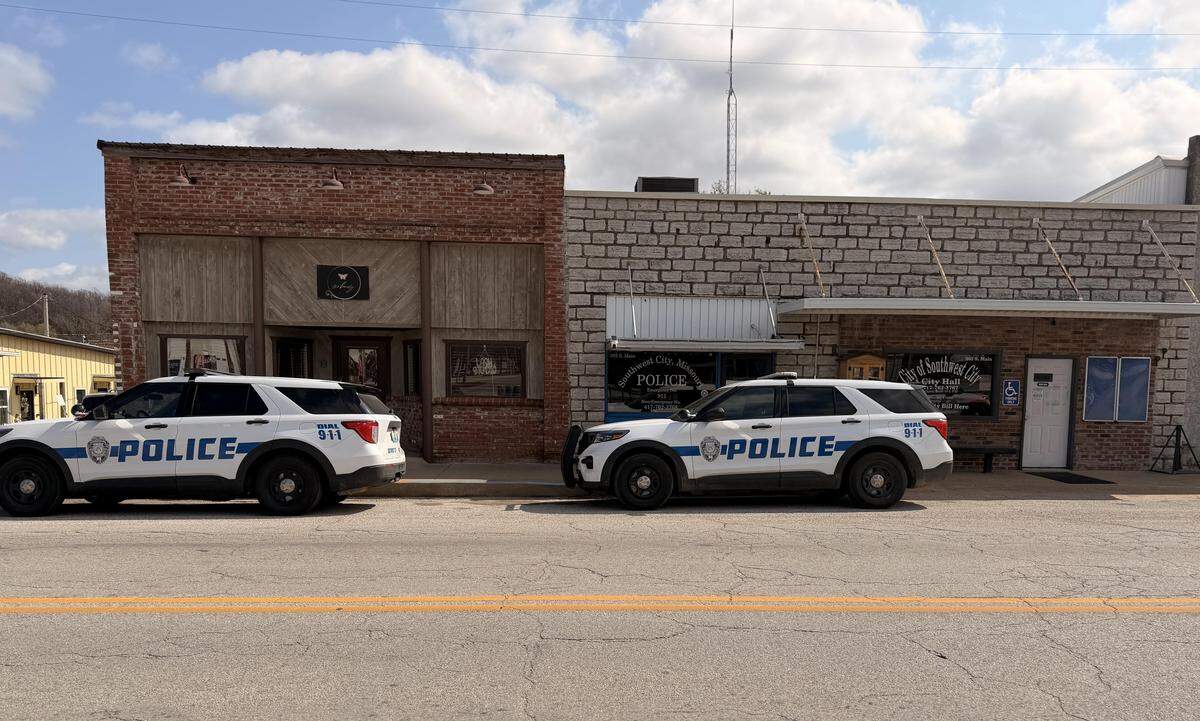
In Southwest City, a Missouri municipality of 845 near Oklahoma and Arkansas, Chief of Police Harvey Gow felt the 287(g) agreement fit right in with what his department of four was doing. He signed the paperwork in early September.
“It’s just regular old police work,” Gow said.
Gow estimates the Southwest City Police Department has arrested 20 people for immigration violations since Trump took office, with six or eight under the 287(g) agreement.
Before Trump took office, Gow was only able to arrest someone for immigration-related offenses if they committed a felony. With changing attitudes toward immigration under the second Trump administration, Gow could call ICE to run names when someone was pulled over for speeding or a DWI.
Now with the most extensive 287(g) agreement, Southwest City’s four trained officers can access ICE databases and question people on their status. They were promised extra money for doing so.
Gow said his training was held online and took six hours.
“Most of (the training) was basic stuff we do anyway,” Gow said. “The only thing that was different was the immigration laws, different types of visas, and permits to get into the country legally.”
The Department of Homeland Security told NPR last month that participating local officers must complete 40 hours of education on topics like immigration law and detention, ICE’s use-of-force policy and public outreach. Descriptions of the training process vary wildly, according to Pishko, who has spoken with two dozen sheriffs and police chiefs about the 287(g) program.
As ICE advertised to law enforcement agencies across the country, Gow says the feds will pay his police department for the time officers spend on immigration enforcement. And with a 2 ½-hour round trip to bring detainees to the nearest ICE jail in Springfield, that time can add up.
In early 2026, Gow’s department received a lump sum $130,000 from ICE for participating in the agreement: $100,000 for vehicles and the rest for equipment.
With this money, Gow said he planned to replace his 10-year-old police vehicles and buy a new roadside drug testing machine, along with upgrading other equipment. Pishko hadn’t heard of any other 287(g) agencies receiving the promised money.
For a department with a budget of $290,000 in 2025, the ICE money is a large sum.
“It takes a lot off the general budget… therefore, the citizens’ tax dollars aren’t buying us patrol vehicles,” Gow explained.
The response from Southwest City’s Latino community has been mixed, Gow said.
“You’ll have some of them that are here legally, and they’re glad. And then you have some of them that are here legally that are upset because they may have family members here that are not legal.
“We’re kind of doing stuff like we did back in the ‘80s,” he said.
The view across state lines
In the northeastern Kansas town of Wathena, Chief of Police Dennis Thompson has a different perspective than his southwestern Missouri counterpart.
Thompson sees his role as a “middle man,” to just hold someone with a felony for ICE while an agent drives up from Kansas City or Wichita to the town of 1,463.
Thompson was not aware of financial incentives offered to other law enforcement agencies and didn’t expect to receive anything himself. He signed a 287(g) agreement in November, and he was the only one of his four officers who received ICE training, which he described as “in-depth.”
While the Southwest City police chief was willing to make a two-hour drive to bring immigrants to jail, his Wathena counterpart wants to be more separate from ICE.
“I don’t put people in my patrol car and take them somewhere. That’s not what 287(g) is.”
Thompson said he’s seen anti-ICE posts on social media, but countered that he is just doing his job.
“There’s no reason for me to be racially motivated or anything like that. I’m a Black male. There’s no ‘Hey, they’re Hispanic, so I want to see if we can’t get them out of the country.’ That’s not even an issue or thought.”
‘Protect all’
Some enforcement leaders decide ICE’s promises money or safety do not outweigh possible damage of the 287(g) agreements.
No agency in the Kansas City area has inked one of these contracts. These police leaders said they were concerned about straining resources and breaching community trust.
Karl Oakman — chief of the Kansas City, Kansas Police Department — said his officers collaborate with ICE to investigate criminal, narcotics and gang activity. However, they do not have the “the staff or the resources” to enforce immigration laws through the 287(g) program.
“We’re here to protect all members of the city. So if you’re a victim, your immigration status does not matter when it comes to us investigating the crime,” Oakman said.
John Moncayo, spokesperson with the Olathe Police Department, wrote in an email, “We feel the best utilization of our staffing is to ensure that our city remains one of the safest in the country by continuing to work with our community in a professional manner to prevent, reduce and solve crime.”
Laura McCabe, spokesperson for the Lawrence Police Department said, “Our hope is that victims and witnesses of crime know that we are not in the civil immigration enforcement business.”
No one immune?
As for the three Guatemalan men detained on Christmas Eve outside of Springfield, their paths diverged at the Greene County Jail gates. That same day, the 15-year-old was let go after being taken to jail.
It isn’t clear where he ended up.
The two older men were detained for at least three months. On Feb. 5, the 38-year-old was still at the Greene County Jail, but a week later he was in ICE custody at an unknown location.
After 29 days in Springfield, the 19-year-old was moved south to Ozark County Jail and then to Louisiana’s Richwood Correctional Center, according to Jonah Beadles, Greene County Jail spokesperson. The Louisiana ICE center in Louisiana was cited in 2023 for insufficient medical care and unsanitary conditions.
As of Feb. 23, neither man showed up on ICE’s detainee locator. They could have been released in the U.S., or they left the country, Pishko said.
Alvarez-Jones echoed the Kansas City area chiefs of police, saying that the 287(g) agreements make people afraid that reporting a robbery or assault could lead to their deportation.
“I think it has fundamentally turned on its head what you know folks might consider the ostensible purpose of local law enforcement.”
Alvarez-Jones said just because many of the headlines are focused on immigration enforcement in big cities like Minneapolis and Chicago, does not mean people in other pockets of the nation are immune.
“We should be very focused on what is happening in our state and local communities,” she said, because there could be “really cruel immigration enforcement happening right next door.”